Archives

Frederica Henrieta Lecornu: Transforming Fragility Into Strength Through Surrealist Art

Frederica Henrieta Lecornu contemporary surrealist artist
Where Fragility Becomes Strength

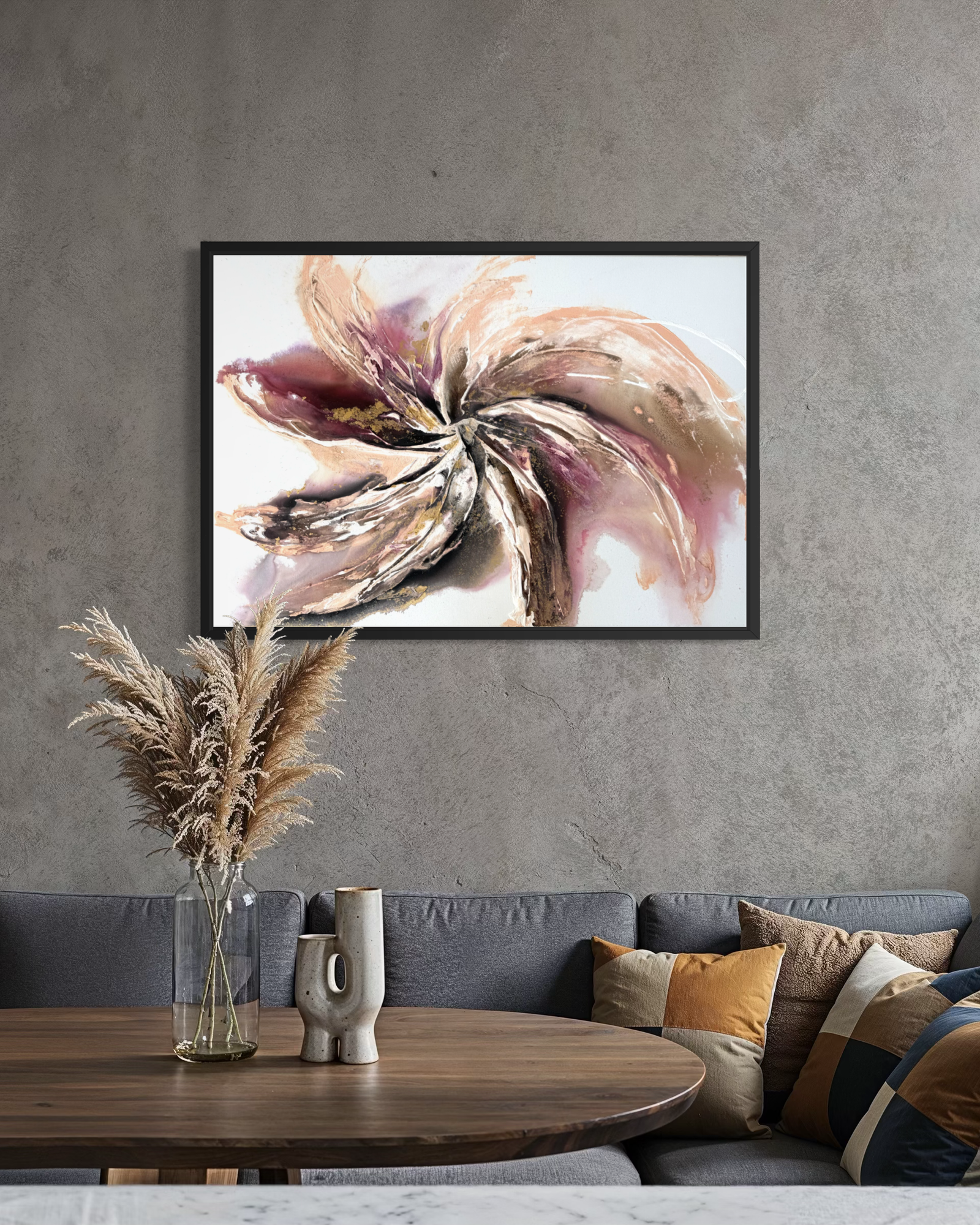
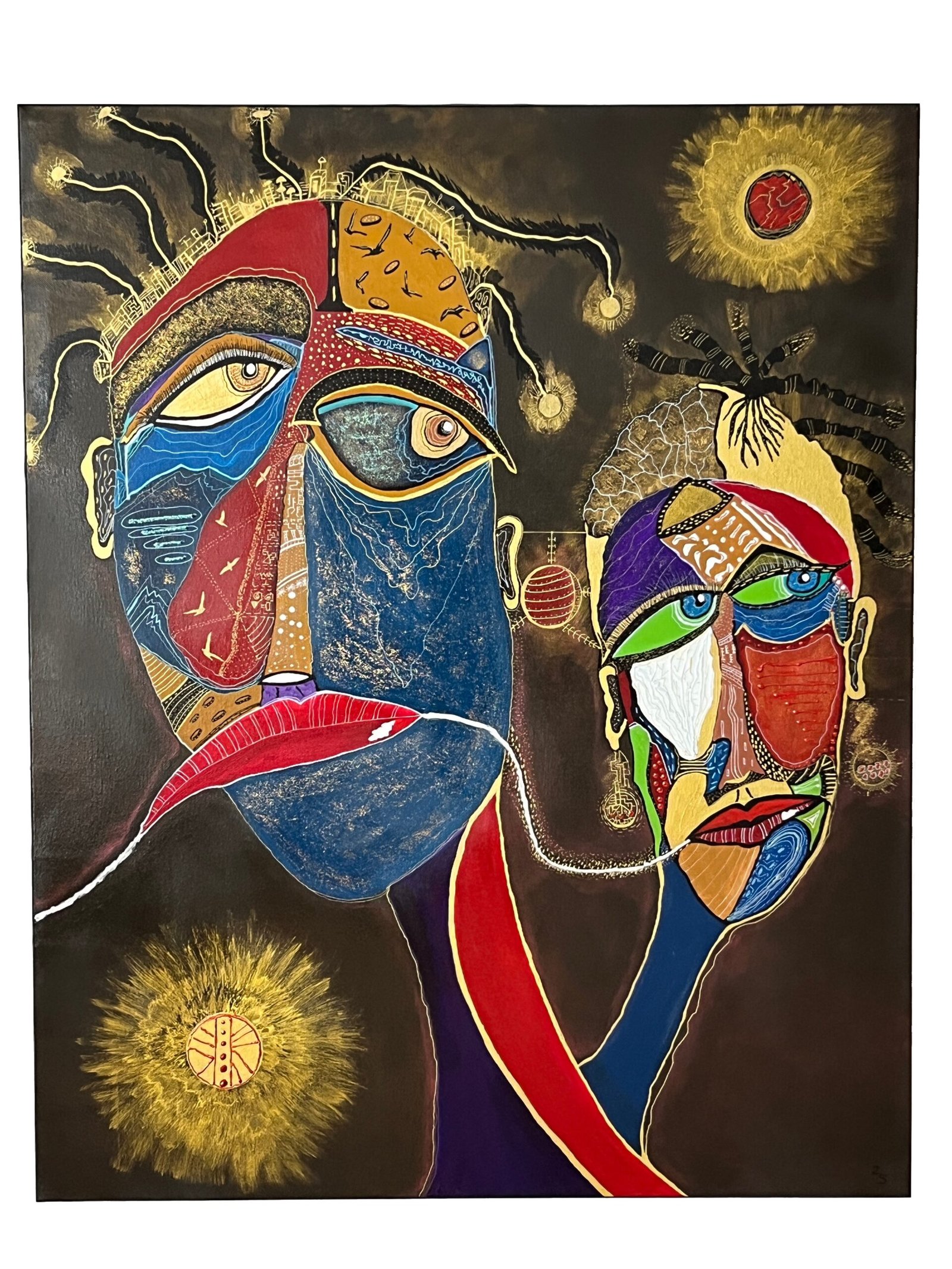
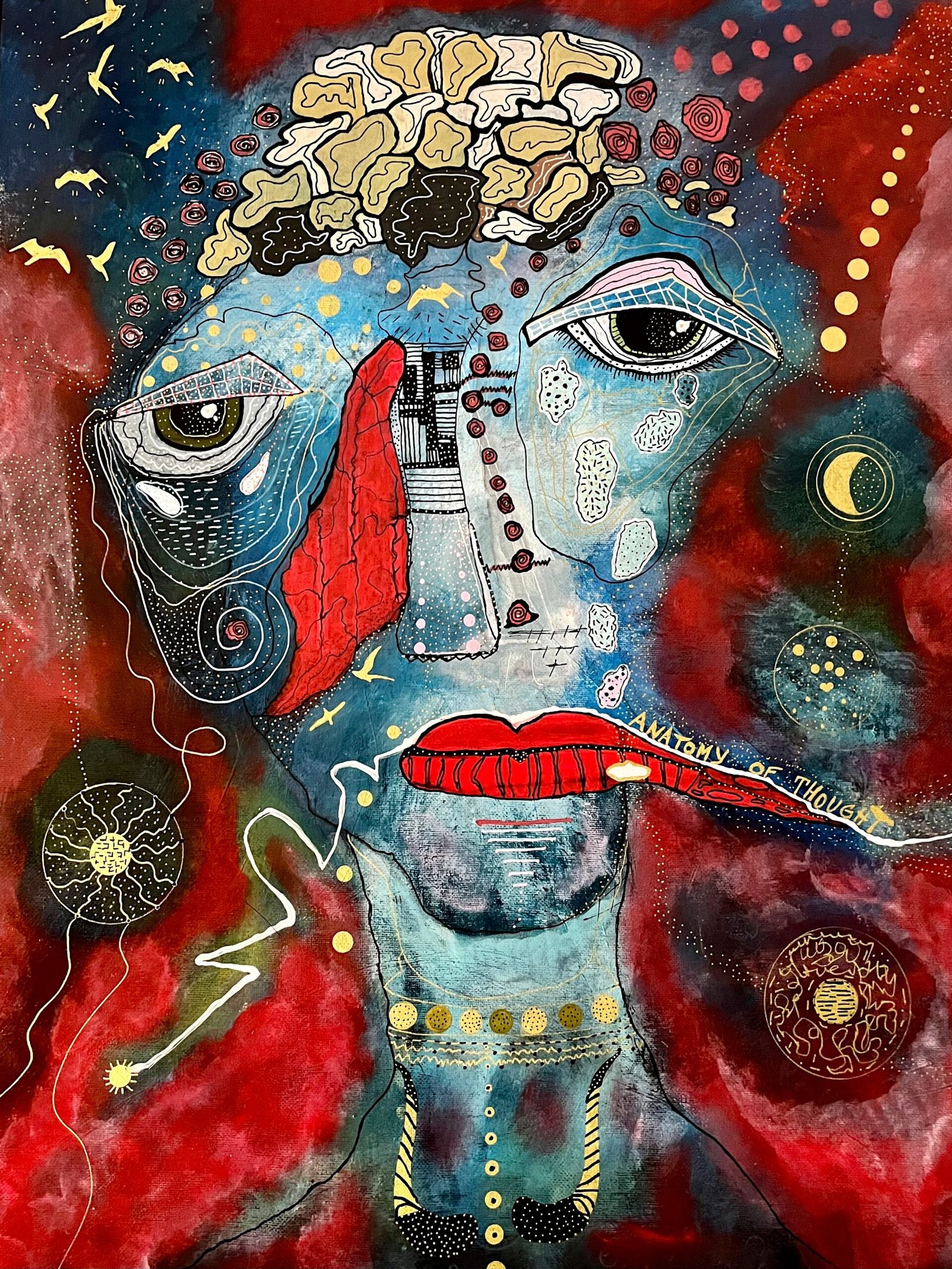
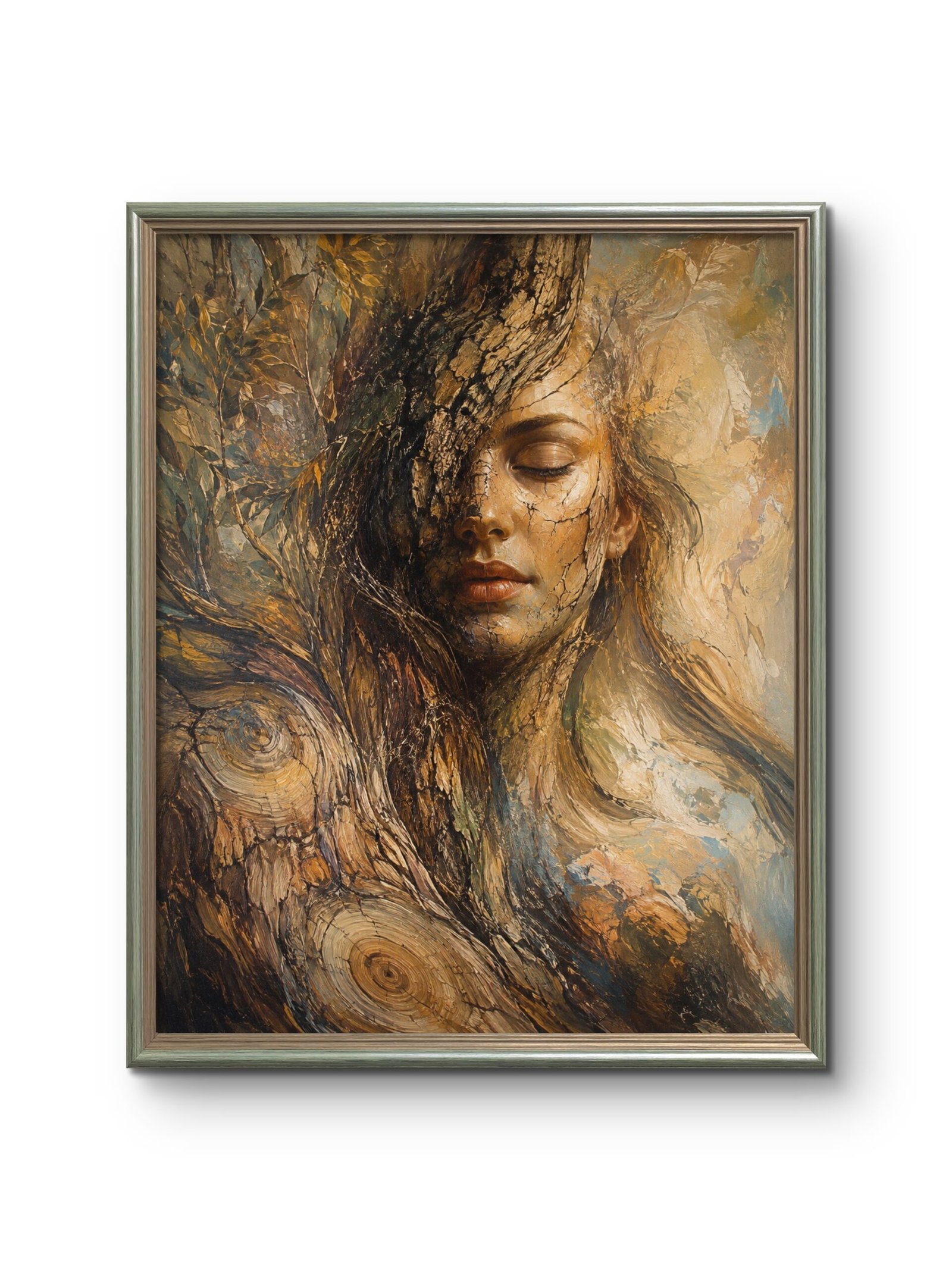
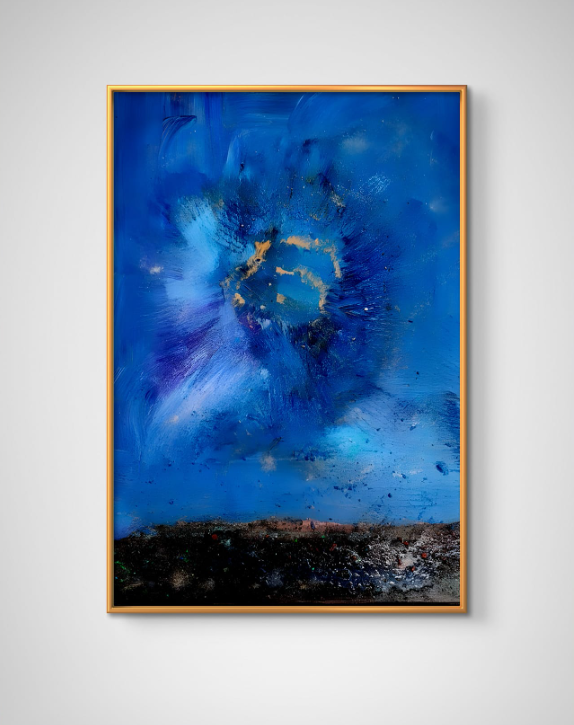
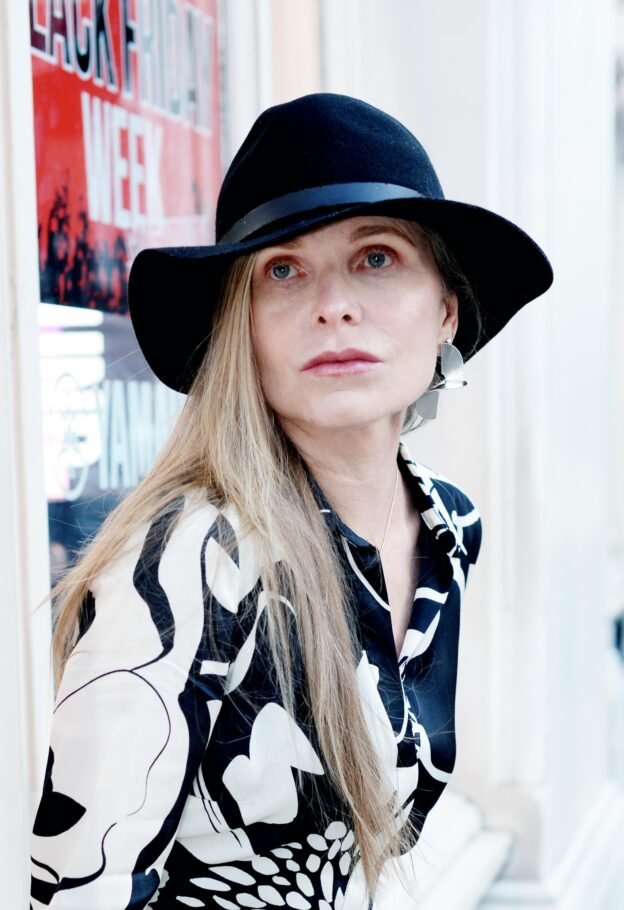
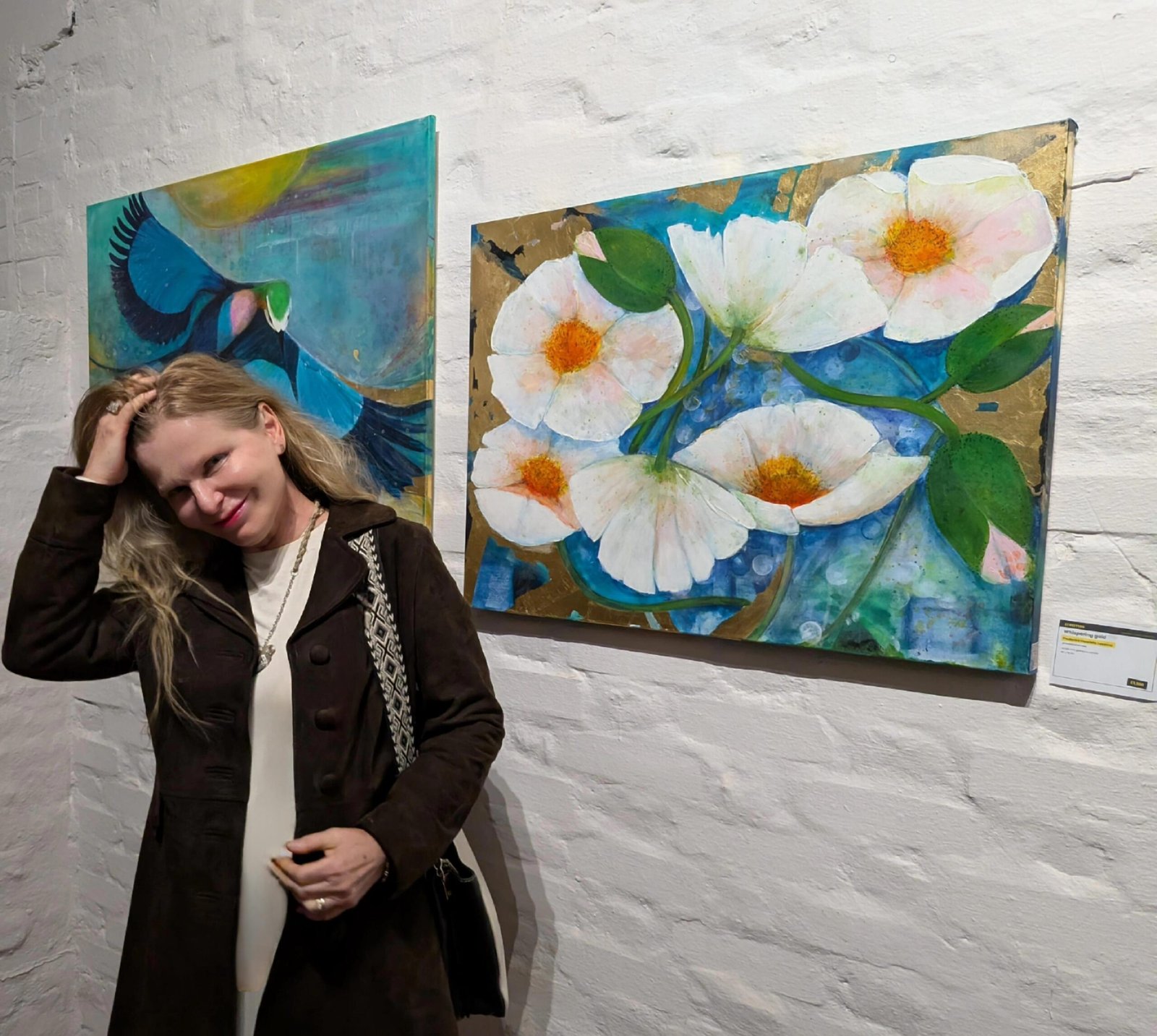
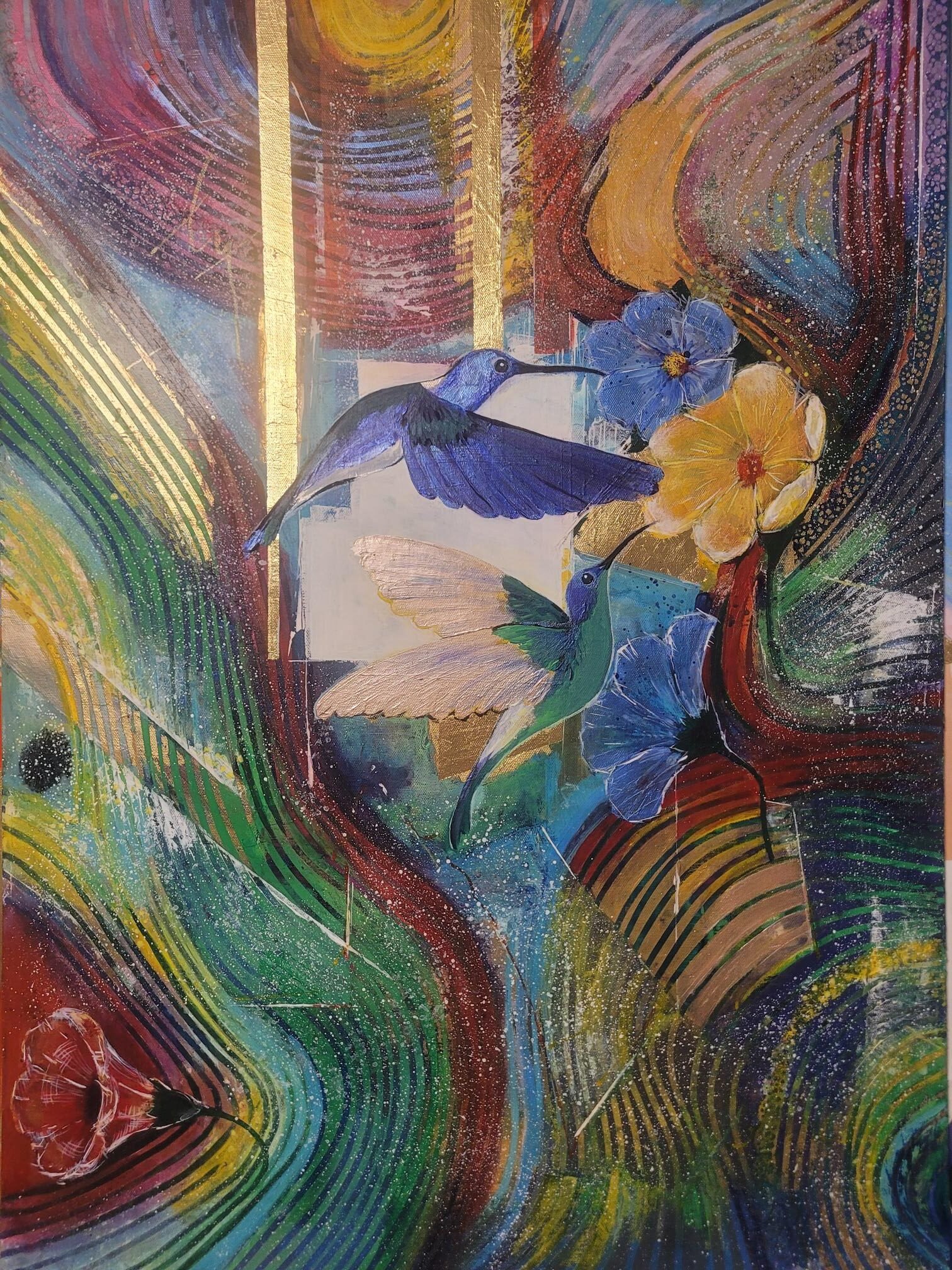
Frederica Henrieta Lecornu is a contemporary surrealist artist whose paintings turn human fragility into strength. Originally from Slovakia and now based in Bristol, she combines expressive figures, lyrical abstraction and luminous gold leaf. Her practice also spans printmaking and conceptual art. Technical precision gives her compositions structure, while colour and gesture bring movement and emotional intensity.

What makes this balance compelling is the tension it creates. Structure gives the compositions a sense of order, while colour and gesture introduce movement and uncertainty. Light shifts across gilded passages, changing the experience of the surface. Beneath these visual decisions lies a more personal concern: how human vulnerability can become a source of strength, and how feelings that resist language might find expression through art.
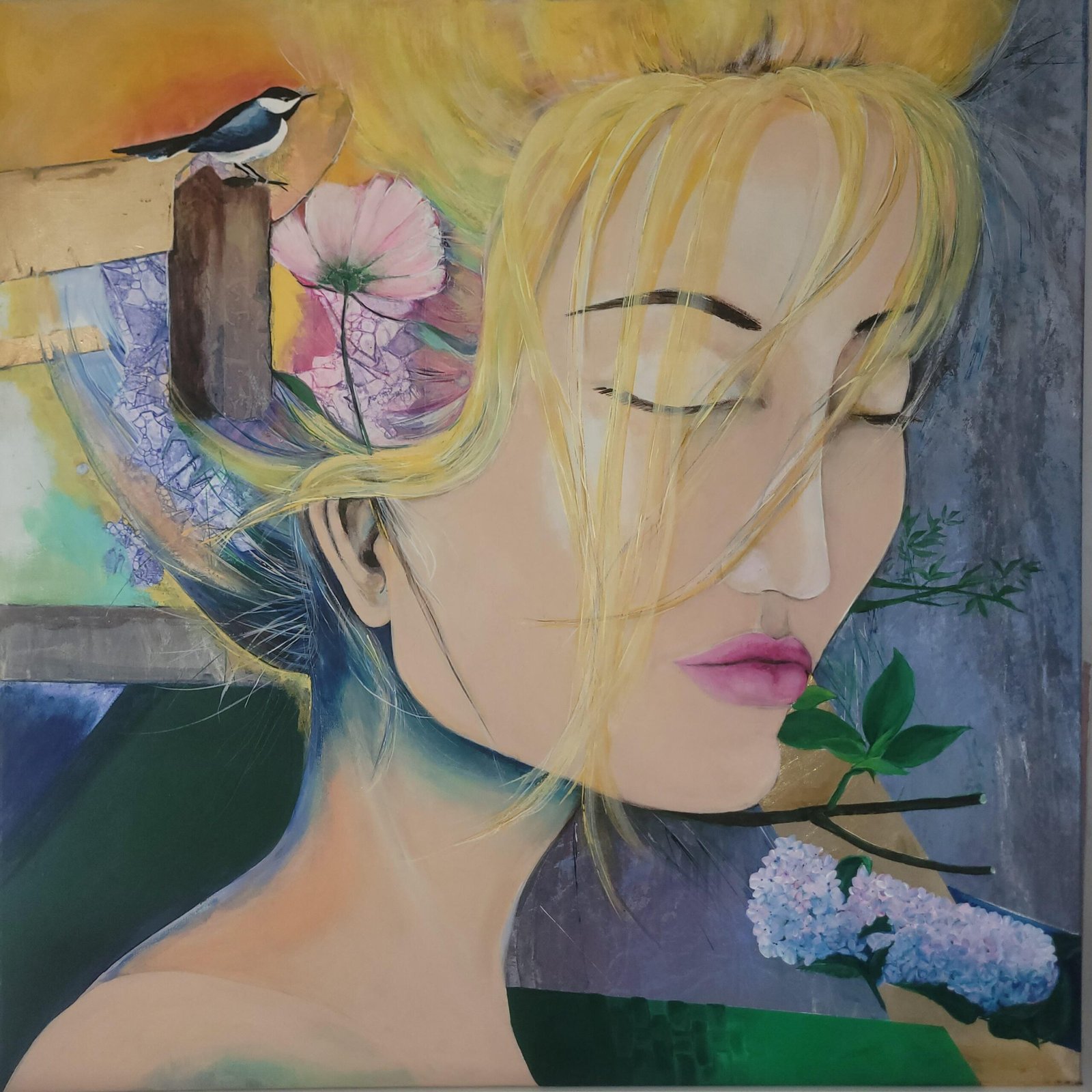
Expressive figurative painting by Frederica Henrieta Lecornu
An Artistic Voice That Refused to Disappear

Her journey began in socialist Czechoslovakia, where political circumstances placed serious obstacles in the way of her artistic ambitions. Coming from an intellectual family, Lecornu faced blacklisting by the regime and could not pursue the fine arts education she wanted. Yet that restriction did not end her creative development. Instead, she followed a different academic route through the Technical University of Košice.

That experience helped shape an unusual relationship between technical knowledge and artistic expression. Her background gave her a strong understanding of structure, while her creative instincts continued to seek a more personal language. Later, moving to the United Kingdom opened new possibilities for her practice. What once seemed like separate paths gradually became connected, allowing discipline and imagination to inform one another.
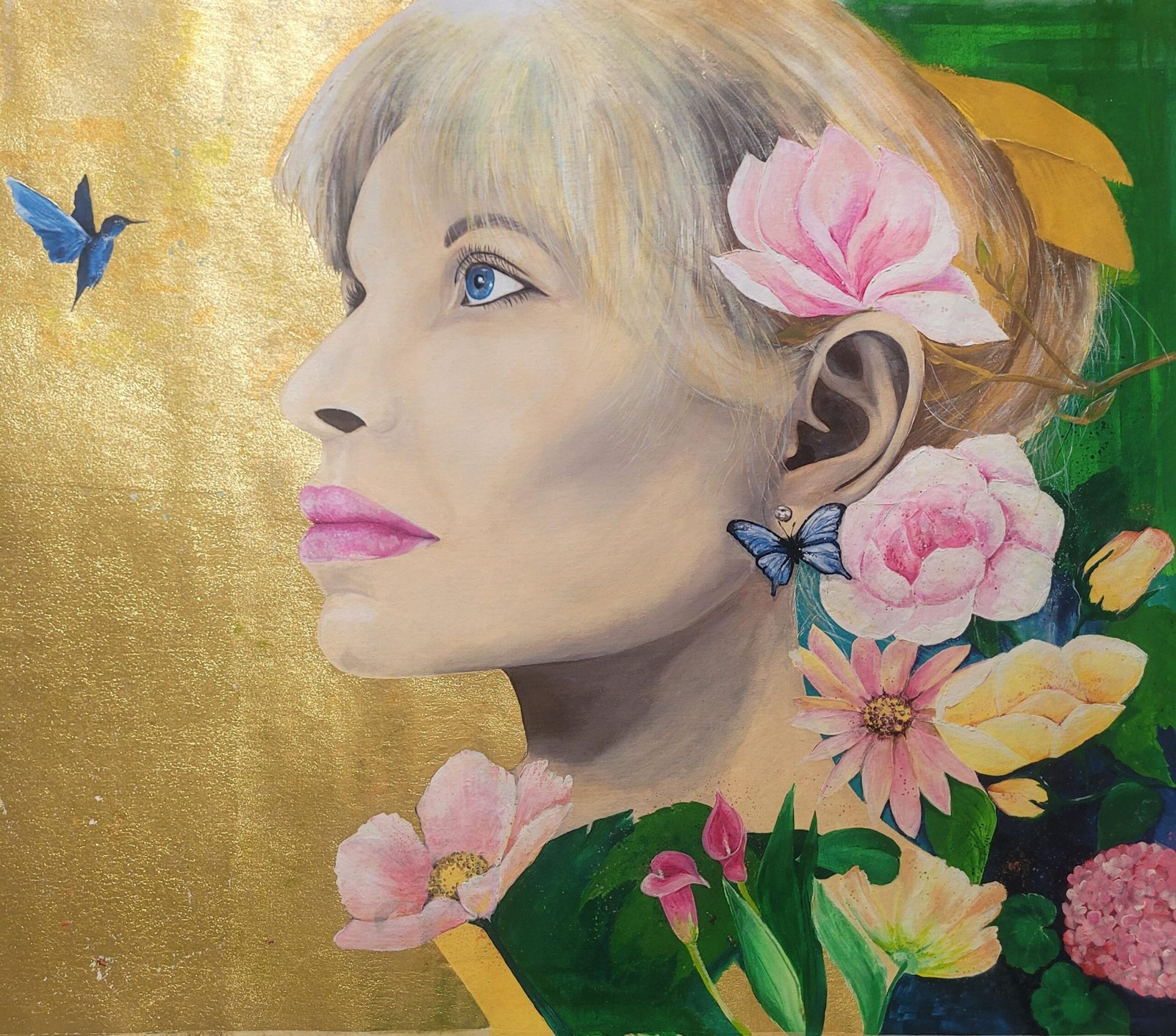
Surrealist painting with gold leaf by Frederica Henrieta Lecornu
The Language of Gold, Colour and Movement

Gold leaf plays a distinctive role in Lecornu’s visual language. Rather than serving only as decoration, it introduces structure and an evolving relationship with light. Metallic passages establish boundaries, while expressive forms move across and around them. As the viewer changes position, the reflective surface responds, giving the painting another dimension.

Alongside gilding, she uses lyrical abstraction and expressive figuration to explore emotional states. Her compositions bring together deliberate decisions and instinctive gestures. As a result, they can feel both carefully constructed and unexpectedly fluid. This relationship between control and freedom reflects a central question within her work: how much of life can we shape, and how much must we learn to move through?
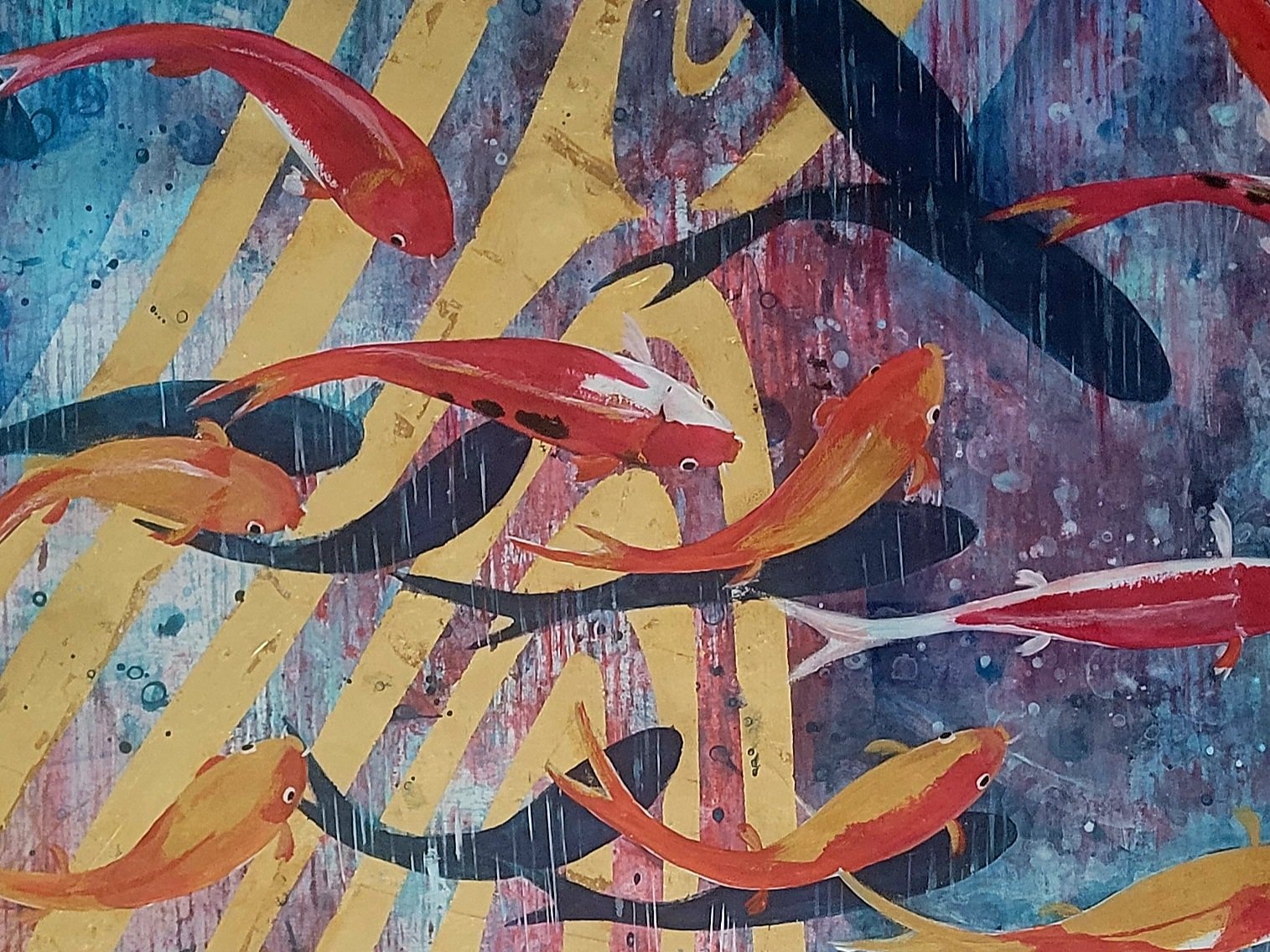
Frederica Henrieta Lecornu artwork featuring fish and geometric gold forms
Finding Freedom Within Boundaries

Schools of fish moving through geometric streams of gold have become a particularly revealing image within Lecornu’s recent work. The fish suggest life in motion, while the metallic lines establish a more rigid environment. Together, they create a visual conversation between freedom and restriction.

For the artist, the world contains both order and chaos. Her background in industrial design also informs this perspective, encouraging her to see connections between science, structure and more intuitive forms of experience. The fish continue their movement despite the boundaries around them. In that relationship, Lecornu finds a metaphor for resilience: life does not always offer unrestricted space, yet movement, beauty and possibility can remain.
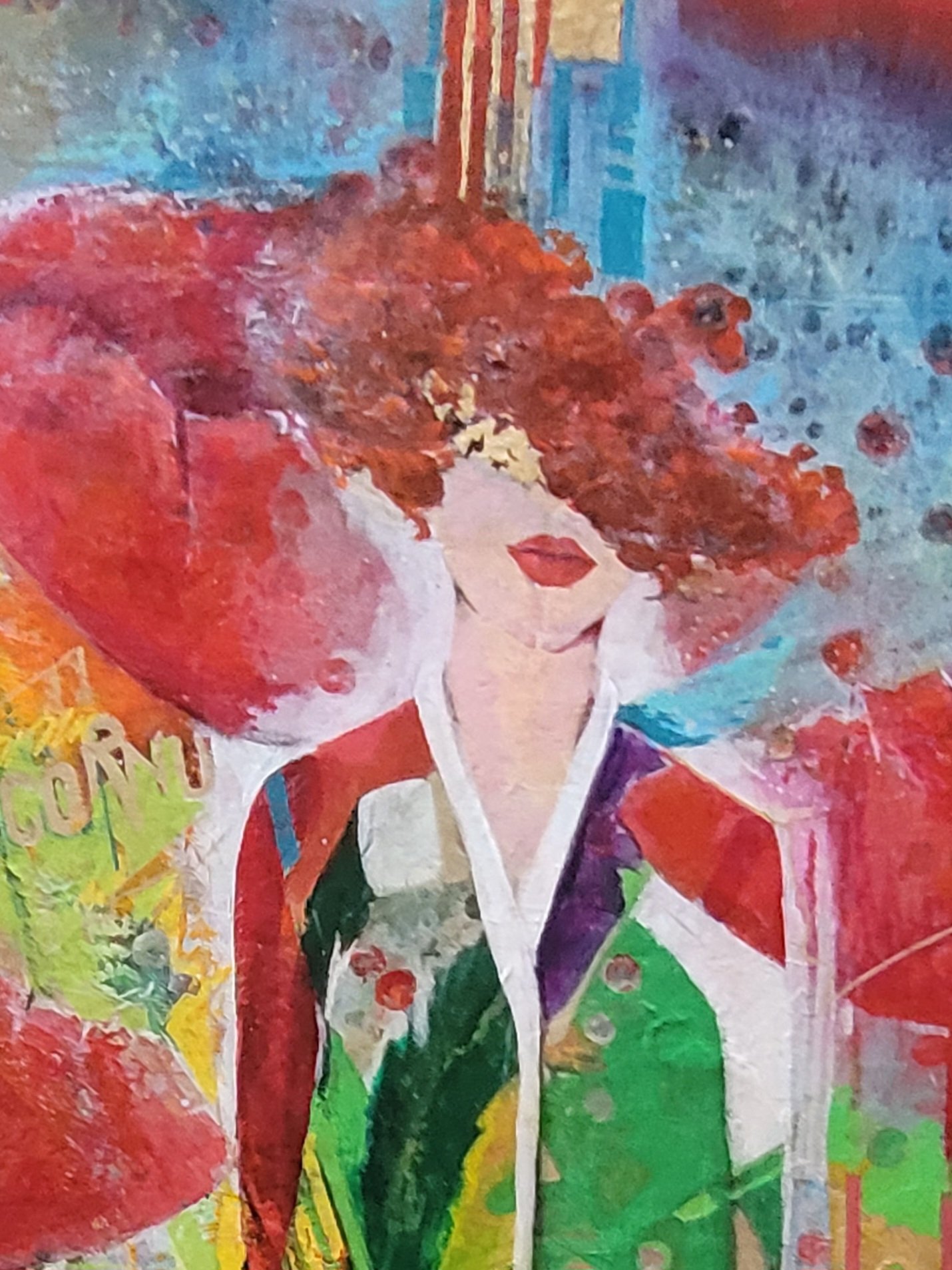
Emotional surrealist expressionist artwork by Frederica Henrieta Lecornu
Painting Through Physical and Emotional Challenges

In recent years, Lecornu’s artistic practice has taken on an even more personal significance. Living with Parkinson’s disease has changed her daily experience, while painting remains a vital means of expression. She describes the act of creating as a way to give form to emotions and experiences that might otherwise remain difficult to communicate.

Her work does not attempt to conceal hardship behind an image of effortless triumph. Instead, it allows fragility and determination to exist together. Each canvas becomes part of an ongoing negotiation between physical limitations and creative possibility. This gives her exploration of resilience a meaning that reaches beyond symbolism. It belongs to the lived experience behind the painting as much as to the image itself.
Frederica Henrieta Lecornu Bristol-based painter and conceptual artist
When Silence Finds Its Colour

Lecornu reports receiving a Certificate of Creative Excellence and a nomination for the Henry Raeburn Prize. For her, these recognitions carry significance beyond professional achievement. They affirm the possibility that deeply personal work can also connect with the experiences of others.

Yet the purpose of her art remains rooted in something more immediate. She wants viewers to encounter an emotional space where hardship does not erase beauty and where vulnerability can coexist with strength. Her paintings invite people to pause, look closely and consider the feelings held within their luminous surfaces.

“Transforming fragility into strength, and silence into colour.” — Frederica Henrieta Lecornu

These words offer a fitting conclusion to her practice. Across the boundaries of structure and intuition, the artist continues to search for ways of making inner experience visible. For Best Art Gallery, her work reminds us that artistic expression can emerge not only from freedom, but also from the determination to create within life’s limitations.

Discover more creative journeys in the Best Art Gallery blog. Explore Frederica’s work through her artist portfolio.
Valentina Secchi: Transforming Everyday Life, Memory and Imagination Into Art

Valentina Secchi contemporary artist Macadamia Art Milan

A Colourful World with Something Beneath It

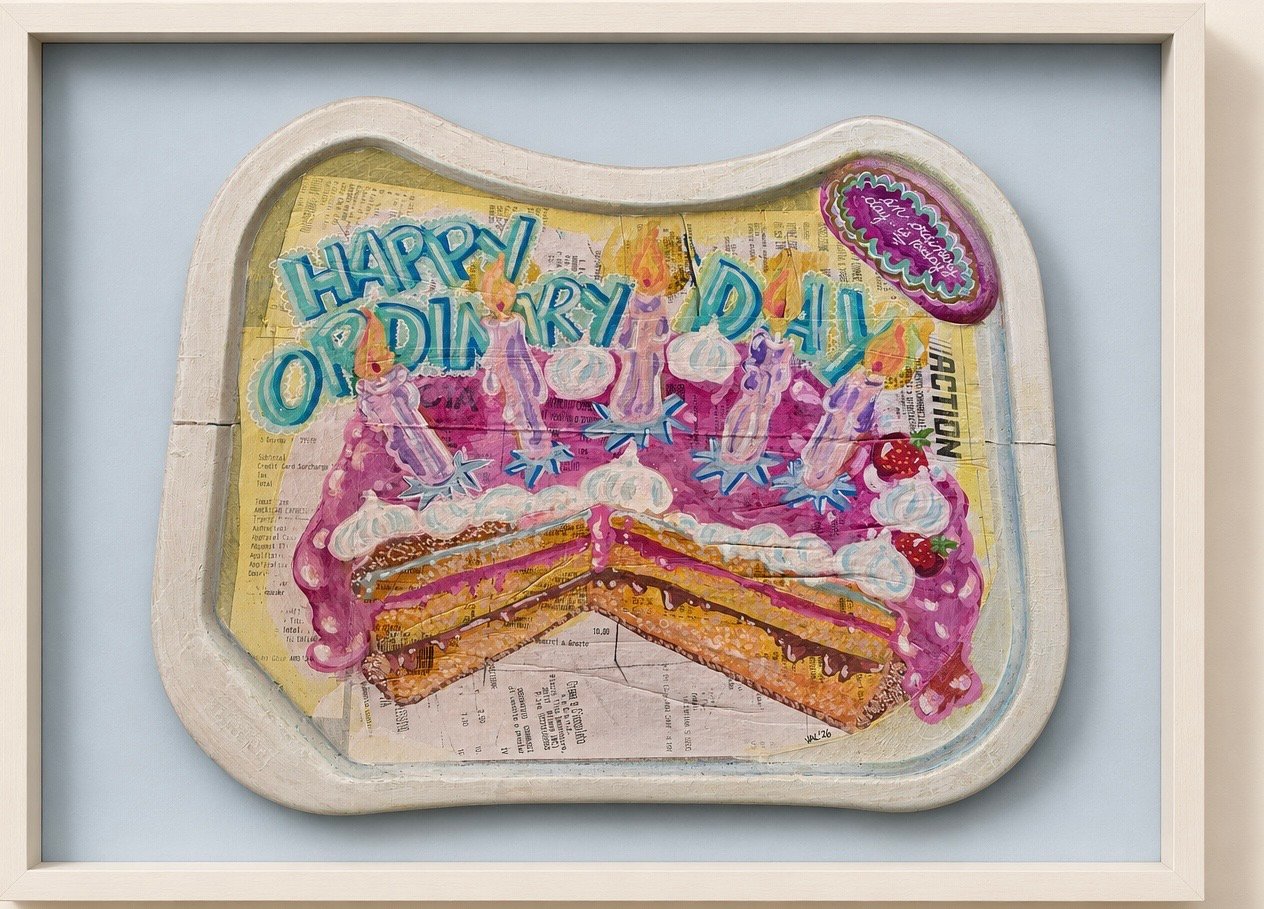
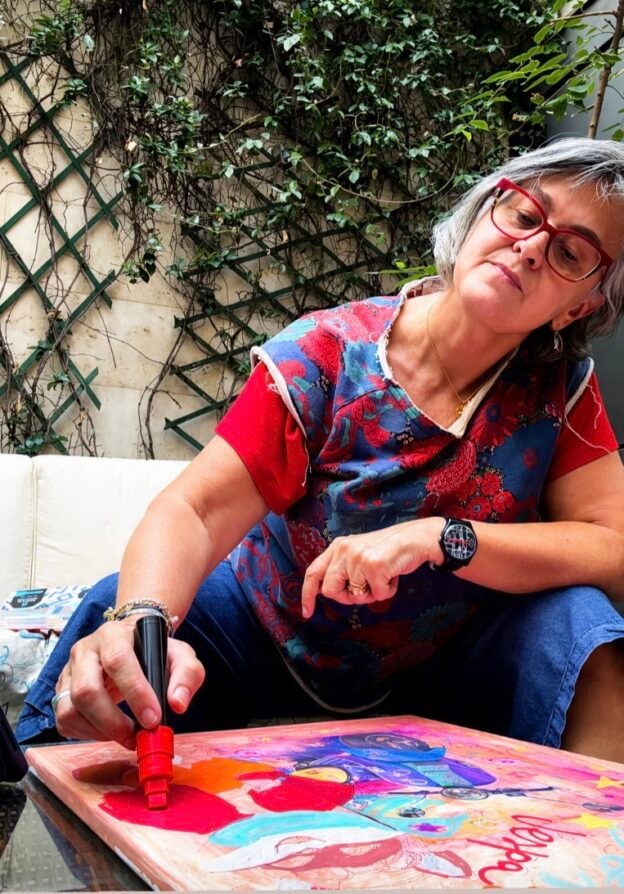
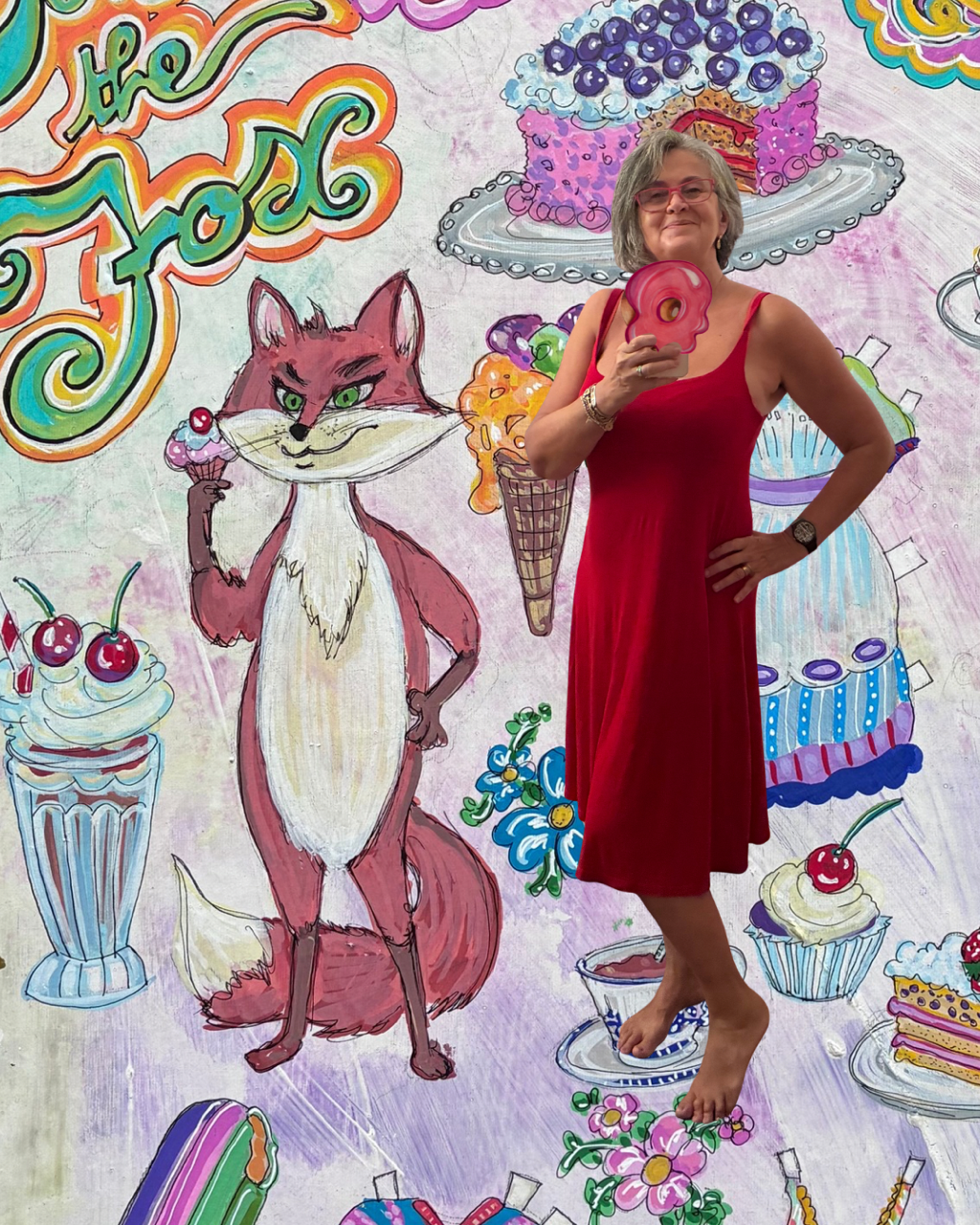
At first glance, Valentina Secchi’s paintings seem to offer a joyful escape. Bright colours, familiar characters, sweets and imagined landscapes create a world that feels playful and inviting. Yet look a little longer, and something less comfortable begins to emerge. Behind the colour are questions about loneliness, vulnerability, memory and the pressures of contemporary life.

Based in Milan, the Italian contemporary artist works under the name Macadamia Art. Her creative identity also carries a deep connection to New York, a city that has shaped both her personal experiences and artistic imagination. Secchi studied painting at the Brera Academy of Fine Arts and architecture at the Politecnico di Milano. She later worked across illustration, design and architecture. These disciplines continue to inform the way she constructs images and tells stories.

Her paintings bring these experiences together without allowing any single discipline to define them. Instead, she creates a visual language where autobiography meets imagination and social observation. What appears cheerful on the surface often asks the viewer to consider something much more complicated underneath.

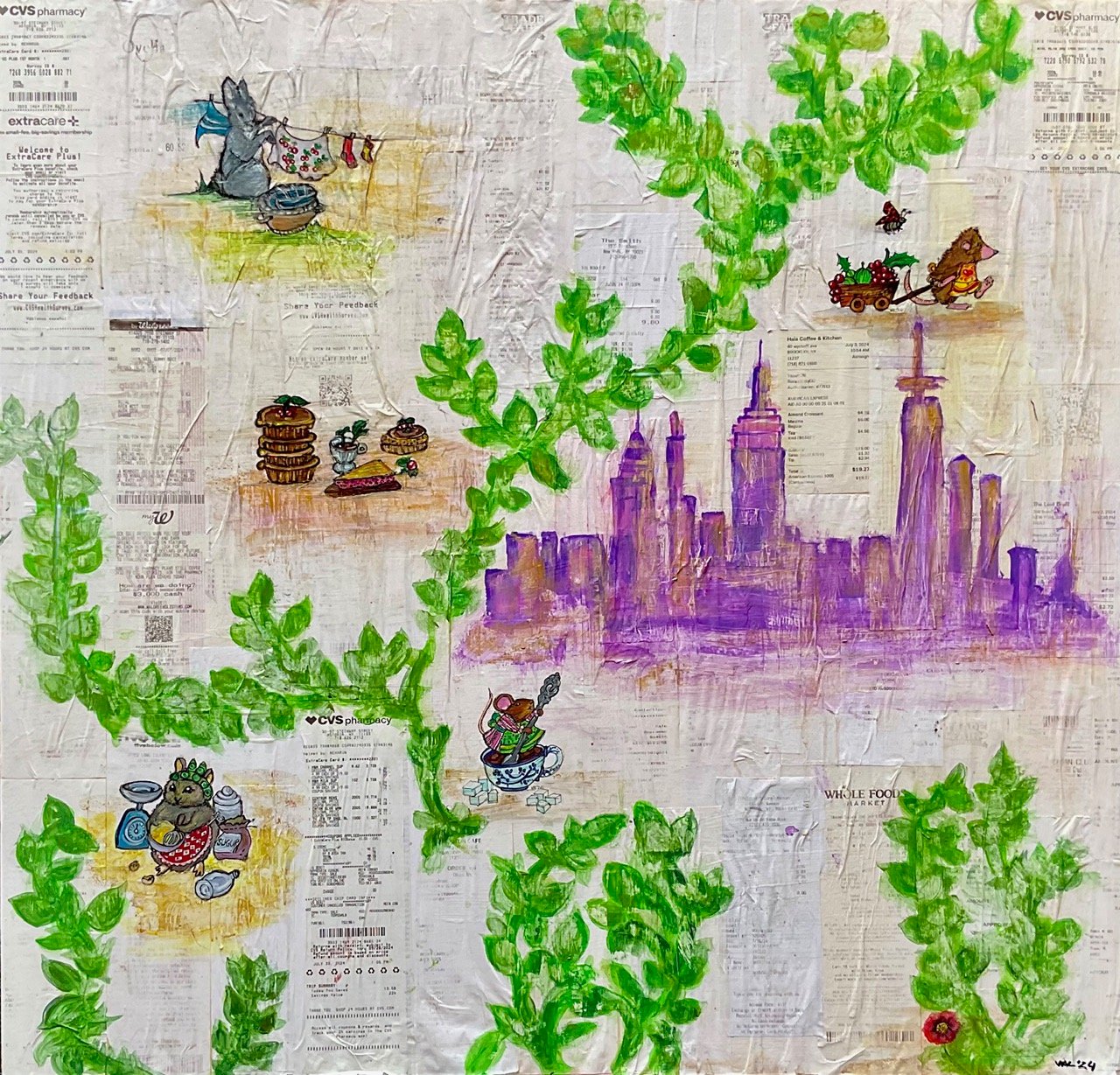
Valentina Secchi artwork exploring receipts and everyday life

When an Ordinary Receipt Becomes a Story

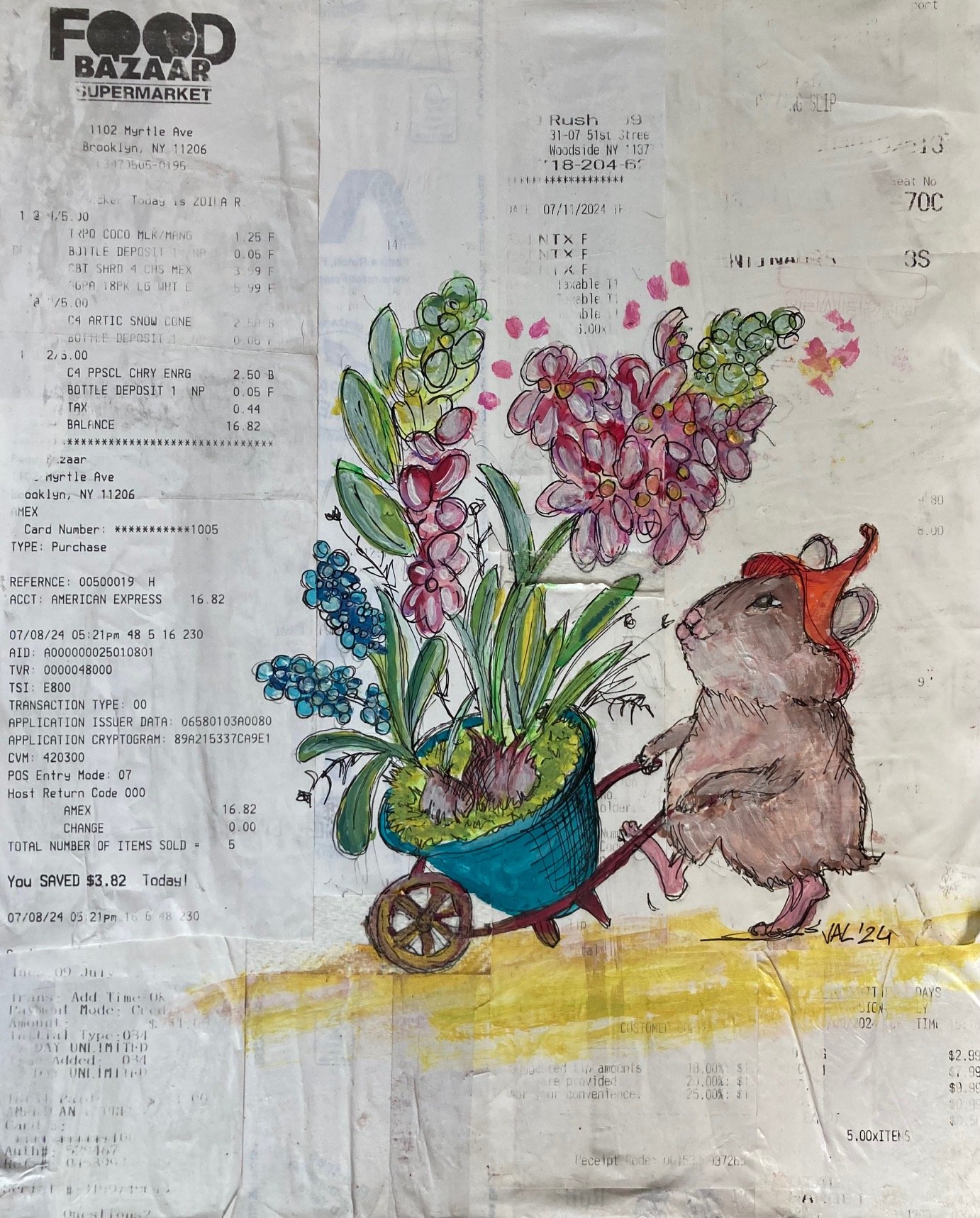
One of the most distinctive elements in Secchi’s practice begins with something most people barely notice: a receipt. Usually discarded moments after a purchase, this small piece of paper becomes a record of lived experience in her hands. It reveals where someone has been, what they needed, what they desired and what they could afford.

For Secchi, these everyday records hold stories that conventional images might overlook. A supermarket receipt can describe the cost of simply existing. Meanwhile, a collection of purchases from a journey can preserve the emotional geography of a particular place and time.

Works such as One Month in New York and 10 Days in Maui demonstrate this approach. Rather than treating receipts as meaningless financial documents, she incorporates them into imaginative compositions. Consequently, the ordinary becomes autobiographical, and the disposable becomes a lasting fragment of memory.

Colourful narrative contemporary painting by Valentina Secchi

A Creative Language That Began in Childhood

Drawing entered Secchi’s life long before she understood what it meant to be an artist. She began at just two or three years old. Even then, she could spend hours absorbed in images of her own making. The page offered a protected space, somewhere the outside world could not completely reach her.

As she grew older, that instinct developed through formal education and professional experience. Painting, illustration, architecture and design introduced different ways of thinking about form, space and communication. However, her deepest connection to art remained rooted in the simple act of making an image.

Over time, Secchi recognised that everyday life offered the richest source of inspiration. Ordinary objects, personal memories and familiar visual symbols gradually entered her compositions. Rather than abandoning the imaginative freedom of childhood, she found ways to bring it into conversation with adult experience.

Today, her paintings preserve that sense of discovery. They allow seemingly unrelated images to coexist, creating narratives that feel personal without becoming entirely literal.

Valentina Secchi painting exploring consumer culture and city life

The Sweetness and Cruelty of Modern Life

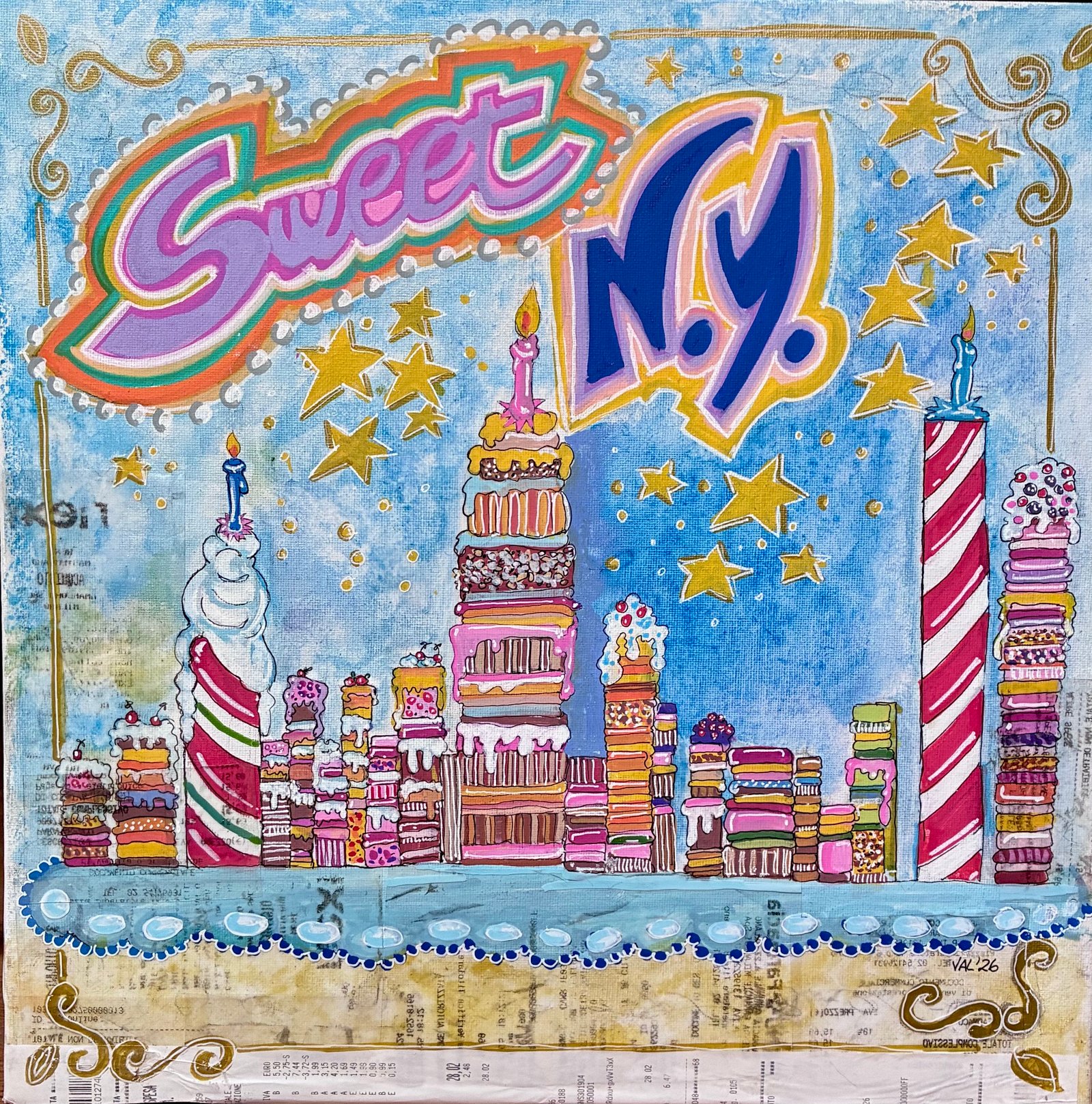
There is a deliberate tension between appearance and meaning in Secchi’s work. A landscape made of sweets might initially suggest childhood pleasure. Yet that same imagined city can also speak about the demanding and sometimes unforgiving nature of urban life.

She remains particularly attentive to the contradictions of consumer culture. Attractive products promise happiness, while everyday expenses place growing pressure on people’s lives. Cities offer freedom and possibility, but they can also create isolation and uncertainty.

Instead of presenting these contradictions through direct criticism, Secchi allows them to emerge through visual storytelling. Animals, familiar characters and colourful objects become carriers of more complex emotions. Their apparent innocence makes the underlying discomfort more noticeable.

This approach gives her paintings a distinctive emotional rhythm. Viewers may arrive because of the colour, but the stories encourage them to stay. Beneath the playful imagery lies an awareness that beauty and difficulty often exist in the same moment.

Macadamia Art by Valentina Secchi exploring memory and imagination

Making Reality Possible to Live With

For Secchi, creating art has never felt like an optional activity. It is something she needs. Since childhood, drawing has offered a way to process experiences that might otherwise feel overwhelming. That relationship continues to shape her practice today.

Rather than turning away from difficult realities, she transforms them into images she can confront. A painful memory might become part of an imagined landscape. An uncomfortable observation may appear through a humorous character. Even a simple object can acquire a meaning that extends far beyond its original purpose.

Importantly, this transformation does not erase the experience behind the work. Instead, it changes how that experience can be approached. Colour creates distance without denying emotion, while imagination offers new ways to understand what has happened.

In this sense, Secchi’s art is not an escape from the world. It is a way of making the world more inhabitable. Painting gives form to what she has lived and creates space for the viewer to recognise something of their own experience.

Valentina Secchi Milan contemporary artist and Macadamia Art

Painting the World as It Needs to Be Seen

What ultimately connects Secchi’s different subjects is her sensitivity to contradiction. Beauty can exist beside discomfort. Humour can carry loneliness. An ordinary object may contain an entire personal history. Rather than choosing between these realities, she allows them to share the same canvas.

Her connection to Milan and New York adds another dimension to this perspective. Both personal experience and the complexity of city life inform her artistic imagination. As a result, her paintings often move between the intimate and the universal, transforming individual memories into images that others can interpret through their own lives.

Perhaps the clearest expression of her philosophy comes from a sentence she wrote herself:

“I don’t paint the world as I see it, but as I need to see it in order to inhabit it.” — Valentina Secchi

These words reveal the purpose behind her visual language. She does not attempt to make difficult realities disappear. Instead, she gives them different shapes, colours and possibilities. In doing so, Secchi reminds us that art can help us live with what we cannot always change.

For Best Art Gallery, this is what makes her practice compelling. Beneath the bright surfaces and imaginative characters lies a deeply human effort to understand experience and transform it into something that can be shared.

Stefanie Carola: Art You Can See With Your Hands

Stefanie Carola Vienna abstract artist

Art You Can See With Your Hands

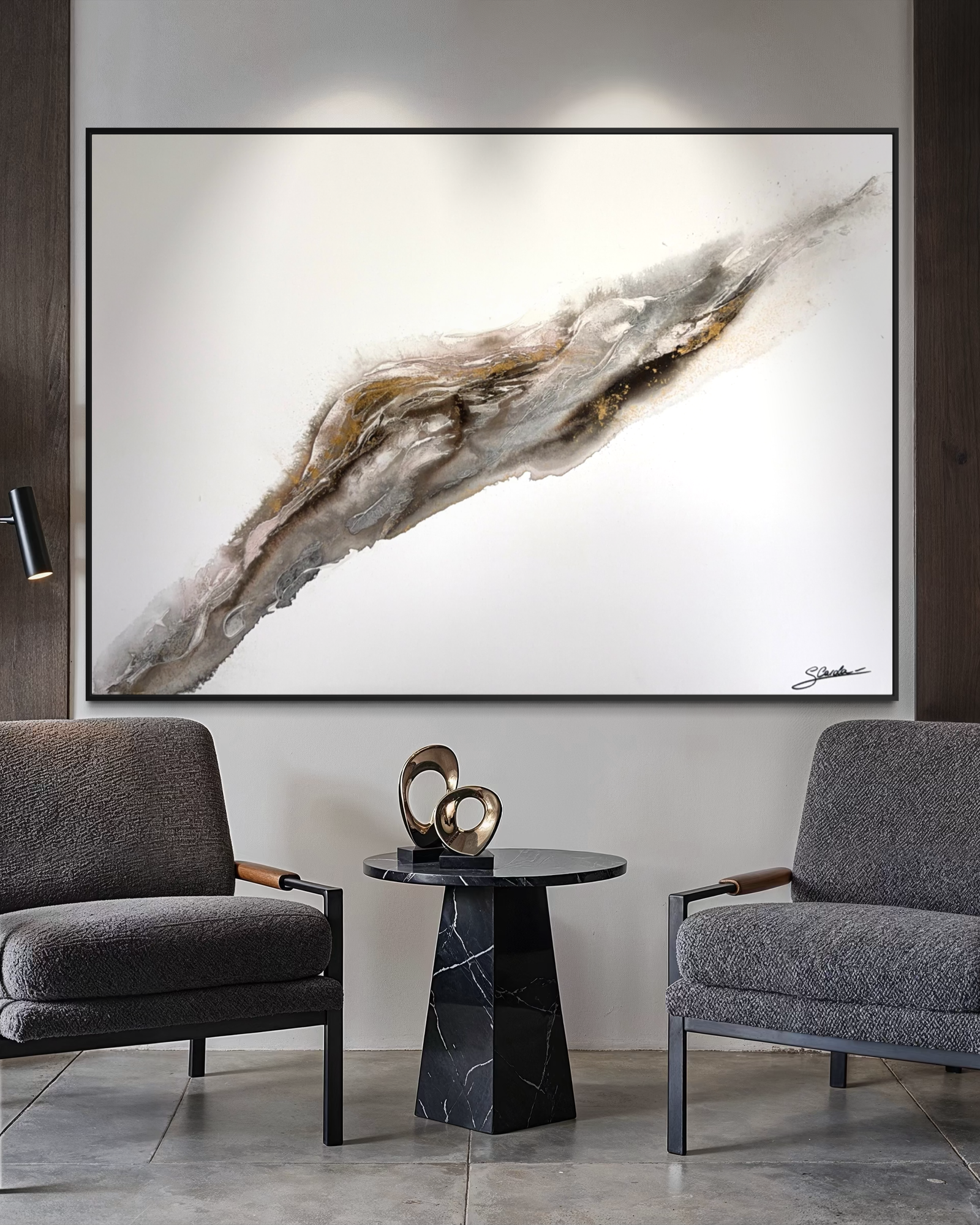
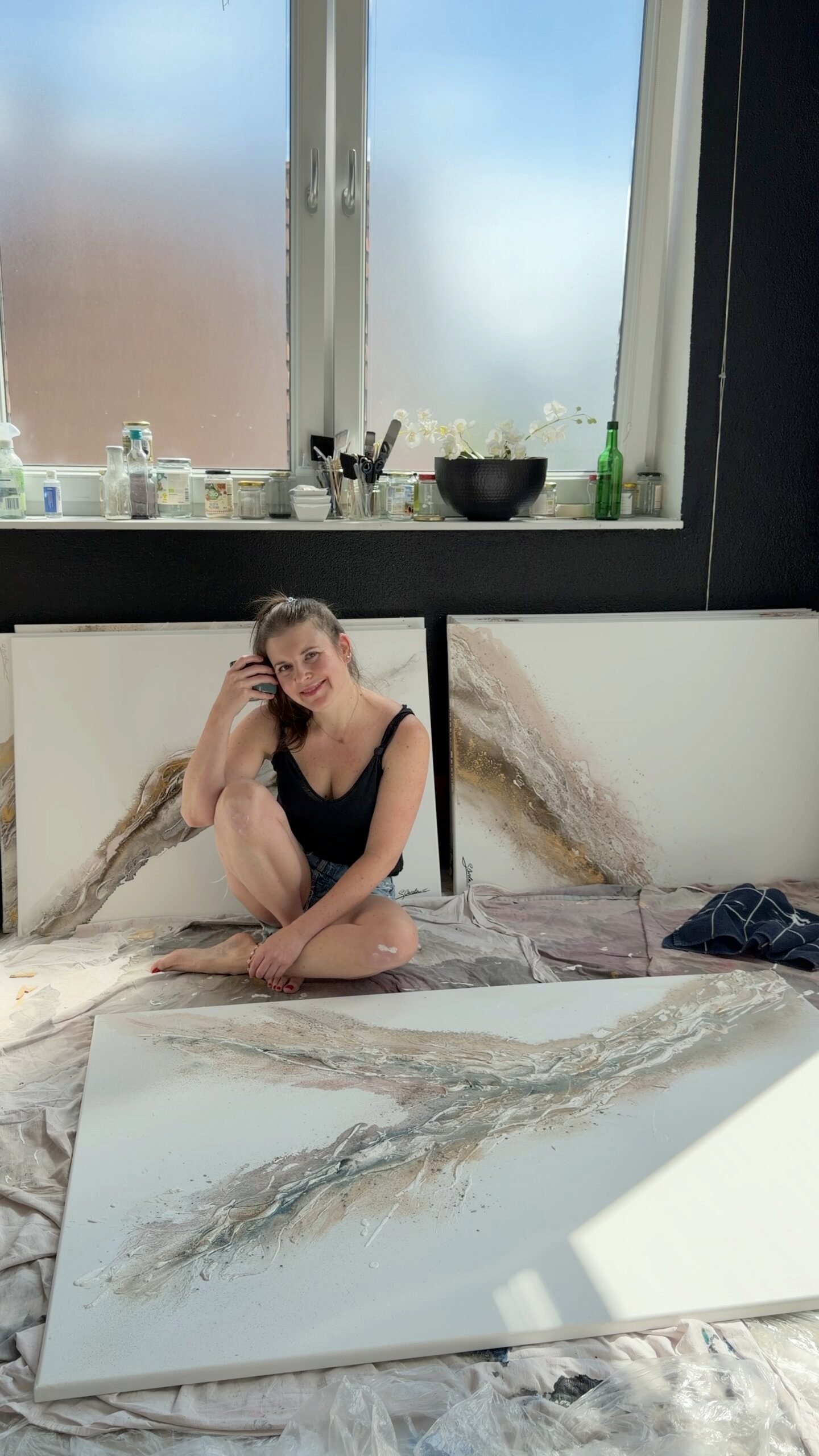
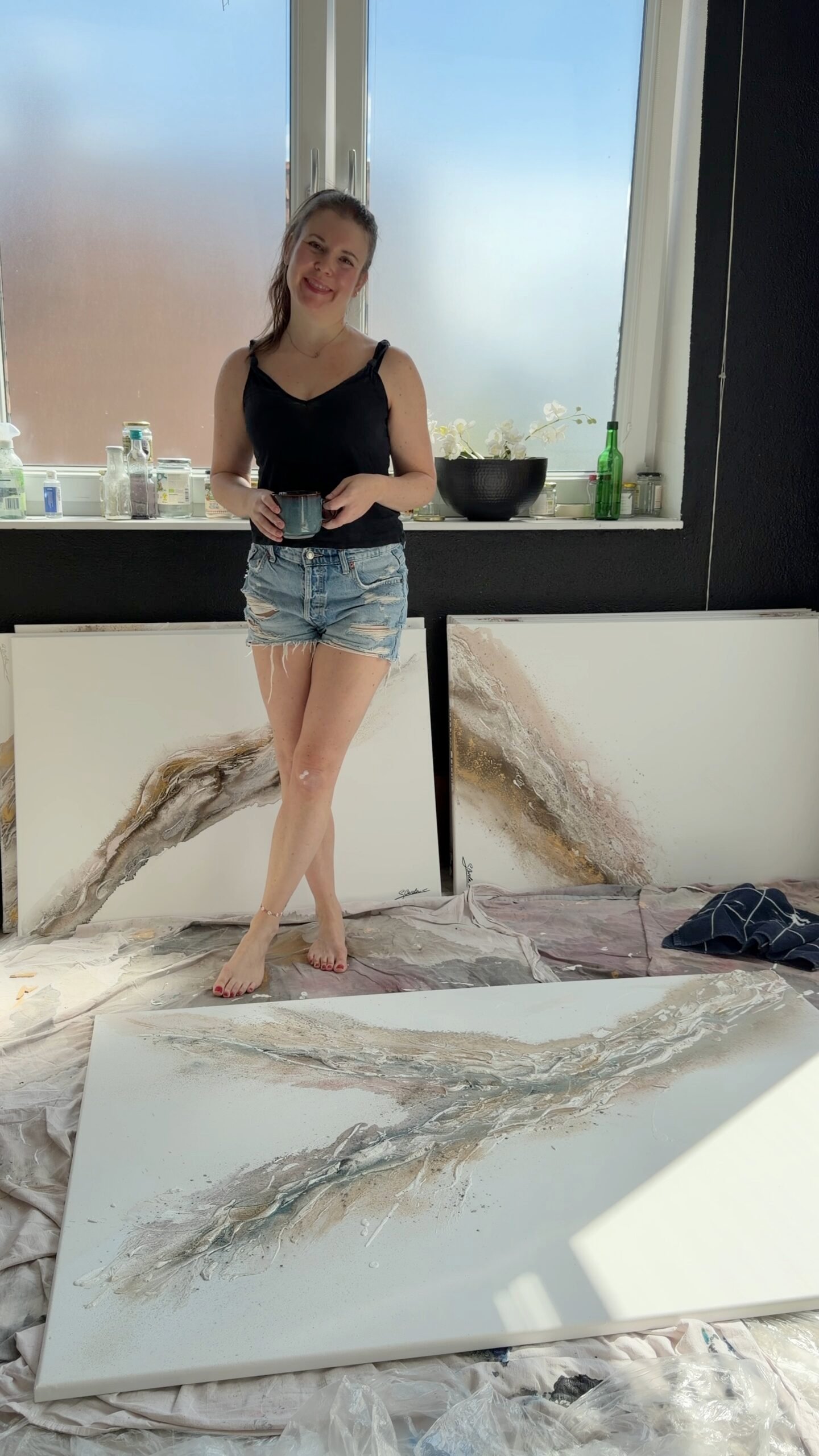
Stefanie Carola creates paintings that ask for more than a glance. Based in Vienna, she builds large, nature-inspired abstract works through heavy texture, earthy colours, carefully placed accents and touches of gold that have gradually become part of her visual signature. The surfaces are deliberately tactile. They invite the hand as much as the eye.

Yet the starting point is rarely an image of nature itself. Instead, Carola paints what remains after she experiences a moment in nature: water finding its way around a stone, wind moving through leaves, birds crossing an open sky or light shifting across a landscape. Her paintings do not attempt to reproduce these scenes. They hold onto their energy, rhythm and sense of presence.

Textured nature inspired abstract painting by Stefanie Carola

When Nature Becomes Material

Material plays a fundamental role in the way these paintings communicate. Carola works with vegan paints and modelling paste, using texture created from natural limestone and sand. Whenever possible, she sources materials from Austria or elsewhere in Europe. She also chooses archival-quality components because she wants each painting to retain its character for decades.

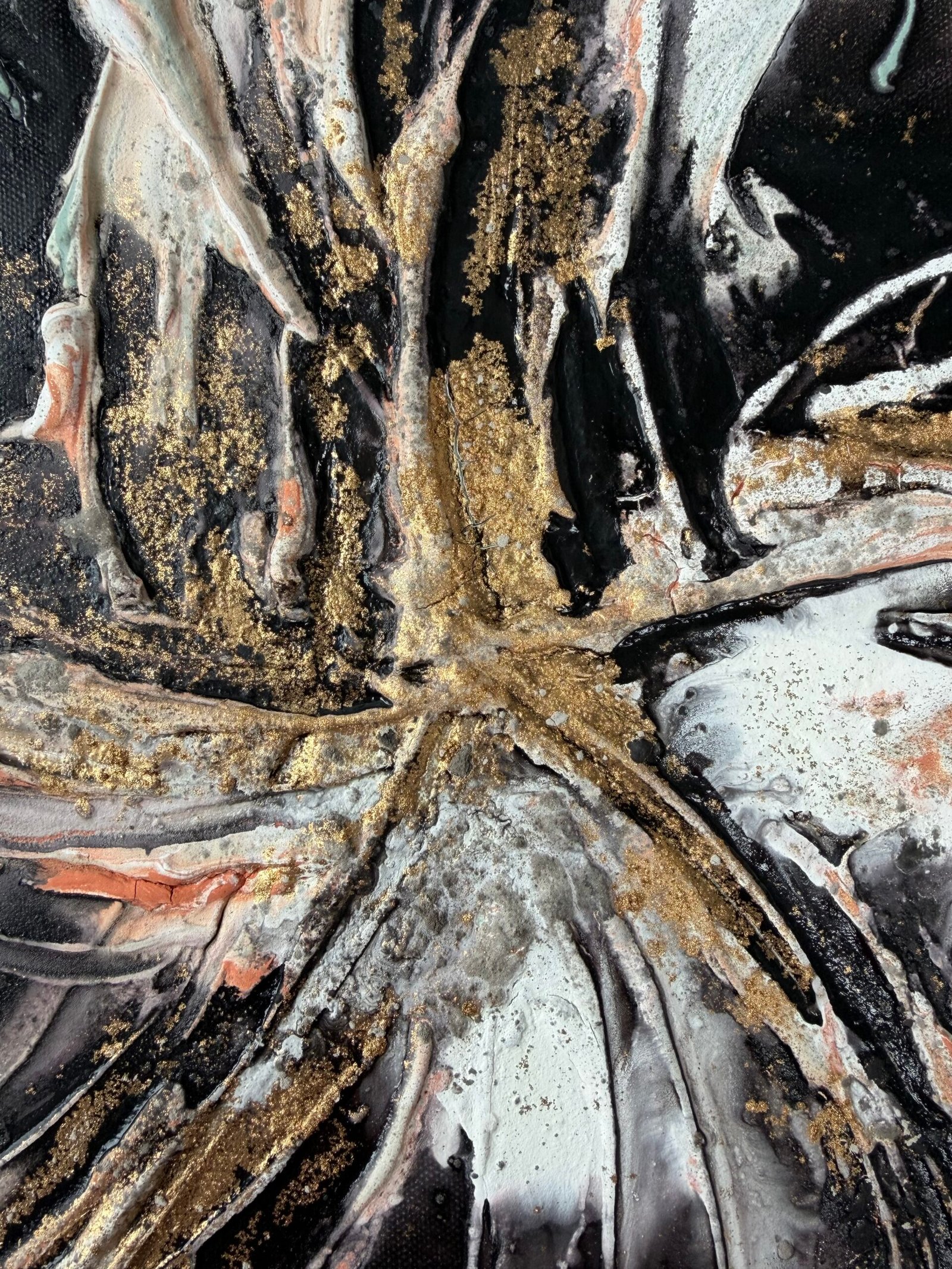
This physical construction gives each surface its own geography. Raised passages catch changing light, shadows settle into crevices and gold appears differently as the viewer moves around the work. Touch adds another dimension altogether. Texture therefore becomes part of how the work asks us to slow down and encounter it.

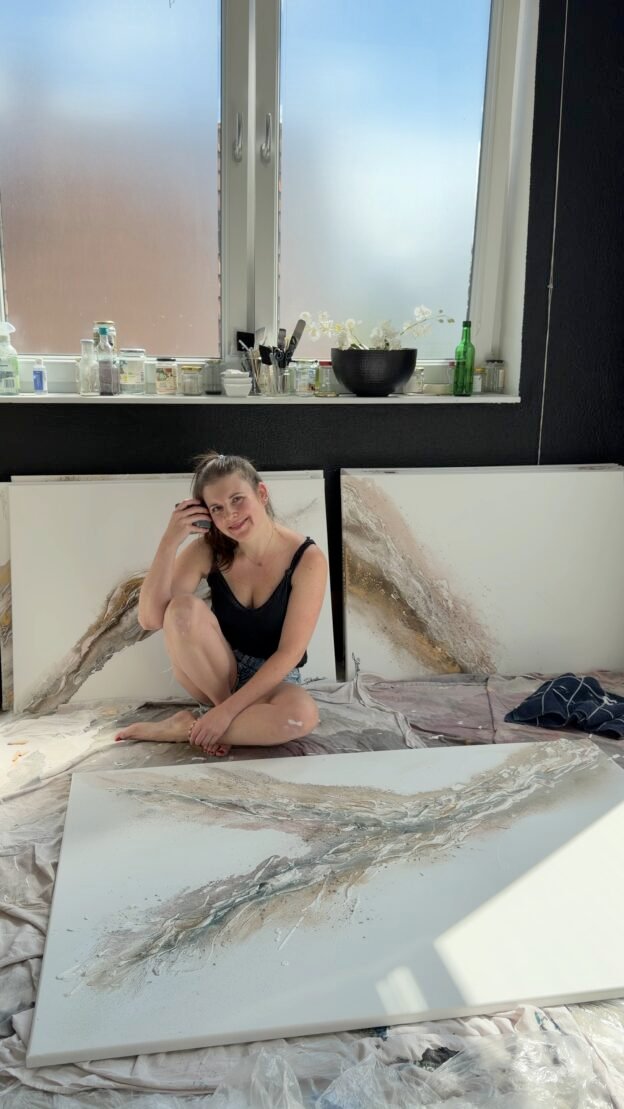
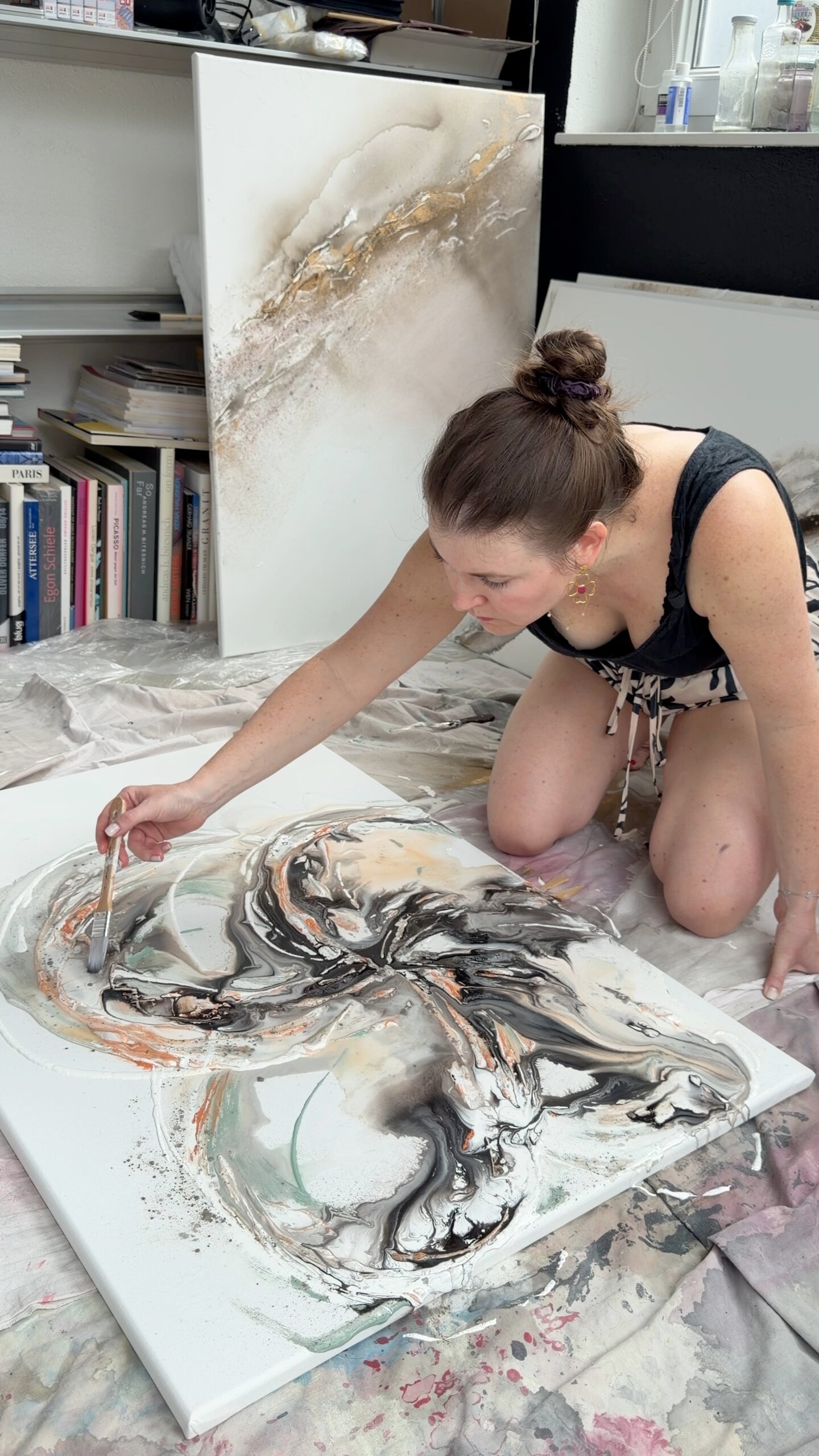
Stefanie Carola creating textured abstract art

The Long Way Back to Making

Creativity had been present from the beginning. As a child, Carola was rarely far from a pencil and later became equally fascinated by photography. She also questioned prescribed paths early, from conventional education to the assumption that adulthood should follow a predictable route through work and retirement.

For a time, she nevertheless tried that more familiar direction. Her studies moved between art school and marketing before she entered brand management and eventually founded Austria’s first low-carb brand. What followed became a substantial entrepreneurial chapter: a restaurant, nine books, television, radio, print and a growing team.

Success eventually created an unexpected problem. As the business expanded, Carola found herself managing creativity instead of practicing it. Other people were making while her own time disappeared into managing the structure around them. Recognising that distance from the act of creation became a turning point.

Organic abstract painting inspired by nature by Stefanie Carola

When the Mind Switches Off

Realistic drawing still holds an important place in Carola’s relationship with art, but abstraction offered something fundamentally different. Drawing, for her, involves knowing where the image is heading. A motif begins as a cat and, through skill and observation, should eventually become recognisably that cat. Abstract painting removes that certainty.

Instead, she allows pigments to flow, fold and connect inside a controlled space. The process echoes the structures she observes in nature, where complexity can emerge without appearing forced. Proportion, movement and balance begin to form intuitively, recalling patterns such as the golden ratio and Fibonacci spiral without requiring conscious calculation.

Her first abstract work made that freedom tangible. What she expected to become little more than an enjoyable experiment dried into something she found genuinely beautiful. Soon, rivers no longer appeared only as rivers; she began seeing pigments folding into one another everywhere. Within months, the first collectors arrived. Exhibitions followed in Vienna, Strasbourg and Milan, while her work also found a permanent public presence in Vienna.

Earthy textured abstract artwork with gold by Stefanie Carola

Painting as an Act of Presence

Behind the material beauty of the work sits a larger philosophy about how a life should be lived. Carola believes people are here to experience, feel, touch and create rather than simply surrender their best years to structures they never consciously chose. Painting has become one of the clearest expressions of that belief.

More importantly, the practice changed her understanding of presence. Finding meaningful work did not simply make the hours spent painting more alive; it altered the atmosphere of the rest of the day. A mind that rarely stopped suddenly had somewhere to go. Through making, attention became quieter and more immediate.

This is also why the work remains personal even as it enters other people’s homes. Collectors make the practice sustainable, something Carola considers a gift, but they are not its original reason for existing. Painting begins as something she would continue to do regardless: an activity chosen for its own sake.

Stefanie Carola tactile contemporary abstract artwork

The Balance Between Looking and Feeling

Carola sees the world as complete rather than waiting for correction. That outlook shapes the balance inside her paintings. Light requires darkness; stillness needs movement. One area gives the eye somewhere to rest while another keeps it travelling across the surface. She finds similar relationships in mountains, rivers and organic formations, and brings that instinctive balance into her work.

What the painting depicts consequently becomes less important than what happens while someone encounters it. A work may carry the energy of a breaking wave, light across a mountain or wind moving through a tree without literally representing any of them. The experience remains open.

Picasso’s reflection that it took him years to paint like Raphael but a lifetime to paint like a child resonates strongly with Carola because, for her, the essential challenge is not technique but letting go. Her own work arrives at that freedom through material, intuition and touch. When someone runs a hand across one of these textured surfaces and stops thinking for a moment, even briefly, the painting has fulfilled its purpose.

Nissfa: Painting the Emotions, Memories and Stories Beneath the Surface

Nissfa contemporary artist

Emotion, Memory & the Human Story

At the center of Nissfa’s developing practice is a fascination with what people carry beneath the surface. The self-taught contemporary artist, currently based in Riyadh, Saudi Arabia, draws from emotions, memories, relationships and human experiences to create paintings that move between visible form and internal feeling.

Contemporary approaches meet cubist influences within this evolving visual language. Faces fragment, forms separate and reconnect, while color, texture and composition shift according to the emotional character of each work. Rather than following a rigid stylistic formula, Nissfa is building an artistic identity through exploration — searching for a language that feels increasingly personal and recognizable.

Emotional contemporary painting by Nissfa

When Painting Became a Language

Art entered Nissfa’s life during a period shaped by profound loss. After a close friend passed away at a young age, painting appeared almost unexpectedly and became a way of processing emotions that were difficult to express through words. The canvas offered somewhere for grief, memory and feeling to exist without requiring explanation.

Although she later stepped away from painting for a time, returning to it changed her relationship with the medium. Creating an image was no longer enough. What mattered increasingly was the possibility of translating an experience into visual form — allowing a painting to hold a memory, a feeling or a story that language alone could not fully contain.

Cubist influenced contemporary artwork by Nissfa

A Life Shaped Across Places

Movement has also become part of the story behind the work. During the past four years, life has taken the artist through Germany, Lebanon, Qatar and Saudi Arabia. Constant change made it difficult to maintain the uninterrupted studio practice she wanted, yet those experiences also accumulated as another layer of memory.

Each place brought different surroundings, encounters and periods of transition. Now based in Saudi Arabia, Nissfa sees the present moment as the beginning of a new chapter — one in which her practice can receive greater time, direction and space. That sense of becoming is important. The work does not pretend to have reached a final destination; its identity is being discovered through the act of making it.

Expressive color and geometric composition by Nissfa

Building a Visual Identity

The desire to develop a distinctive artistic language keeps the practice moving forward. Nissfa experiments with composition, fragmented structures, texture and changing relationships between colors, searching for combinations capable of carrying the emotional weight of an idea.

There is deliberately no single fixed palette or formula. One painting may require intensity, while another calls for restraint. The choices emerge from the story, memory or feeling behind the work. This freedom allows experimentation to remain central to the process while gradually revealing recurring characteristics that can become recognizably her own.

For Best Art Gallery, this period of exploration is especially compelling because the search itself remains visible. Rather than hiding uncertainty, the work allows discovery to become part of its identity.

Fragmented figurative painting exploring human emotion by Nissfa

What Exists Beneath the Surface

The human experience is rarely as simple as what can be seen from the outside. Nissfa is particularly interested in emotions people leave unspoken, memories carried privately, connections formed with others and the internal conflicts that may remain invisible to everyone around them.

This interest helps explain the recurring presence of faces, fragmented forms and symbolic elements. Breaking the figure apart can become a way of suggesting psychological complexity rather than physical appearance alone. A face does not need to reveal everything. In fact, what remains unresolved may be precisely what allows the viewer to enter the work.

The paintings therefore operate somewhere between personal expression and open interpretation. They begin with the artist’s experience, but they do not have to end there.

Nissfa artist with contemporary artwork

Leaving Space for Another Story

Perhaps the most important relationship begins after a painting is finished. Nissfa does not want every symbol or emotion to arrive with an explanation attached. Instead, enough space is deliberately left for another person to bring their own memories, associations and experiences to what they see.

That openness reflects the way the artist understands painting itself. A work can originate in one person’s story and still awaken something entirely different in someone else. Meaning does not have to remain fixed to the circumstances that produced it.

Thomas Merton’s words, “Art enables us to find ourselves and lose ourselves at the same time,” capture something essential within this developing practice. For Nissfa, painting offers exactly that possibility: a place where personal emotion can take physical form, yet remain open enough for another person to discover a story of their own.

Zélie Show: Painting Beyond Appearances Through Intuition and Imperfection

Zélie Show contemporary artist and painter

Between Intuition and Imperfection

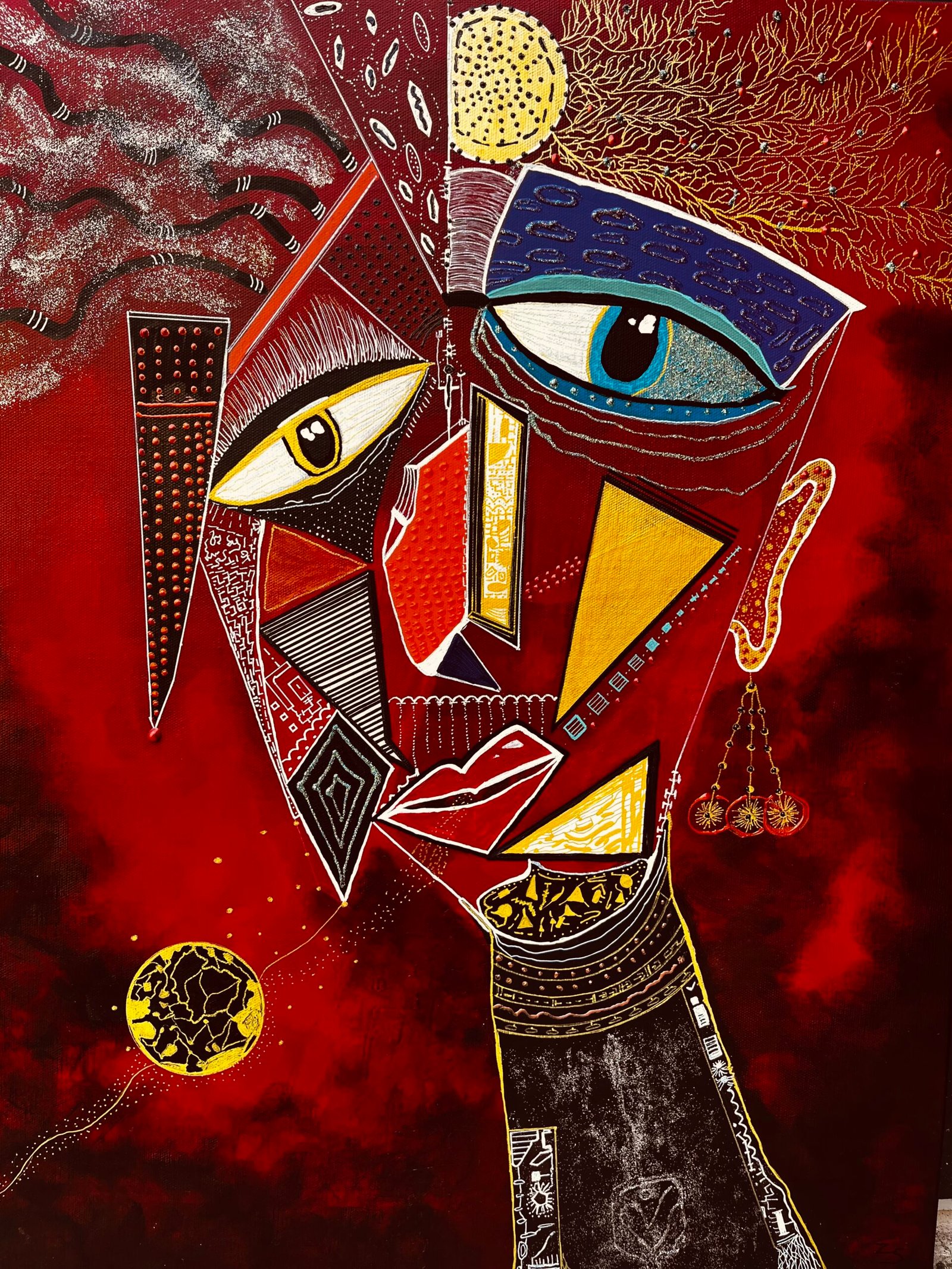
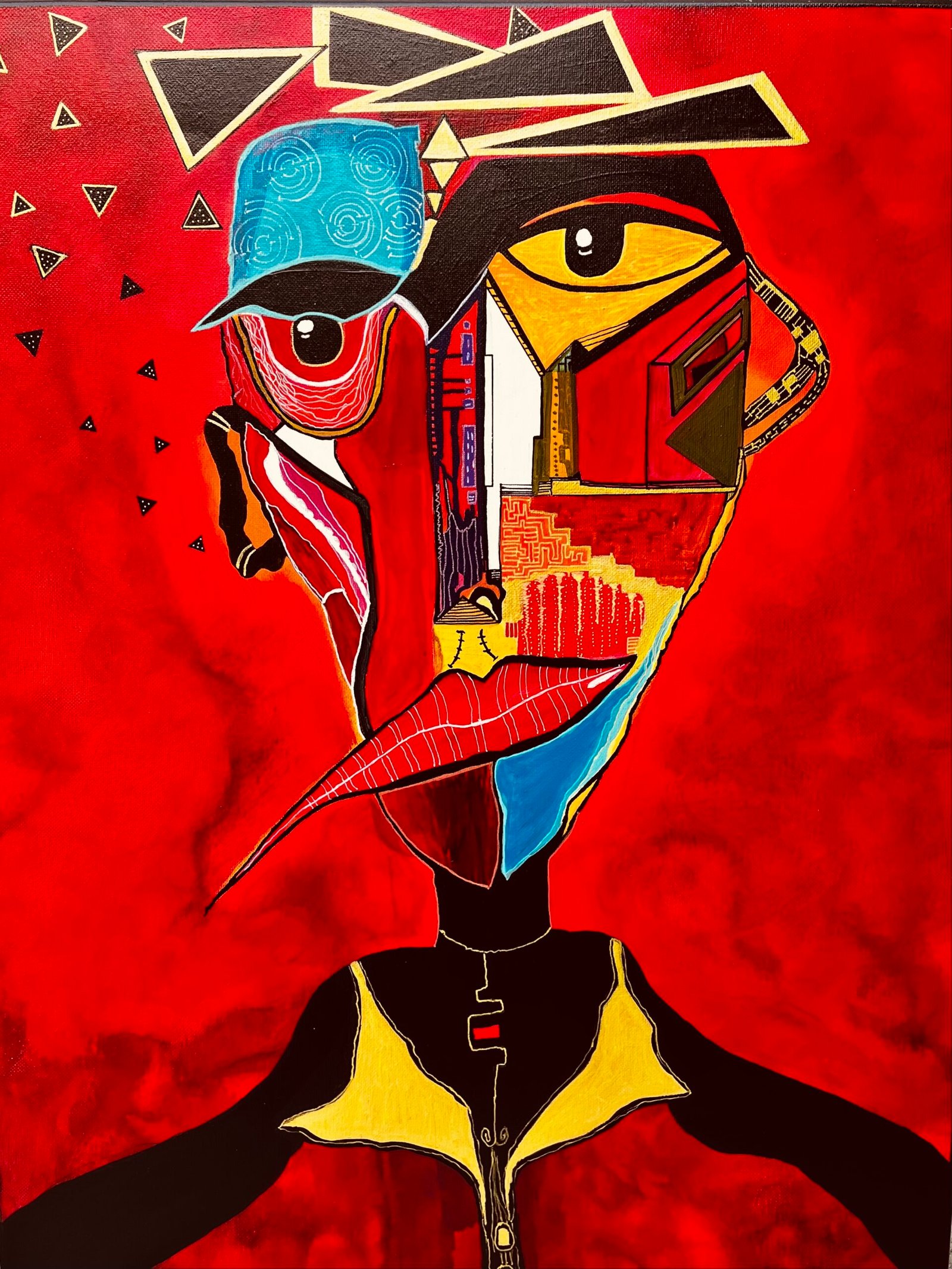
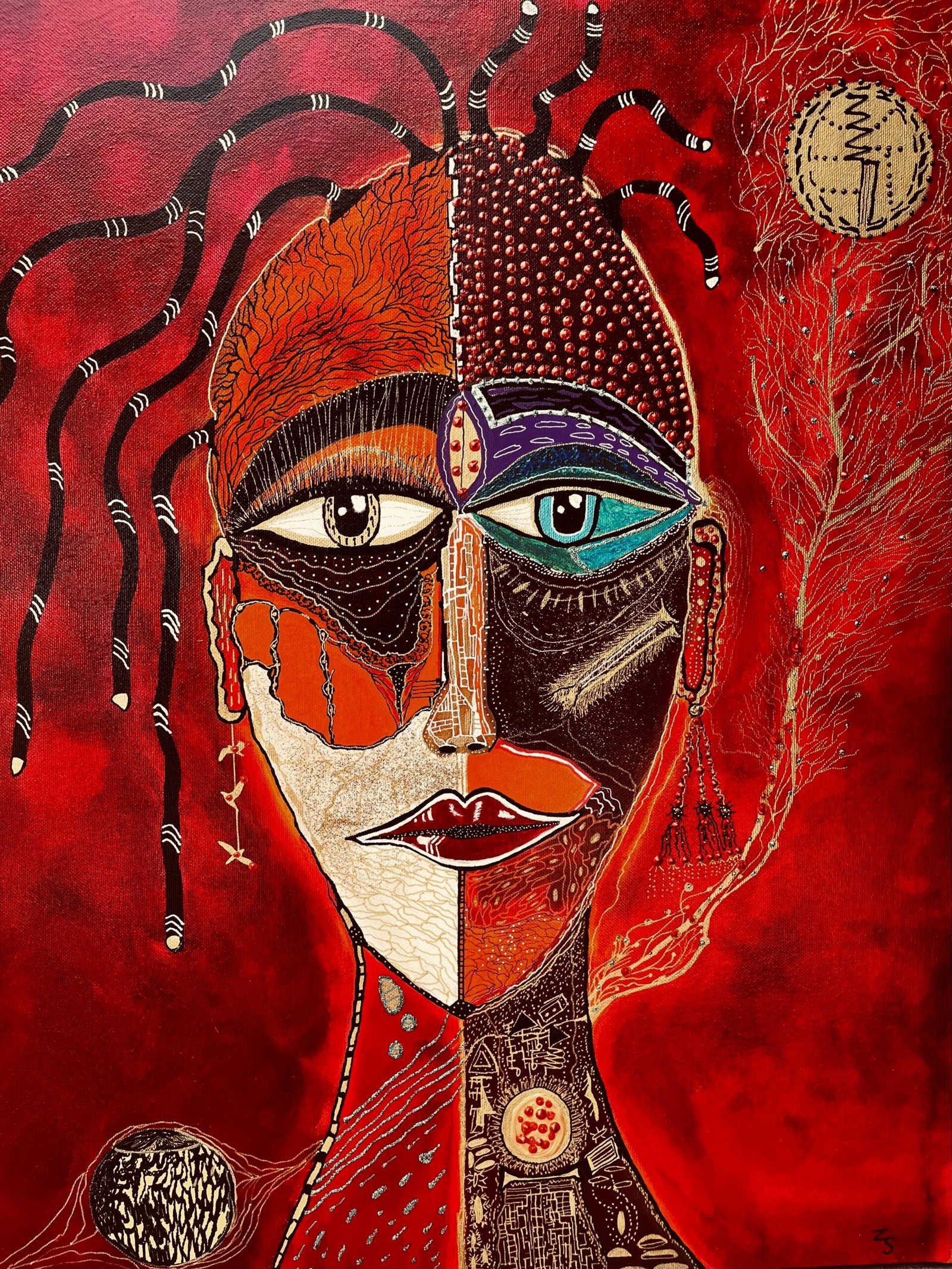
Zélie Show approaches painting as an exploration rather than a search for perfection. A self-taught artist, she works at the boundary between figurative painting and a freer, instinctive language in which recognizable forms are allowed to shift, fragment and transform. The human face sits at the center of this evolving world, but faithful representation is rarely the destination.

Instead, proportions move, contours loosen and color becomes emotionally charged. Faces may appear deconstructed or deliberately distorted, creating a tension between familiarity and uncertainty. What interests Zélie is not simply the face itself, but the presence that can emerge through it: fragility, strength, tension or an emotion that is felt before it can be named.

Deconstructed figurative portrait painting by Zélie Show

When the Painting Begins to Answer

Materiality plays an equally important role in Zélie’s practice. Paint is not simply a tool used to construct an image; it becomes a language in itself. Surfaces preserve gestures, hesitation, accidents and transformations, allowing the process of creation to remain visible within the finished work.

A painting often begins with little more than an intuition, a sensation or a loose direction. From there, Zélie allows the work to respond. An unexpected color can open a new path. A form can redirect the composition. Even what initially appears to be a mistake may become one of the painting’s most important elements. Rather than forcing the work toward a predetermined result, she accompanies it until it begins to acquire a presence of its own.

Expressive contemporary portrait artwork by Zélie Show

A Language Built Through Experience

Zélie arrived at painting without formal artistic training. Curiosity came before certainty, and experimentation became her education. She learned through making, observing, failing, beginning again and gradually trusting discovery more than predetermined methods. That self-directed path continues to shape the openness of her practice today.

Her wider life has also entered the work. Years spent interacting with people strengthened her attention to behavior, expression and everything that can exist behind appearances. Travel expanded that vocabulary further. Different landscapes, cultures and encounters altered the way she perceived the world, while African influences in particular found a natural place within her visual imagination.

These experiences have accumulated like layers of paint. Rather than fixing her artistic language in place, Zélie allows it to change alongside her.

Textural figurative painting exploring imperfection by Zélie Show

The Moment of Transformation

One of the experiences that keeps Zélie returning to the studio is what she calls the “moment of transition.” A new canvas may begin with searching, hesitation and uncertainty. Then something changes. A color, shape, material gesture or unexpected relationship suddenly creates a direction, and what had been a question begins to feel like a presence.

This transformation explains why imperfection matters so deeply within her work. Total control can close possibilities too early. An accidental mark can contain energy, while something initially destined to be erased may eventually give a painting its character. Zélie wants the work to retain that sense of life — something spontaneous that has not been polished until every uncertainty disappears.

Painting therefore becomes both an act of freedom and a period of introspection. The external world quiets, attention narrows and the emerging image becomes a space in which instinct can operate without needing to explain itself.

Zélie Show figurative art exploring perception and identity

Looking Beyond What Seems Certain

Beneath the expressive surfaces lies a larger question about perception. Zélie is fascinated by the distance between reality and what we believe ourselves to be seeing. History, memory, sensitivity and cultural references shape every encounter with the world. What feels obvious may simply be something we have learned to recognize in a particular way.

Her paintings enter precisely this uncertain territory. Familiar forms are shifted enough to interrupt immediate recognition. A face remains a face, yet its proportions, colors or structure ask the viewer to look again. The purpose is not to uncover one hidden truth, but to make space for multiple ways of seeing.

For Zélie, painting can therefore question certainty without replacing it with another certainty. The work may leave behind a doubt, an association, a memory or simply the feeling that something remains beyond what we can immediately understand.

Zélie Show artist exhibition and contemporary paintings

When the Viewer Enters the Work

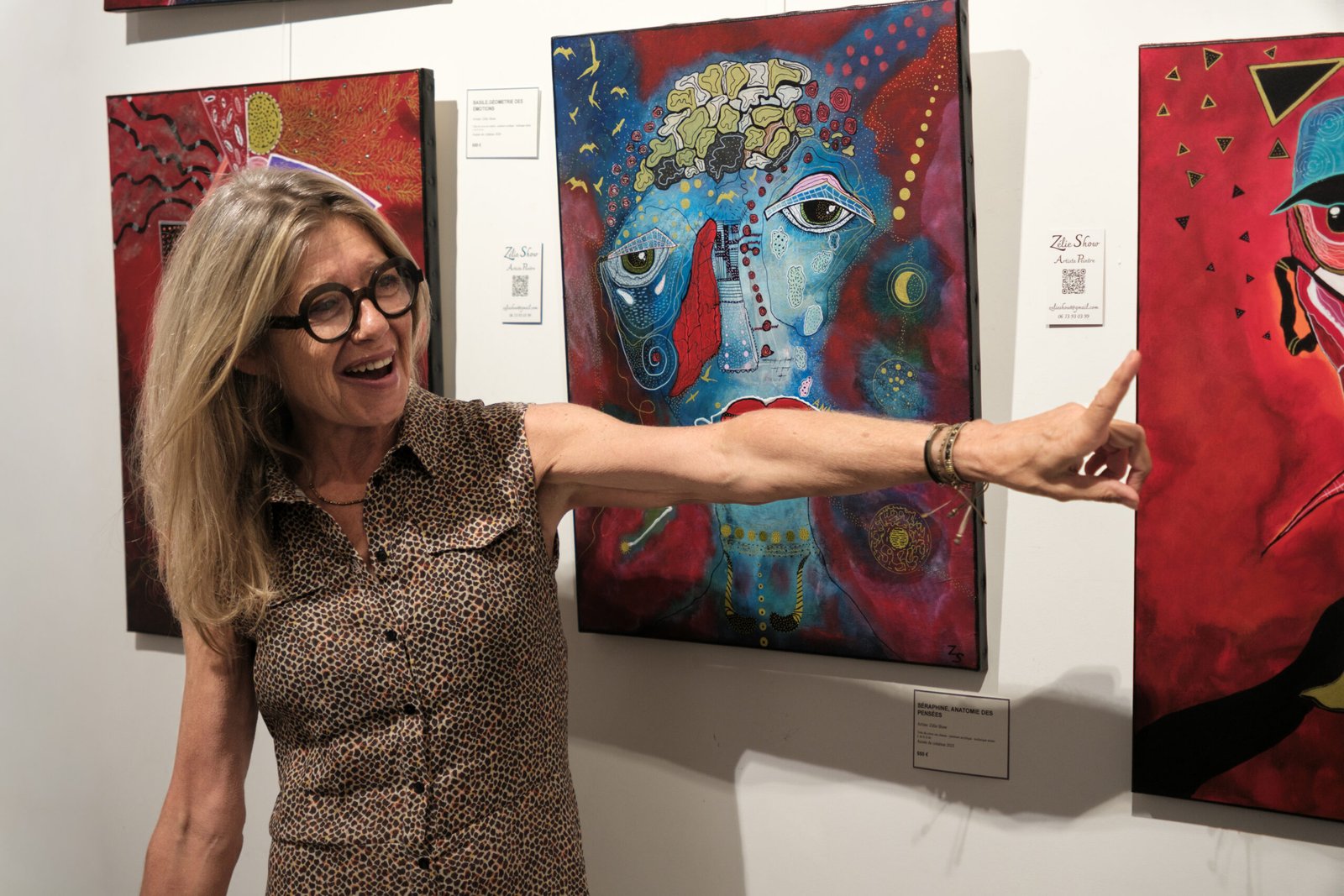
Zélie’s paintings have already travelled beyond the studio through exhibitions in cities including Paris, Casablanca and Valencia. These presentations have introduced another essential element into her practice: the viewer. Once a painting leaves her hands, its meaning no longer belongs entirely to the person who created it.

People bring their own memories and experiences to an artwork. During exhibitions, viewers have shared stories and emotions inspired by her paintings that Zélie herself had never imagined while making them. She sees these encounters as part of the continuing life of the work. The painting becomes a meeting point between two inner worlds rather than a message with only one interpretation.

A phrase Zélie values captures this approach: “I do not paint what I see; I paint what I feel.” Regardless of its uncertain attribution, the idea resonates with her practice. Painting, for Zélie, is not about remaining faithful to visible reality. It is about transforming perception into something another person might encounter, question and ultimately feel for themselves.

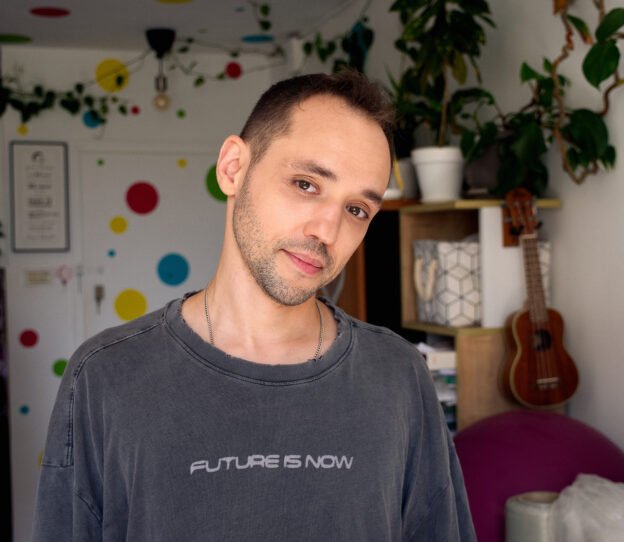
Andrii Gardu: Turning Chaos Into Form Through Art, Material and the Human Condition

Andrii Gardu multidisciplinary artist

Life as the Main Medium

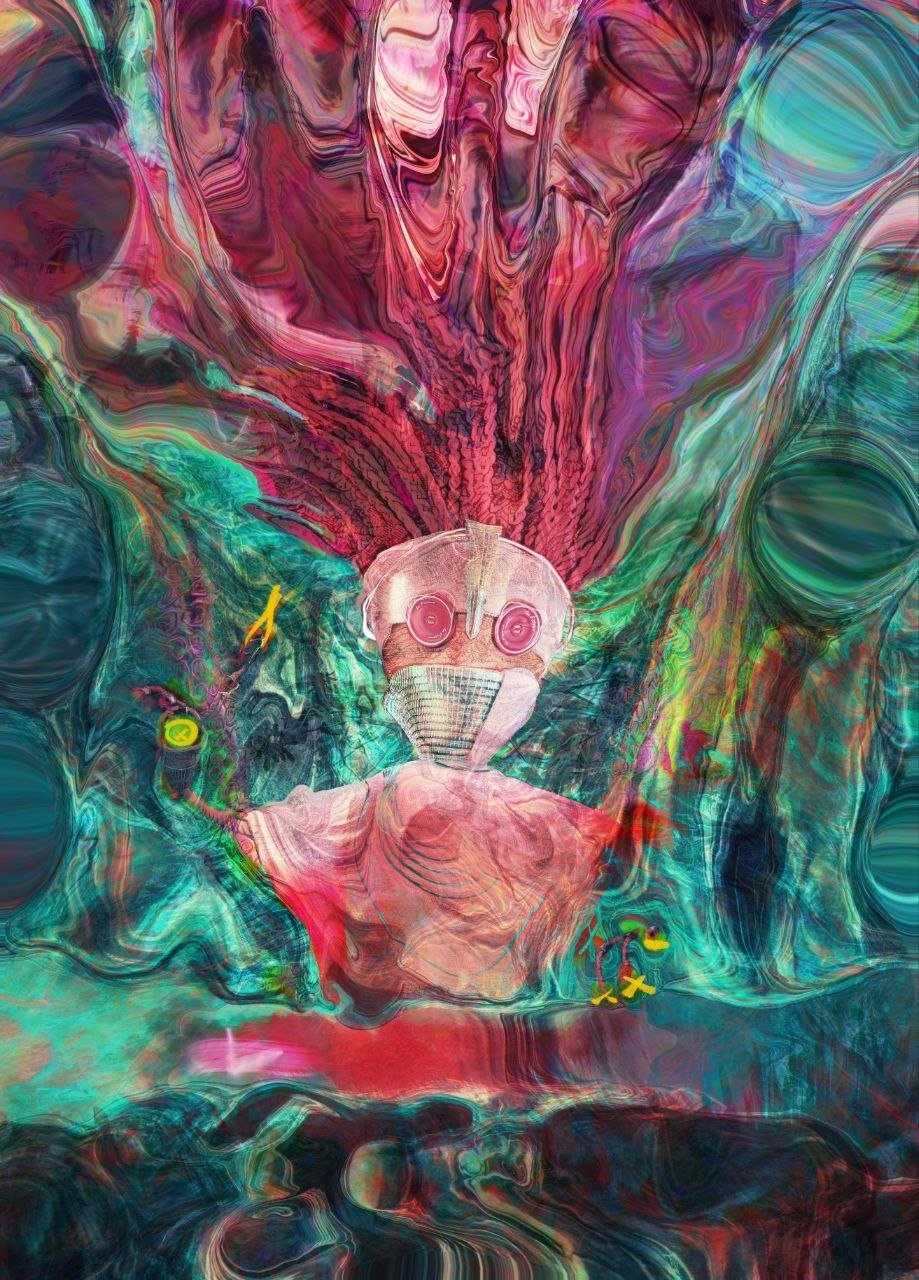
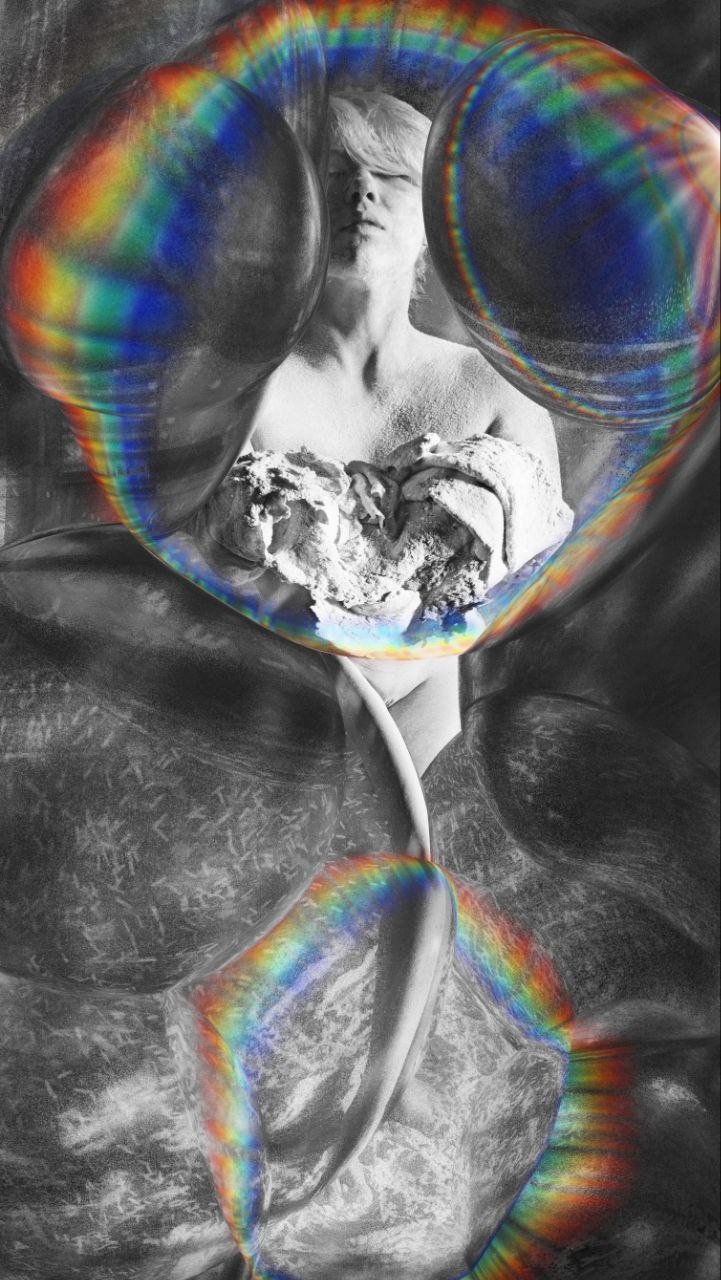
Andrii Gardu’s practice begins where conventional artistic categories start to break down. Originally from Kyiv and now based in Tel Aviv, the self-taught multidisciplinary artist works across photography, video, digital art, installation and experimental materials. Lab-grown meat, mushroom leather, construction materials and medical imagery can all enter his work when they serve the idea.

Rather than committing to a single medium, Gardu follows the questions behind each project. The psyche, biotechnology, identity and material transformation repeatedly intersect. As a result, his practice treats art less as a fixed discipline and more as a method for examining what it means to inhabit a changing human body and an unstable world.

Andrii Gardu contemporary experimental art

Becoming the Artist He Avoided

For years, becoming an artist was something Gardu resisted. His parents were artists, but their lives were also affected by mental illness and addiction. His grandmother raised him, and by his early twenties he had lost both parents. Those experiences complicated what an artistic life represented to him.

Instead, he built stability through technical disciplines. Sixteen years in video production, 3D, design and creative direction gave him an extensive visual vocabulary. Yet those skills were largely used to construct images for other people. The shift came when his wife, Liza, recognized what he had struggled to accept: beneath the technical career was an artist who had already learned many different languages for making art.

Experimental biotechnology artwork by Andrii Gardu

Giving Chaos a Physical Form

Chaos is not simply a subject within Gardu’s work; it is something he attempts to translate into physical form. His life has moved through unstable family structures, immigration, addiction, war and rapidly changing technology. Art gives him a way to examine the pressure created by those forces rather than pretending they can be neatly resolved.

This is where unusual materials become essential. Cultivated meat can resemble death while raising questions about slaughter. Mushroom leather exists somewhere between organism and manufactured object. Raw dough changes under every touch. Each material carries its own tension before Gardu even begins to work with it.

Andrii Gardu artwork exploring body identity and technology

What Remains After Damage

Resilience appears throughout this practice, although not as a simple story of overcoming hardship. Gardu is more interested in what remains after damage. He asks what changes, what disappears and what refuses to leave. The body becomes particularly important within these questions.

Medical scans can turn hidden biological structures into images, while organic materials blur the boundary between living matter and object. In this context, technology does not sit opposite humanity. Instead, science, memory, emotion and the physical body become different ways of investigating the same condition: how a person changes under pressure while continuing to exist.

LA Gardu conceptual multidisciplinary artwork

Identity as Something We Construct

Even the name Gardu carries a story about constructed identity. It began as a writer’s name that Andrii invented when he was young. Years later, he and Liza legally adopted Gardu as their family name when they married. Something imaginary had crossed into lived reality.

That transformation mirrors a larger concern within the work. Gardu sees identities, nations, technologies and belief systems as structures people create partly to produce stability. Pressure, however, can expose their limits. Working independently and together with Liza as LA Gardu, he explores the distance between the identities people construct and what remains when those structures begin to shift.

Andrii Gardu multidisciplinary contemporary art

Looking at Reality Without the Mask

Ultimately, Gardu does not use art to create distance from reality. He uses it to move closer. Every project offers another way to examine the gap between appearance and experience, control and instability, destruction and survival. Curiosity keeps that investigation moving. One work may begin with biotechnology, another with a circulatory scan, raw dough or an unexpected construction material.

Two quotations he returns to illuminate different sides of this worldview: James Joyce’s “Nature abhors a vacuum” and the line “To dispel the darkness, a single candle is enough” from The Last of Us. Between absence and illumination lies much of the territory Gardu continues to investigate. The medium may change from one project to another, but the underlying material remains remarkably consistent: life itself.

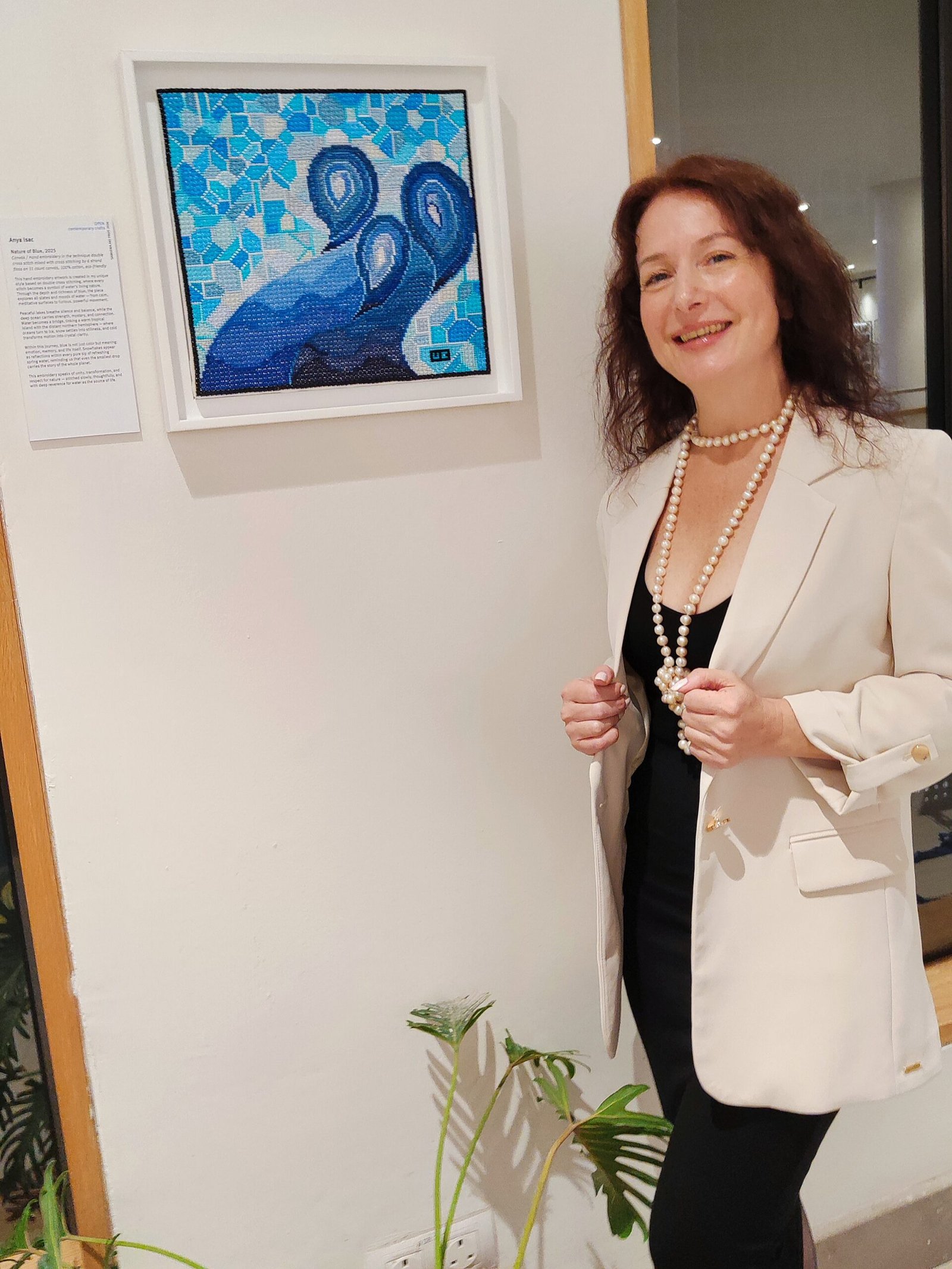
Anya Isac: Reimagining Double Cross Stitch Through Contemporary Embroidery Art

Anya Isac contemporary embroidery artist

Thread as a Contemporary Language

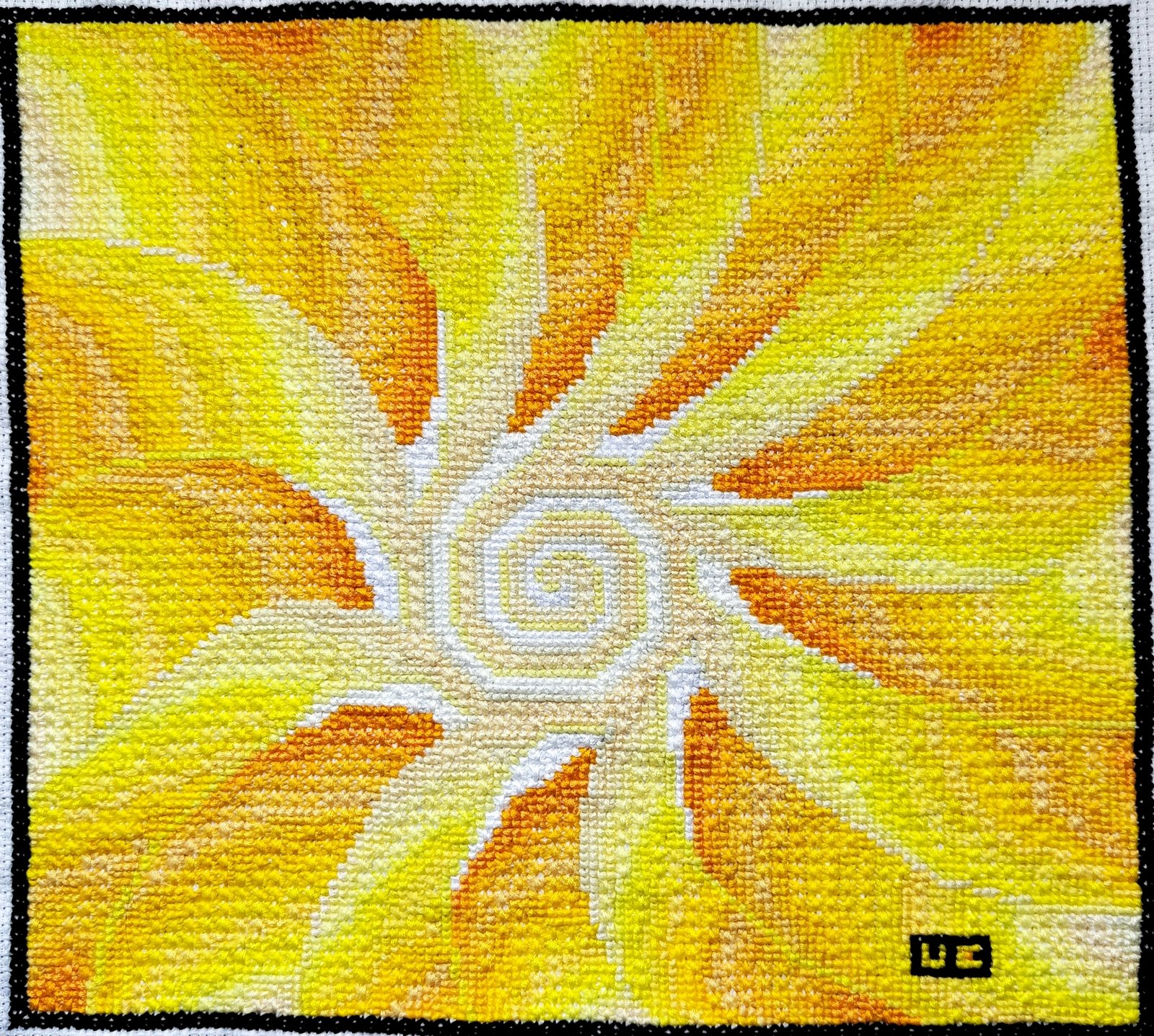
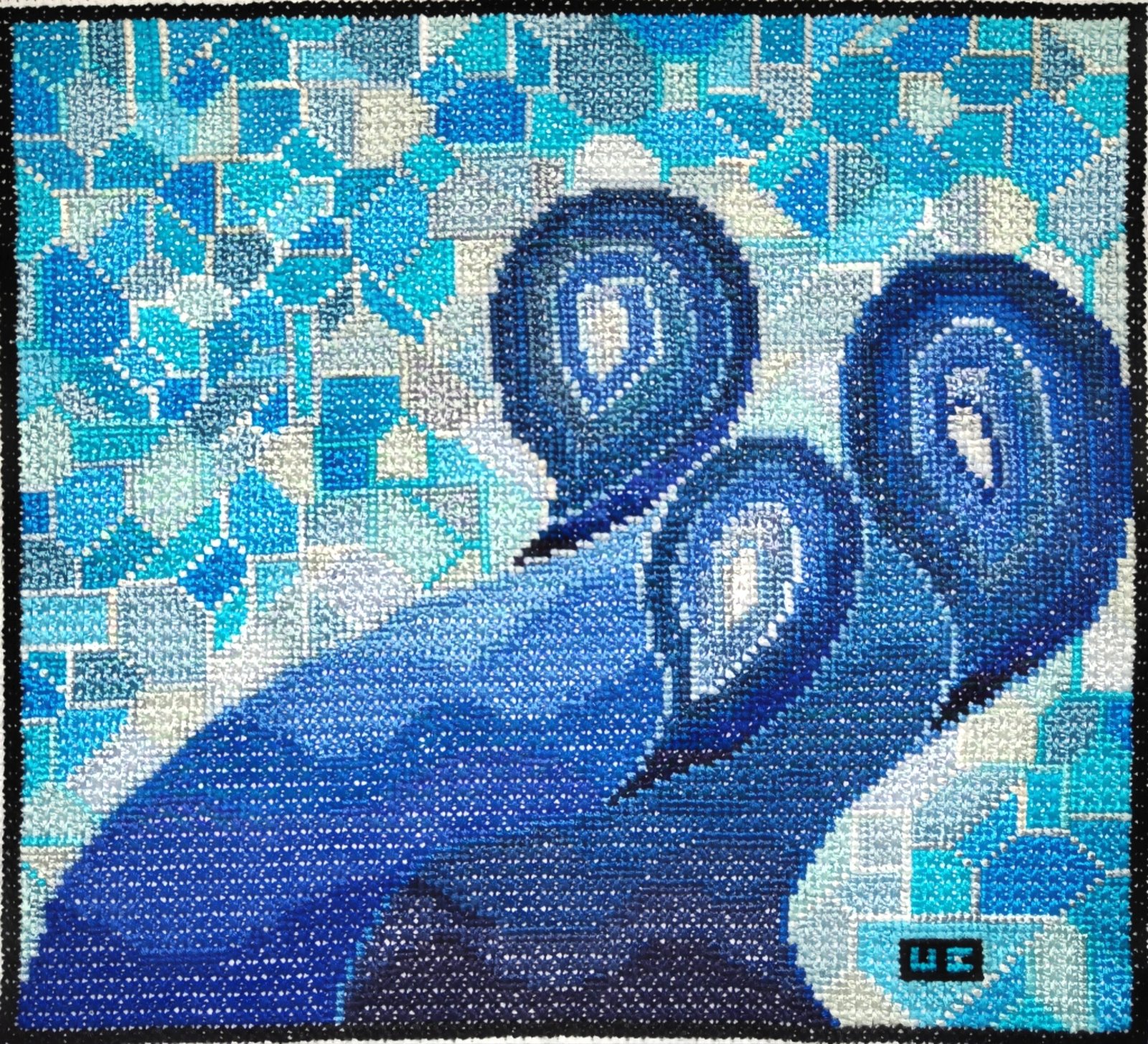
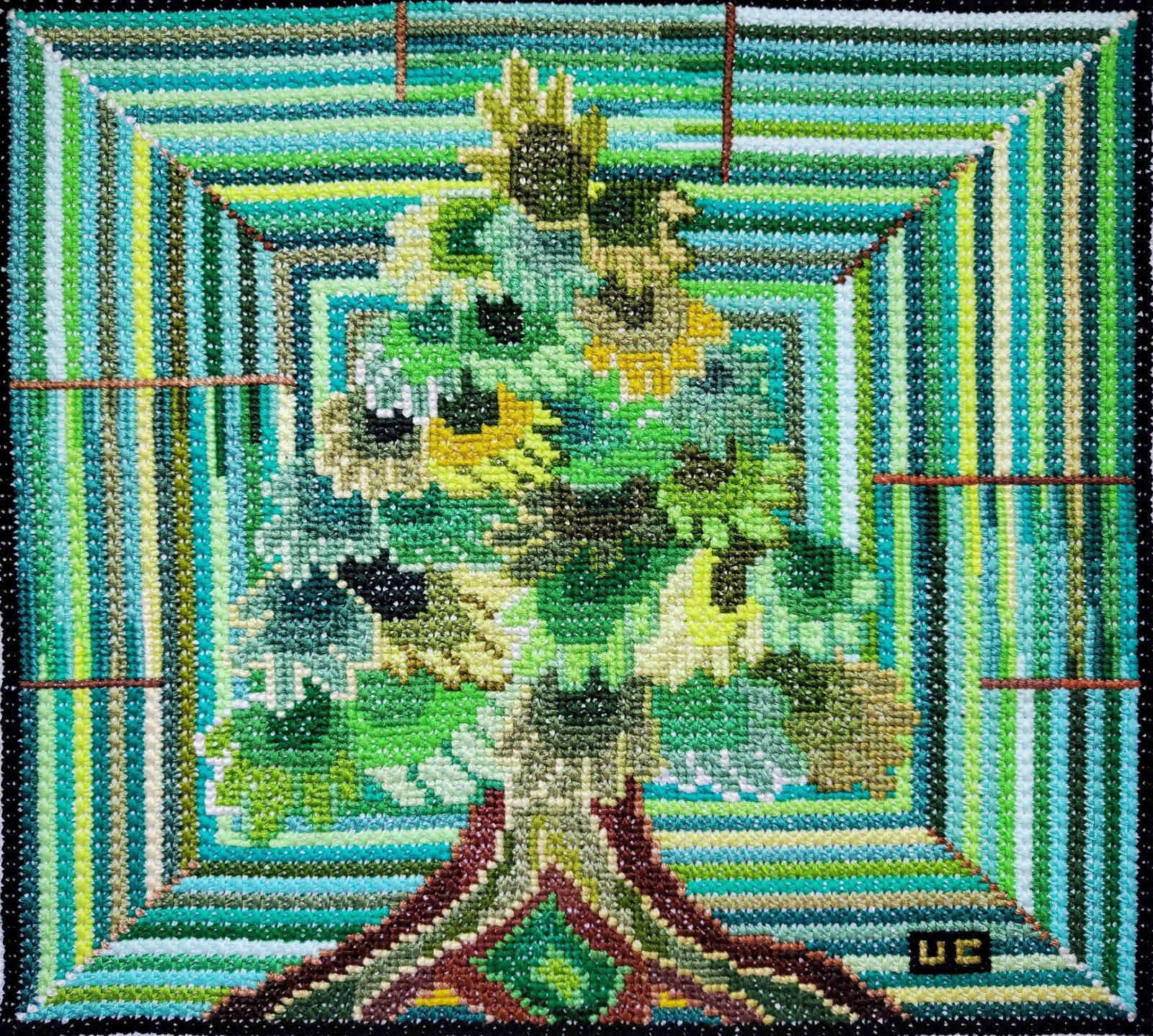
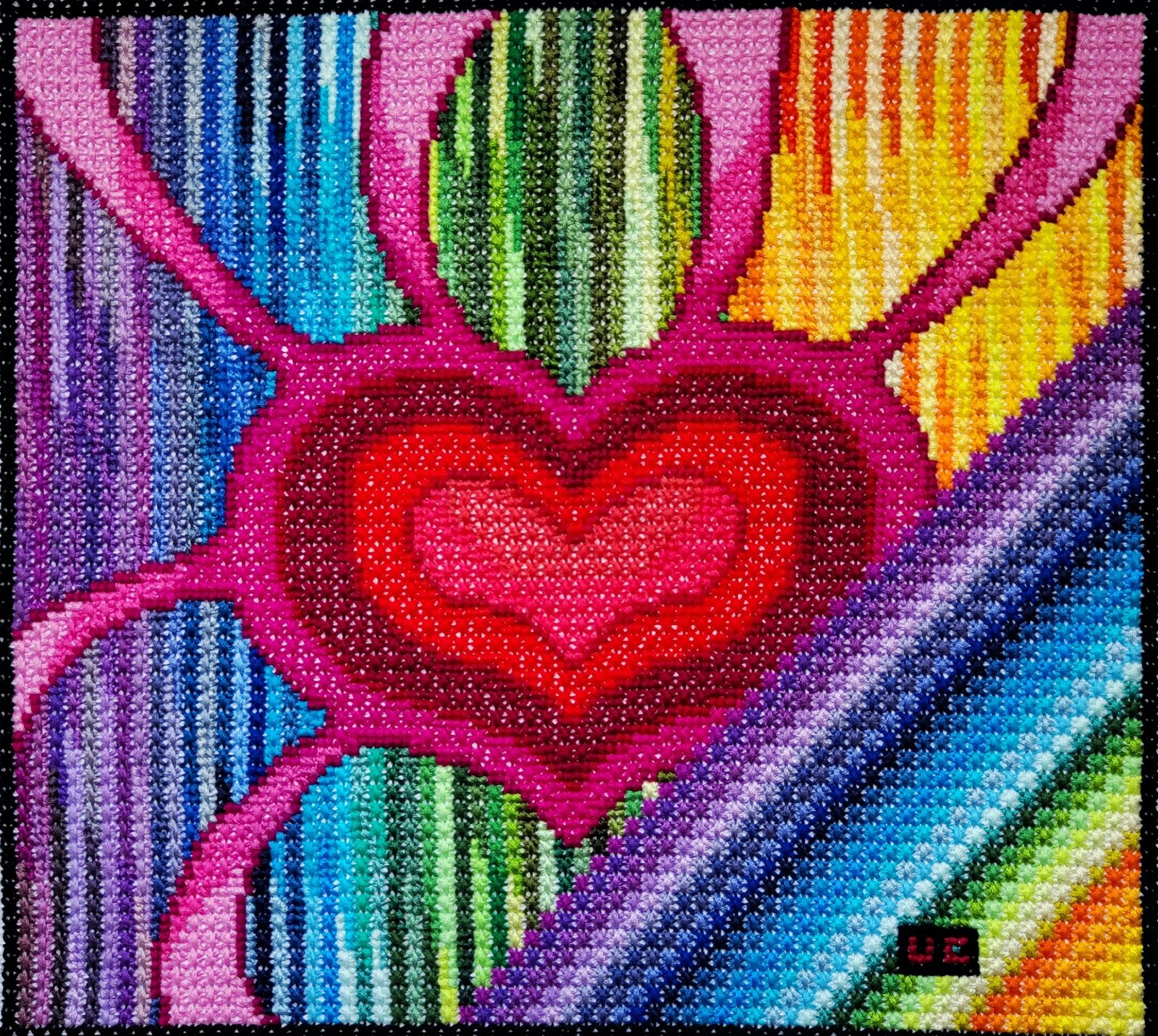
In Anya hands, embroidery moves beyond tradition and becomes a contemporary visual language. She specializes in the rare double cross stitch technique. Through it, she creates geometric compositions filled with luminous gradients, architectural textures and visual depth.

Precision plays an important role in her process. However, intuition and emotion remain equally important. As a result, thread becomes more than a material. It becomes a way to explore thought, feeling and personal meaning.

Anya Isac double cross stitch embroidery artwork

A Discovery Through Her Grandmother

Anya found her artistic direction at an unexpected moment. For years, her creative instincts existed alongside a demanding career as an executive. Then, during an intensely stressful period at work, she discovered an unfinished embroidery piece that her grandmother had started.

She decided to learn the technique and complete the work herself. Soon, stitching gave her a deep sense of calm and balance. What began as a personal discovery quickly became something much larger. From that point forward, double cross stitch became central to her creative life.

Geometric double cross stitch embroidery by Anya Isac

Beyond Two Dimensions

One of the most compelling aspects of Anya practice is her ability to expand a simple stitching system. Repetition, color and carefully planned geometry give the compositions a sense of depth. Meanwhile, luminous gradients and changing thread density create movement across the surface.

Consequently, a two-dimensional technique begins to feel almost architectural. Patterns create rhythm, while accumulated stitches build visual structure. Yet these works are not exercises in technique alone. Anya also uses them to carry emotion, metaphor and layered meaning.

Double cross stitch detail by contemporary embroidery artist Anya Isac

The Mind Within the Making

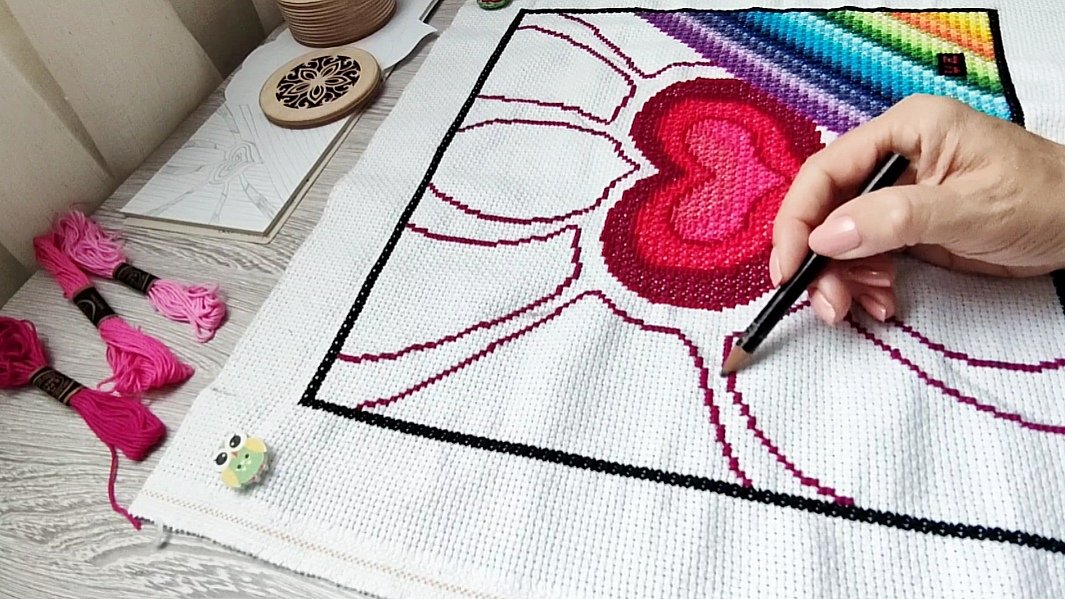
For Anya, embroidery has value beyond the finished artwork. Hand stitching requires concentration, coordination and repeated movement. Her own experience with this process inspired a wider interest in fine motor skills, mindfulness and cognitive engagement.

She now shares double cross stitching through YouTube and social media. In doing so, she encourages others to explore both its artistic and meditative qualities. The process offers an opportunity to slow down and focus. It also reconnects the hand, mind and imagination through creative practice.

Conceptual contemporary embroidery artwork by Anya Isac

A Metaphorical World in Thread

Beyond technique, Anya’s compositions belong to a deeply personal visual world. She sees art as a metaphorical language that can give form to feelings without relying on conventional words. Every line of thread contributes to this language.

At the same time, she leaves space for the viewer. Meaning does not need to remain fixed. Instead, each person can approach the work through individual memories, emotions and associations. Anya creates the world, but the viewer can discover a personal place within it.

Anya Isac contemporary textile and embroidery art

A Practice with a Wider Purpose

Recognition has followed the development of Any’s distinctive practice. She became a semifinalist in the Global Eco Artisan Awards 2020. More recently, the Samudra Art Prize Exhibition 2026 selected her work for presentation.

Still, her purpose extends beyond recognition. Anya wants to bring renewed attention to double cross stitch and introduce its possibilities to a wider audience. For her, creativity can support focus, self-development and meaningful human connection.

Gustav Klimt’s words, “Art is a line around your thoughts,” connect naturally with this philosophy. In Anya’s practice, that line becomes thread. Stitch by stitch, thought gains structure and emotion finds form. In turn, an inherited technique becomes a contemporary artistic language.

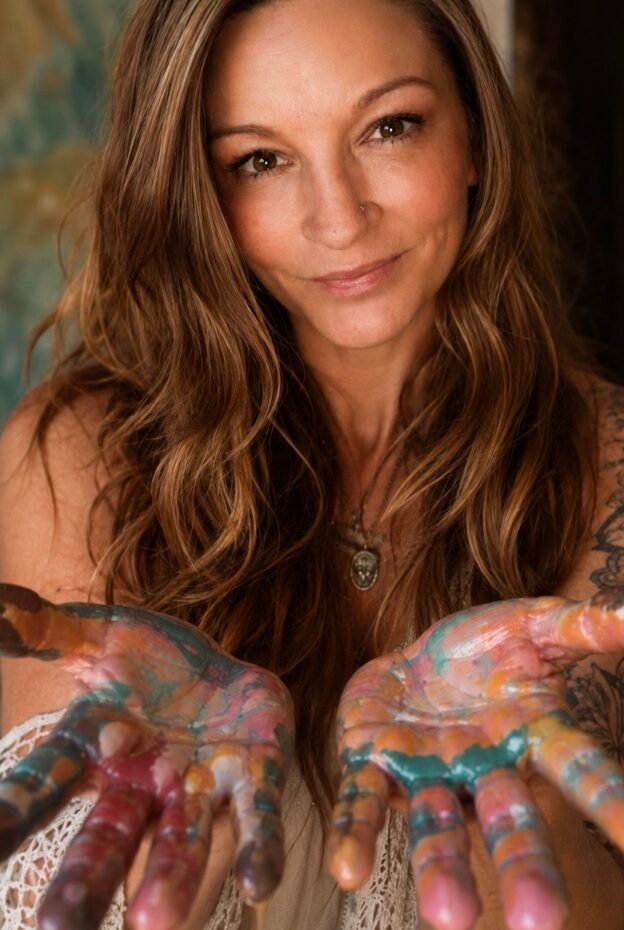
Heather Townsend — Finding Healing, Science and Freedom in the Flow of Paint


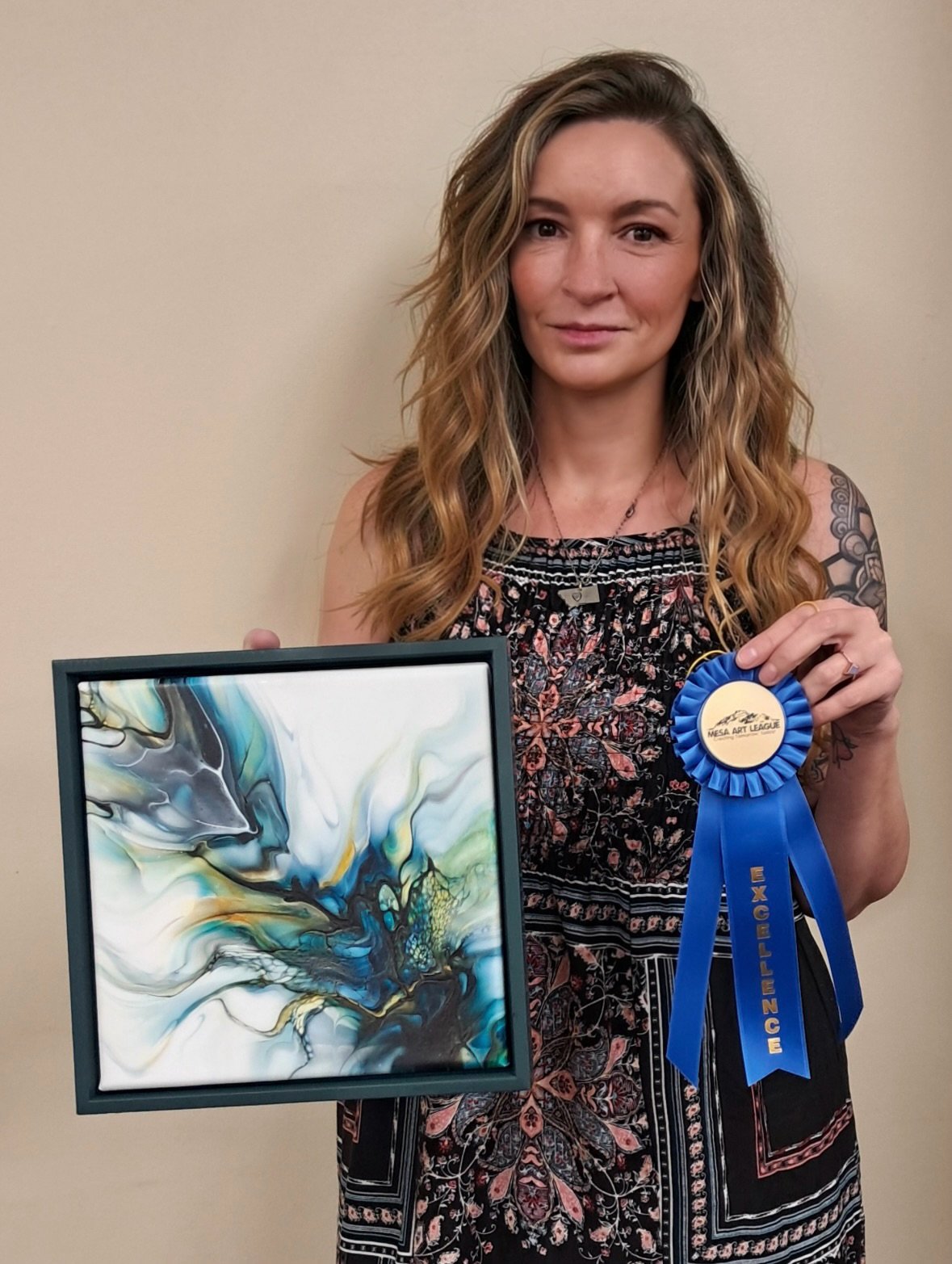
Heather Townsend artist at Sweetgrass Art Studio
Movement, Colour & the Unexpected

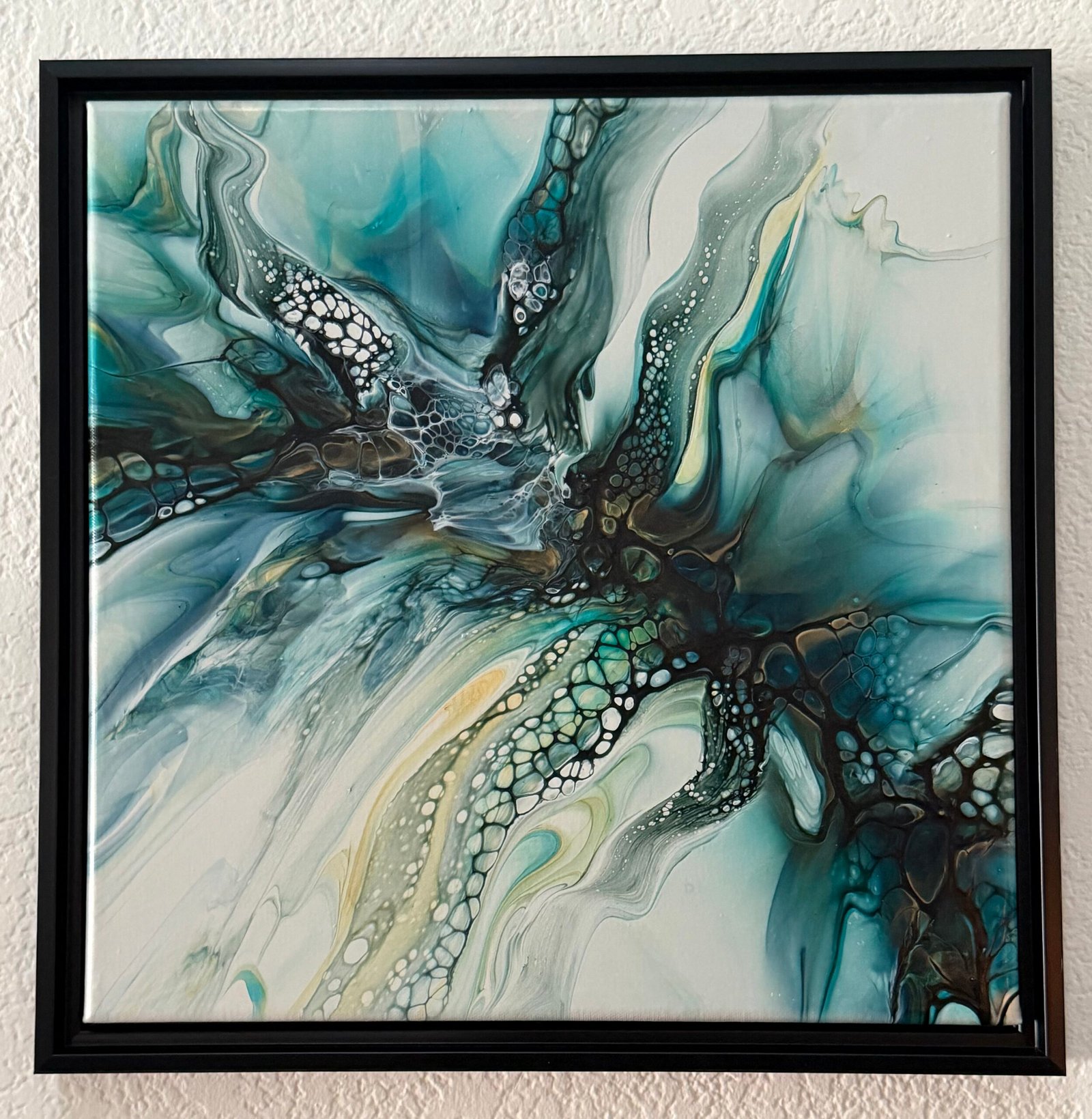
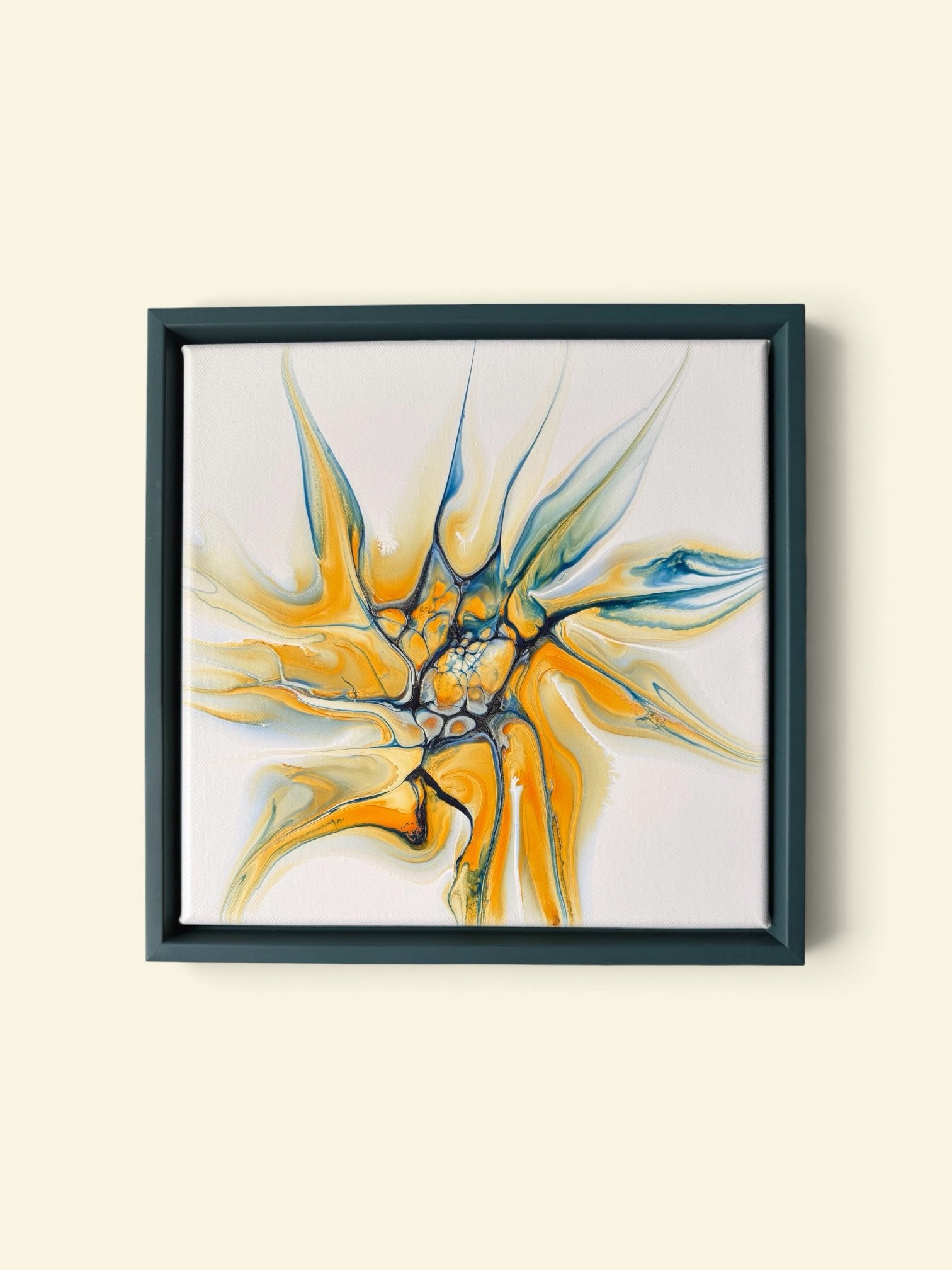
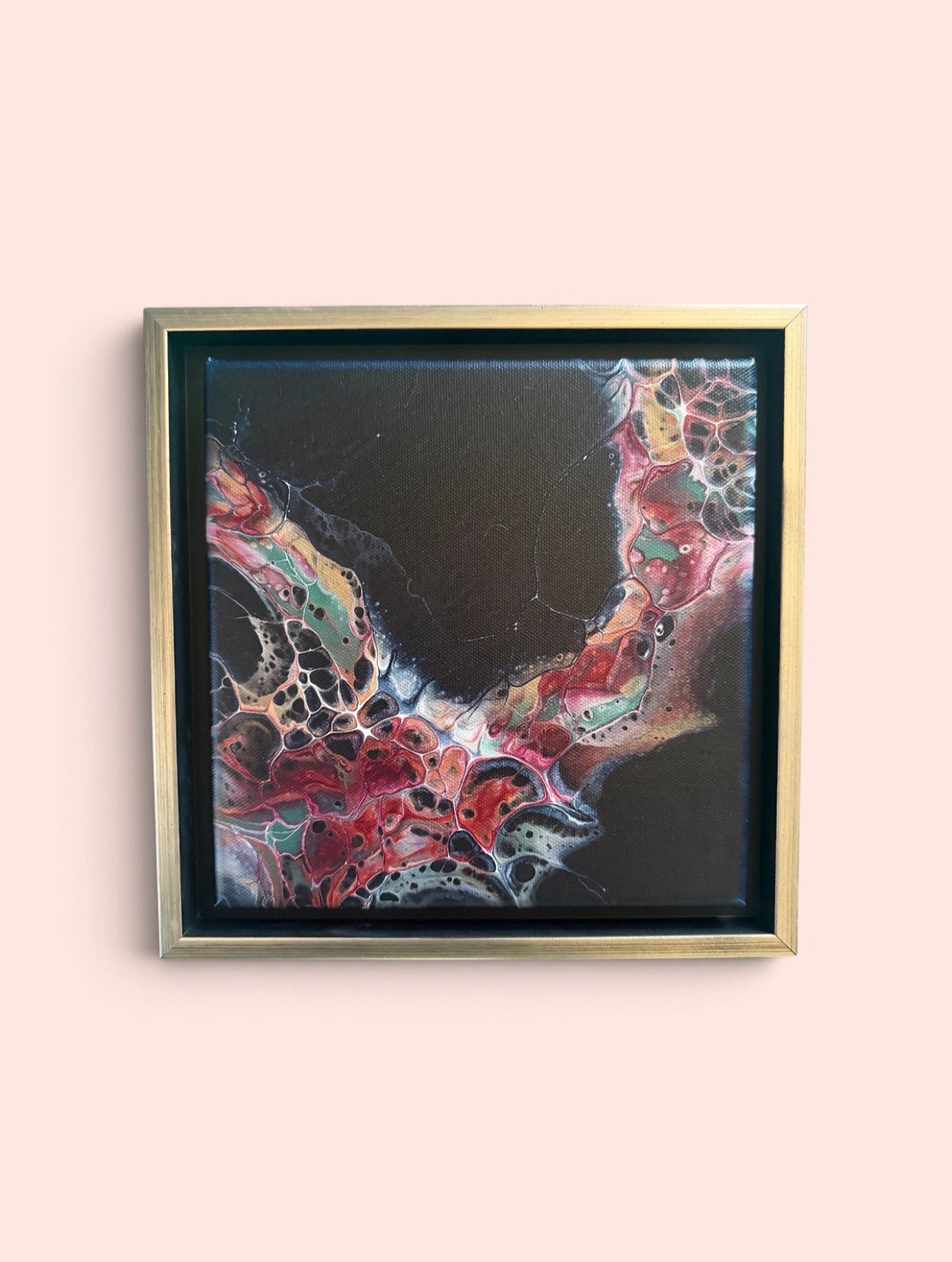
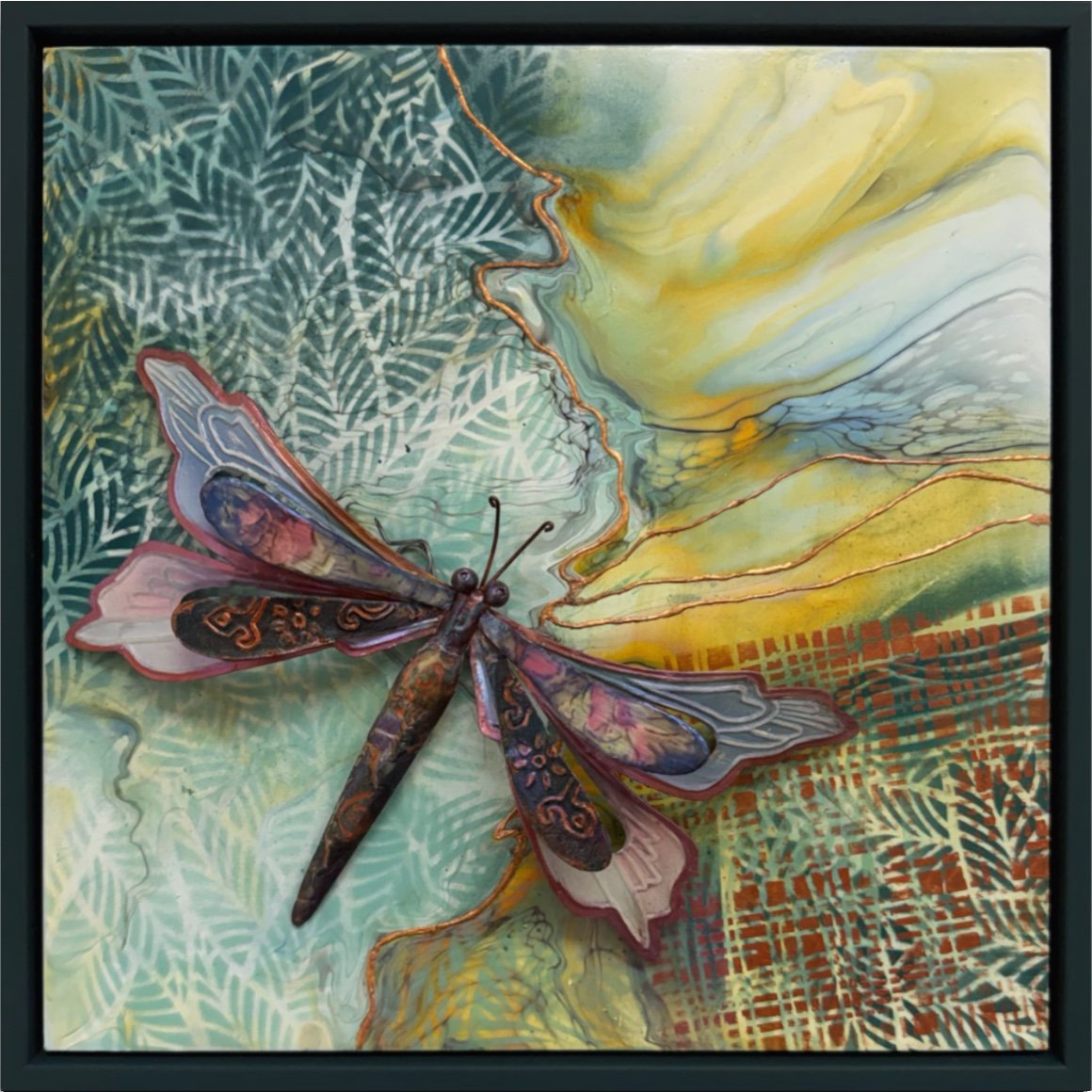
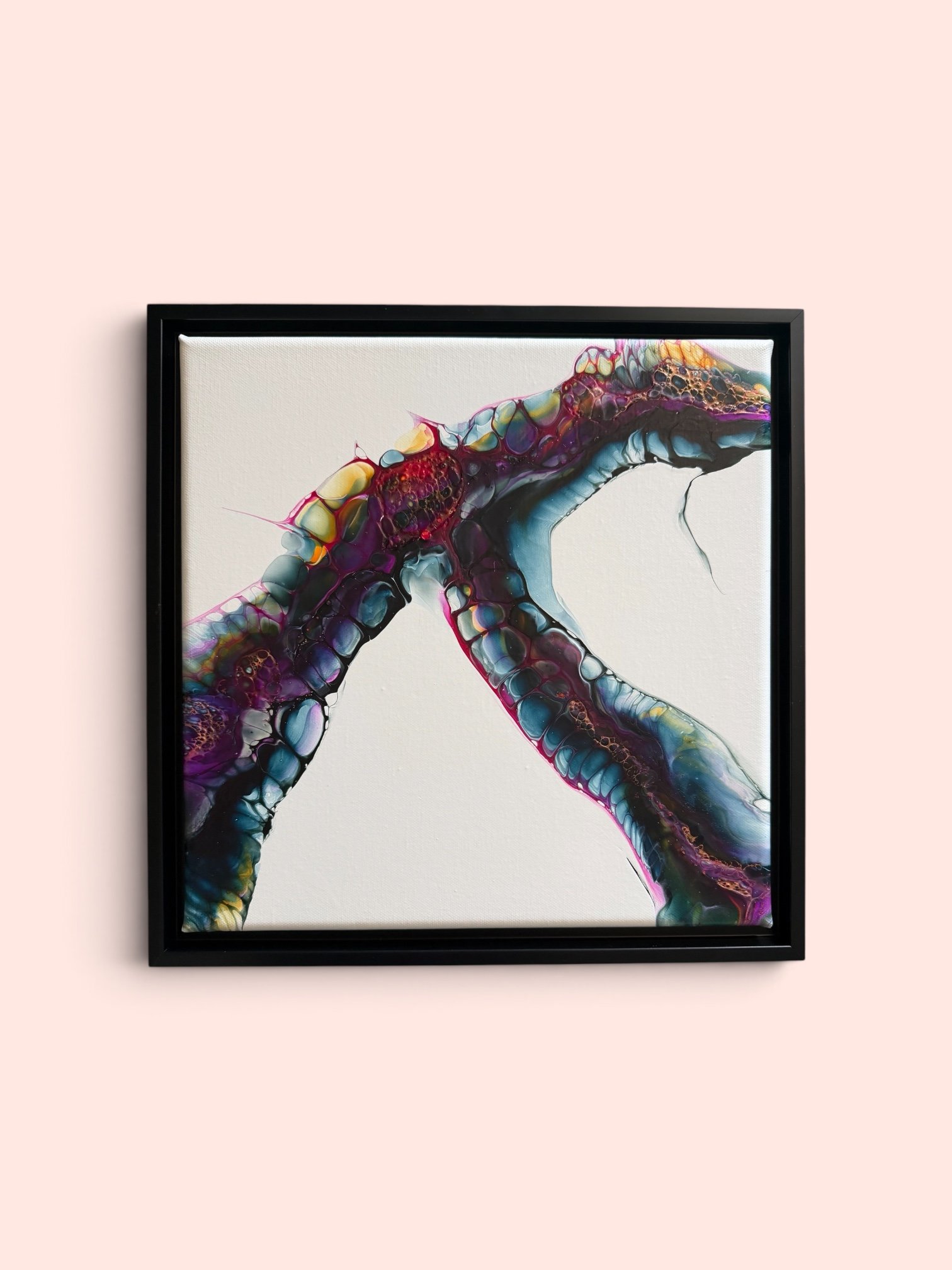
At Sweetgrass Art Studio in Arizona, Heather Townsend has built a practice around movement, experimentation and the possibilities hidden inside acrylic paint. Fluid art is central to her work, but what makes the paintings compelling is the balance she seeks between intention and unpredictability. Rich colour moves through organic forms, while negative space gives each composition room to breathe. Rather than controlling every detail, Townsend creates conditions in which the paint itself can participate in determining what the finished work becomes.

That willingness to experiment has made her practice increasingly exploratory. New techniques, unfamiliar materials and unexpected results are not interruptions to the process; they are part of it. The aim is ultimately to create work that feels alive — something capable of making a viewer pause long enough to discover their own response within it.


Fluid acrylic artwork by Heather Townsend
Finding Herself Through Paint

Townsend’s path into art emerged during a profound period of personal change. After more than fifteen years of feeling that she had been living in someone else’s shadow, she was confronting trauma, maintaining her sobriety and beginning to give space to emotions that had long been difficult to express. During that period, her trauma therapist suggested returning to painting.

Although she had experimented with art before, this time painting became something much more significant. Acrylic offered an outlet when language was insufficient. The studio became somewhere emotion could move without first needing to be explained. Eventually, discovering fluid art introduced another dimension: freedom, motion and unpredictability. What began as part of a healing process gradually became a passion and, eventually, Sweetgrass Art Studio — a creative space born from the process of finding herself again.


Heather Townsend abstract fluid acrylic painting
Where Art Meets Science

There is another force behind Townsend’s fascination with fluid art: science. Having studied science, she approaches the behaviour of paint with genuine curiosity about the reactions taking place in front of her. Pigments, mediums and different paints interact according to their own physical properties, producing effects that can be influenced but never entirely scripted.

For Townsend, understanding why those reactions occur is nearly as fascinating as seeing their visual results. One experiment often produces several new questions. A change in material suggests another technique; an unexpected reaction opens another direction. This continuous cycle of testing, observing and learning keeps the studio from becoming predictable. Her paintings emerge not only from artistic intuition but from an ongoing conversation between creativity and curiosity.


Organic fluid art patterns by Heather Townsend
Patterns Hidden in Nature

Look closely at Townsend’s fluid paintings and the language of the natural world begins to appear. The flowing paint can resemble cells and microscopic organisms, branching veins, underwater kelp, currents of water or larger fields of energy. These similarities are not necessarily planned. They emerge through the same kinds of movement, interaction and pattern that make natural systems so visually compelling.

This connection allows scale to become wonderfully uncertain. A detail might evoke something visible beneath a microscope while another passage resembles an entire landscape seen from above. For an artist with both scientific curiosity and an instinct for abstraction, these recurring structures offer an endless source of fascination.


Heather Townsend fluid painting with organic movement and negative space
The Freedom of Not Knowing

Fluid art asks an artist to negotiate an unusual relationship with control. Decisions still matter — colour, composition, materials, technique and negative space can all be carefully considered — yet once the paint begins to move, another kind of intelligence enters the process. Gravity, viscosity, chemistry and motion begin making decisions of their own.

Townsend embraces that uncertainty rather than trying to eliminate it. Unexpected details can become the most compelling areas of a painting, while apparent accidents may reveal possibilities that deliberate planning could never have produced. The process becomes a collaboration between intention and surrender, giving each work an energy that could not be recreated in exactly the same way twice.


Contemporary fluid artwork by Heather Townsend of Sweetgrass Art Studio
Finding Peace in the Pour

There is something fitting about the fact that a practice born partly from healing has developed around flow. Townsend’s work does not attempt to freeze experience into perfect order. Instead, it allows movement, reaction, uncertainty and transformation to remain visible. The same curiosity that draws her toward microscopic structures and natural patterns also keeps her looking for the next experiment, material or technique that might reveal something unexpected.

Her own words — “Find yourself in the flow. Find peace in the pour.” — bring the different parts of the practice together. What began as a place to hold difficult feelings has grown into a continually evolving artistic language shaped by science, nature, experimentation and discovery. At Sweetgrass Art Studio, the pour is not simply a technique. It is a process of allowing something new to emerge.

Chaya — Painting Emotion, Healing and the Power of the Human Figure

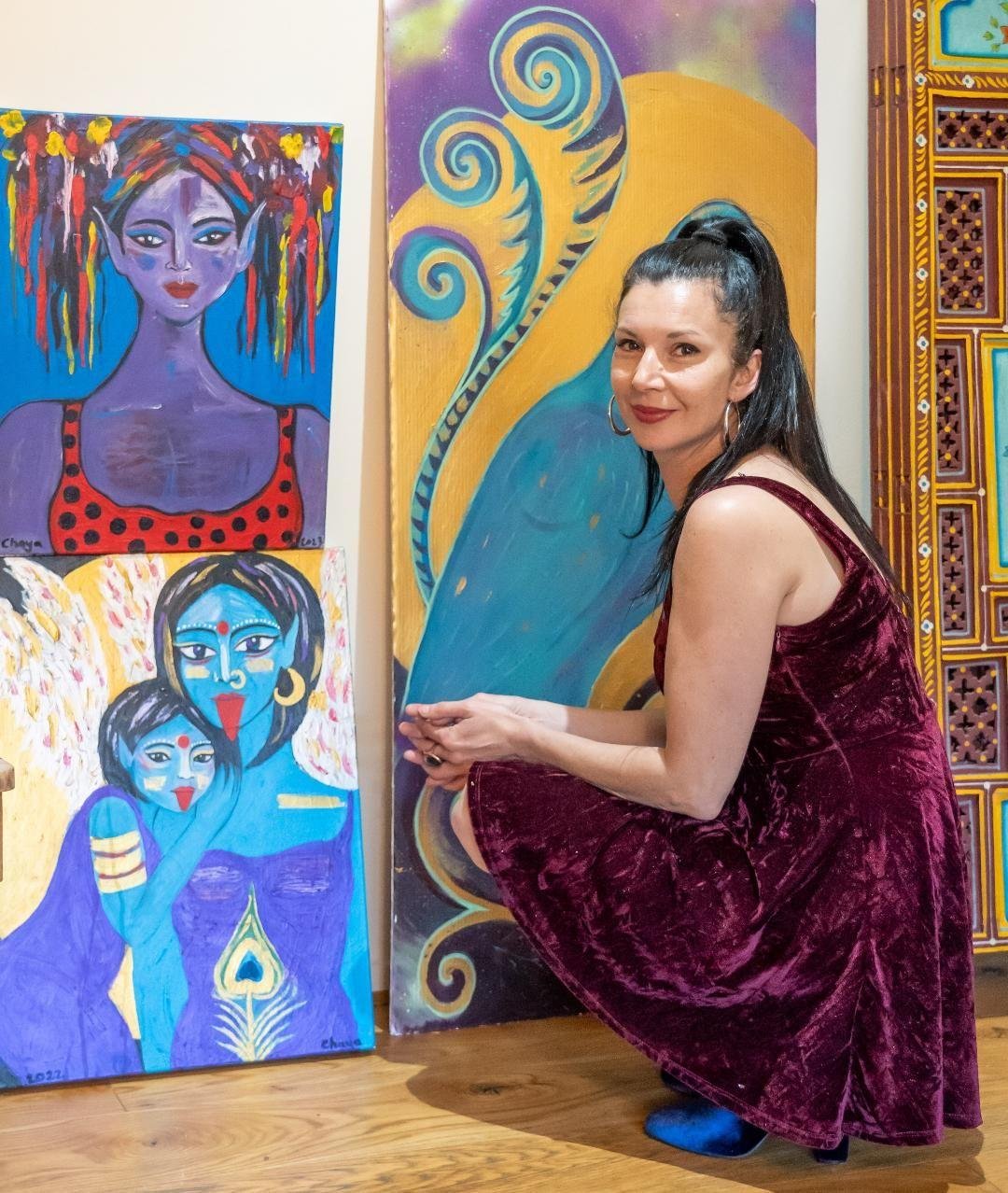
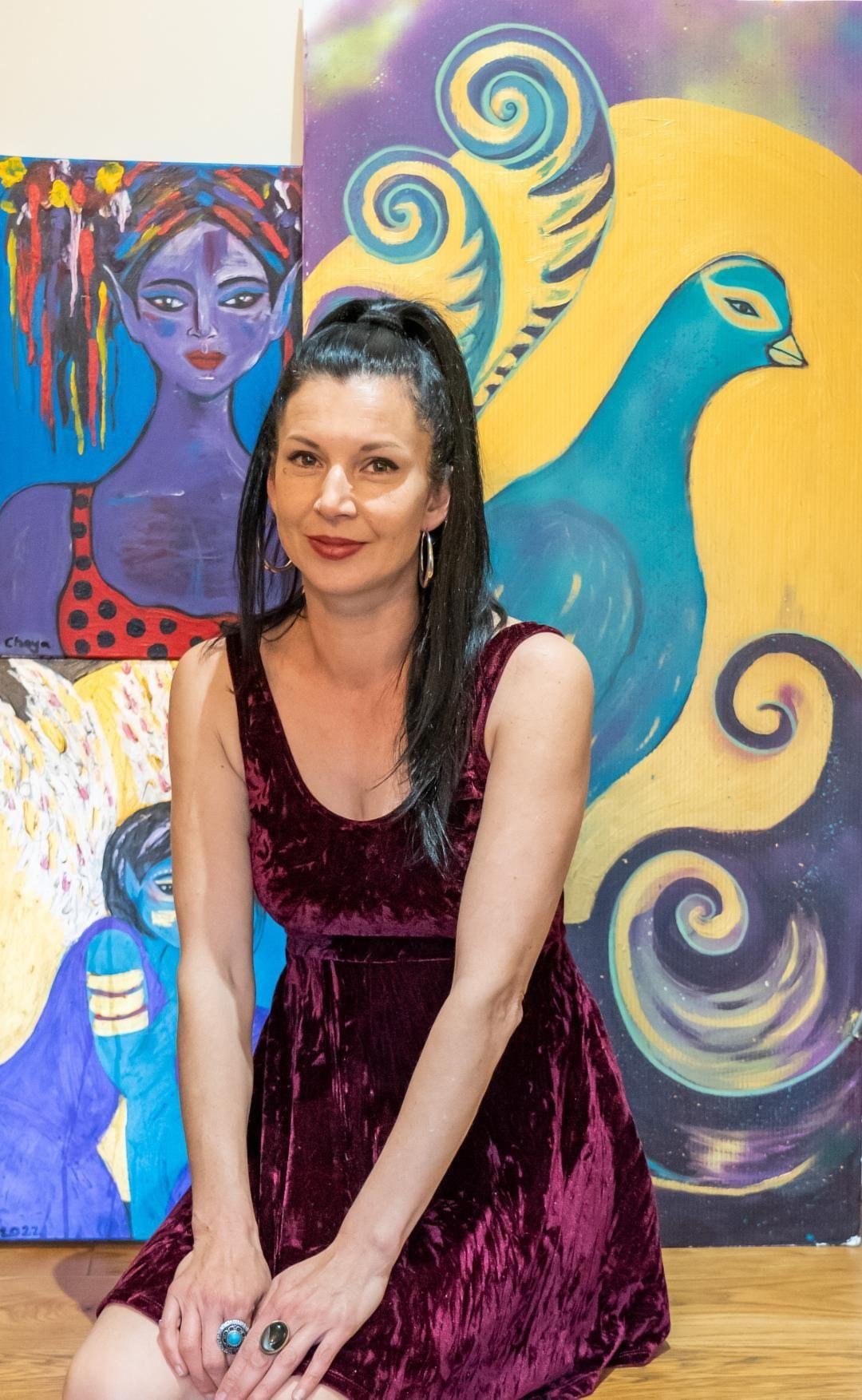
Chhaya figurative artist painting
Emotion & The Human Figure

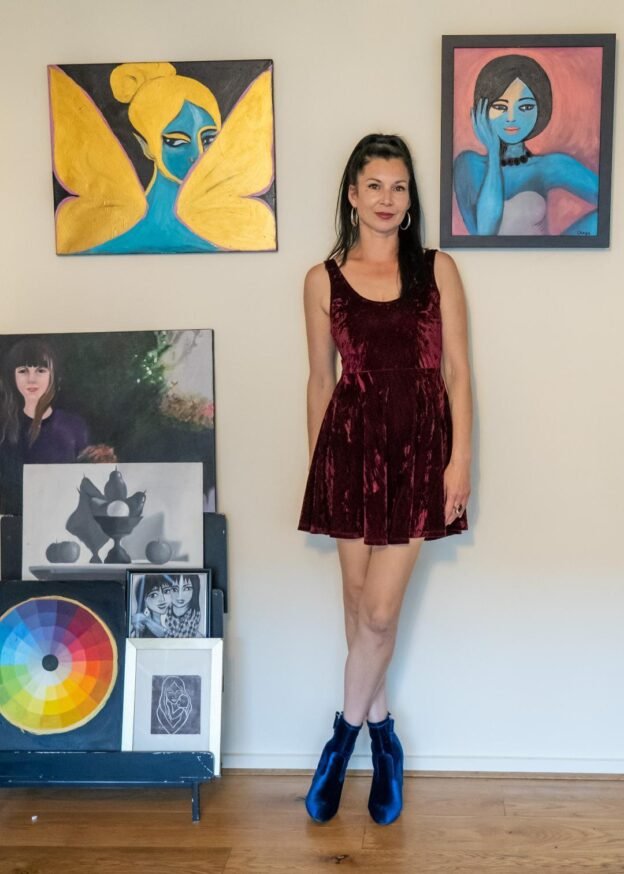
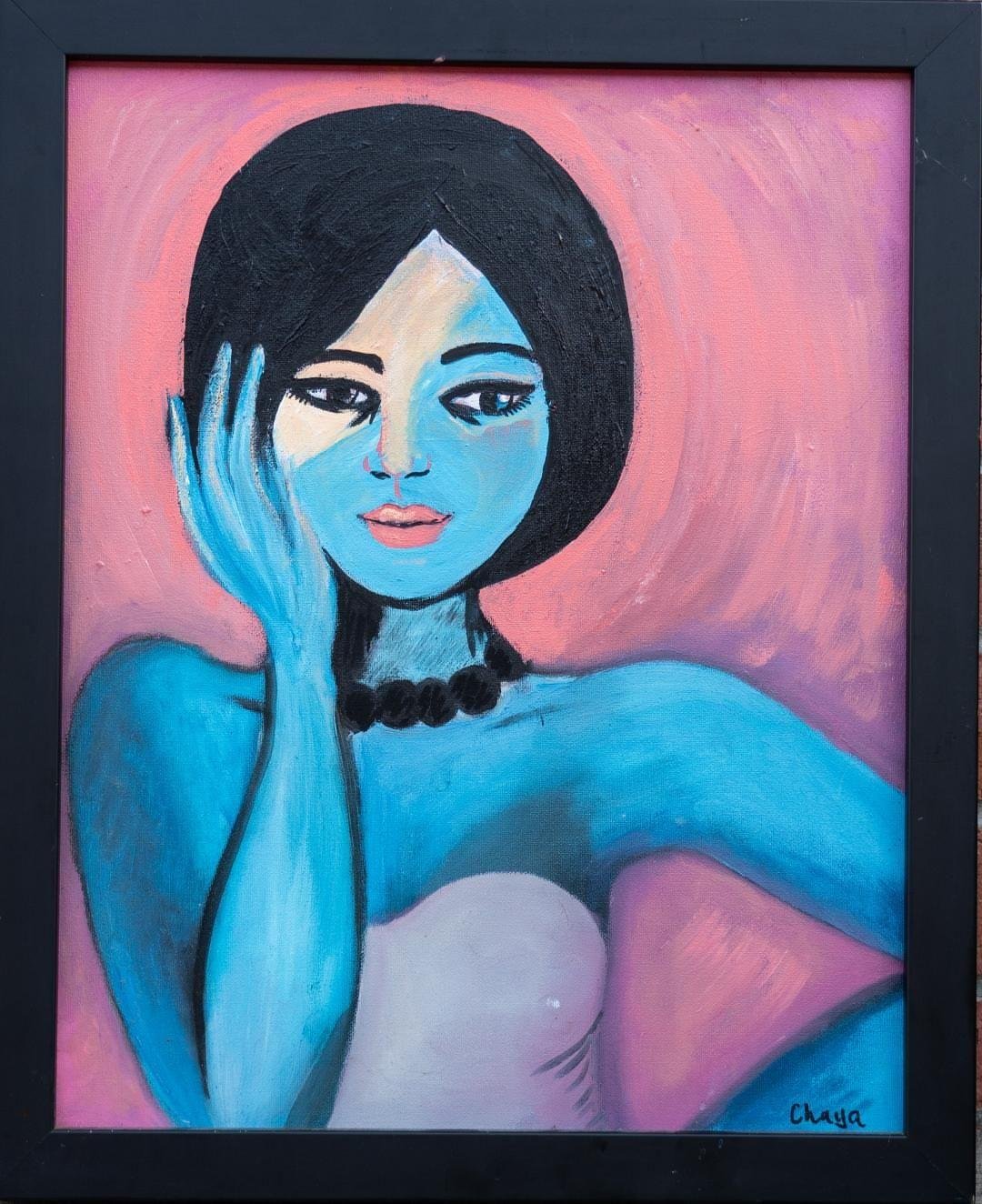
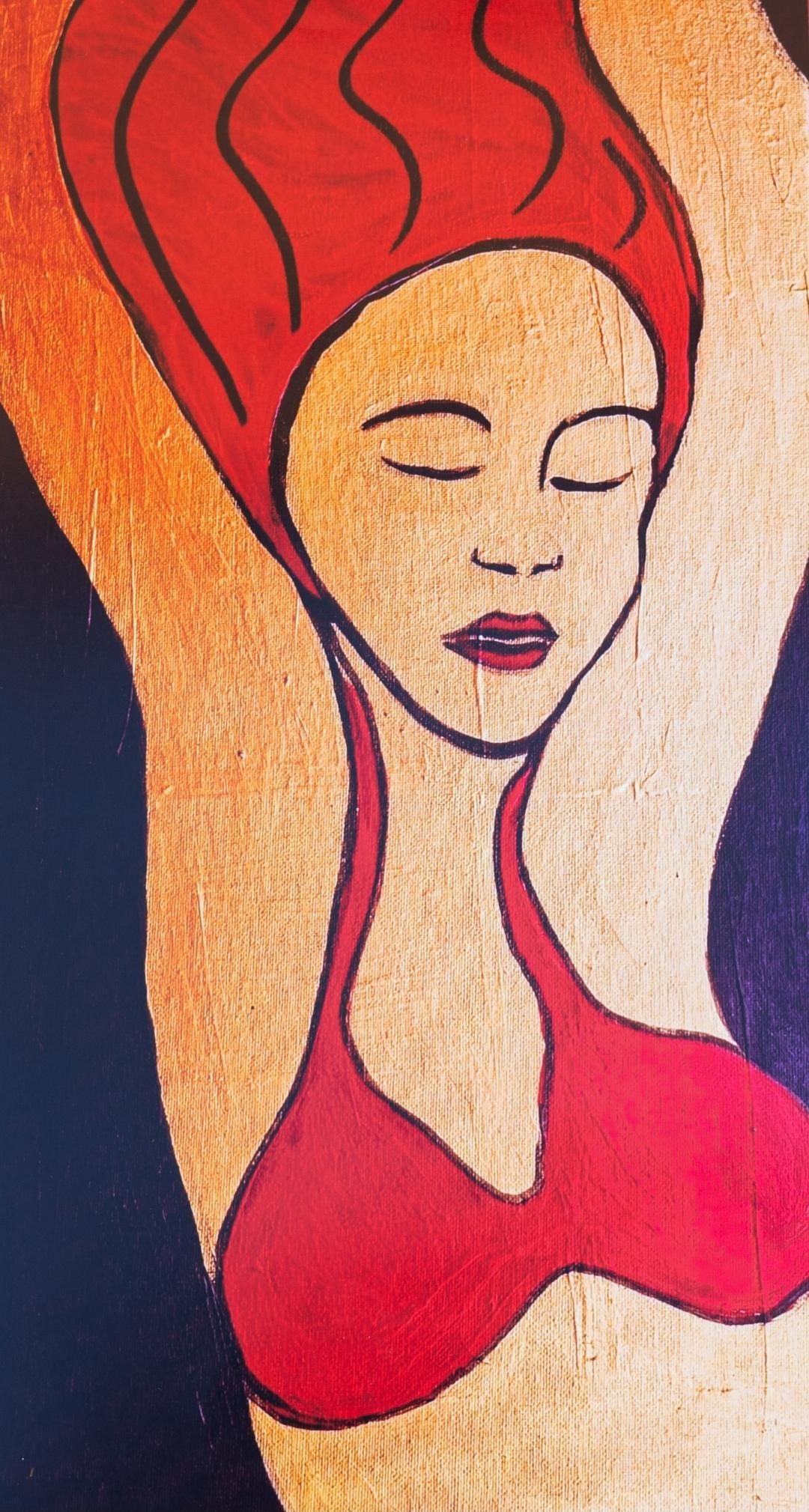
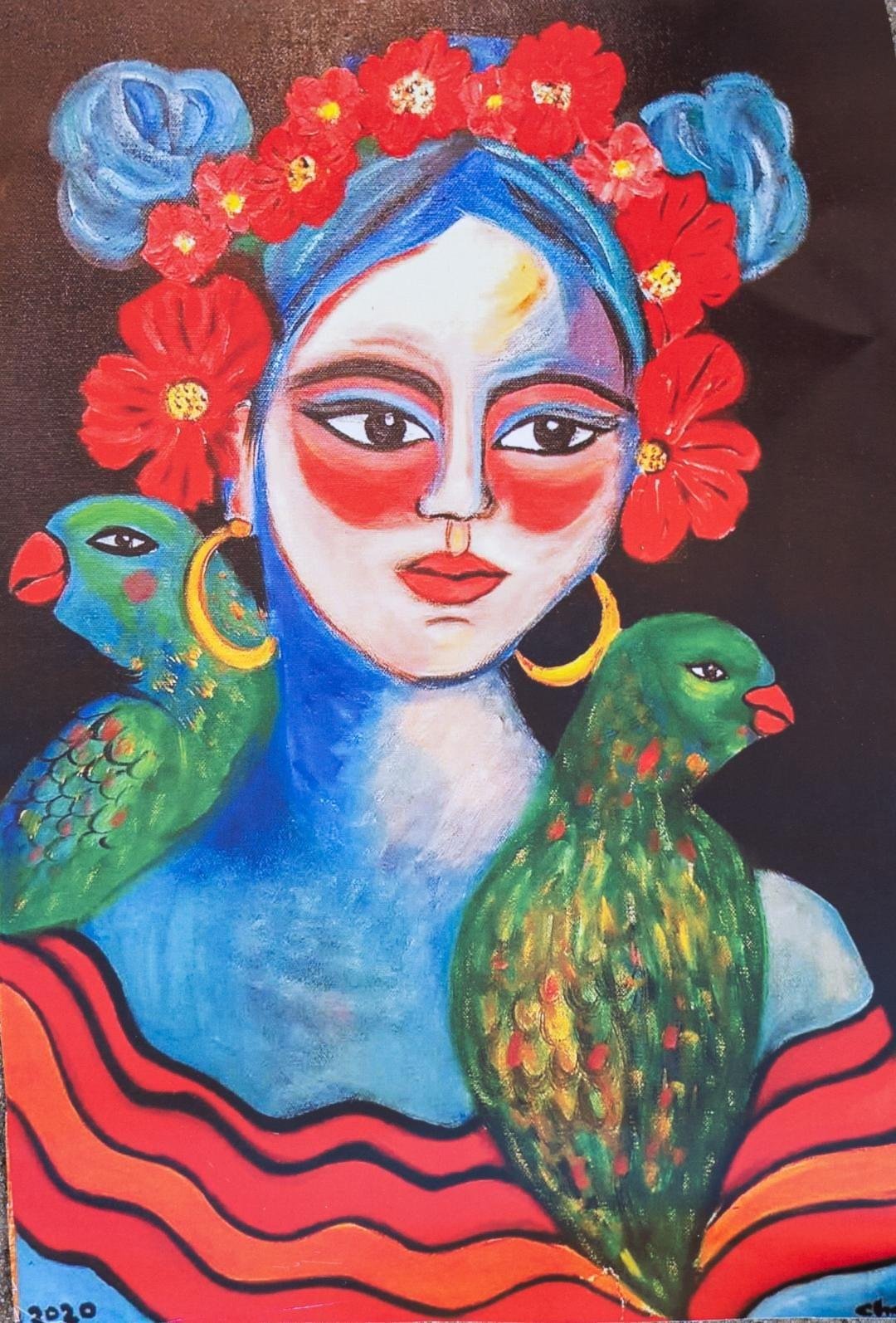
At the centre of Chaya’s artistic practice is a fascination with people and the emotions that can exist within a single expression. Working primarily in oils and occasionally acrylics, she creates figurative paintings that favour emotional honesty over polished perfection. Faces, eyes, hands and elongated limbs become expressive elements through which inner states begin to surface. Features may be exaggerated and compositions can carry a deliberate sense of discomfort, yet that tension is part of their emotional power. Birds, flowers, children and animals also enter this visual world, while vivid colour often provides moments of brightness against darker emotional territory.

Chhaya expressive oil painting
Raw Before Perfect

There is an instinctive quality to the way a painting begins in her studio. Rather than approaching the surface with a predetermined destination, Chhaya starts with a feeling and allows the work to reveal itself through the act of painting. Canvas is only one possible surface. Wooden board, paper, furniture and even objects recovered from hard rubbish can become part of the process. She has learned not to overwork what initially arrives with honesty. Too much editing can weaken the emotional charge of an image. This philosophy has shaped an approach in which imperfection remains visible and spontaneity is protected. What matters most is not technical perfection, but whether something genuine survives on the surface.
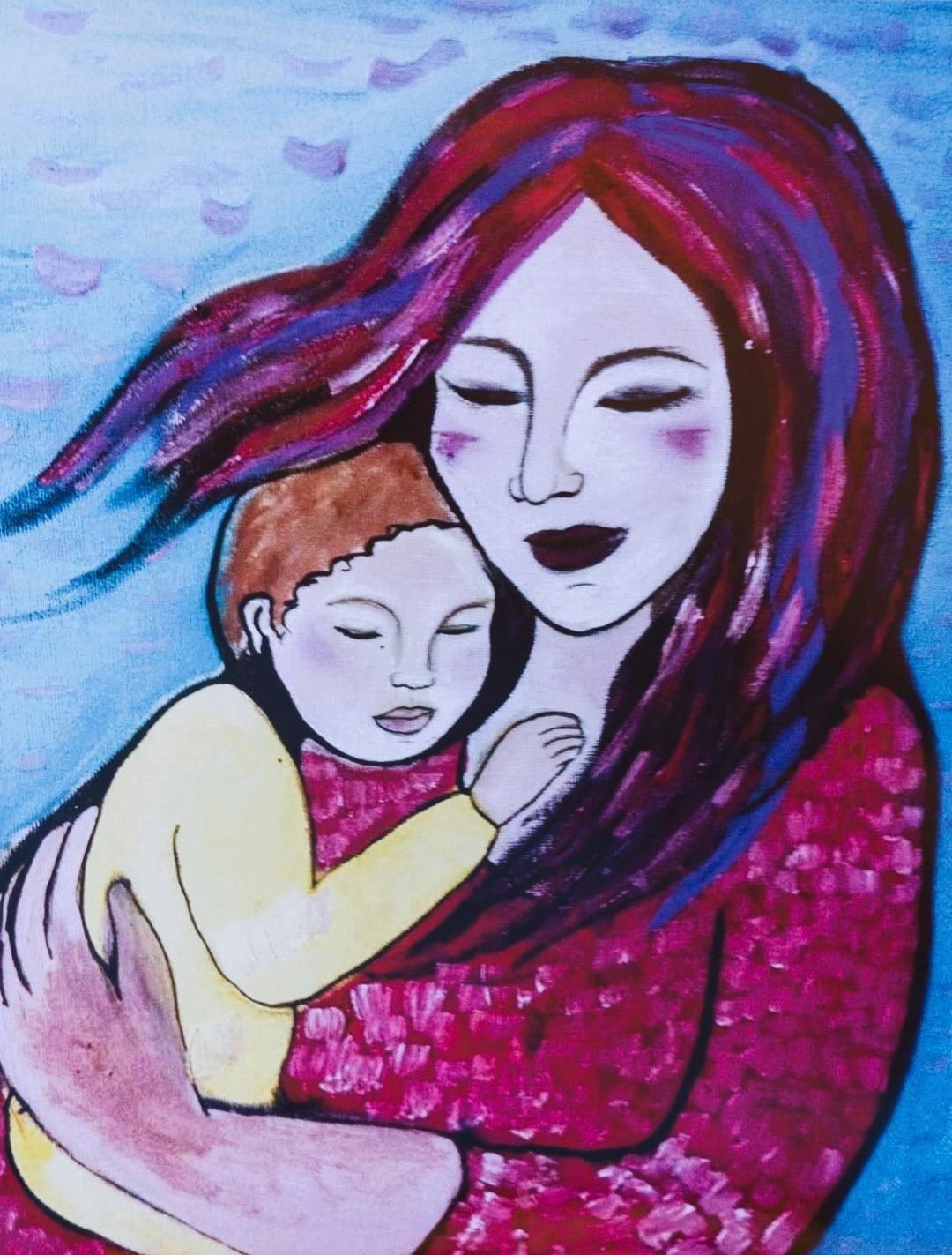
Chhaya art exploring healing and motherhood
Art as a Way Through

Although creativity had been present since childhood, formal study gave the emerging practice another foundation. After studying VCE Studio Art at Swinburne, Chaya continued into a Bachelor of Visual Art. However, some of the most defining developments came outside the classroom. During the isolation of the COVID period, a difficult pregnancy, serious physical complications and postpartum depression created an intensely challenging chapter. Art, music and poetry became important ways of moving through that darkness. Night after night, painting offered somewhere to place emotions that were difficult to contain elsewhere. Exhibitions followed, collectors began responding to the work, and a deeply personal process of healing gradually developed into a growing artistic career.

Chhaya contemporary figurative artwork
Painting What Is Difficult

Personal experience is only one layer of the work. Across her practice, wider questions surrounding equality, motherhood, racism and sexism repeatedly emerge. Many of these concerns have appeared in her paintings since her teenage years, shaped by memories, cultural observations and experiences accumulated over time. Rather than separating vulnerability from strength, the work allows both to occupy the same space. Her developing exhibition theme, transforming trauma into power, extends this idea further. It considers how painful experiences can change with time and how what once wounded a person may eventually become a source of wisdom, resilience and strength.

Colourful painting by Chhaya
Colour Against Darkness

Colour carries its own emotional purpose within Chaya’s paintings. Bright tones are not simply decorative choices; they can act as a counterweight to darker feelings and difficult subjects. This contrast reflects a larger duality running throughout the work. Beauty can exist beside sadness, tenderness beside discomfort, and vulnerability beside power. As a lifelong introverted observer with a vivid imagination and an active inner world, she often notices the gestures and expressions that can pass unnoticed in everyday life. Painting gives those observations another language. The eyes may reveal one emotion, the hands another, while colour changes the psychological atmosphere surrounding them.

Chhaya contemporary artist signature artwork
When Art Becomes Life

For Chaya, creativity extends far beyond the studio. Gardening, cooking, clothing, music and even the way a family is raised can carry an artistic dimension. Everything feels connected. Despite balancing motherhood, work and daily responsibilities, much of her painting happens late at night, often after midnight, when the surrounding world becomes quieter and concentration deepens. Art has become a source of healing, expression and financial independence, but its deepest value remains personal. Louise Bourgeois’ words, “Don’t be too careful, you might hurt yourself,” reflect an attitude already visible throughout the practice: creativity requires risk, instinct and the willingness to leave something unresolved. In Chhaya’s world, rawness is not something to correct. It is often where the truth of a painting begins.
Patrycja Joanna Sikorska — Nature, Memory and the Art of Seeing

Patrycja Joanna Sikorska interdisciplinary artist exploring nature, memory and perception

Nature, Memory & the Art of Seeing

There is a quiet interconnectedness at the heart of Patrycja Joanna Sikorska’s practice. The Polish artist, independent curator, and writer approaches art as a way of looking beyond the immediately visible, tracing connections between nature, memory, human emotion, landscape, and time. Her interdisciplinary practice moves freely between painting, drawing, sculpture, mixed media and digital or generative processes, with the medium always chosen in service of the idea.

She also selectively explores digital and generative processes, including AI, within particular projects, treating technology as one of many possible creative tools rather than as a defining medium. Across these different forms, recurring themes begin to surface: transformation, ancestral memory, belonging, spirituality and the emotional ties between people and place. Trees hold particular significance within this world, appearing not simply as elements of landscape but as living presences carrying histories, vulnerabilities and traces of time.

Patrycja Joanna Sikorska artwork exploring material, memory and transformation

Where Creative Languages Meet

What makes Sikorska’s journey particularly interesting is the way several creative disciplines have gradually grown into one another. Writing, curating, research and visual art once occupied different spaces within her life. Over time, those boundaries became less important. Curatorial work sharpened her attention to context and intention, while writing developed an awareness of nuance, silence and what remains unsaid. Visual art offered another possibility: a language for experiences that resist explanation altogether.

The material dimension of this practice is equally significant. Her material works often incorporate unconventional elements such as charcoal, river clay, resin and powdered minerals, allowing matter itself to become part of the narrative. Rather than functioning merely as surfaces or techniques, these materials connect the ideas within the work to the physical world from which they emerge.

Patrycja Joanna Sikorska Polish artist exploring nature, memory and human experience

The Art of Paying Attention

Looking closely is central to this practice. An old tree, a disappearing forest, a landscape marked by history, a fleeting human gesture or a moment of silence can all become points of departure. Rather than allowing such encounters to disappear into the pace of everyday life, the work stays with them. In this sense, creating becomes an act of attention. It asks what we have stopped noticing and what might become visible if we look again.

This sensitivity has also carried the work into international contexts, allowing its questions around nature, memory, identity and human connection to encounter viewers beyond a single place or cultural setting. Yet however far the work travels, its attention remains rooted in experiences that are both intimate and universal.

Nature inspired artwork by Patrycja Joanna Sikorska exploring trees, humanity and interconnected living systems

Trees as More Than Landscape

Nature in these works is never simply scenery. Human beings, bodies, trees, memory, landscape and history belong to the same interconnected system. This perspective gives the recurring presence of trees a deeper significance. They can suggest ancestry and endurance, but also fragility, transformation and loss. A landscape can therefore become something psychological as easily as it becomes ecological.

By moving between these meanings, the work encourages us to reconsider the distance we often place between ourselves and the natural world. Human beings are not positioned outside nature looking inward. Instead, they exist within the same living network — affected by it, dependent upon it and inseparable from its transformations.

Patrycja Joanna Sikorska work exploring the relationship between the human figure and organic natural forms

What Exists Beneath the Visible

Perhaps the most intriguing territory in Sikorska’s practice exists between states. Presence meets disappearance. Growth exists beside decay. Memory begins to resemble imagination, while physical forms move toward something spiritual. A figure might appear to merge with bark, an external landscape can transform into an inner state, and even a cosmic event can begin to carry emotional meaning. These shifts resist straightforward interpretation and instead draw attention toward connections we may sense before we fully understand them.

Her sculptural practice gives these ideas another physical dimension. Organic structures, bark, roots and the human figure begin to merge, giving rise to guardian-like presences that explore memory, care and the interdependence of living systems. Sculpture allows relationships between body, material and nature to move beyond the image and occupy physical space.

Contemporary artwork by Patrycja Joanna Sikorska exploring perception, memory and invisible connections

The Work Continues Beyond the Artist

There is intentionally no single conclusion waiting inside these artworks. Once a piece leaves the artist’s hands, another experience begins between the work and the person standing before it. Memory, attention, emotion and personal history inevitably change what each viewer discovers. This openness gives the work room to continue evolving beyond its creation.

Paul Klee’s words — “Art does not reproduce the visible; rather, it makes visible” — feel especially relevant here. Sikorska’s practice follows a similar path: rather than telling us exactly what to see, it creates the conditions for something previously unnoticed, unnamed or perhaps only felt to become visible. The artwork therefore remains unfinished in a conceptual sense until another person encounters it and brings their own memories, associations and way of seeing into the conversation.