
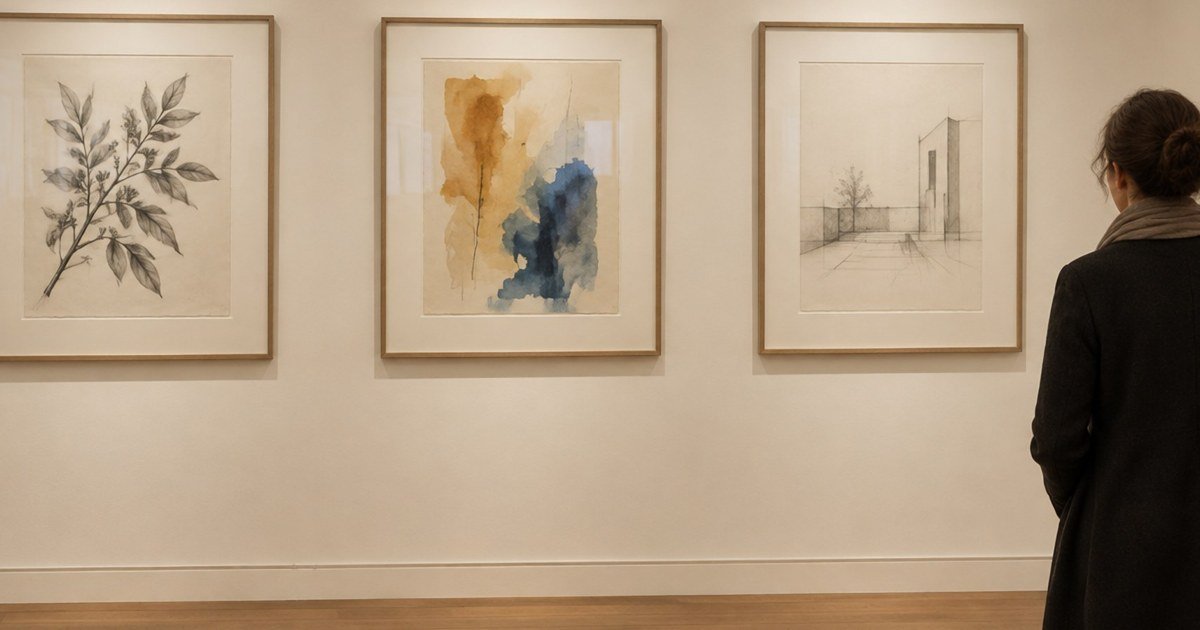
Collecting works on paper can change the pace of a collection. A drawing asks you to move closer. A watercolour makes the unpainted surface part of the image. A collage turns an edge, a fold or a change in texture into an artistic decision. These encounters offer a different kind of presence beside a painting on canvas.
Paper deserves attention on its own terms. A sheet may hold an experiment, a carefully developed composition or a complete statement that depends on this particular surface. Understanding the difference helps a collector see more than size, price or the artist’s signature.
This guide explores what drawings and other works on paper can contribute to a collection, how to look at them closely, and what their materials ask of us once they come home.
Part 01 · The medium
What Counts as a Work on Paper?
“Works on paper” describes the support rather than a single technique. The category can include graphite drawings, ink, charcoal, pastel, watercolour, gouache, collage and prints. An artist may combine several of these within one sheet. A work painted on paper is still a painting; a drawing need not be monochrome.
These distinctions matter because different materials create different experiences. Graphite can shift from a pale line to a dense, reflective passage. Charcoal can spread into a soft field or make an emphatic edge. A translucent wash allows the surface beneath it to participate in the colour, while opaque gouache can establish a more solid shape.
Begin by reading the medium description carefully. “Mixed media on paper” is a starting point for a conversation. Ask which materials were used and how they relate to the image. Paper type, mounting and any surface treatment may also help explain what you see.
Original prints belong within this wider category too, but their production and edition questions deserve their own attention. Here, the emphasis is on drawings, paintings and collages whose particular marks and surfaces reward close looking.
Part 02 · Attention
A Drawing Can Make a Decision Visible
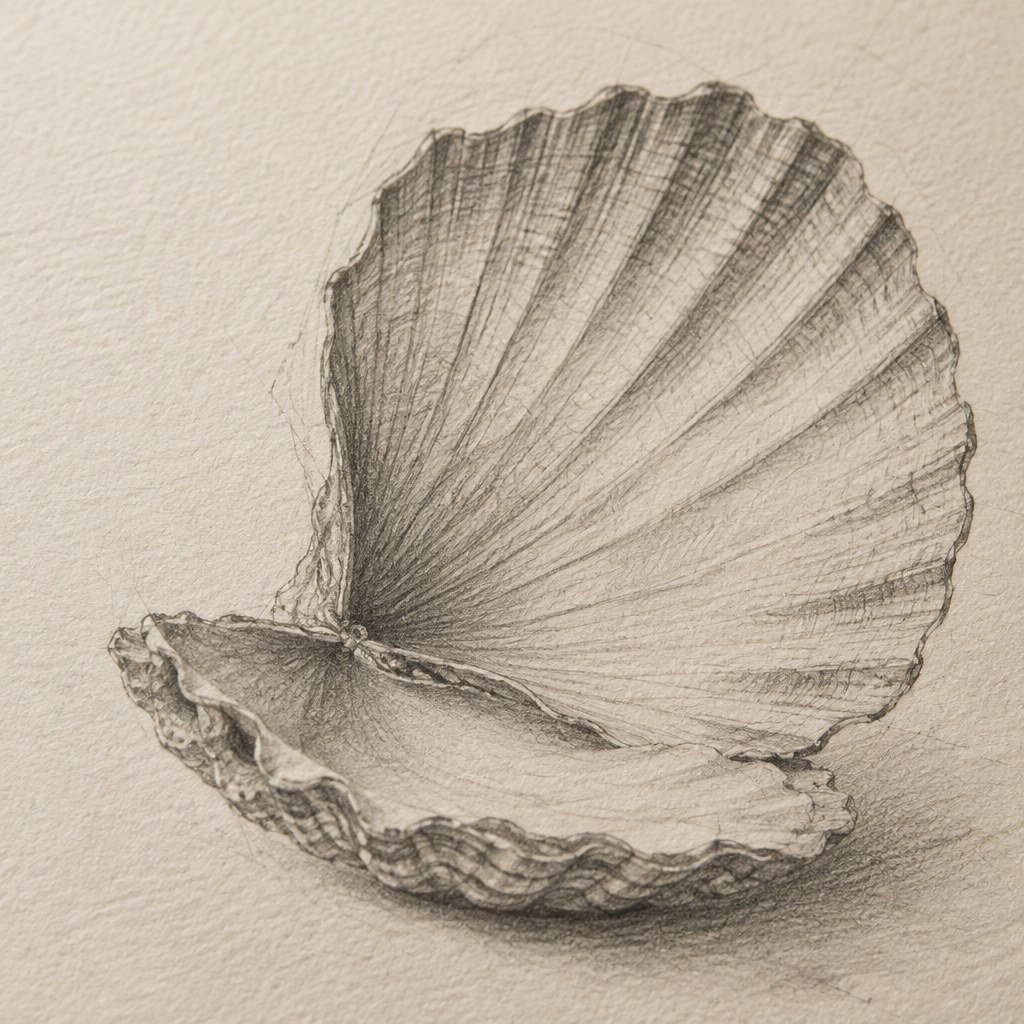
Look at the way a line begins, changes pressure and comes to rest. Notice where the artist has returned to a contour, left an interval open or allowed a lighter mark to remain beneath a darker one. These choices can create movement even in a quiet image.
Some drawings retain visible revisions. Others conceal their development through patient refinement. Neither approach is automatically more revealing or more accomplished. A loosely drawn image may be carefully planned, while a highly finished sheet may contain a searching, uncertain process.
The Metropolitan Museum’s digital project on Jackson Pollock’s sketchbooks offers a concrete example of drawings as a record of investigation. Its studies show his engagement with other artists and his developing approach to composition. They invite attention to how a practice forms over time.
A collector should resist treating every drawing as a private confession. Marks can offer evidence of making, but they do not give direct access to an artist’s thoughts. Read studio explanations and supporting research alongside the work, leaving room for what the image itself communicates.
— Best Art Gallery editorial perspective
Part 03 · Artistic intention
A Study and an Independent Work Ask Different Questions

A preparatory study may explore a figure, arrangement or colour relationship that appears in another work. An independent drawing may have been conceived as a complete work from the beginning. There are also sheets whose role changes as an artist revisits them.
Ask how the piece sits within the practice. Was it made in preparation for something else? Does it belong to a series? Is the date established? If a seller describes it as connected to a particular painting, request the evidence for that connection rather than accepting resemblance alone.
A study can be compelling because of the problem it explores. An independent work can be compelling because its concentration belongs entirely to the sheet. Neither needs to borrow importance from a larger canvas. A drawing’s purpose is useful context, not a hierarchy that decides its quality.
This perspective makes paper a meaningful addition to a collection you already have. A drawing by an artist whose paintings you know may reveal another rhythm, subject or way of organising space. It can extend your understanding of the practice without simply repeating an existing image.
Part 04 · Surface and scale
Let the Paper Participate in the Image
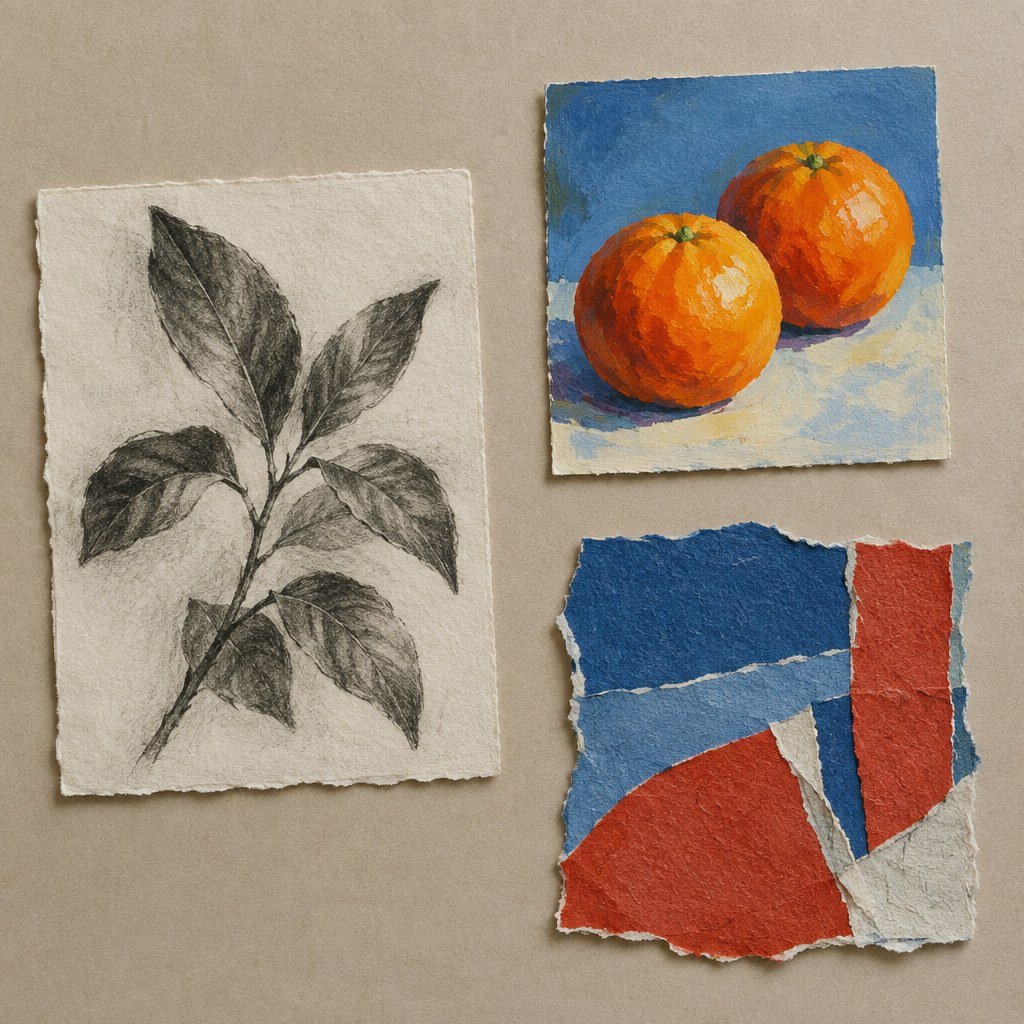
Notice the areas where nothing has been added. A warm sheet can soften a dark mark. A rough surface can interrupt a stroke. In a collage, the thickness of one layer may cast a small shadow onto another. The support can be an active part of the composition.
Look at the edges as well as the centre. A torn or deckled edge may contribute to the work’s appearance, while an irregular boundary may come from its manufacture or handling. Ask what is intentional. An attractive photograph cannot establish whether a crease, stain or abrasion belongs to the work as conceived.
Scale also changes the encounter. A small drawing encourages proximity; a large sheet may surround the viewer with gesture or colour. Confirm both the sheet dimensions and the framed dimensions. Generous matting can give a modest work considerable physical presence on the wall.
Works on paper may offer accessible options within an artist’s practice, but there is no universal price rule. Artist, period, significance, medium, condition and the individual work all matter. Choose a sheet for what it contributes, rather than assuming that paper means either a bargain or a lesser work.
Part 05 · A closer encounter
Learn to Look Beyond the Listing Photograph
Online photographs can make graphite look flatter, lose pale watercolour passages or exaggerate contrast. Glazing reflections may obscure the image. Ask for a straight-on view and detailed photographs that show the surface, edges and any disclosed condition concerns.
If the work is framed, ask what can be confirmed about the sheet beneath the mount. A mat may conceal its edges or an inscription. Have a suitable professional examine it when that information matters; avoid dismantling an unfamiliar frame yourself.
When viewing in person, give the work a few minutes. Start with the whole image, then follow one area closely. Step back again. Consider whether the details strengthen the composition or merely attract attention individually. The point is to develop your own account of why this particular work holds you.
Museum resources are useful companions to this exercise. The Met’s Drawings and Prints department provides a route into collection records and exhibitions. Comparing different techniques can make a seller’s terminology easier to understand and give you better questions to ask.
Part 06 · Framing and care
Choose a Frame That Protects as Well as Presents
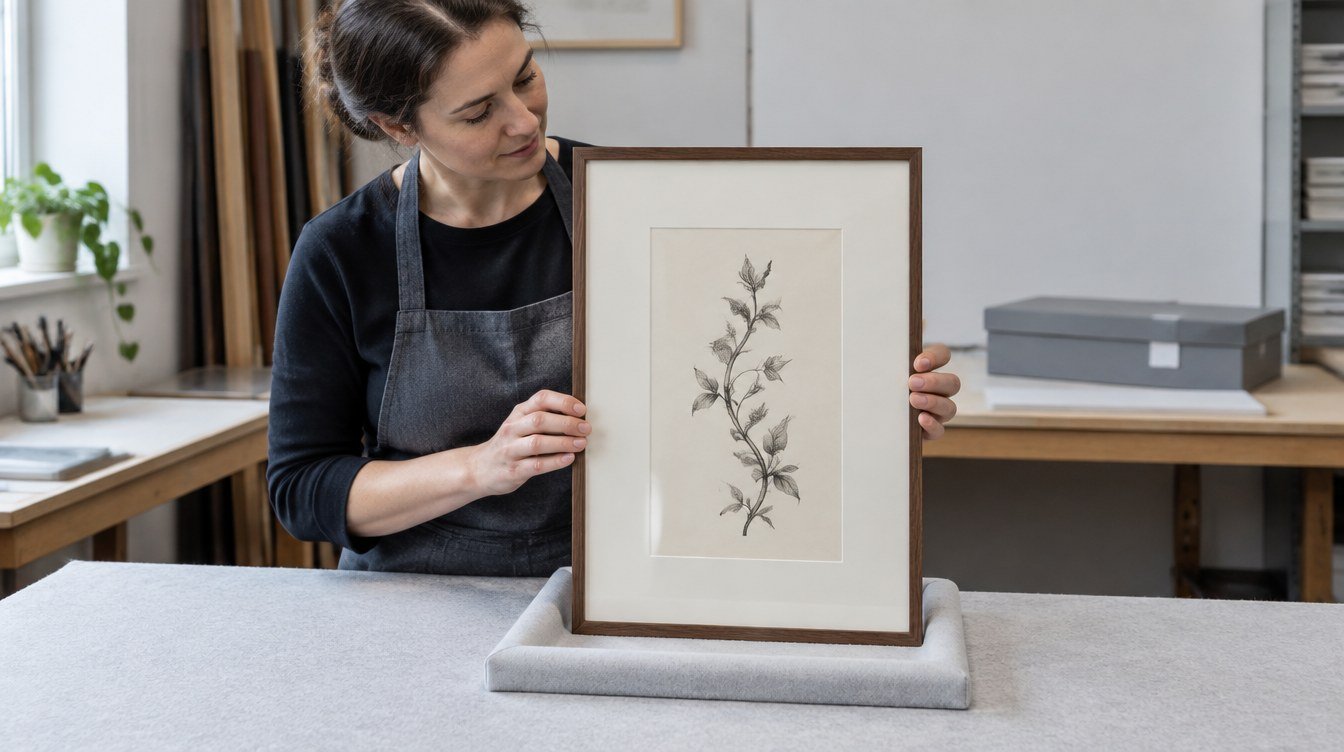
A frame shapes the viewing experience. The width and colour of a mat affect the space around the image; glazing affects reflection; the outer frame introduces another line. Begin with the work’s needs, then consider the room.
Discuss conservation-appropriate mounting and separation from the glazing with a framer experienced in works on paper. The Canadian Conservation Institute’s framing guidance is a useful reference. Avoid household glues and adhesive tapes applied directly to the artwork. A float mount may reveal the sheet’s edges, but it needs a method suitable for that particular paper and medium.
Charcoal, pastel and other easily disturbed surfaces require particular care. The Canadian Conservation Institute’s paper-care guidance warns that static from plastic enclosures can affect friable media. Tell the framer exactly what the work is made from, and ask for a solution appropriate to its surface.
For display, keep paper artworks out of direct sunlight and away from heat sources. UV-filtering glazing helps with one source of damage, but it does not make exposure to visible light harmless. The Institute’s preventive-conservation guidance for paper explains how light sensitivity varies between materials. Seek specific advice for vulnerable works and consider rotating what you display.
Store unframed pieces in suitable archival enclosures, with guidance for any delicate surface. Keep cleaning and repairs in the hands of a paper conservator. An eraser, damp cloth or household cleaner can alter a mark that is part of the artwork.
Part 07 · Living with the work
Give Drawings Their Own Place in the Collection
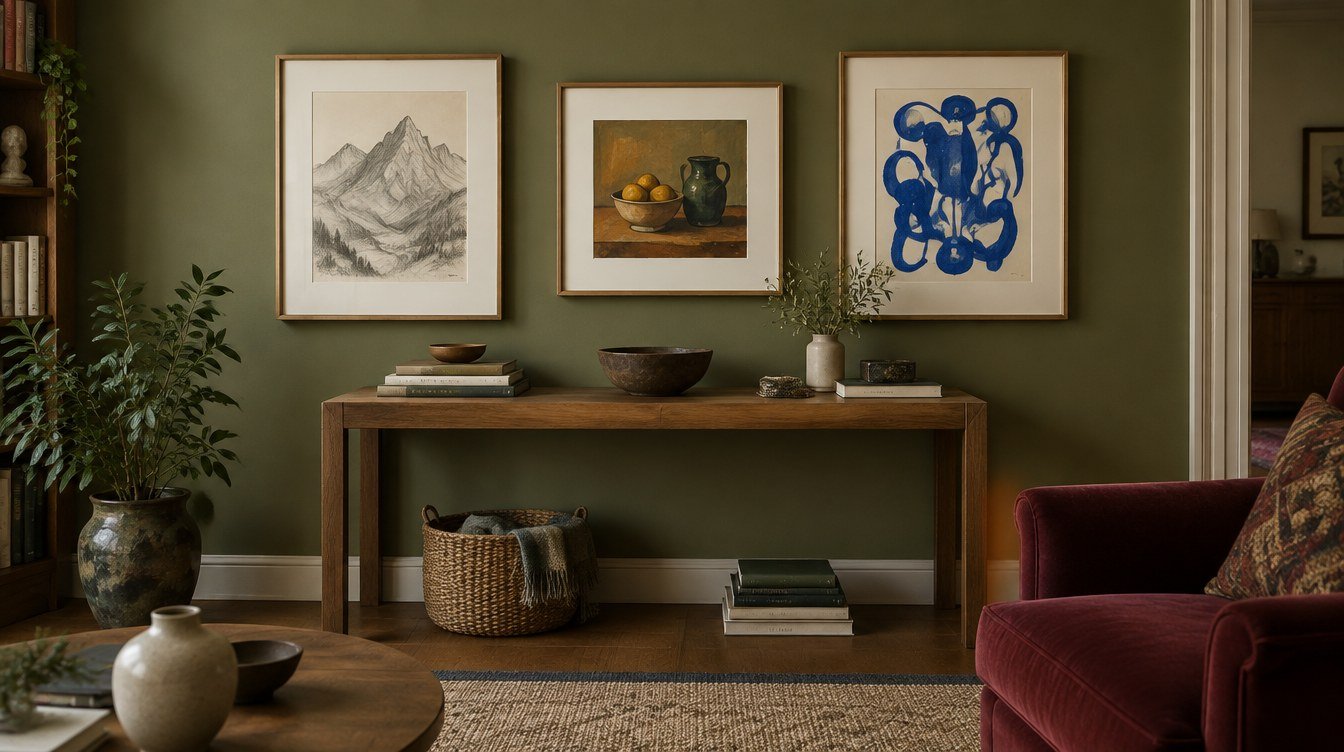
A drawing beside a painting can create a productive difference in pace. The painting may command attention across the room; the drawing may reward a closer approach. They can share a subject or contrast in mood without matching in every detail.
Try to explain the relationship in a sentence. Perhaps both works organise space through a repeating line, or one brings a quieter interval to a group of strong colours. That connection gives a collection more coherence than choosing everything to coordinate with the furniture.
Placement should allow both attention and care. A protected wall near a reading chair may encourage regular looking. A sunny window or damp bathroom may be unsuitable even if the arrangement looks appealing. Confirm the full framed size and lighting conditions before deciding where a piece belongs.
Before purchasing, use our first-original-artwork guide for seller records, total costs and delivery questions. For this category, add a clear description of the medium, paper, mounting and condition. Keep photographs and care instructions with the invoice.
A thoughtful paper collection can grow through curiosity: a new technique, a recurring motif or another side of an artist’s practice. The most important addition is a work that makes you look again. Paper gives that encounter a surface, a scale and a rhythm of its own.
Explore the ideas and individual practices behind the artwork. Discover artists’ materials, creative journeys and perspectives at Best Art Gallery.
Frequently Asked Questions
Are works on paper always sketches?
No. Some are studies, while others are complete independent works. Drawings, watercolours, gouaches and collages can be conceived specifically for paper. Ask about the purpose and context of the individual piece.
Are drawings less valuable than paintings?
There is no universal rule. Prices depend on the artist and the particular work, including its date, significance and condition. Artistic quality also cannot be ranked by support alone. Compare relevant examples rather than assuming paper means lower importance.
Can I hang a watercolour in a bright room?
Choose a position away from direct sunlight and ask about the sensitivity of its pigments and paper. UV-filtering glazing does not eliminate visible-light damage. A framer or conservator can help assess the proposed location and display arrangements.
Should the artwork touch the glass?
Discuss a suitable separation between the surface and glazing with a conservation-minded framer. A window mat or spacers may be appropriate. The mounting and glazing should suit the paper, dimensions and medium, especially for charcoal or pastel.
How can I recognise an original work rather than a reproduction?
Ask how the image was made and request a precise medium description. Hand-drawn or painted marks and original printmaking involve different processes; signatures alone do not settle the distinction. Review the artist or seller’s documentation and seek specialist advice when needed.
Works on Paper
Drawing
Art Collecting
Watercolour
Images are AI-generated editorial illustrations of imagined artworks and settings, not photographs of named artists’ works or museum collections. Research checked on 5 October 2026.
