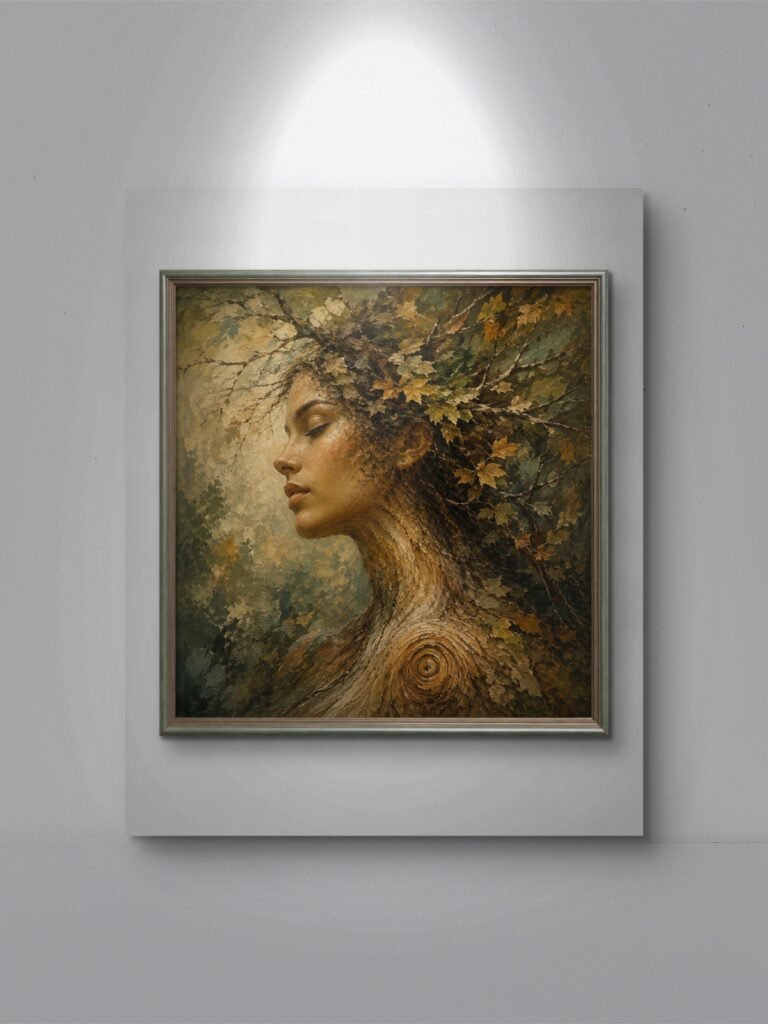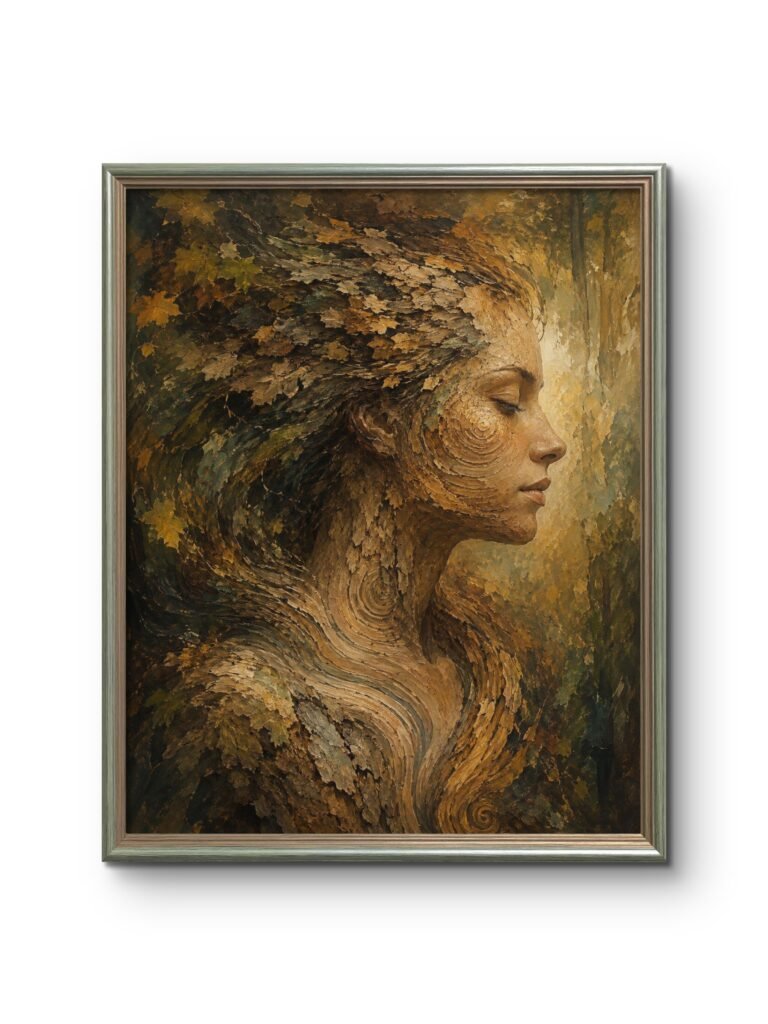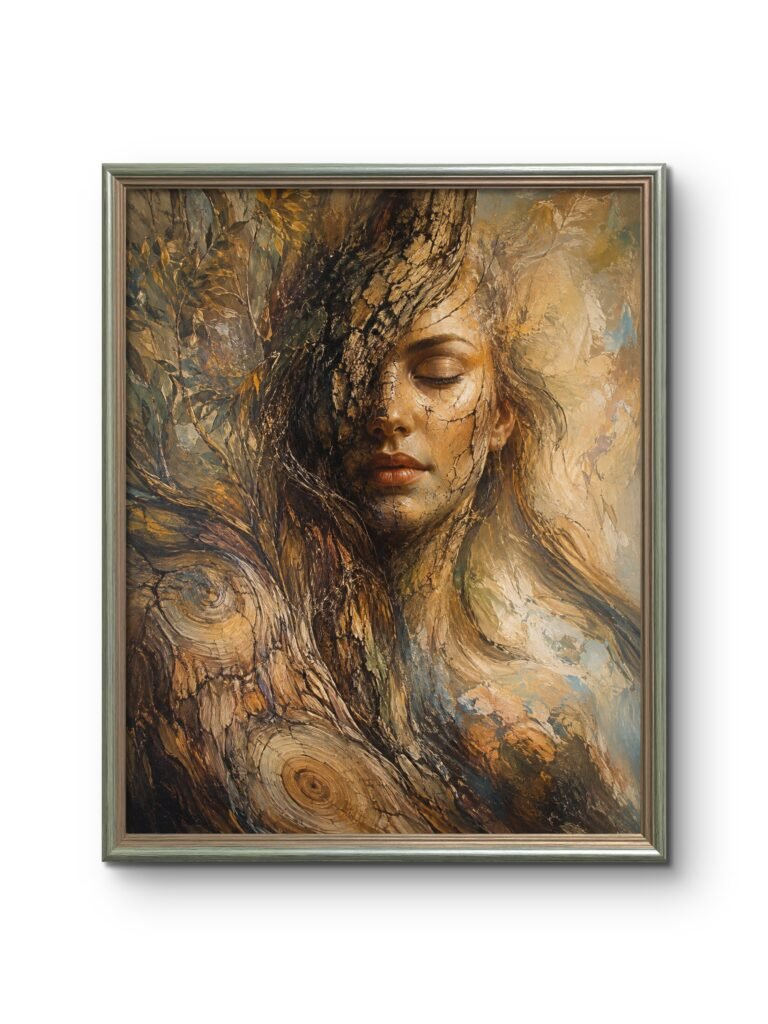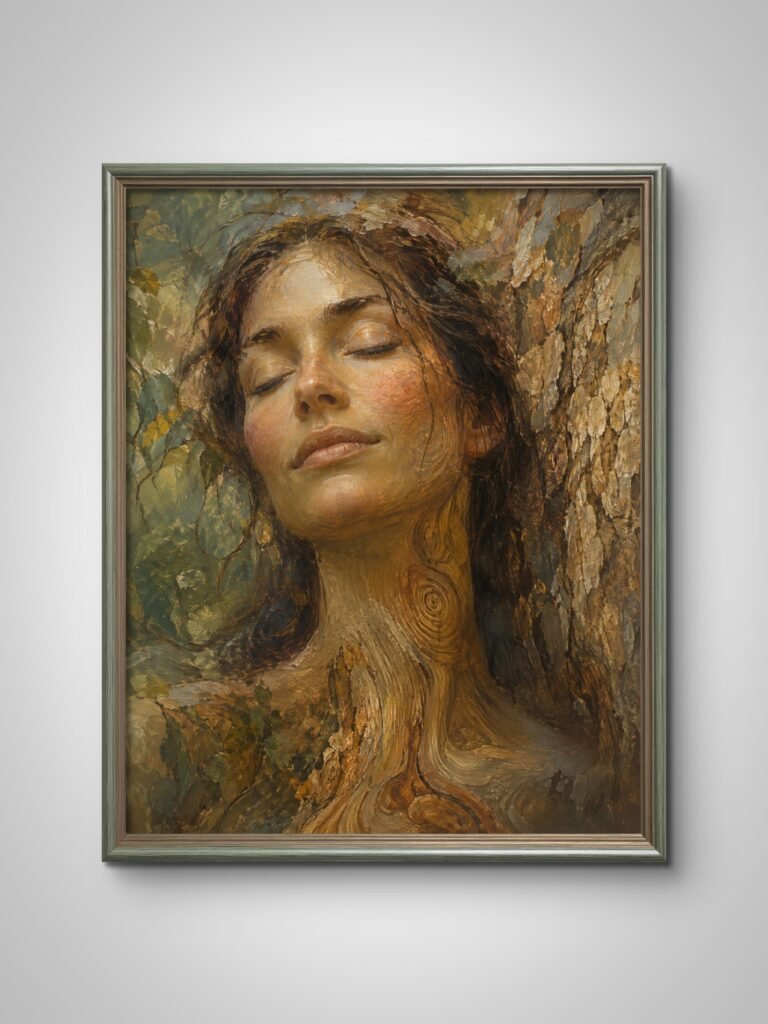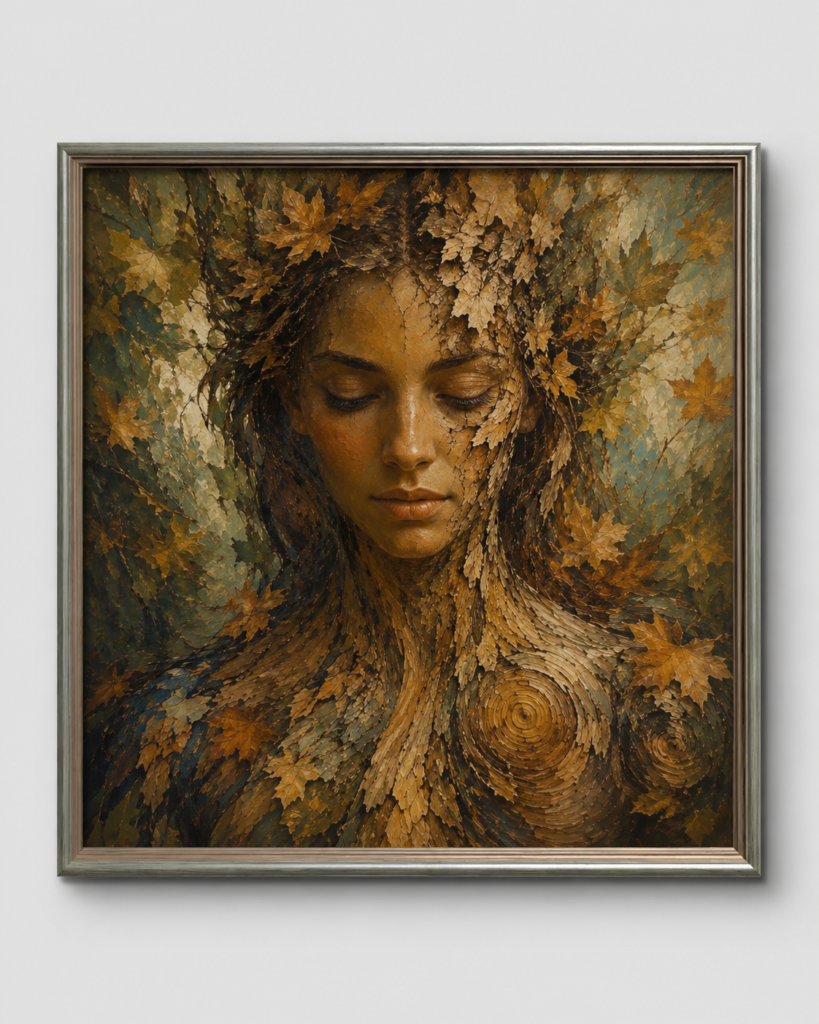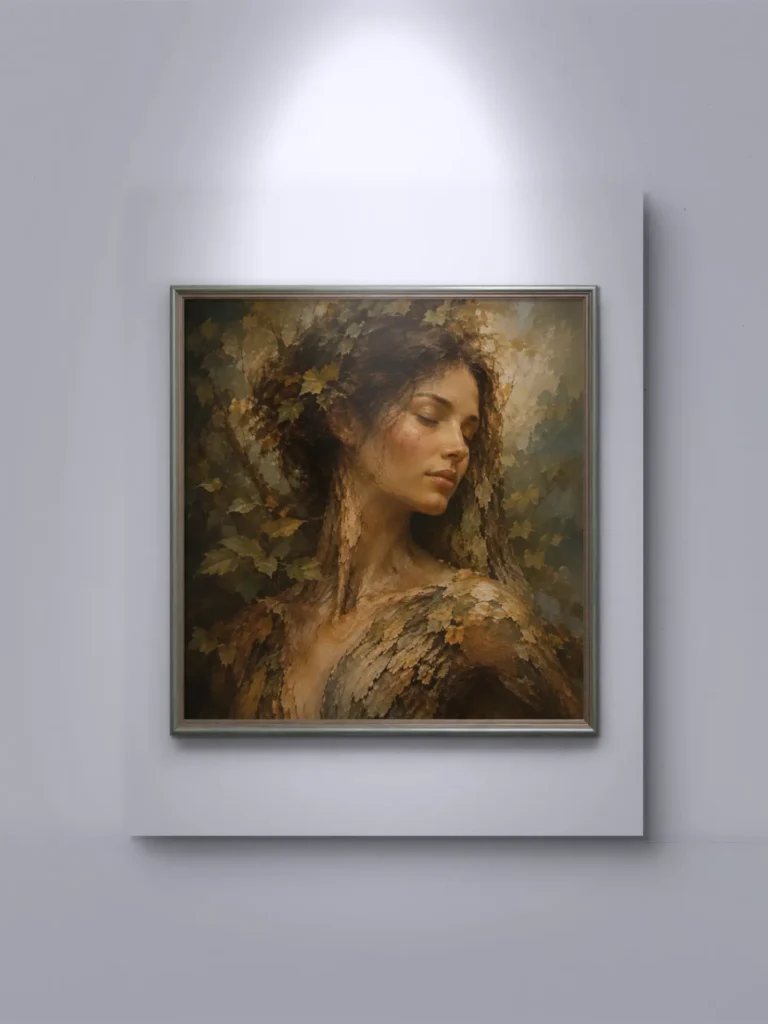
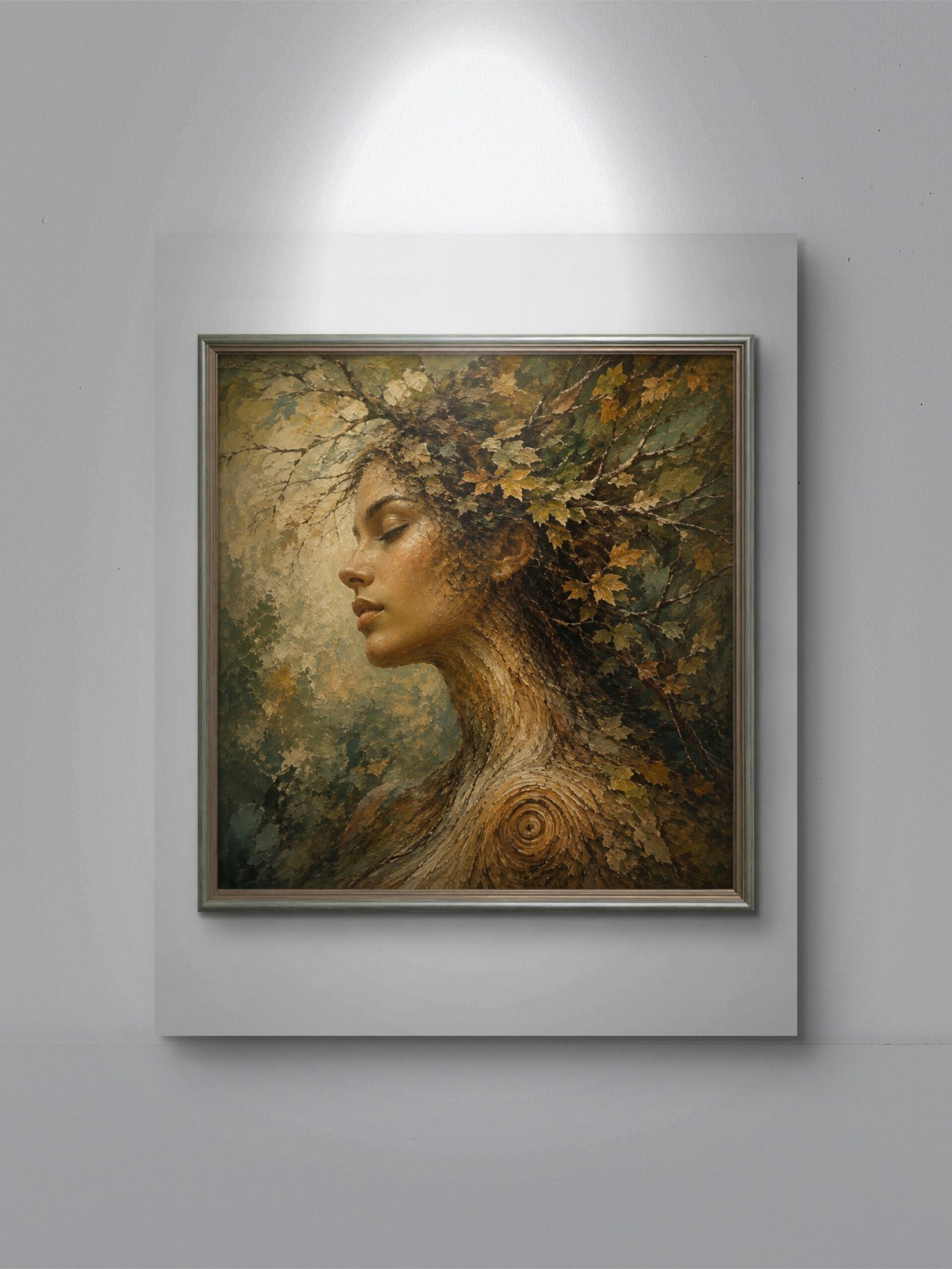
There is a quiet interconnectedness at the heart of Patrycja Joanna Sikorska’s practice. The Polish artist, independent curator, and writer approaches art as a way of looking beyond the immediately visible, tracing connections between nature, memory, human emotion, landscape, and time. Her interdisciplinary practice moves freely between painting, drawing, sculpture, mixed media and digital or generative processes, with the medium always chosen in service of the idea.
She also selectively explores digital and generative processes, including AI, within particular projects, treating technology as one of many possible creative tools rather than as a defining medium. Across these different forms, recurring themes begin to surface: transformation, ancestral memory, belonging, spirituality and the emotional ties between people and place. Trees hold particular significance within this world, appearing not simply as elements of landscape but as living presences carrying histories, vulnerabilities and traces of time.
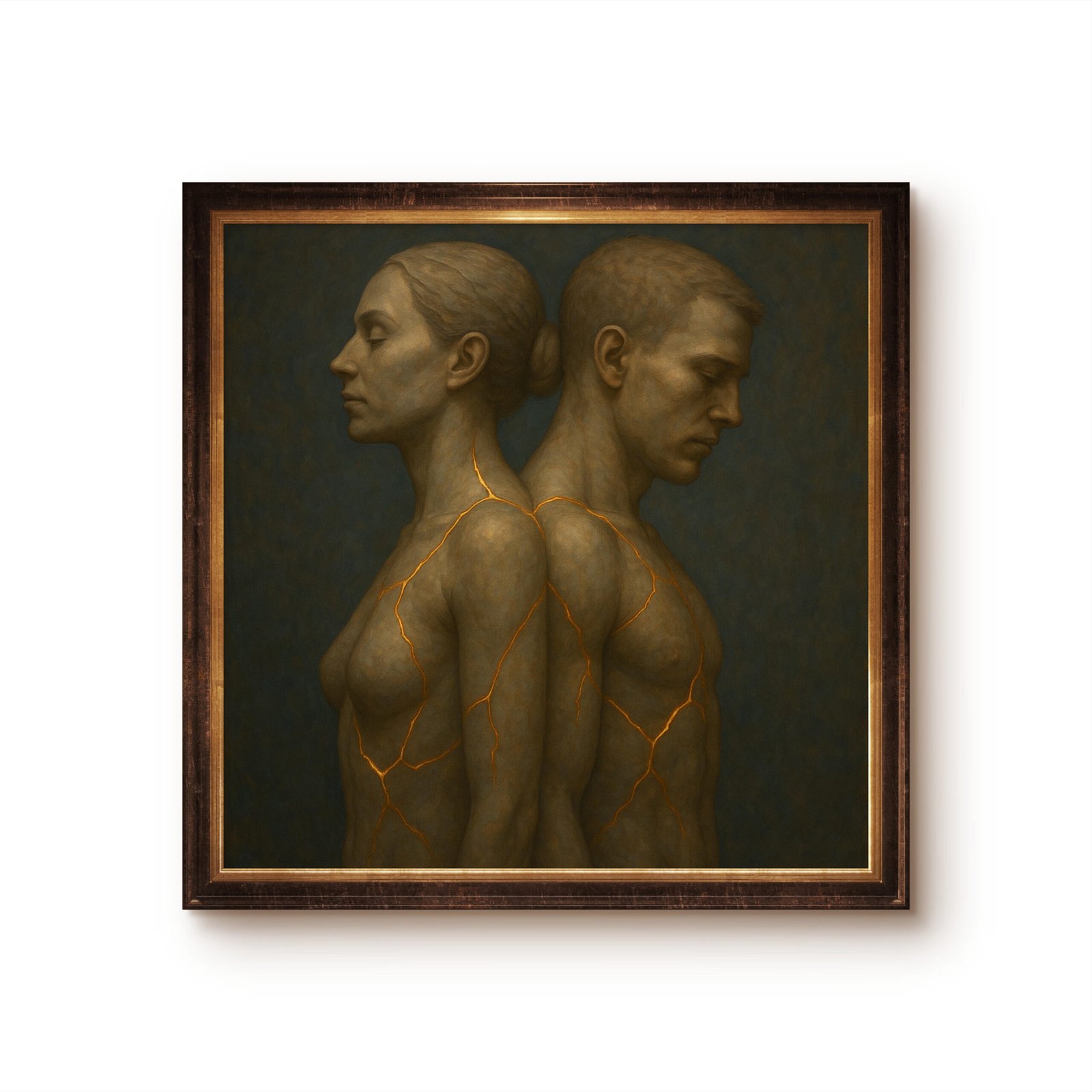
What makes Sikorska’s journey particularly interesting is the way several creative disciplines have gradually grown into one another. Writing, curating, research and visual art once occupied different spaces within her life. Over time, those boundaries became less important. Curatorial work sharpened her attention to context and intention, while writing developed an awareness of nuance, silence and what remains unsaid. Visual art offered another possibility: a language for experiences that resist explanation altogether.
The material dimension of this practice is equally significant. Her material works often incorporate unconventional elements such as charcoal, river clay, resin and powdered minerals, allowing matter itself to become part of the narrative. Rather than functioning merely as surfaces or techniques, these materials connect the ideas within the work to the physical world from which they emerge.
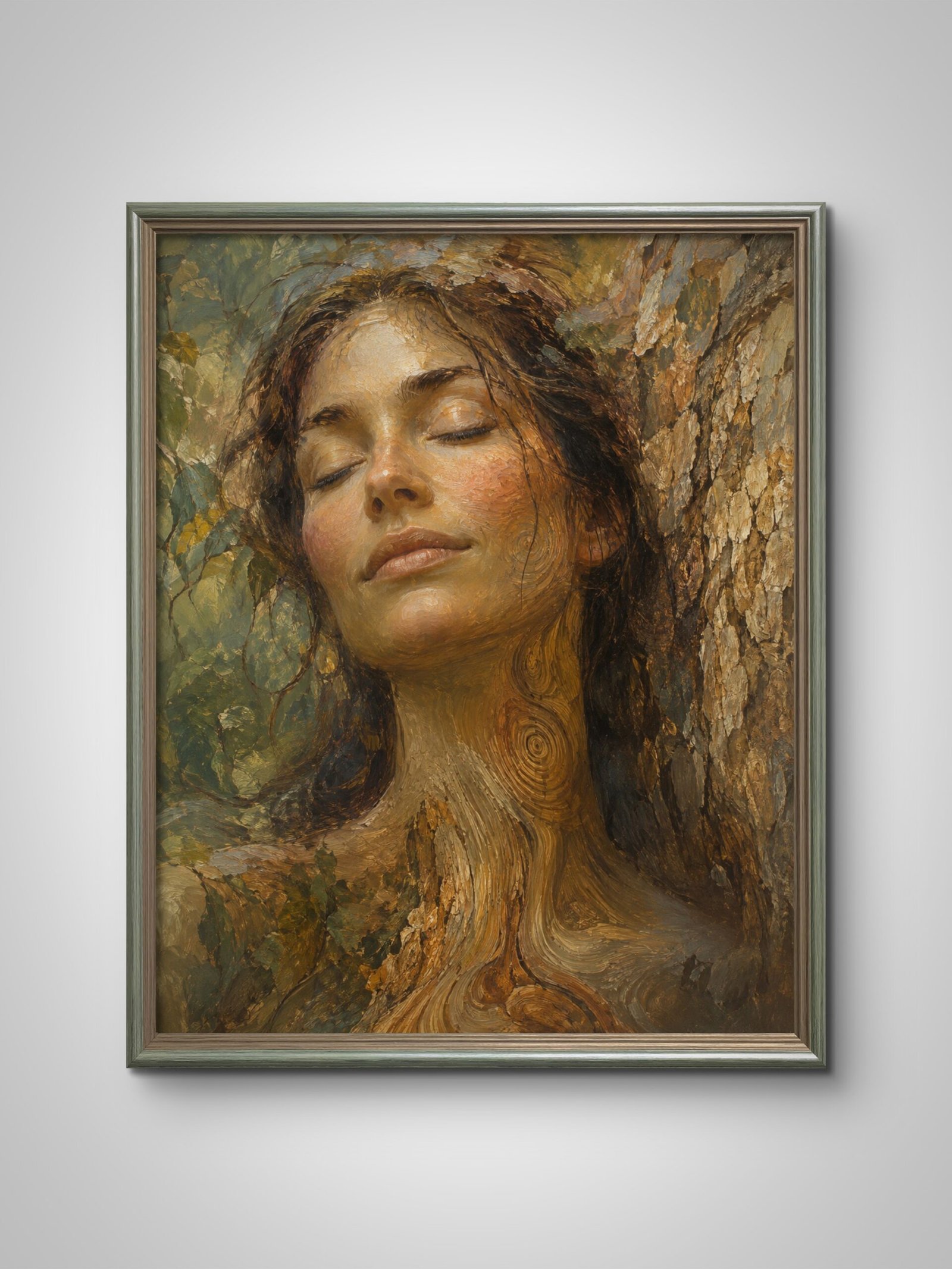
Looking closely is central to this practice. An old tree, a disappearing forest, a landscape marked by history, a fleeting human gesture or a moment of silence can all become points of departure. Rather than allowing such encounters to disappear into the pace of everyday life, the work stays with them. In this sense, creating becomes an act of attention. It asks what we have stopped noticing and what might become visible if we look again.
This sensitivity has also carried the work into international contexts, allowing its questions around nature, memory, identity and human connection to encounter viewers beyond a single place or cultural setting. Yet however far the work travels, its attention remains rooted in experiences that are both intimate and universal.
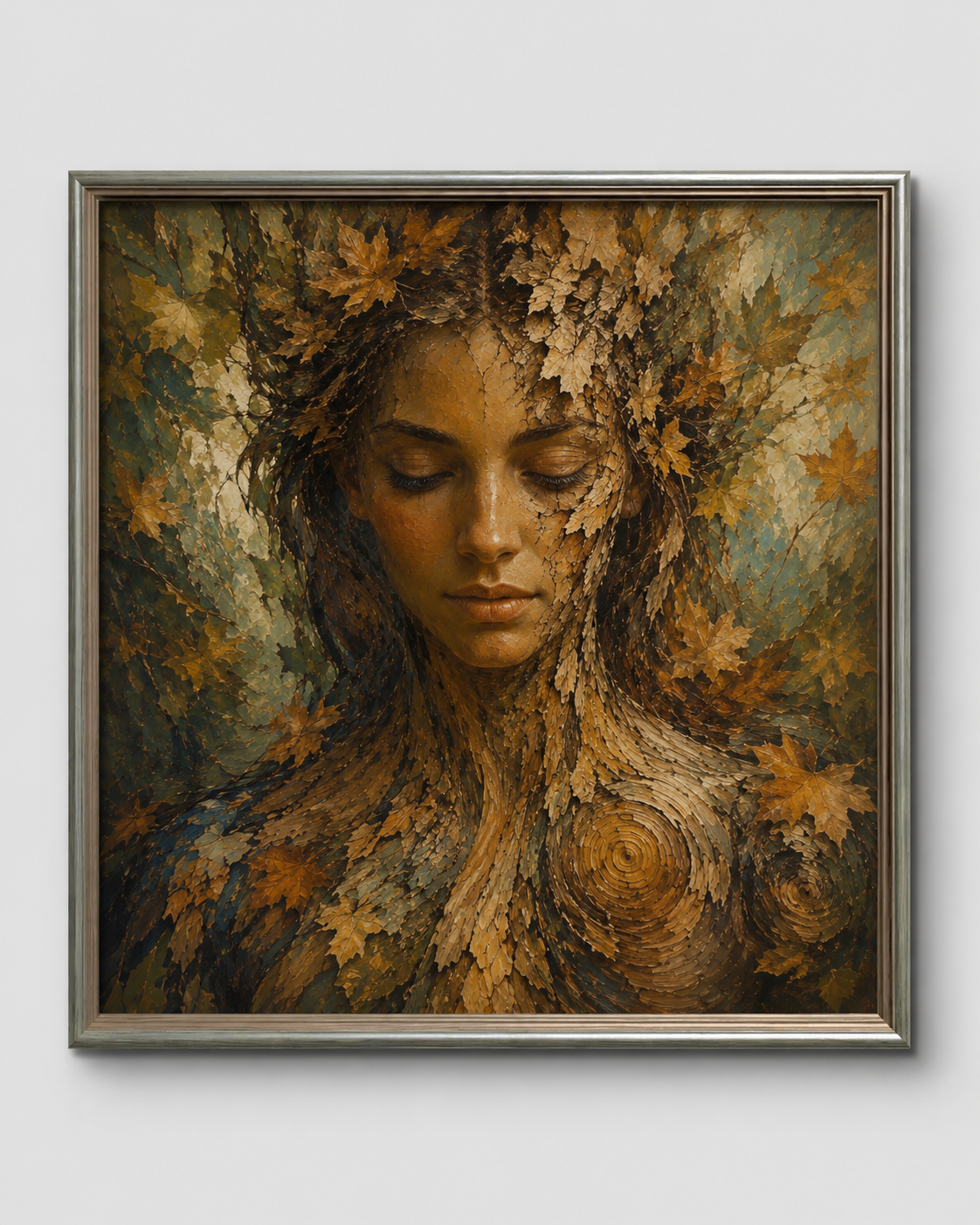
Nature in these works is never simply scenery. Human beings, bodies, trees, memory, landscape and history belong to the same interconnected system. This perspective gives the recurring presence of trees a deeper significance. They can suggest ancestry and endurance, but also fragility, transformation and loss. A landscape can therefore become something psychological as easily as it becomes ecological.
By moving between these meanings, the work encourages us to reconsider the distance we often place between ourselves and the natural world. Human beings are not positioned outside nature looking inward. Instead, they exist within the same living network — affected by it, dependent upon it and inseparable from its transformations.
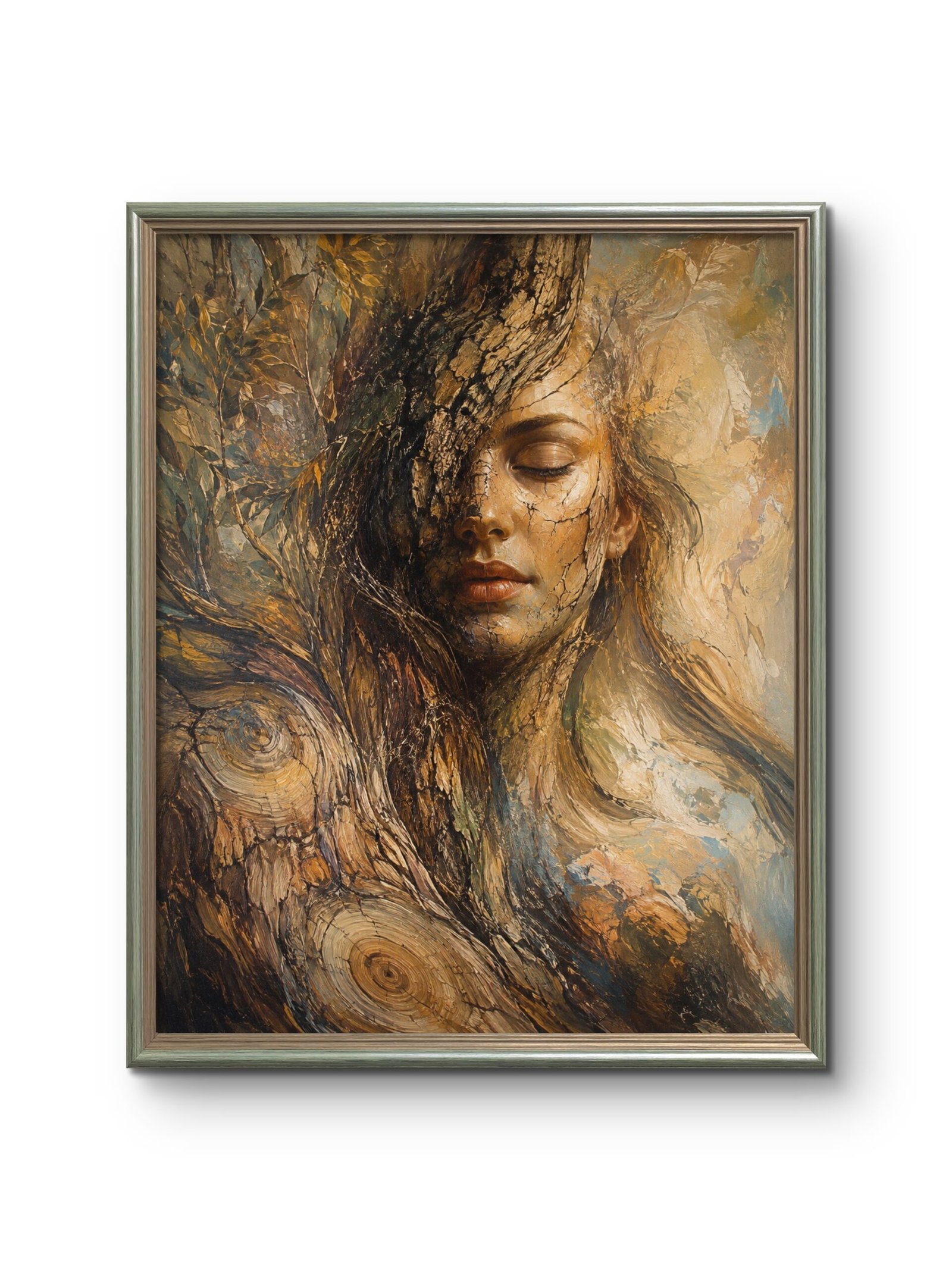
Perhaps the most intriguing territory in Sikorska’s practice exists between states. Presence meets disappearance. Growth exists beside decay. Memory begins to resemble imagination, while physical forms move toward something spiritual. A figure might appear to merge with bark, an external landscape can transform into an inner state, and even a cosmic event can begin to carry emotional meaning. These shifts resist straightforward interpretation and instead draw attention toward connections we may sense before we fully understand them.
Her sculptural practice gives these ideas another physical dimension. Organic structures, bark, roots and the human figure begin to merge, giving rise to guardian-like presences that explore memory, care and the interdependence of living systems. Sculpture allows relationships between body, material and nature to move beyond the image and occupy physical space.
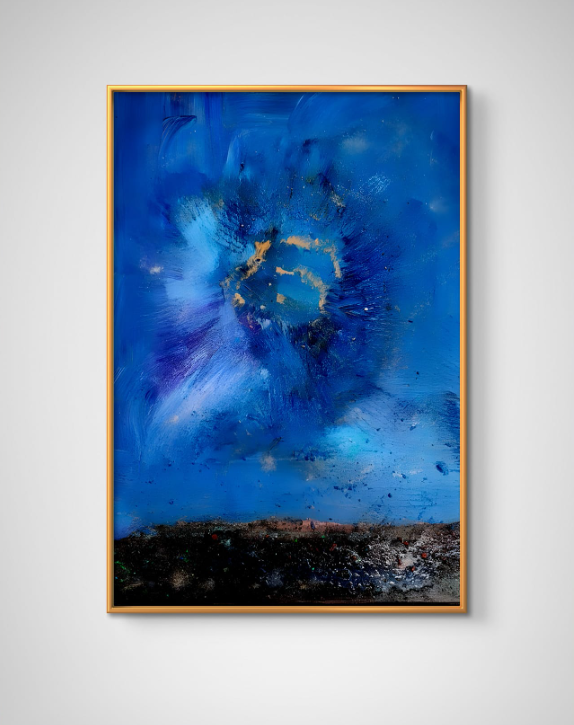
There is intentionally no single conclusion waiting inside these artworks. Once a piece leaves the artist’s hands, another experience begins between the work and the person standing before it. Memory, attention, emotion and personal history inevitably change what each viewer discovers. This openness gives the work room to continue evolving beyond its creation.
Paul Klee’s words — “Art does not reproduce the visible; rather, it makes visible” — feel especially relevant here. Sikorska’s practice follows a similar path: rather than telling us exactly what to see, it creates the conditions for something previously unnoticed, unnamed or perhaps only felt to become visible. The artwork therefore remains unfinished in a conceptual sense until another person encounters it and brings their own memories, associations and way of seeing into the conversation.