
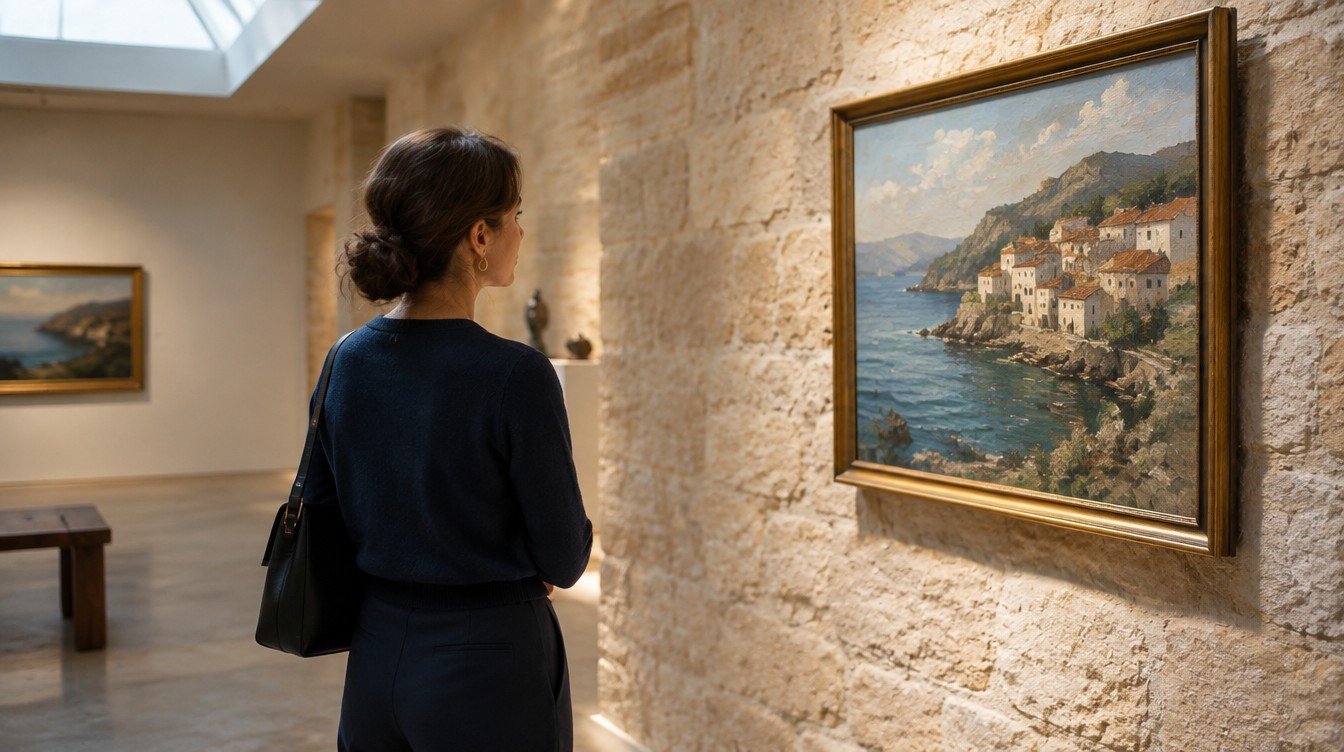
Buying your first original artwork often begins with a surprisingly quiet moment. You stop in front of a painting, return to a drawing on your screen, or notice a print that stays in your mind after you leave. Then comes the practical question: what should you check before paying?
You do not need an art-history degree to make a thoughtful purchase. You need time to look, a clear understanding of the object, and an agreement that explains the price and what happens next. This guide takes you through those decisions, from the first viewing to the day the artwork arrives.
Part 01 · Choosing
Start with the Work You Want to Live With
Before researching prices, spend a little longer looking. What draws you back: a particular colour relationship, the rhythm of a line, an unfamiliar subject, or a detail that only reveals itself slowly? Your answer can be simple. It should be yours.
Look at several works by the same artist. A wider view helps you understand whether this piece belongs to a sustained practice and whether your interest extends beyond a single striking photograph. Read the artist’s statement, but leave room for your own response.
If possible, revisit the work on another day. An exhibition opening, a sales deadline or an enthusiastic friend can influence the moment. A useful test is whether you would still want the artwork if nobody else saw it and you never resold it.
— Best Art Gallery editorial perspective
Part 02 · Understanding the object
Find Out Exactly What “Original” Means
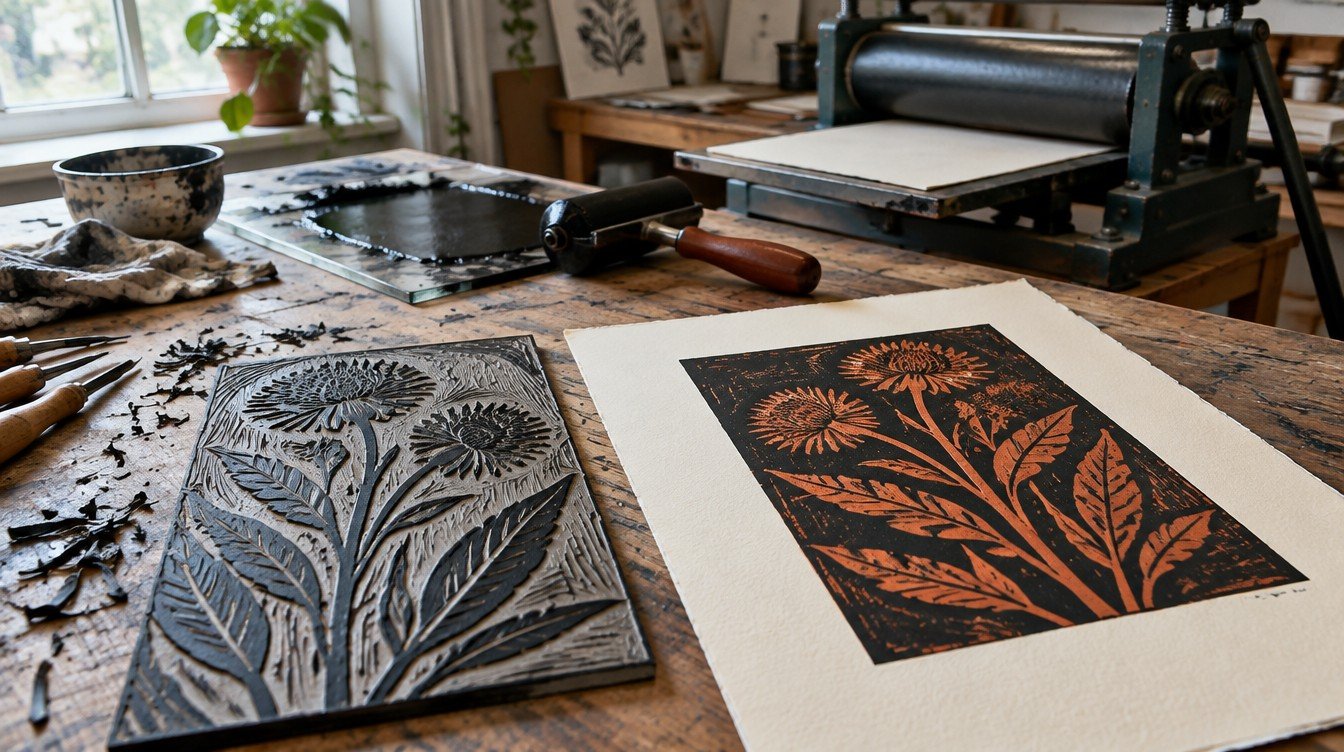
An original painting may be a unique object. An original print can exist in multiple impressions, created through a printmaking process such as etching, lithography or relief printing. Editioned work is a legitimate collecting category; a lower price does not automatically make it a reproduction.
A reproduction usually translates an existing artwork into another printed format. The distinction is about how the work was conceived and produced. A signature or edition number alone cannot settle the question.
Ask for the precise medium and support: oil on linen, graphite on paper, or linocut on cotton paper, for example. For an edition, request the edition size, the number of this impression and details of any artist’s proofs or other variants. Ask whether other sizes or editions exist. Terms such as “limited edition” need an explanation.
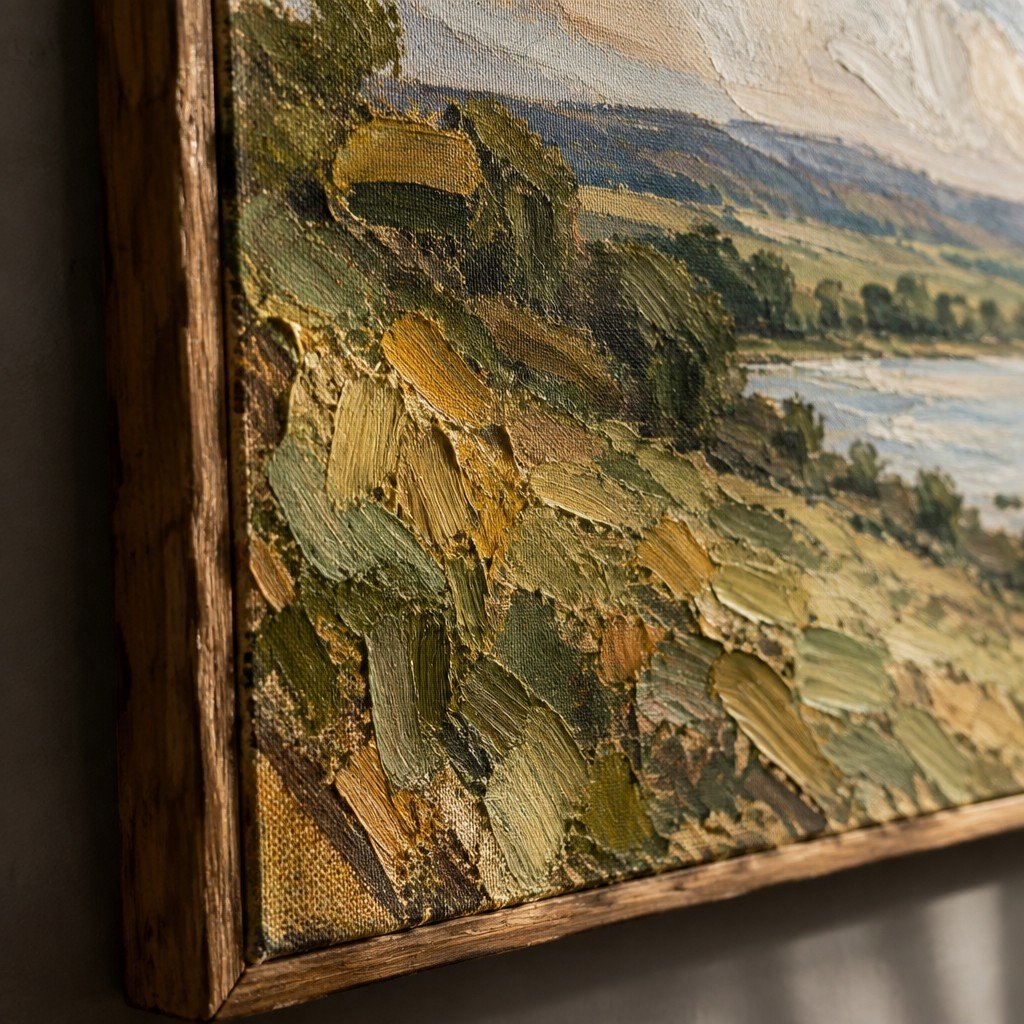
For a hand-pulled print, small variations may be part of its making. For a painting, visible texture may be intentional. Understanding the process helps you distinguish character from a condition problem. The Metropolitan Museum’s Drawings and Prints department offers a useful introduction to the range of works on paper.
Part 03 · Budget
Calculate the Cost Beyond the Price Tag
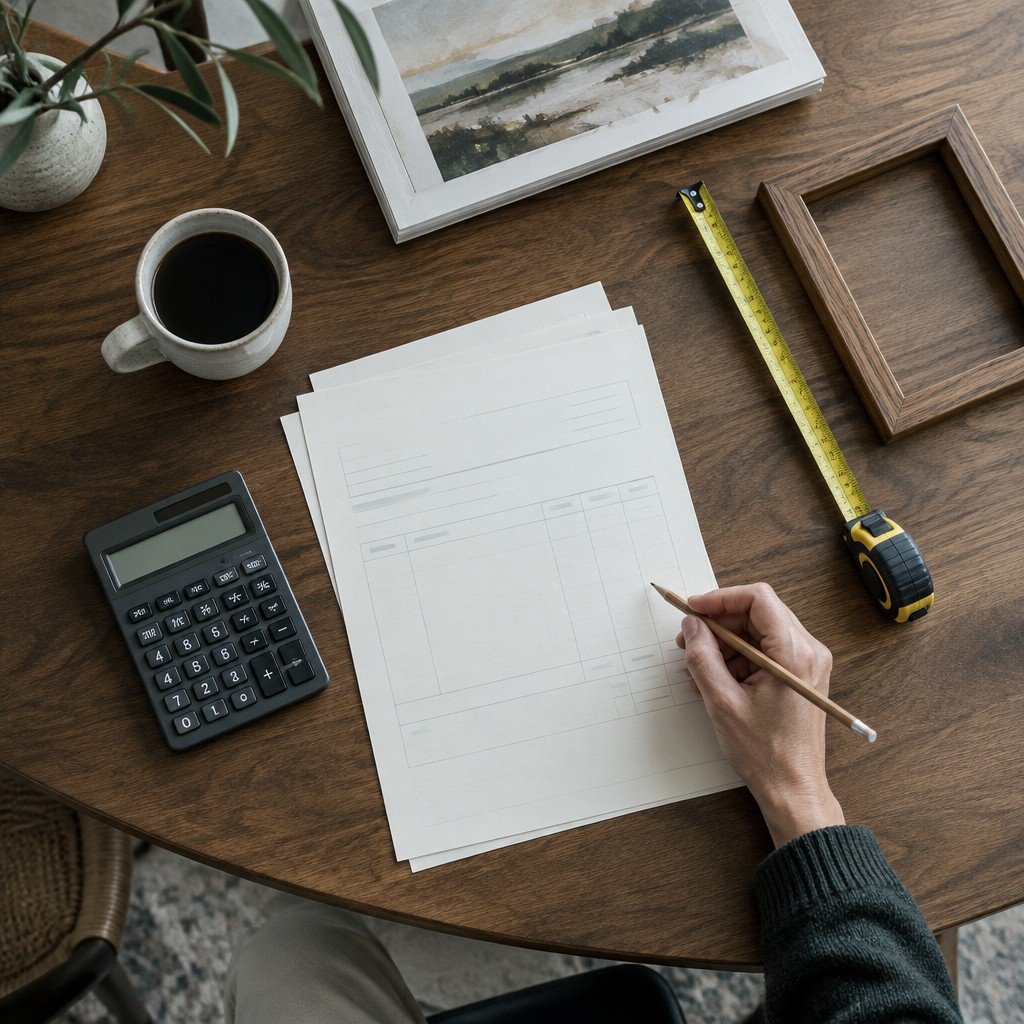
Set a total spending limit before discussing the purchase. The artwork price is one part of that total. Framing, delivery, transit insurance and applicable taxes can change what you actually pay. An international shipment may also involve import charges or customs-handling fees.
Request an itemised quote and ask which charges are estimates. Confirm the currency and whether a displayed price includes tax. If buying at auction, check the buyer’s premium and other published fees before bidding.
As a hypothetical example, an $800 artwork plus $150 framing and $80 delivery totals $1,030 before any applicable tax or other charges. These figures illustrate the calculation; they are not market prices.
If you need a payment plan, clarify the instalments, any fees, cancellation terms and when the work will be released. A purchase should leave you able to enjoy the artwork without financial strain.
Part 04 · Seller and records
Know Who Is Selling and Keep a Clear Paper Trail
Buying directly from the artist, from a gallery, or through a resale seller involves different histories. For a newly made work, ask how the seller is connected to the artist. For a previously owned piece, request the available ownership history and supporting records. A gap in the history deserves a question rather than an invented explanation.
Check the seller’s identity, contact details and payment instructions. If bank details change unexpectedly, verify the change through a previously established contact route before sending money.
Ask for an invoice that identifies the work clearly: artist, title, date if known, medium, dimensions, edition details where relevant, price, currency and seller. Keep the paid receipt and the correspondence that records your agreement.
A certificate of authenticity can be useful, but ask who issued it and what supports it. It is not a substitute for investigating the seller and the artwork. Equally, not every legitimate artwork comes with a certificate. Artsy’s guide to purchasing from a gallery recommends retaining the invoice and explains that certificates are not universally supplied.
Part 05 · Inspection
Check Condition, Scale and Framing
A beautiful listing photograph rarely answers every practical question. Request a straight-on image, close-ups, views of the edges and reverse, and information about any damage or restoration. Ask specifically about marks, tears, staining, flaking paint or other concerns relevant to the medium.
If viewing in person, ask the seller to show the reverse and any areas of concern. Avoid handling the work without guidance. For an older, expensive or technically complicated purchase, an independent conservator or appropriate specialist may help you understand what the condition means.
Confirm whether the dimensions describe the image, sheet, canvas or framed object. Use removable paper or tape to mark the full framed size on your wall. This simple exercise often reveals more than an online room mockup.
Ask whether the frame is included, whether it needs attention, and whether suitable hanging fittings are supplied. A frame that looks attractive in a photograph may still require a framer’s assessment.
Part 06 · The agreement
Put the Important Terms in Writing
Before paying, establish the payment schedule, delivery estimate and cancellation or return arrangements. Ask whether a return is possible, the deadline, any exclusions and who pays for packing and transport. Policies and legal rights vary by seller, buying method and location; confirm what applies to your transaction.
For a commissioned work, agree on the dimensions, medium, deposit, expected completion, revision process and what happens if the brief changes. Do not assume that a made-to-order piece has the same return terms as an existing artwork.
It is reasonable to ask whether the price is fixed. It is also reasonable for an artist or gallery to decline a discount. Clarity matters more than winning a negotiation. Be cautious when a seller pushes you to pay before answering basic questions.
Part 07 · Delivery and care
Plan the Journey to Your Wall
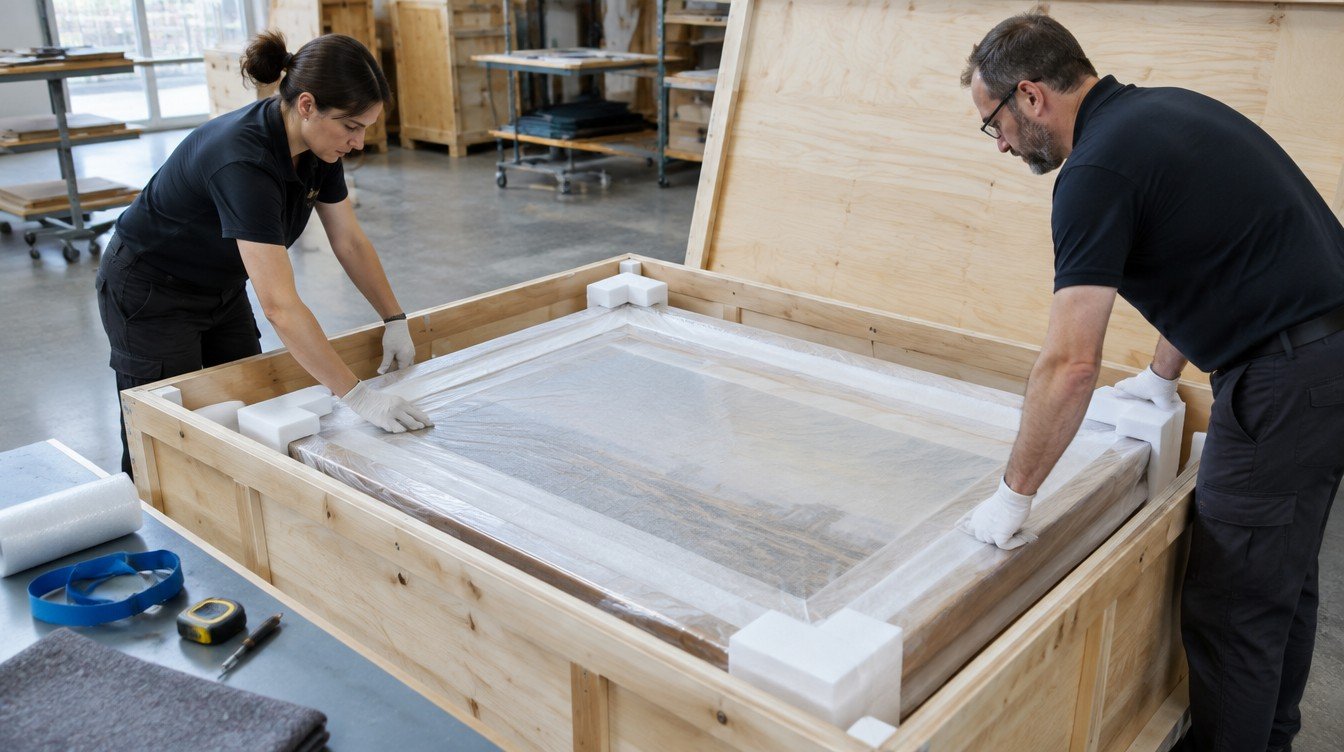
Confirm who arranges packing, which carrier will be used and what transit cover applies. Ask how a damage claim would be handled and whether there is a reporting deadline. Larger, fragile or high-value works may need a specialist art transporter.
On arrival, photograph the package before opening it and document the unwrapping. Follow the seller’s instructions and keep the packing materials until you have checked the work. If there is damage, contact the seller promptly and preserve the evidence.
Choose the display location with the medium in mind. The Canadian Conservation Institute’s painting-care guidance advises against direct sunlight. Its guidance for works on paper also discusses appropriate glazing and avoiding locations with fluctuating temperature and humidity.
Ask for care advice specific to the artwork. Keep it away from splashes and heat sources, use appropriate hanging hardware, and consult a conservator about cleaning or repairs. Do not experiment with household cleaners on the surface.
Before You Pay: The Final Check
- The object: I know its medium, dimensions and edition status.
- The condition: I have inspected it or received adequate images and disclosures.
- The total: I understand included costs and any unresolved charges.
- The agreement: Payment, delivery and return terms are recorded.
- The records: The invoice will identify the artwork and seller.
- The home: I have a suitable place and a care plan.
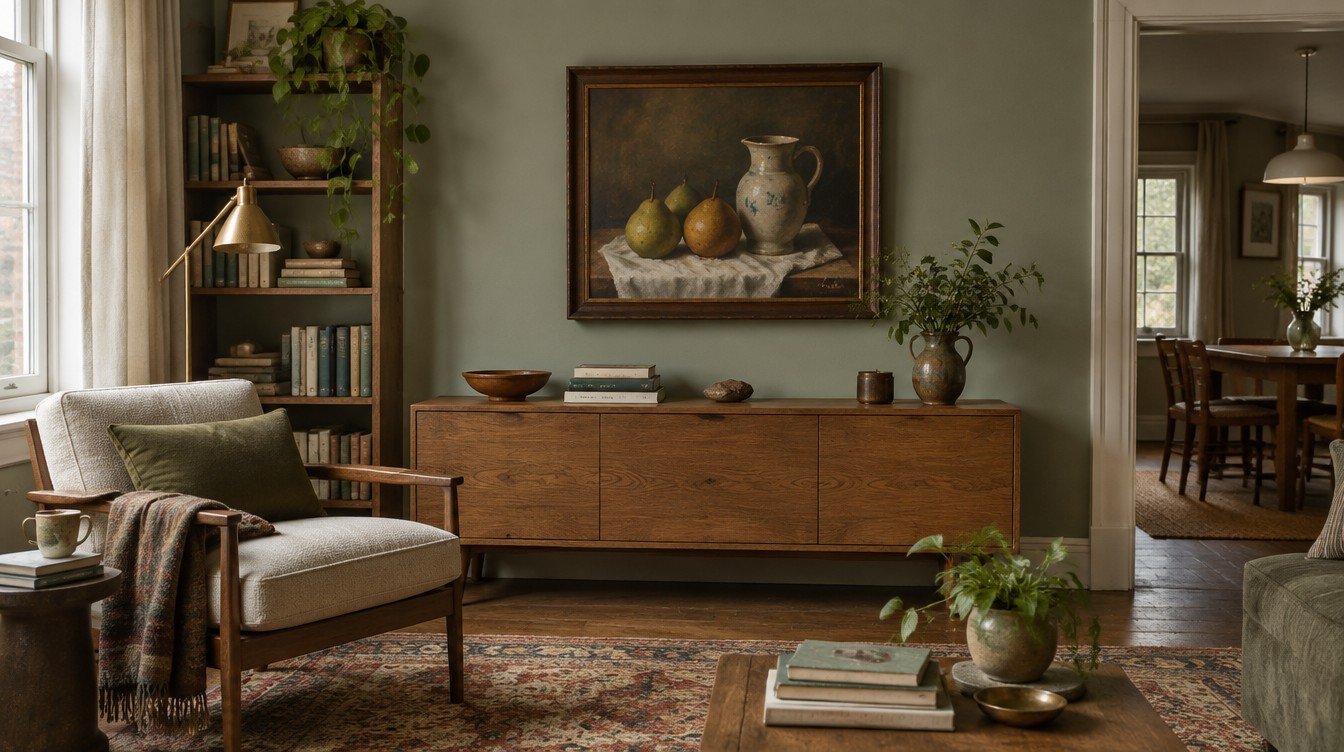
Your first purchase does not need to define the collection you will build later. It can be a drawing, a small painting or an original print that opens a new way of looking. What matters is that your interest has survived the practical questions.
Once the work is home, keep a digital folder with the invoice, photographs, artwork details and care instructions. Then give yourself time to live with it. The most rewarding part of collecting often begins after the payment: noticing what the work brings to an ordinary day.
Begin with an artist’s practice. Explore the materials, ideas and individual perspectives behind the work.
Frequently Asked Questions
How much should I spend on my first original artwork?
There is no required starting amount. Set a comfortable total budget that includes the work and confirmed additional costs. Compare options within that limit and avoid relying on hoped-for resale profits.
Can an original print be a good first purchase?
Yes. Ask how it was made, whether it is an original print or a reproduction, and what the edition information means. Choose a work you want to live with rather than treating an edition number as a guarantee of value.
Should I buy online or view the artwork in person?
An in-person viewing makes surface, scale and colour easier to assess. If buying online, request detailed images and written information. Screen colour varies, so ask about any difference between the photograph and the physical work.
What if the artwork arrives damaged?
Document the packaging and damage, keep the materials and contact the seller promptly. Follow the agreed reporting and claim process. Confirm that process before purchase.
Will my first artwork increase in value?
Future resale value is uncertain, and selling can involve costs and delays. For a first purchase, prioritise affordability, reliable information and lasting personal interest.
Art Collecting
Contemporary Art
Emerging Artists
