
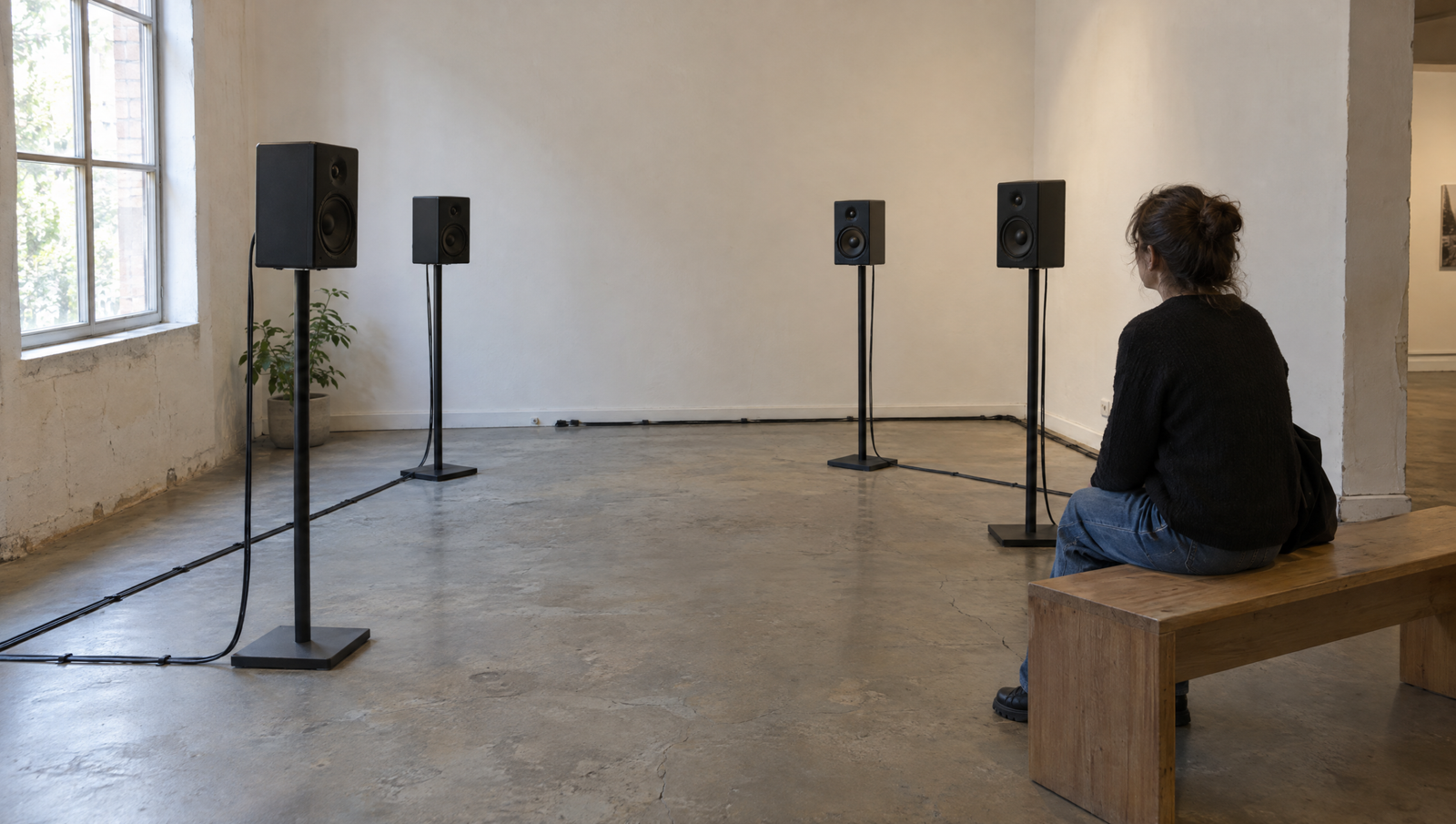
What is sound art? It is art that uses sound as a central material. A voice, a recording, a vibration or a room’s acoustics can become part of the work. Listening, and sometimes moving through a space, helps you encounter it.
Imagine entering a gallery where the first thing you notice is a voice from somewhere behind you. There may be little on the walls. You turn, wait, and realise that standing still is already changing what you hear.
That can feel unfamiliar if you usually begin an exhibition by looking for an object.
At Best Art Gallery, we believe an artist’s thoughts are also art. Sound gives those thoughts another way to reach us. It asks what happens when attention moves away from the surface of a painting and towards an event unfolding around us.
Part 01 · Understanding the medium
What Makes Something Sound Art?
Sound art can involve recorded speech, environmental recordings, electronic tones, instruments or objects that produce sound. Some works occupy a room; others take the form of a walk, a performance or an encounter with a particular place.
The equipment may be ordinary. A speaker, microphone or recorder becomes part of an artist’s decisions about what we hear, where we hear it and how long the experience takes.
Start with the role of the sound. Is it carrying a story, directing your attention to a location or changing as you move? Does the room affect it? These questions are more useful than deciding whether an unfamiliar noise is pleasant.
Sound art can be quiet, musical, unsettling or conversational. Loudness is not a measure of artistic ambition. A small recorded gesture can deserve as much attention as an installation that fills a hall.
Part 02 · A useful distinction
How Is Sound Art Different From Music?
The boundary is open. Artists work with music, and composers make installations. A work does not need to abandon melody to become sound art.
Instead, consider what the presentation asks of you. A song may arrive as a recording you can play in many places. An installation may make the distance between speakers, the shape of a room or your own route through it part of the experience.
That distinction is a starting point, rather than a rule. Concerts can also involve space and participation, while sound artworks can use a fixed recording.
The useful question is specific: what has the artist done beyond selecting something for us to hear? Perhaps separate voices occupy different positions. Perhaps a recording brings another place into the room. Perhaps a physical object changes how a sound is produced.
Background music can accompany an exhibition. In a sound artwork, listening is central to understanding what the artist has made.
Part 03 · Sound as material
What Can Artists Make With Sound?
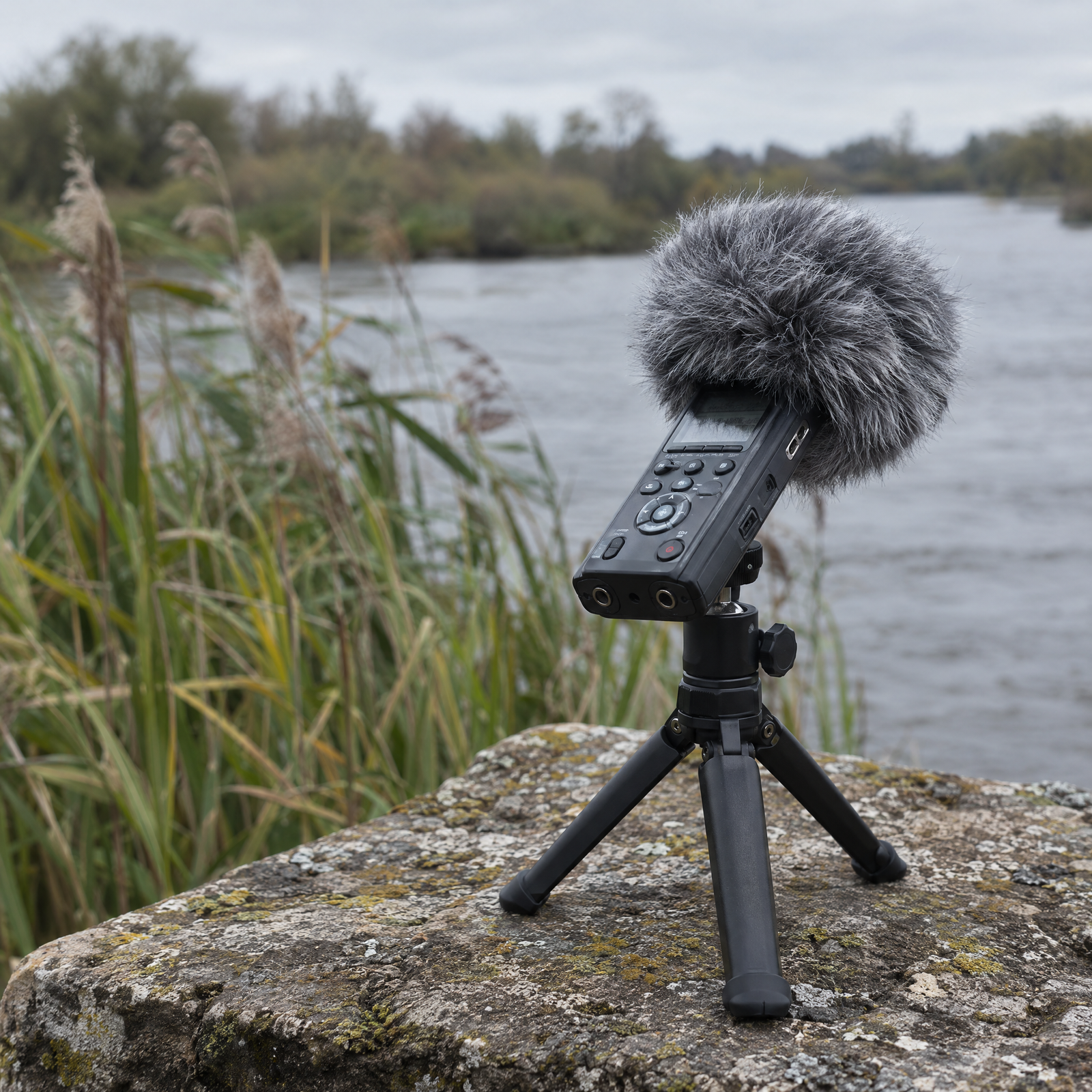
A recording can preserve something that would otherwise pass: footsteps, a brief exchange, wind moving through a doorway. When an artist selects and places that recording, the familiar event gains a different setting.
A voice also carries more than words. Breath, pace, hesitation and the distance from a microphone can affect how we respond. A voice heard close by may feel different from the same voice arriving from across a room.
Other artists begin with objects. A microphone can pick up vibrations from a surface. An instrument can be built for a particular action. Electronics can repeat, delay or alter a sound.
None of this equipment explains the work on its own. Ask what the process lets you notice. The answer might concern a place, a physical sensation or an ordinary sound you had stopped hearing.
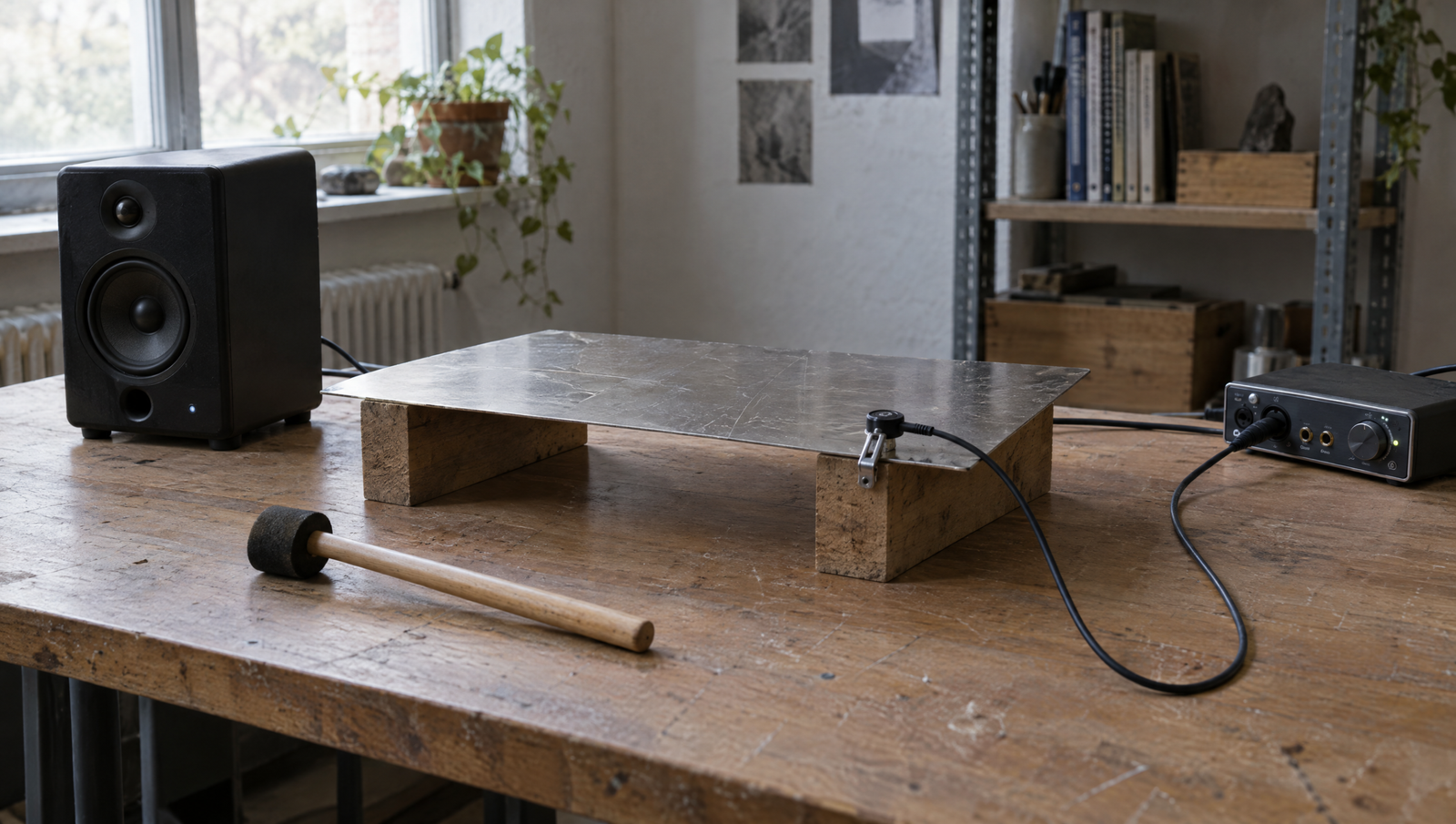
Photographs can show the objects and their arrangement. They cannot fully convey what happens over time. When researching sound art online, look for artist-approved audio or video, a duration and an account of how the work is installed.
Even then, headphones or a laptop will provide a particular version of the encounter. A recording can introduce the work while leaving its spatial experience open.
Part 04 · Three ways to begin
Sound Art Examples That Make the Idea Clearer
Janet Cardiff: A Choir You Can Move Through
In The Forty Part Motet (2001), Janet Cardiff presents forty separately recorded voices through forty speakers. The work draws on Thomas Tallis’s choral composition Spem in alium.
MoMA explains that each speaker carries one singer’s voice. Moving towards an individual speaker or standing among several changes the combination you hear. Near the centre, the voices come together.
Here, the music and its spatial arrangement belong to the same encounter. Your position offers a way into the relationships between individual voices and the group.
Alvin Lucier: Letting a Room Affect a Voice
Alvin Lucier’s I Am Sitting in a Room offers another approach. In MoMA’s account of the work, a voice is recorded and repeatedly played back and recorded again, allowing the room’s resonant frequencies to shape the result.
The space becomes audible through the process. What might usually seem like an empty container for a recording begins to influence its character.
This is a useful idea to carry into your next exhibition: the room may be doing more than housing the work.
Tarek Atoui: A Current Conversation at Tate Modern
Tarek Atoui’s Hold brings custom-built wind instruments, percussion, electronics and sculptural objects into Tate Modern’s Turbine Hall. The commission runs from 13 October 2026 to 11 April 2027.
The announcement describes an environment that develops through performance and participation, with sound experienced through the body as well as the ears. It brings sculpture, music and social research into the same project.
For us, this opens a question about attention: how does sharing a space with other listeners affect the encounter? Check Tate’s official exhibition page for current programme and access information.
Part 05 · The room participates
Why Space Matters in a Sound Installation
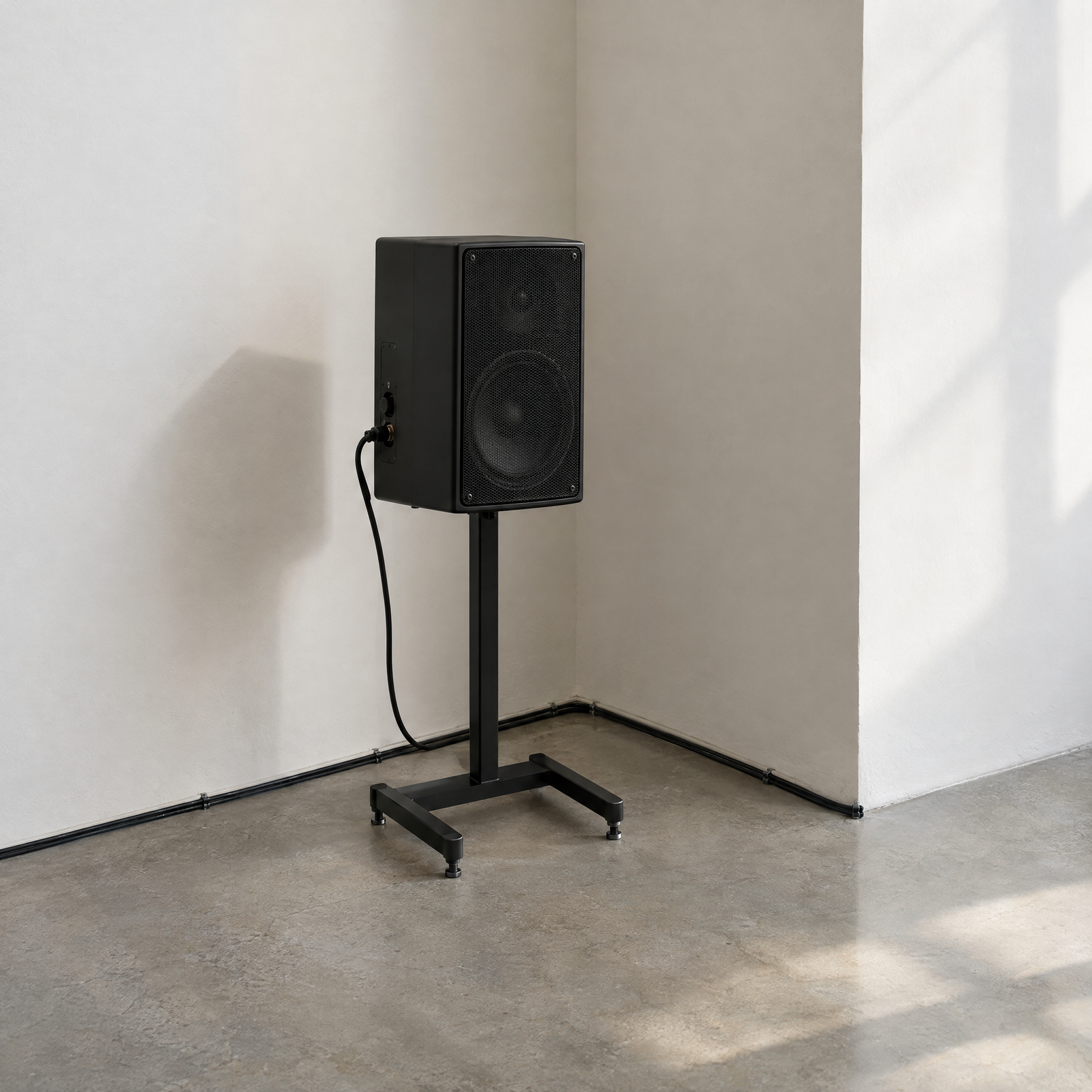
A hard wall, a soft curtain and an open doorway offer different conditions for sound. So does the position of a speaker. A sound that seems clear at one point may blend with another as you move.
Try listening from one permitted position, then another. What comes forward? What recedes? You may notice a voice becoming distinct, or an echo that was less apparent near the source.
Keep an eye on the arrangement too. Speakers can mark out a route or suggest a gathering. A bench may invite time. A visible cable can remind us that the encounter has been constructed through physical equipment.
That does not mean every practical detail has a hidden symbolic meaning. Read the artist’s account and distinguish what it establishes from what you are beginning to interpret.
Best Art Gallery · Editorial perspective
Part 06 · Your first encounter
How to Experience Sound Art in a Gallery
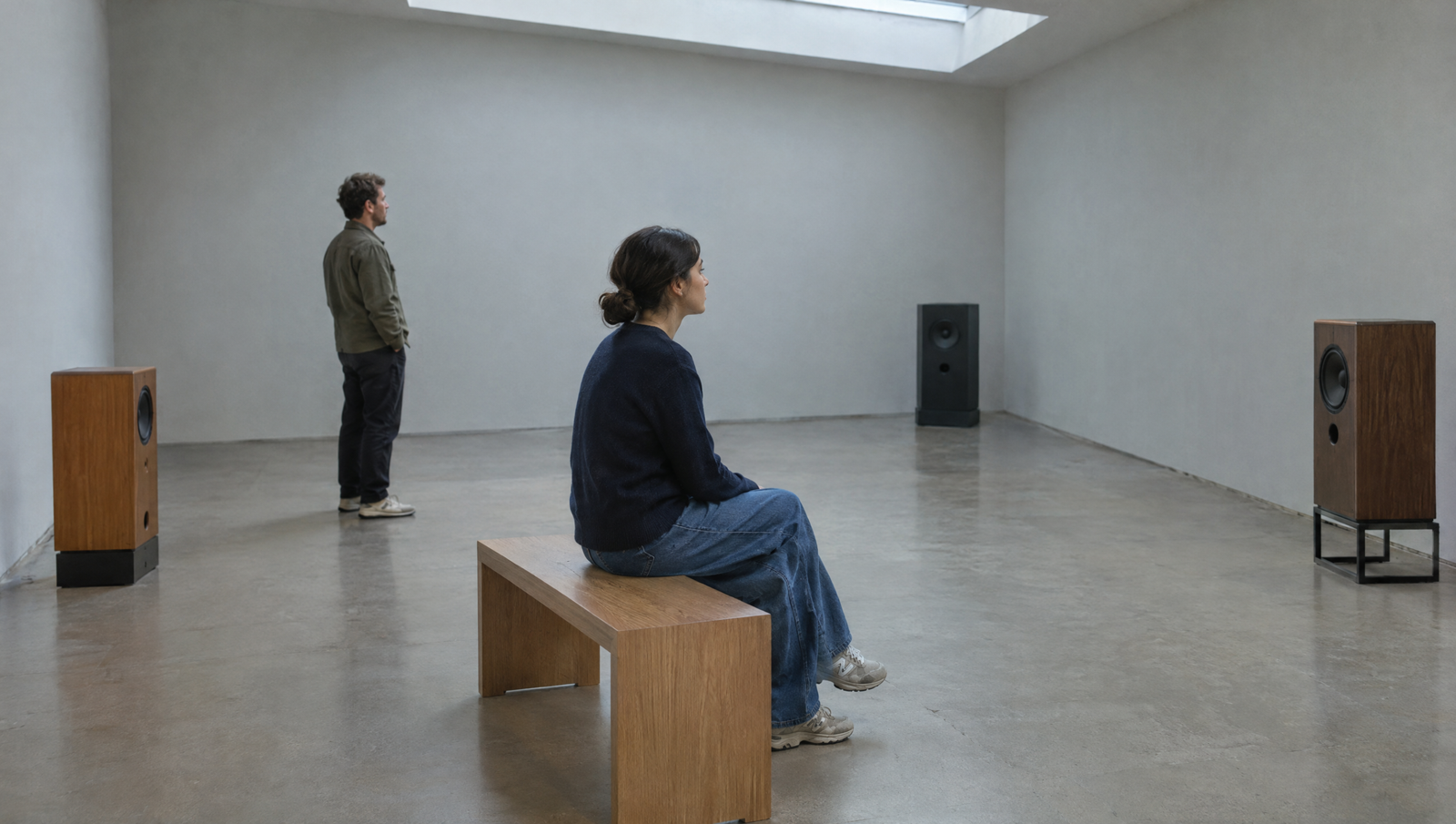
Give yourself a moment before deciding what the work is doing. You may have arrived partway through a sequence. Look for a duration, a loop description or a performance schedule.
You do not have to stay for a prescribed length of time to have a response. Still, knowing the structure helps you understand what you have encountered and what you may have missed.
- Begin with one observation: a repeated sound, a change in distance or a pause.
- Move only where the installation allows; avoid touching equipment unless invited.
- Read the description, then listen again with one question in mind.
- Notice how the experience changes when other people enter or leave.
People experience sound differently. Before visiting, check information about volume, sudden sounds, seating and available access resources. Ask the venue about transcripts, descriptions or other ways into the work. A multisensory presentation does not automatically meet every access need.
If a sound is uncomfortable, step out. Attention does not require endurance. You can form a thoughtful response without enjoying every part of an artwork.
Part 07 · Describing what happened
What Sound Art Adds to Our Conversation About Artists
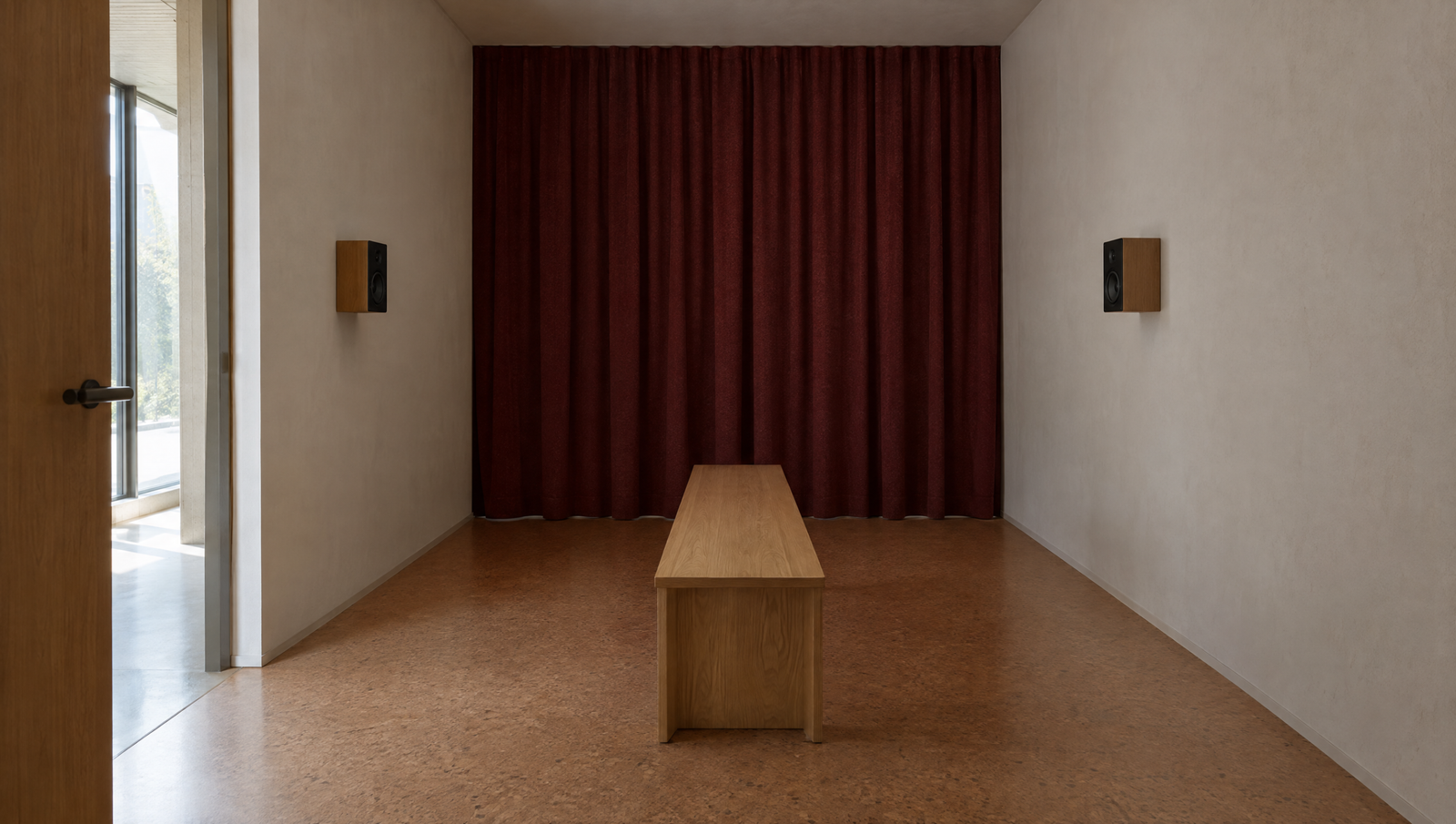
After listening, try describing an event rather than assigning an adjective. “The voice became clearer when I moved towards the doorway” gives you more to work with than “it was immersive.”
You can then ask what caused that change. Was it the placement, the recording or a shift in the sequence? The question connects your response with the artist’s decisions.
At Best Art, that connection matters across mediums. A painter makes decisions about colour and surface. Sound asks us to attend to duration, distance and the conditions of listening.
For readers encountering an unfamiliar practice, there is no need to arrive with a complete vocabulary. Start with something you noticed. Our guide to discovering emerging artists offers more ways to turn that first interest into a useful question.
Next time a gallery seems to contain very little, pause before moving on. There may be something unfolding that a photograph of the room could never tell you.
Explore the thoughts, materials and working lives behind the artists featured at Best Art Gallery.
Frequently Asked Questions About Sound Art
What is sound art in simple terms?
Sound art uses sound as a central artistic material. Artists may work with voices, recordings, instruments, vibration or a room’s acoustics. The way you listen, and sometimes where you stand, can be part of the experience.
Is sound art the same as music?
The two overlap. Sound art can use music while also making location, equipment, movement or participation central to the work. There is no single boundary separating every musical work from every sound artwork.
What are some examples of sound art?
Janet Cardiff’s The Forty Part Motet distributes separately recorded singers across forty speakers. Alvin Lucier’s I Am Sitting in a Room explores how repeated recording reveals a space’s resonance. Tarek Atoui’s practice combines sound, instruments, performance and sculptural forms.
Do I need headphones to experience it?
It depends on the work. Some pieces use headphones; others place speakers or sound-producing objects in a shared space. Follow the venue’s instructions. An online recording may introduce a work without reproducing its spatial experience.
When is Tarek Atoui’s Hold at Tate Modern?
The commission runs from 13 October 2026 to 11 April 2027. Check Tate’s official page for the latest opening, performance and access information before planning a visit.
Sound Art
Listening
Installation Art
Artist Practice
Images are AI-generated editorial illustrations of fictional spaces, people and equipment arrangements. They do not depict the named artists’ works or actual museum installations. Follow the source links for authentic documentation. Exhibition information checked on 15 October 2026.
