14
June
Painting Is Dancing With the Hands — The Emotional Portraits of Pilarcho Yanguas
Why Most Artists Never Sell Their Work
- 02 Jun
The reason why most artists never sell their work isn't what they think. It's not the economy, not the gallery system, not bad luck or bad timing. The studios of the world are full of genuinely extraordinary work — and almost none of it sells. Not because it isn't good enough. Because the people who made it never understood what selling actually requires.
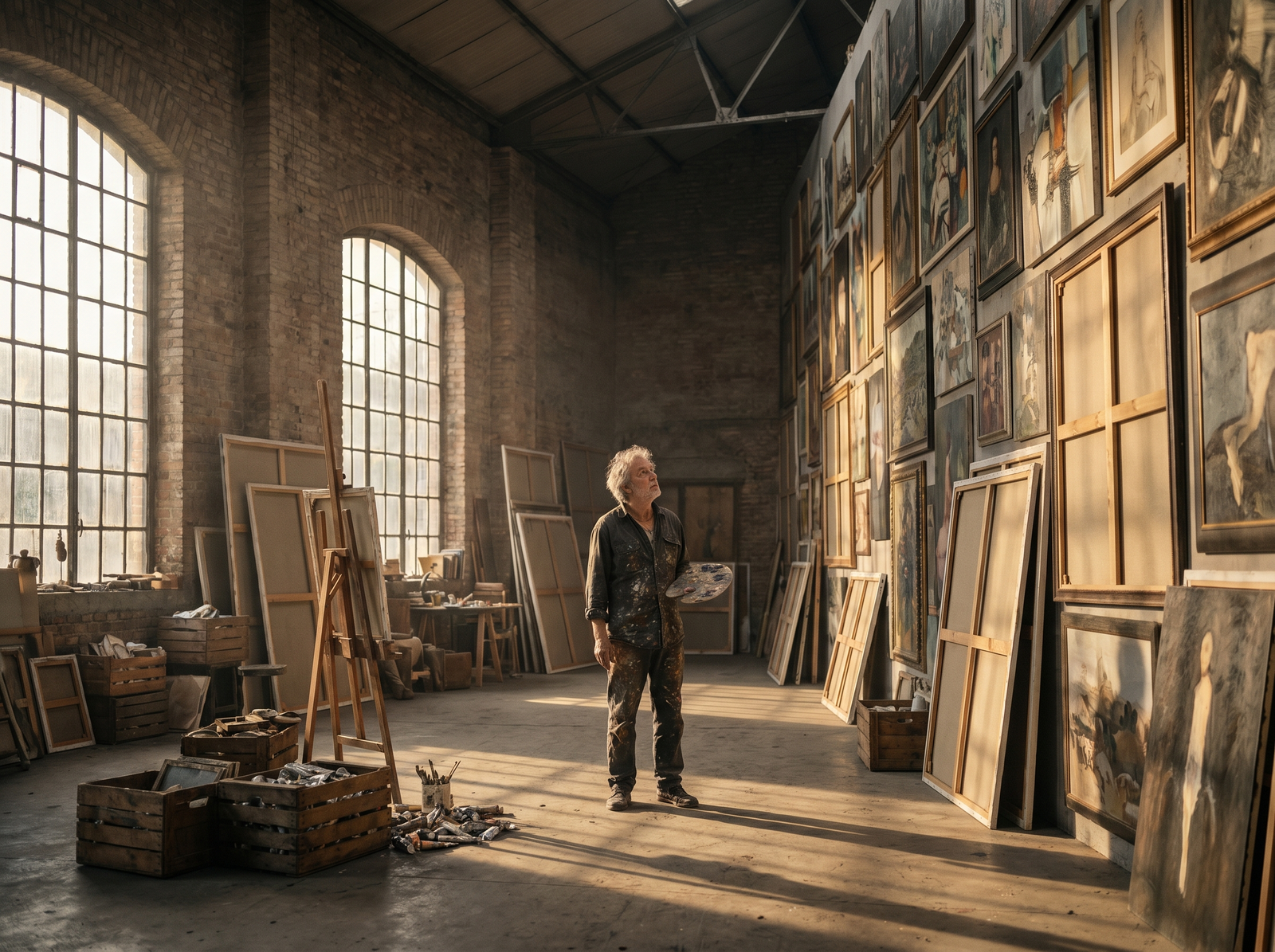
The work is finished. The studio is full. The sales never come. This is the story of most artists — and it has nothing to do with talent.
Let's be honest about what's happening. The romantic version of the artist's career — the gallery that comes calling, the collector who discovers you, the slow build to a sold-out show — exists. However, it sits on top of a foundation most people never talk about openly. The gap between making work and moving it. The invisible skills nobody teaches. The mindset shifts that feel like compromise but are actually just clarity.
We've spoken with artists at every stage — emerging voices trying to make their first sale, mid-career artists with critical recognition and empty bank accounts, established names wrestling with why the work has stalled. In each case, the same reasons come up again and again, regardless of career stage or talent level.
This isn't a post about how hard it is to be an artist. Rather, it's about what why most artists never sell actually looks like up close — and what the ones who do sell have figured out that everyone else hasn't. You can read more about the broader picture in our piece on the challenges facing artists today.
1. The Number That Shows Why Most Artists Never Sell — And Should Stop You Cold

The numbers aren't meant to discourage. They're meant to replace comfortable myths with useful facts.
Before anything else, a dose of reality. Only 1 in 5 artists will ever exhibit their work in their lifetime. Of the roughly 5 million active artists competing for visibility globally, only 70,000 exhibitions happen per year. Inside the gallery system, 45% of total sales value at smaller galleries comes from a single artist — meaning the rest are being subsidised by that one person's success.
You are not failing at something easy. You are participating in one of the most structurally competitive environments that exists. In 2025, the global art market contracted by approximately 12%, with values falling to around $57.5 billion. The artists who broke through in that environment didn't do it on talent alone. They did it because they understood something most artists spend an entire career refusing to accept.
Selling is not a reward for making good work. It is a completely separate skill. And until you treat it that way, nothing changes.
2. They're Waiting to Be Discovered — One of the Core Reasons Why Most Artists Never Sell

Discovery is a myth the art world tells itself. Visibility is a practice. The artists who get found are almost always the ones who made finding them easy.
There is a version of the artist's career that goes like this: you make the work, you make it well, and eventually the right gallerist walks through the door, sees what you've done, and changes everything. It's a beautiful story. It happens. It happens rarely enough that building your strategy around it is the professional equivalent of a business plan that depends on winning the lottery.
Relying solely on a gallery to sell your work limits your sales opportunities in ways that compound over time. The gallery system — valuable as it is for connecting with serious collectors — was never designed to make every artist it touches commercially successful. It was designed to find the rare few who fit a particular market moment. Everyone else waits.
The artists who sell consistently have stopped waiting. They take action before they feel ready. They put the work in front of people without waiting for institutional permission. They treat visibility not as something that happens to you but as a discipline that runs in parallel with the practice itself.
"If you have been doing the same thing and not seeing the results, this indicates that what you're currently doing isn't effective. Stop waiting. Take control."
— Martha Ronson, gallerist3. Their Body of Work Has No Clear Identity
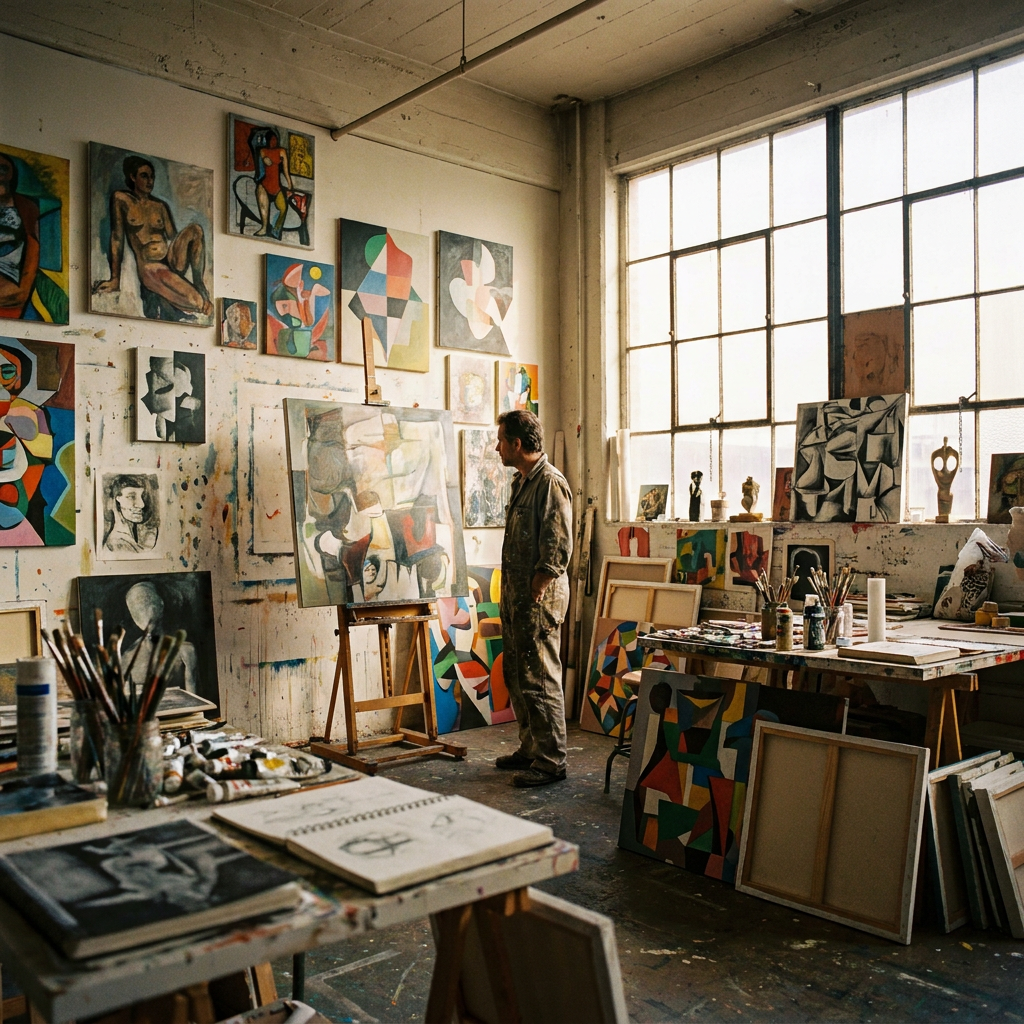
A collector needs to see an identity, not a range. Cohesion is not a creative compromise — it's what makes buying feel safe.
Here is one of the most uncomfortable truths in the art business: a scattered body of work is almost impossible to sell consistently. This is especially hard to hear for curious, experimental artists who want to try everything — and should, in the studio. But when it comes to presenting work to buyers, inconsistency reads as instability.
Collectors and gallerists need legibility. Buying art is an act of trust — and trust requires being able to see a clear identity. When someone arrives at a portfolio and finds landscapes next to abstracts next to portraits next to digital experiments, the message isn't "this artist is versatile." The message is: this artist doesn't know who they are yet. And collectors don't take financial positions on artists who don't know who they are.
Niching down is not a cage. It is the fastest path to a voice that is genuinely recognisable — and a recognisable voice is what sells. One strong, coherent series will do more for your career than fifty technically accomplished pieces that have nothing to say to each other.
4. Ten Reasons Why Most Artists Never Sell — Honestly Ranked
Based on everything across the research, the gallerist perspectives, and the artist conversations — these are the reasons that show up most consistently. Not the most dramatic ones. The most real ones.
-
Waiting for discovery rather than building visibility
The belief that quality eventually gets found. It sometimes does. Not often enough to rely on, however. Visibility is a practice, not a byproduct.
-
No cohesive body of work to sell from
A fragmented portfolio signals an unresolved identity. Collectors buy into a practice, not a single piece. Without coherence, therefore, there's nothing to buy into.
-
Pricing that sends the wrong signal
Underpricing signals insecurity. Overpricing without the career context to support it signals delusion. Either direction breaks trust — and trust, ultimately, is what the sale runs on.
-
No story attached to the work
In 2023, 94% of art buyers cited emotional benefits as their primary purchase motivation. As a result, a painting without a story asks the buyer to supply all the meaning themselves. Most won't.
-
Too much friction in the buying process
Someone has decided they want the work. Then they hit a DM thread that goes cold, a website with no prices, a checkout that doesn't work. Consequently, friction kills sales that were already made in the buyer's mind.
The second half: harder to admit, more important to fix
-
No defined buyer — selling to "everyone"
"People who appreciate art" is not an audience. Furthermore, you cannot build meaningful visibility for a person you cannot describe. Without a specific buyer in mind, marketing is a broadcast into empty space.
-
Confusing social media presence with a sales strategy
Instagram builds awareness. It does not, however, close sales. The conversion happens in the relationship layer — the email, the studio visit, the direct conversation — which most artists never build.
-
Too emotionally attached to let the work go
Some artists, on some level, don't actually want anyone to buy their work. This shows up in protective pricing, hesitant descriptions, and discomfort after completed sales. Understandable — and worth being honest about.
-
Not believing the work is worth buying
Doubt leaks into everything — the way you describe the work, the way you quote a price, the apology before you send someone to your website. Buyers take their cue from the seller. If you're ambivalent, you therefore hand them your ambivalence.
-
Quitting before the compound effect kicks in
The timeline of a selling art practice is far longer than most artists expect. The compound effect — each collector introducing the next, each piece building visibility — takes years. Most artists quit eighteen months in, just as it was starting to build.
5. Why Story Is the Real Currency — And Why Most Artists Skip It

The moment a collector understands why a piece was made, the sale is almost already done.
This deserves its own section because it is the most fixable reason on the list — and, consistently, the most overlooked. A painting presented without context is just an object. However, that same painting presented with a story becomes an experience. In a market where 94% of buyers are motivated primarily by emotional connection, the experience is ultimately what sells.
When you look at art that genuinely moves you, blood flow in your brain increases by as much as 10% — the equivalent of looking at someone you love. Art activates the hippocampus, connecting sensation and emotion to memory and lived experience. That is the neurological reality of why people buy. As a result, the story is what triggers the response that leads to the sale.
The story doesn't need to be dramatic. It doesn't need to be long. What it does need to be is true, specific, and human. The place. The season. The question you were chasing. The technical obsession. The conversation that changed how you saw the subject. Any of these — stated plainly — gives a potential buyer a way in. And a way in, in the end, is what converts admiration into ownership.
"Some pieces are meant to wait, to be discovered years later by someone whose life has finally caught up to what the work was always saying."
— Aunia Kahn, Poetic Tiger Gallery6. What the Artists Who Do Sell Have Actually Figured Out
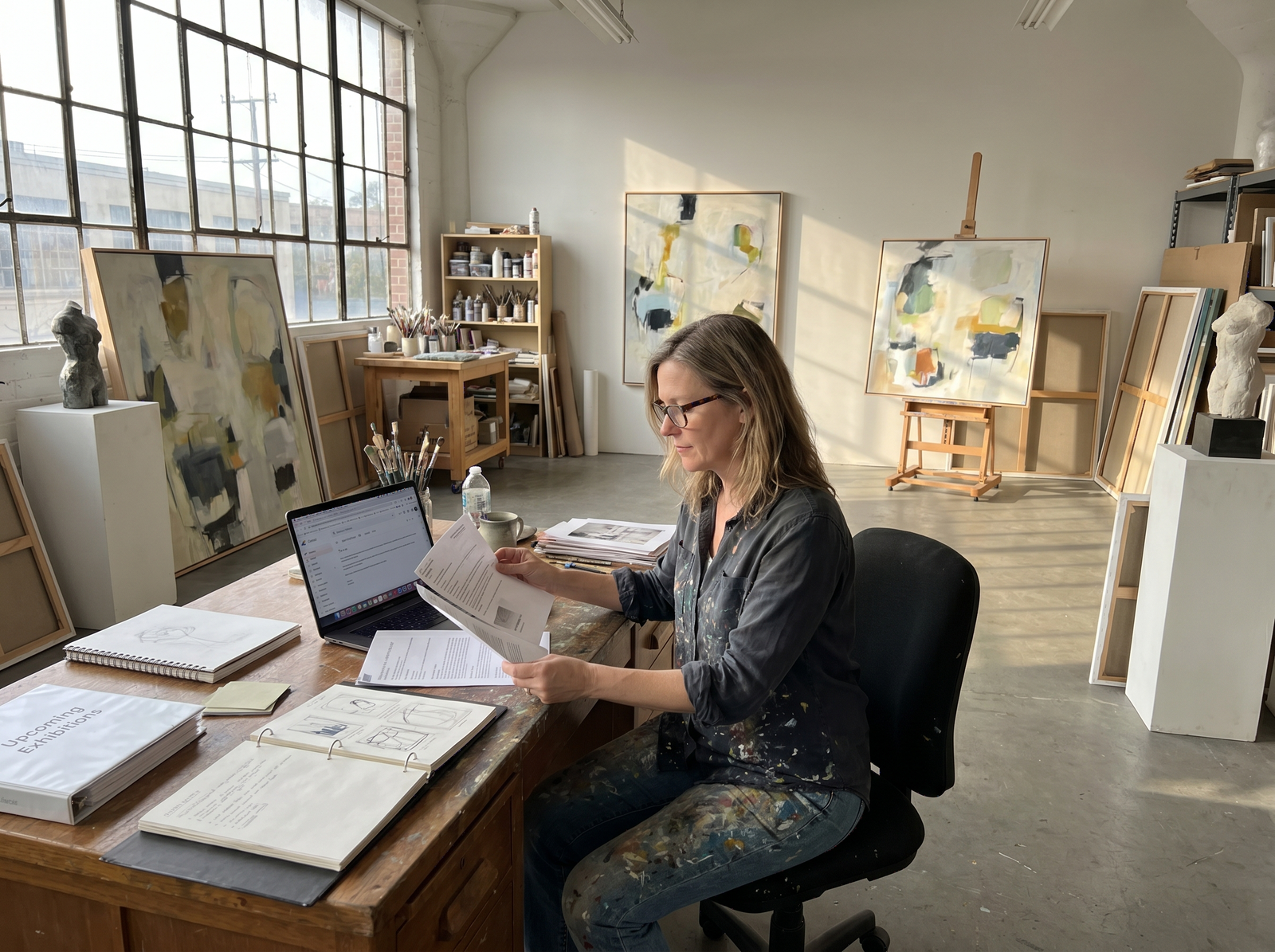
Longevity in an art career looks less like inspiration and more like organised persistence. The two are not in conflict.
There isn't a single formula. However, after looking at the research, the gallerist perspectives, and the conversations we've had with artists who have built practices that actually last, certain habits show up consistently. Not glamorous ones. Practical ones.
What separates the artists who sell from the ones who don't
-
The business of art is treated as seriously as the art itself
Not because money is the point, but because a practice that isn't financially viable eventually stops. Understanding pricing, collector relationships, and income diversification isn't selling out. It is, however, what keeps you in the room long enough to do the work that matters.
-
A precise understanding of who the buyer is comes first
Not a demographic — an emotional profile. What does this person believe about beauty, about home, about what it means to own something made by a human hand? That clarity, once achieved, shapes everything: where to be present, how to describe the work, and what the ask looks like.
-
Something is built beneath the platforms
An email list they own. A website that works. Collector relationships that survive algorithm changes. Social media builds awareness at the top of the funnel — but the email, the direct conversation, and the clear purchase path are ultimately what close the sale.
-
The sale is asked for directly
This sounds absurdly simple, and yet it is the step most artists never take. A clear, warm, direct invitation — "This piece is available. Would you like it?" — changes everything. The number of artists who have never said those words, in any form, is higher than anyone in the art world likes to admit.
-
Community replaces isolation as the operating condition
Other artists, collectors who genuinely engage, gallerists, curators, writers — all of these relationships compound over time. As we explored in our piece on the real challenges facing artists, isolation is not just emotionally costly. It is, furthermore, strategically fatal.
The conversation the art world needs to have more openly
Artists are far more honest about the selling problem in private than in public. The mythology that commercial awareness is somehow beneath serious practice has cost more artists their careers than any recession. Making and marketing art require two completely different parts of the brain. The first demands creativity. The second demands the discipline of a business operator. Solo artists must do both to survive. The artists who accept this — who stop treating the business side as a compromise — are the ones still making work a decade from now.
Frequently Asked Questions: Why Most Artists Never Sell Their Work
Why do most artists never sell their work even when it's good?
Why most artists never sell almost always comes down to visibility, story, and follow-through — not quality. The most common gaps are: not enough of the right people know the work exists, the work is presented without context or emotional connection, pricing is inconsistent, and the artist has never directly asked anyone to buy.
How long does it take to start selling art consistently?
Building a reliably selling practice typically takes three to five years of consistent, strategic work. The compound effect of visibility, relationship-building, and collector trust accumulates slowly. Artists who expect faster results tend to quit before the practice has had time to work.
Does having more followers on social media help artists sell more?
Not directly. Social media builds awareness — the top of the funnel. Sales happen through relationship and trust, which develop in channels like email newsletters, studio visits, and direct conversations. Artists who convert followers into buyers have almost always built something beneath the platform: a list they own, a website that works, and a habit of asking for the sale.
Should artists price their work lower to sell more?
Usually not. Underpricing signals insecurity and makes buyers nervous rather than confident. Price should reflect size, medium, and career stage — applied consistently across every platform. Discounting to close a sale undermines trust with existing collectors and sets a precedent that is very difficult to reverse.
What is the single most important thing an artist can do to sell more work?
Build a story around each piece and tell it clearly. In 2023, 94% of art buyers cited emotional benefits as their primary purchase motivation. Story is what turns a beautiful object into something a collector cannot leave behind.
Key takeaways: why most artists never sell
- Selling is a completely separate skill from making — and treating it that way is the first shift that changes everything
- Waiting to be discovered is a strategy that fails the vast majority of artists who rely on it
- A scattered portfolio signals an unresolved identity — coherence is what makes buying feel safe for collectors
- 94% of art buyers are motivated primarily by emotional connection — story is the mechanism that triggers it
- Friction kills sales that were already made in the buyer's mind — the buying process needs to be effortless
- The compound effect of a selling practice takes years to build — most artists quit just before it starts working
At Best Art Gallery, we work with artists who are serious about building a practice that lasts. If you're ready to close the gap between making extraordinary work and getting it in front of the right people — explore how we work with private collectors and artists, or reach out directly.