14
June
Painting Is Dancing With the Hands — The Emotional Portraits of Pilarcho Yanguas
Private Art Collectors: Who They Are, How They Build Collections, and How to Become One
- 14 May
Some of the most significant art in the world will never hang in a museum. It lives in private homes, personal studios, and curated spaces known only to a select few — gathered not by institutions, but by individuals who simply could not stop buying what moved them.
A private art collector is someone who builds a collection for themselves — not on behalf of a museum, corporation, or foundation. That bare definition misses what makes collecting genuinely compelling. It is one of the few pursuits where obsession, taste, and emotional response to objects can create something that outlasts you.
The range is extraordinary. On one end, you have Dorothy and Herbert Vogel — a New York librarian and postal clerk who lived on one salary and spent the other entirely on art, accumulating over 4,000 works before donating them to the National Gallery of Art. On the other, you have billionaires with private museums. What they share is not money. It is the compulsion to surround themselves with work they believe in.
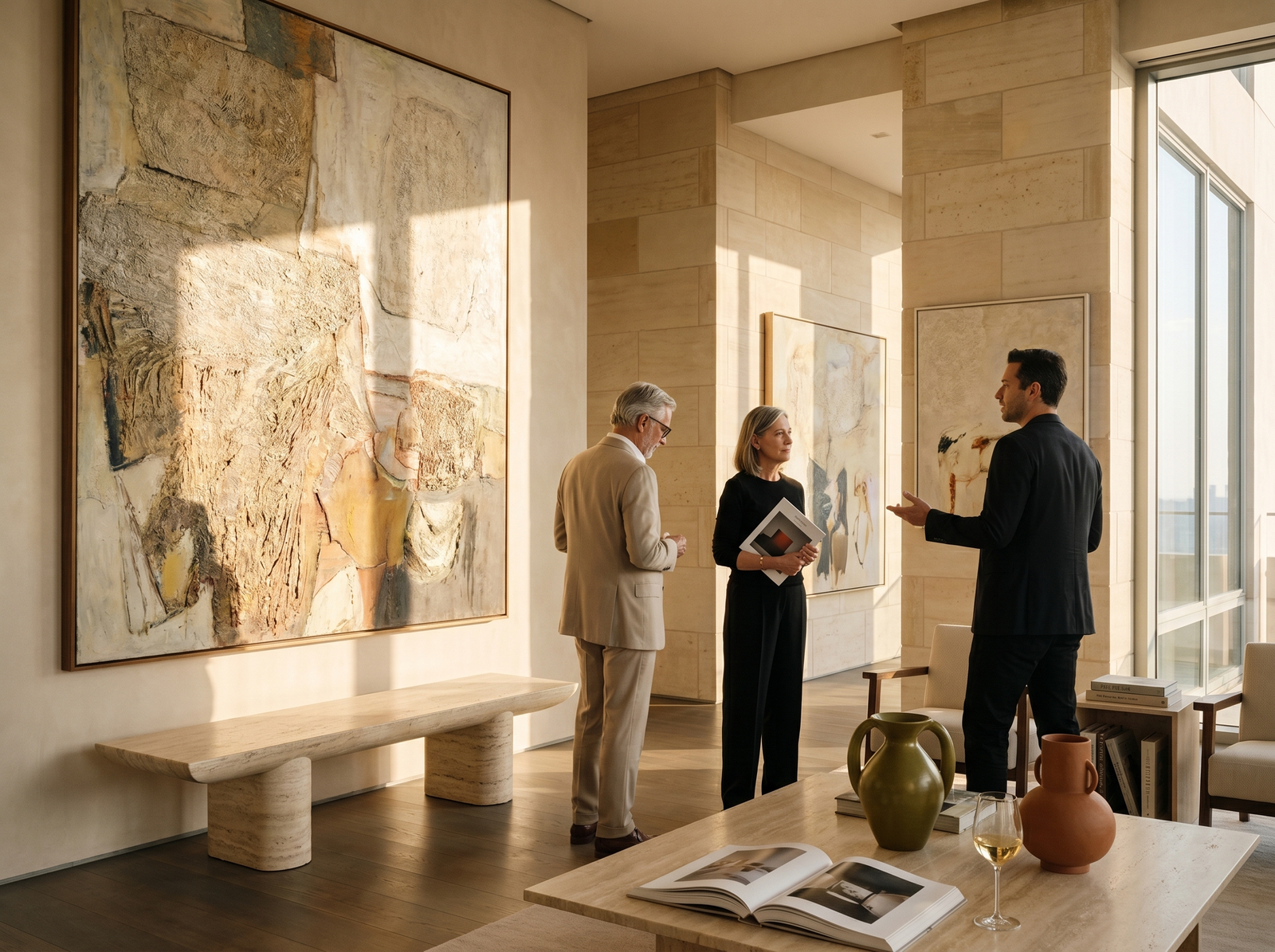
A private collection is one of the few spaces where every decision belongs entirely to one person.
The world's most inspiring private art collections
The best collections are not always the most expensive. What makes a collection memorable is the coherence of the vision behind it — the sense that one person made every decision, driven by passion rather than prestige.
The Vogels are the most cited example for good reason. They had no wealth — they had discipline, relationships, and relentless curiosity. They cat-sat for Christo and Jeanne-Claude in exchange for discounted works. They attended every opening and built 30 years of trust inside the New York art world. Their collection grew to over 4,000 objects — primarily drawings — before they donated it all. Then in 2008, they started again, ultimately distributing 50 works across every U.S. state through their "50 x 50" project.
Great collections don't try to cover everything. They go deep — one person, one vision, consistently pursued over years.
The Rubell Family Collection in Miami tells a different story. Don and Mera Rubell have collected since the 1960s. Their holdings — now housed in a former U.S. Drug Enforcement Agency storage facility — include over 7,000 works, open today as the Rubell Museum. The choice of venue says everything about their aesthetic: unconventional, challenging, committed to work that pushes back.
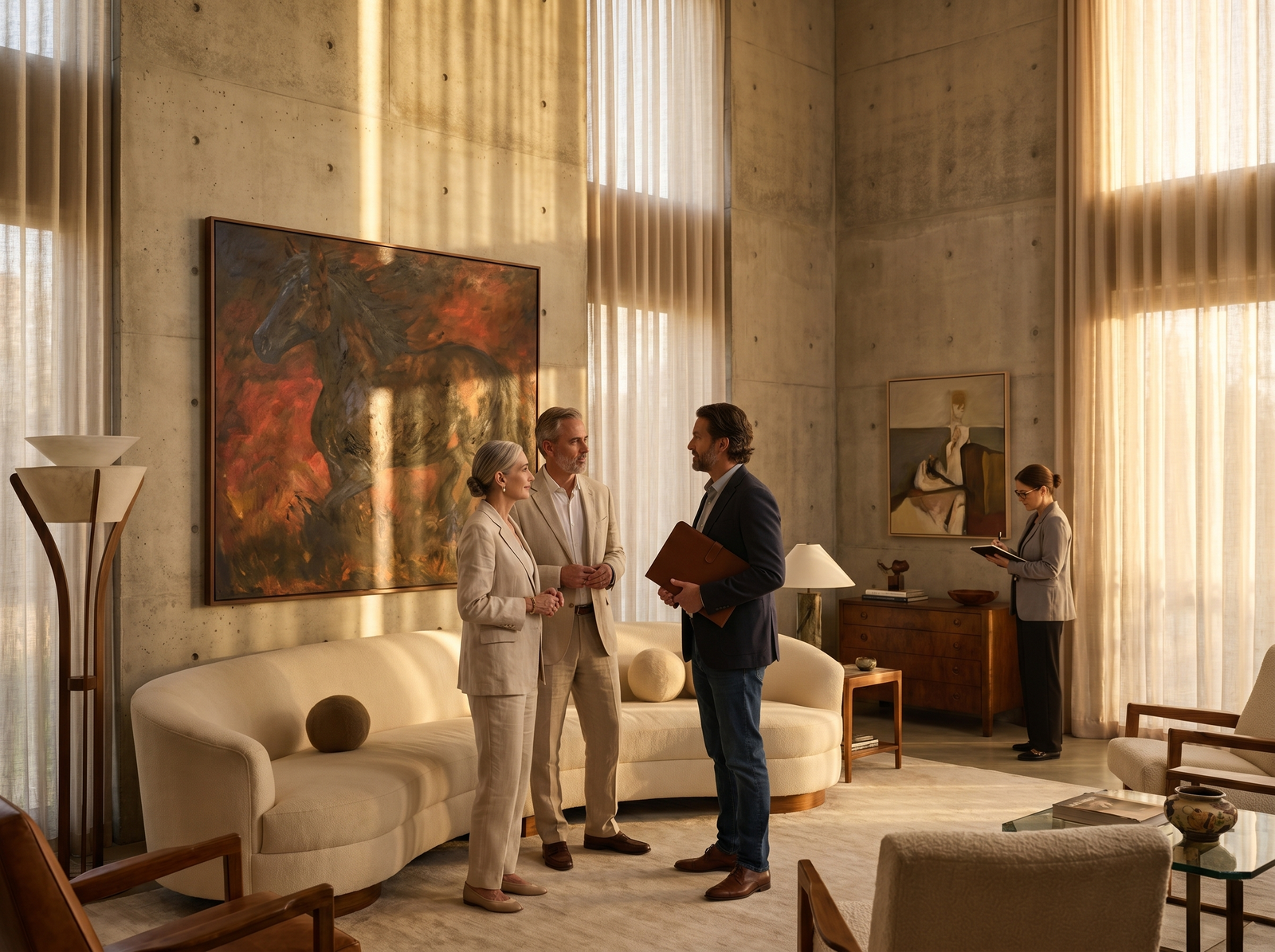
Major private collections often rival the depth and quality of public institutions — just without the crowds.
How young collectors get started
The most common misconception about collecting is that you need to wait until you have significant disposable income. You don't. Meaningful collections have been built on modest budgets — and the habits developed early, when stakes are low, are the ones that serve collectors for decades.
According to Larry's List, the world's leading art collector database, many of today's most interesting new collectors are under 40 — entrepreneurs, finance professionals, and people inside the arts who began by supporting artists at the very start of their careers. Prices were accessible. Relationships were real. And they had the satisfaction of being early.
- Develop your eye before you open your wallet — spend months in galleries before buying anything
- Start with emerging artists — prices are accessible and relationships are direct and personal
- Build genuine connections with gallerists, artists, and fellow collectors — access follows trust
- Join collector communities like Contemporary Art Collectors (CAC) for education and conversation
- Buy what genuinely moves you — emotional connection sustains a collection far longer than investment logic
Building a collection with intention
Once you have bought a few pieces, a decision appears that separates casual buyers from serious collectors: do you want a collection, or a room full of things you liked at different points in your life?
A collection has a thesis. It doesn't need to be rigid, but it needs to exist. The Vogels collected drawings. The Rubells collected work that challenges. Your thesis doesn't need to be complicated — it just needs to be yours, and it needs to guide every purchase.
Set a budget framework and treat collecting as a deliberate line item, not an impulse. The Vogels used a simple rule: one salary for living, one for art. Prioritise quality over quantity — two significant works define a collection more powerfully than twenty minor ones. Document everything from day one. Provenance becomes very difficult to reconstruct after years of buying.
Buy what moves you, not what you think will appreciate. The collectors who do best financially are almost always the ones who never thought about it that way.
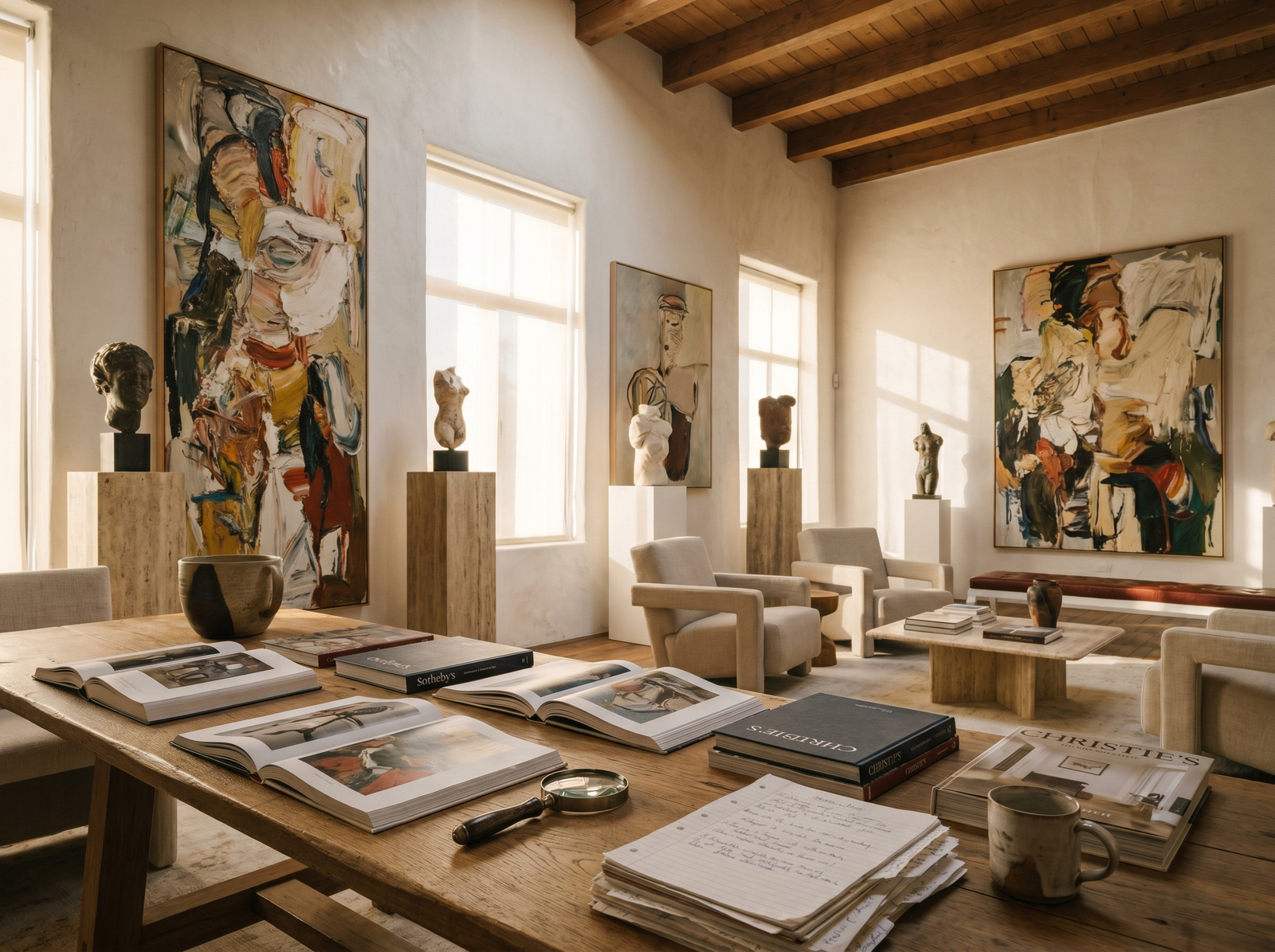
Studio visits give collectors access to work long before it reaches the gallery — and conversations no white wall can replicate.
Where private collectors discover new art
Art fairs are the primary market's main event. Art Basel, Frieze, and TEFAF bring hundreds of galleries and thousands of works together in one place. Go with a plan: identify the galleries you want to visit, spend real time there, and let the rest be a bonus.
Gallery openings are free, low-pressure, and consistently underused by people new to collecting. Show up regularly, talk to gallerists, and you'll quickly build a map of which galleries represent artists whose work resonates with you.
Studio visits are the closest thing collecting has to a secret weapon. You see work in progress, work that hasn't been priced, work not yet visible to the broader market. Many artists welcome serious collectors — ask your gallery contacts to make introductions.
Online platforms have dramatically lowered the barrier to discovery. Work from galleries in Seoul, Lagos, and São Paulo is now browsable and buyable without leaving your desk — with a level of access that simply didn't exist ten years ago.
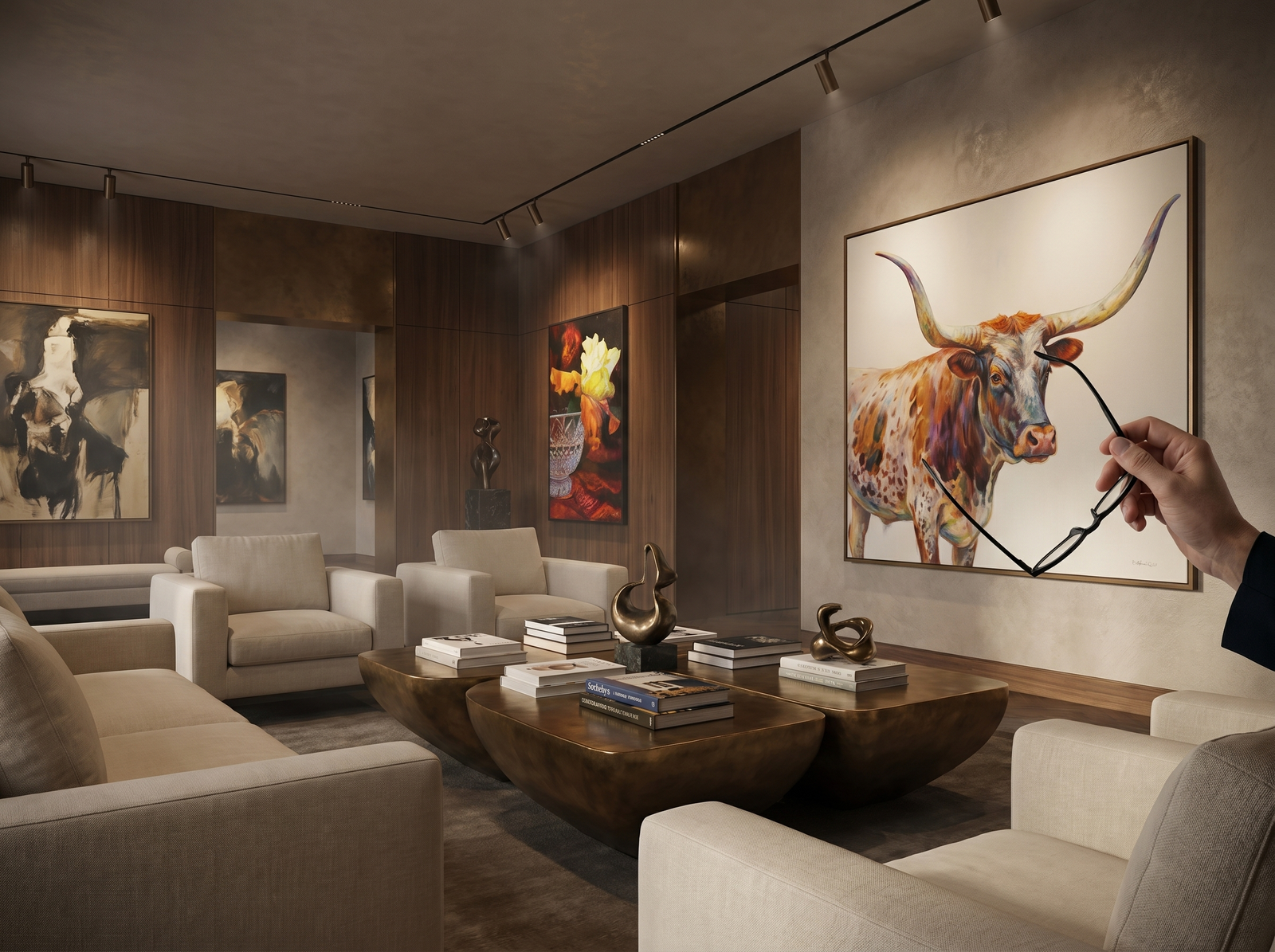
Art fairs like Art Basel and Frieze remain the most concentrated opportunity for discovery — hundreds of galleries, thousands of works, one venue.
The culture and community behind collecting
Collecting is more social than it looks from the outside. The best collectors are embedded in their communities — attending, giving, lending, and supporting in ways that go far beyond the transaction of purchasing a work.
Contemporary Art Collectors (CAC) frames it precisely: art is "a dialogue between the creator, the viewer, and the time in which it exists." That dialogue doesn't happen in isolation. It happens in galleries, studios, and across conversations where collectors, artists, and critics debate what matters and why.
The collector community is also becoming more diverse. Younger buyers are entering from more varied backgrounds, geographies, and relationships to art than any previous generation — changing what gets collected, which artists rise, and how the art world understands itself.
Where to begin
Serious collecting can start under $1,000. Prints, works on paper, and pieces by emerging artists are all accessible at entry-level prices. The Vogels started with almost nothing. What matters more than budget is consistency: buying intentionally, building relationships, and developing your eye steadily over time.
Start looking. Start talking to galleries. Find one artist whose work you can't stop thinking about. Buy something small. Go from there.
Ready to discover artists redefining contemporary art today?
Explore Our Artists