14
June
Painting Is Dancing With the Hands — The Emotional Portraits of Pilarcho Yanguas
Challenges Facing Artists: What No One Tells You | Best Art Gallery
- 20 May
The challenges facing artists today go far deeper than a creative block. Nobody warns you about the money, the time, the self-doubt, or the algorithm. The canvas is the easy part. Here's what those challenges actually look like — and what the artists who keep going do differently.
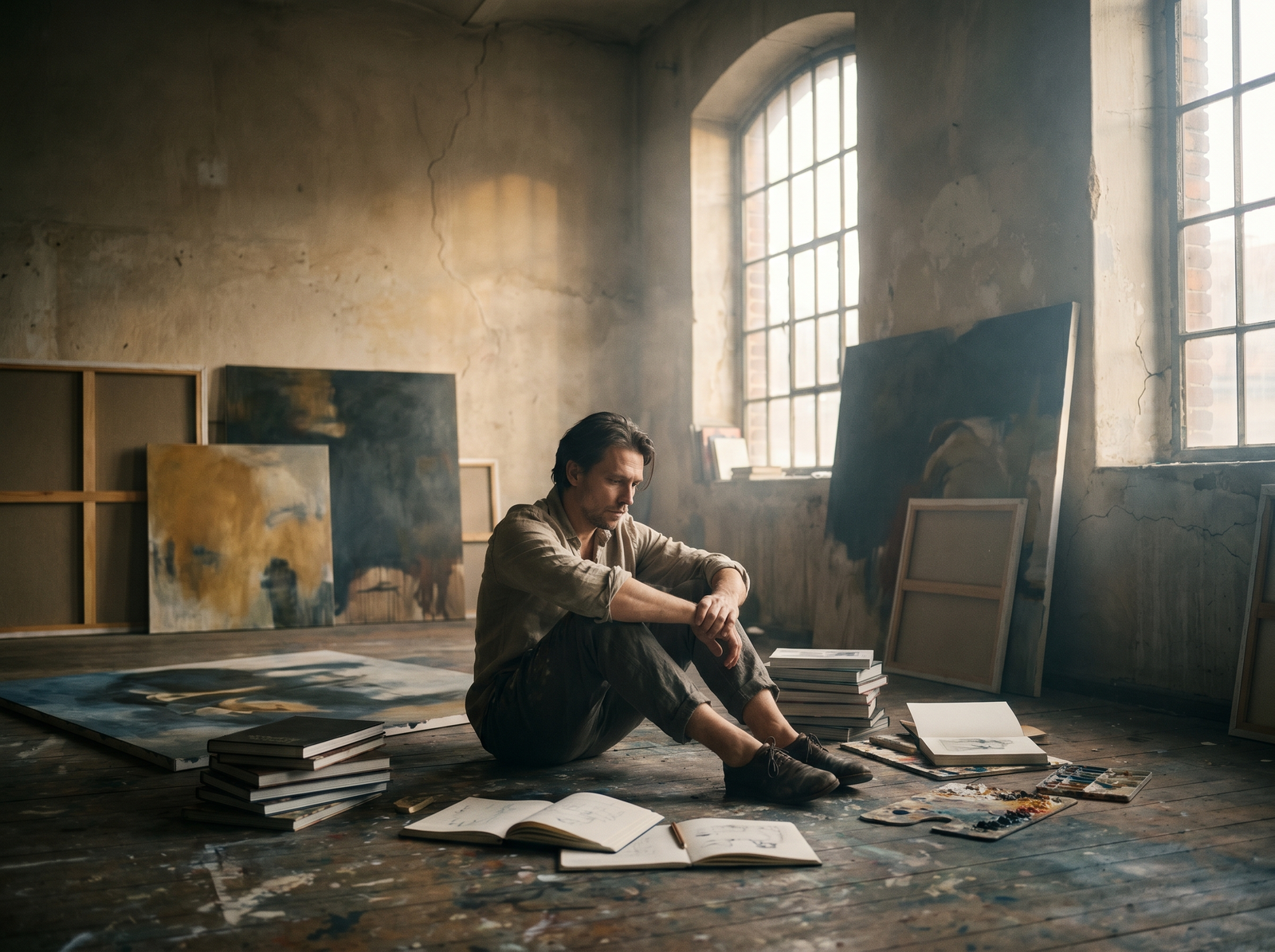
The studio — where ambition meets reality every single day.
Let's be honest. The romantic version of the artist's life — the sun-drenched studio, the critical acclaim, the sold-out shows — exists. But it sits on top of a foundation most people never talk about openly. Inconsistent income. Creative blocks that last months. The creeping feeling that the market doesn't quite understand what you're doing. The exhaustion of being both the maker and the marketer.
We've spent time with artists at every stage of their careers — emerging voices trying to get their first gallery placement, mid-career artists managing commissions and collectors, established names wrestling with staying relevant without selling out. The same challenges come up, again and again, regardless of how much success someone has achieved.
This isn't a post about how hard it is to be an artist. It's about what those challenges facing artists actually look like up close — and what the ones who navigate them well have figured out.
1. The Money Problem: One of the Biggest Challenges Facing Artists

Cashflow: the conversation every artist eventually has to have with themselves.
Cashflow is the challenge that blindsides more artists than any other. Not because artists are bad with money — though that's the cliché — but because the structure of how art sells is genuinely unlike almost any other business. You might sell three major works in one month and nothing for the next four. You pour months of work into a commission and the payment arrives late. A gallery takes 50% and you wait 90 days to see the rest.
The artists who manage this well don't do anything magical. They treat the flush months as infrastructure months. They build a buffer. They price in the dry spells from the start, which means understanding what it actually costs to make a piece — materials, time, studio overhead — and not discounting themselves into a corner to make a sale feel easier.
The other thing that helps: diversifying income streams without diluting the work. Teaching. Limited edition prints. Licensing. Commissions with clear payment structures. According to RedDot Blog's research on successful artists, cashflow management consistently ranks as the single most common challenge regardless of career stage. None of these things have to compromise your practice. They just make it survivable.
"The goal isn't to get rich quick. It's to still be making work in ten years."
A recurring theme among artists who last2. Time Management: The Challenge No Artist Escapes
Ask any working artist what they need more of and the answer is almost always the same. Not money, not connections, not gallery representation. Time.
The problem is structural. Making art takes deep, uninterrupted focus — the kind of time where you lose track of hours and emerge with something you couldn't have planned. But building a career around that art requires a completely different mode: emails, social media, proposals, shipping, pricing, photographing work, chasing invoices, attending openings, maintaining relationships with collectors and galleries.
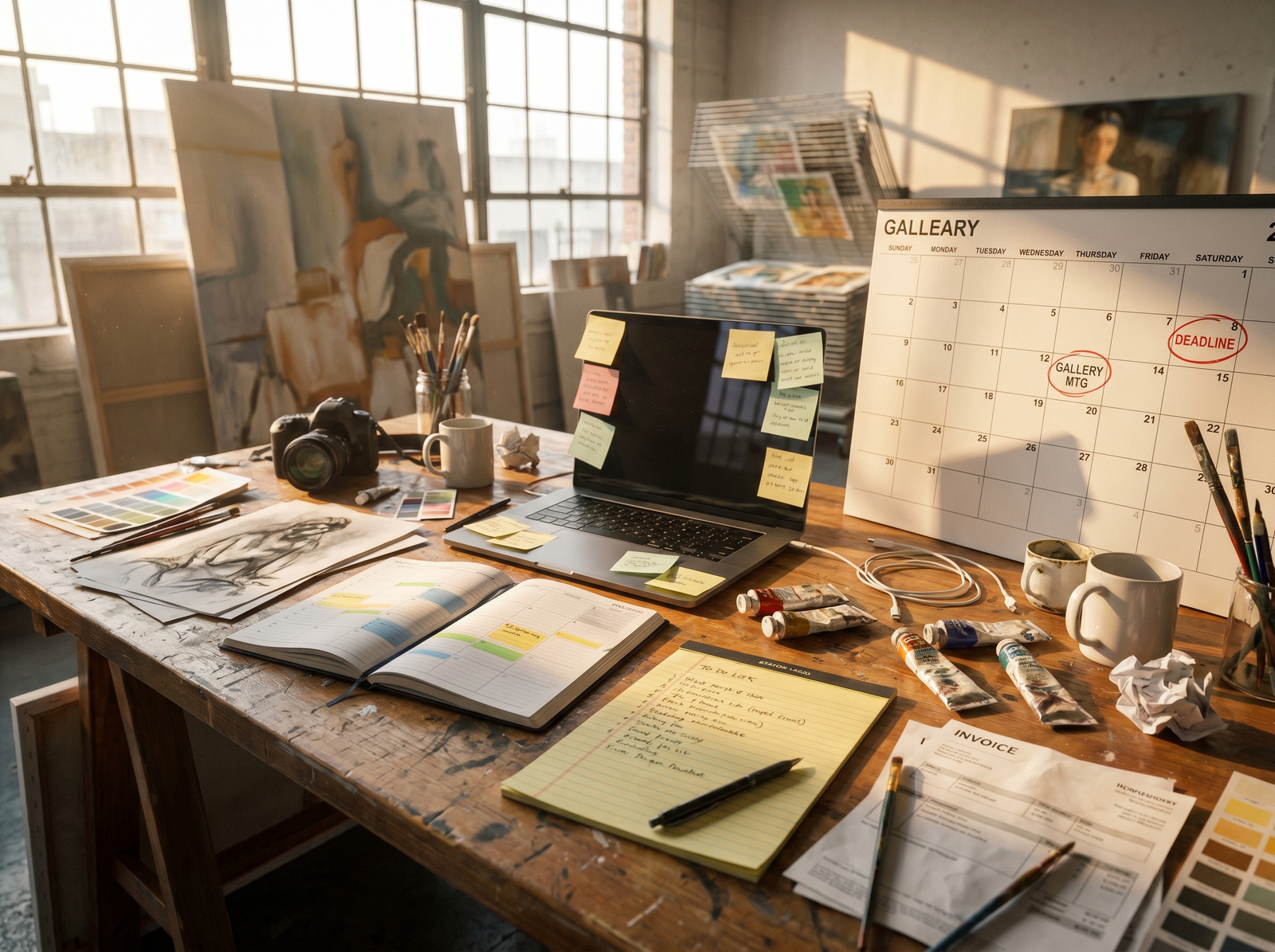
Time is the one thing you can't make more of — but you can get smarter about how you protect it.
The artists who figure this out tend to draw a hard line. Studio hours are sacred. Admin has a slot. The two don't bleed into each other. It sounds simple. It isn't. When you work for yourself, there's always a reason to answer one more email before you pick up the brush. The discipline is in refusing that reason.
Some artists batch their admin work into two or three sessions a week and close everything else. Others hire part-time help once the income supports it. As artist Kristel Bechara writes on modern-day artist challenges, the digital era has added entire new layers of obligation that didn't exist a decade ago — and recognising that is the first step to managing it.
3. Staying Visible Without Becoming Someone You're Not
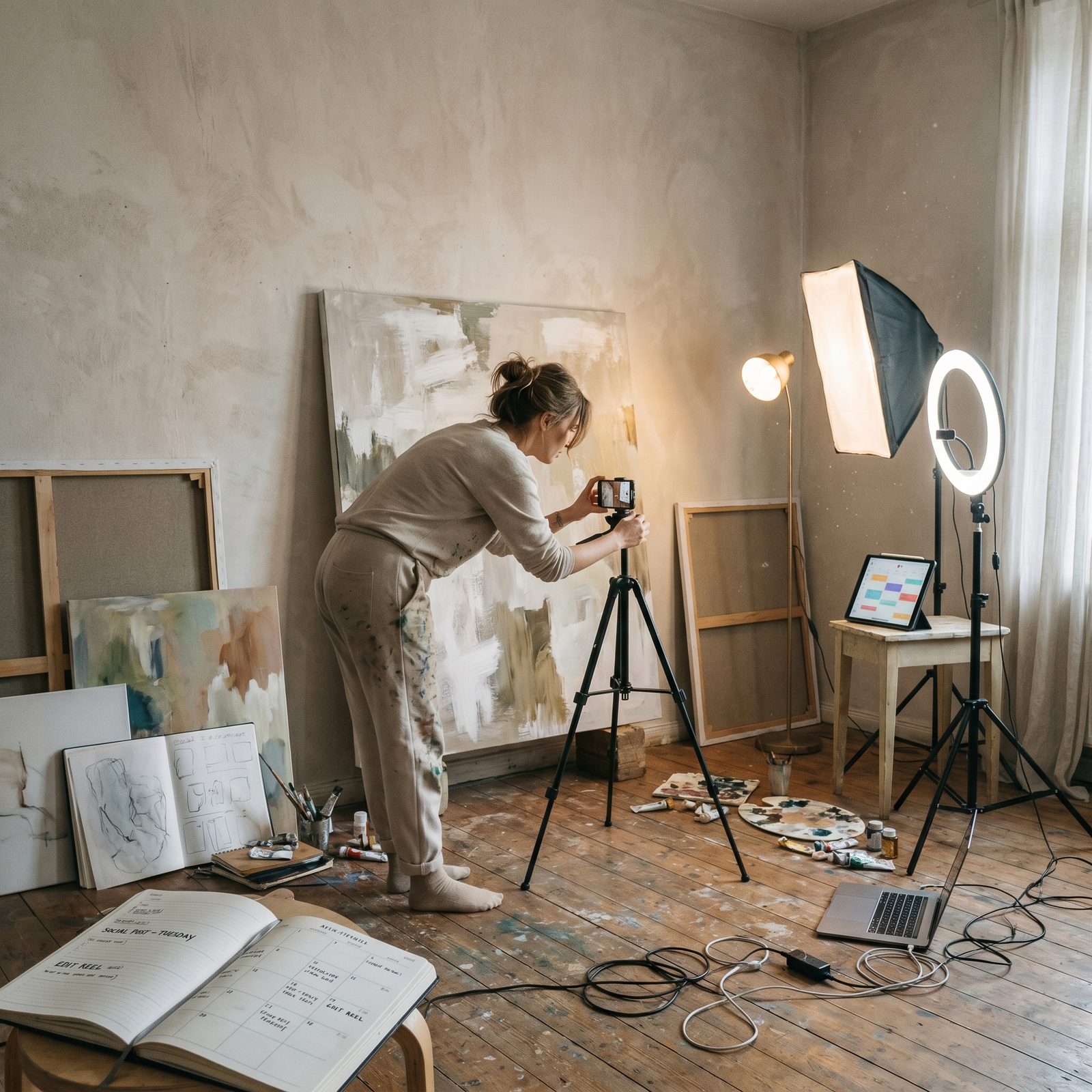
The new studio practice: make the work, then make the content.
The internet changed everything about how artists build audiences — and not entirely for the better. On one hand, it removed the gatekeepers. You don't need a Chelsea gallery or a blue-chip dealer to build a collector base anymore. On the other, it created a new kind of pressure: the pressure to perform your practice publicly, constantly, in formats designed for short attention spans.
A lot of artists find this deeply uncomfortable. Making work is a private, slow, often messy process. Instagram wants the highlight reel. The algorithm rewards consistency over depth. And somewhere in the middle of all of it, there's a real risk of starting to make work that photographs well rather than work that means something.
The artists navigating this most honestly tend to treat their online presence the same way they treat their studio practice. With intention, not desperation. They show process as well as finished work. They talk about the ideas, not just the aesthetics. They accept that a smaller, genuinely engaged audience is more valuable than a large, passive one.
4. The Six Challenges Facing Artists — Honestly Ranked
Based on conversations with working artists across career stages, these are the challenges that come up most consistently — not the ones that sound most dramatic, but the ones that actually determine whether a practice survives.
Challenge 01
Inconsistent Income
Not just the low months — the psychological weight of not knowing when the next sale is coming. It affects creative risk-taking, decision-making, and long-term planning in ways that compound over time.
Challenge 02
Pricing Your Own Work
Underpricing is endemic. It comes from a mixture of imposter syndrome, fear of rejection, and genuine uncertainty about market value. Getting it wrong in either direction costs you — financially or reputationally.
Challenge 03
Creative Burnout
The point at which making feels like producing. When the studio becomes a factory and the work loses the quality that made people want it in the first place. More common the more successful you become.
Challenge 04
Navigating the Digital Landscape
NFTs, AI-generated art, online marketplaces, algorithm-dependent visibility. The rules keep changing and no one has a complete map. Artists who adapt without losing their voice are the ones who endure.
Challenge 05
Managing Growth
Counterintuitive but real: success creates its own problems. More commissions, more admin, more expectations. The challenge shifts from "how do I get work" to "how do I protect the conditions that produce good work."
Challenge 06
Self-Doubt and Isolation
The creative life is largely solitary. Without colleagues, performance reviews, or external validation structures, artists have to build their own frameworks for knowing when the work is good — and when they are.
5. What the Artists Who Last Actually Do Differently
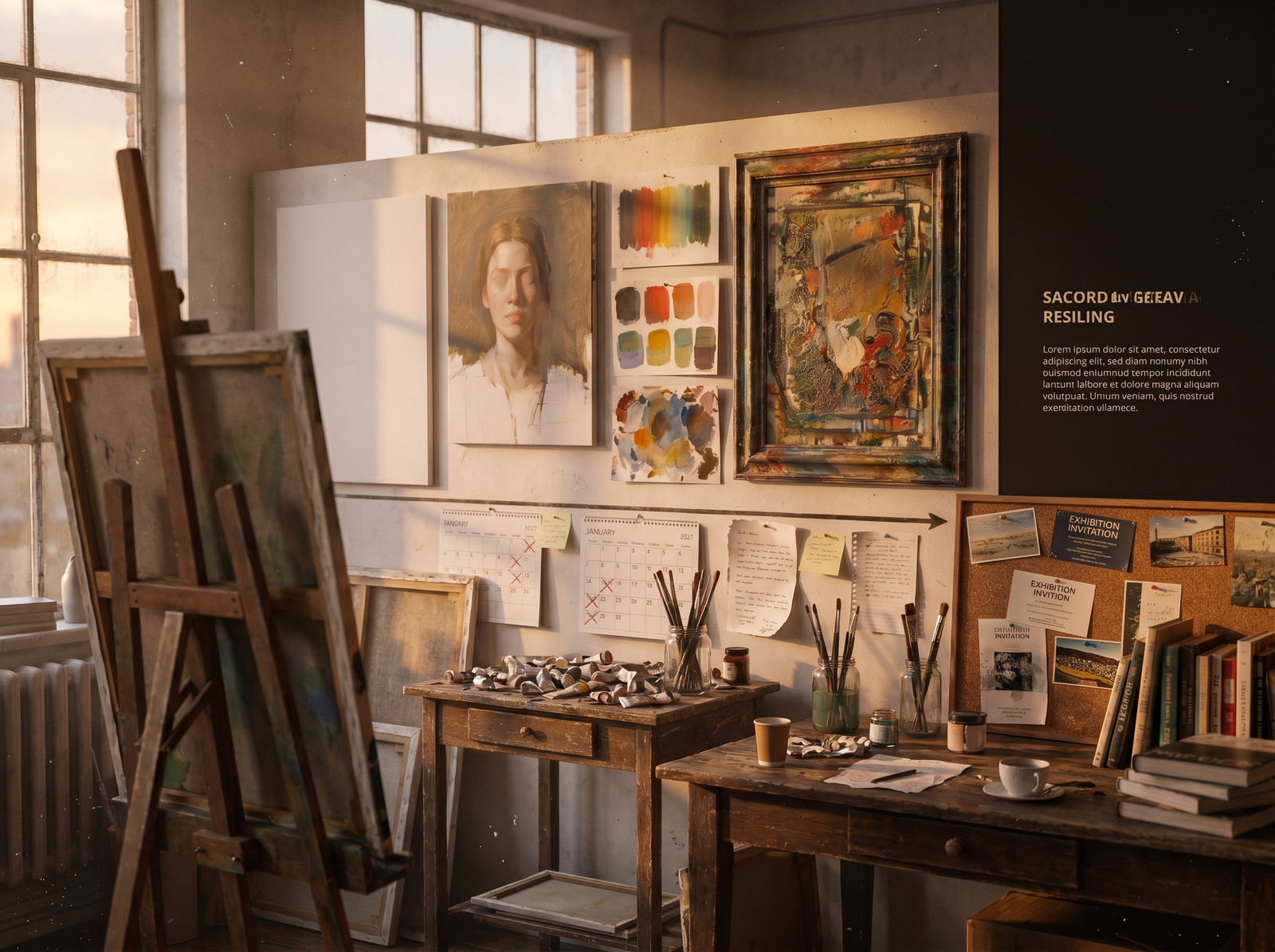
Longevity in art looks less like inspiration and more like organised persistence.
There isn't a single formula. But after speaking with artists who have built practices that last — not just a moment of recognition but a decade or more of sustained, meaningful work — certain habits show up consistently.
-
They treat the business of art as seriously as the art itself
Not because money is the point, but because a practice that isn't financially viable eventually stops. Understanding pricing, contracts, gallery relationships, and income diversification isn't selling out. It's what keeps you in the room.
-
They build community, not just an audience
Other artists, collectors who genuinely engage, curators, writers, gallerists. The creative life is less lonely and more resilient when it's embedded in real relationships rather than follower counts.
-
They protect their creative process ferociously
Deep work requires conditions. The artists who produce consistently over time are ruthless about protecting the time and space those conditions require — even when it means saying no to things that look like opportunities.
-
They evolve without chasing trends
There's a difference between growth — the natural development of a voice over time — and trend-chasing, which tends to produce work that feels dated almost immediately. The artists who endure are those whose work gets more specifically themselves, not more generic.
-
They ask for help earlier than feels comfortable
An accountant. A studio assistant. A mentor. A gallerist they trust. The instinct to handle everything alone is understandable — but it's also one of the most reliable paths to burnout. Getting support isn't weakness. It's infrastructure.
On AI and the challenges facing artists in 2026
It would be dishonest to write about the challenges facing artists without addressing AI. The conversation is often framed as existential — and for some kinds of commercial work, the disruption is real. But the artists thinking about this most clearly tend to make a distinction: AI is very good at producing images. It is not, yet, good at having something to say. The artists who navigate this best are those whose work is grounded in genuine perspective and lived experience — qualities that don't compress into a prompt.
6. The Conversation the Art World Needs to Have More Openly
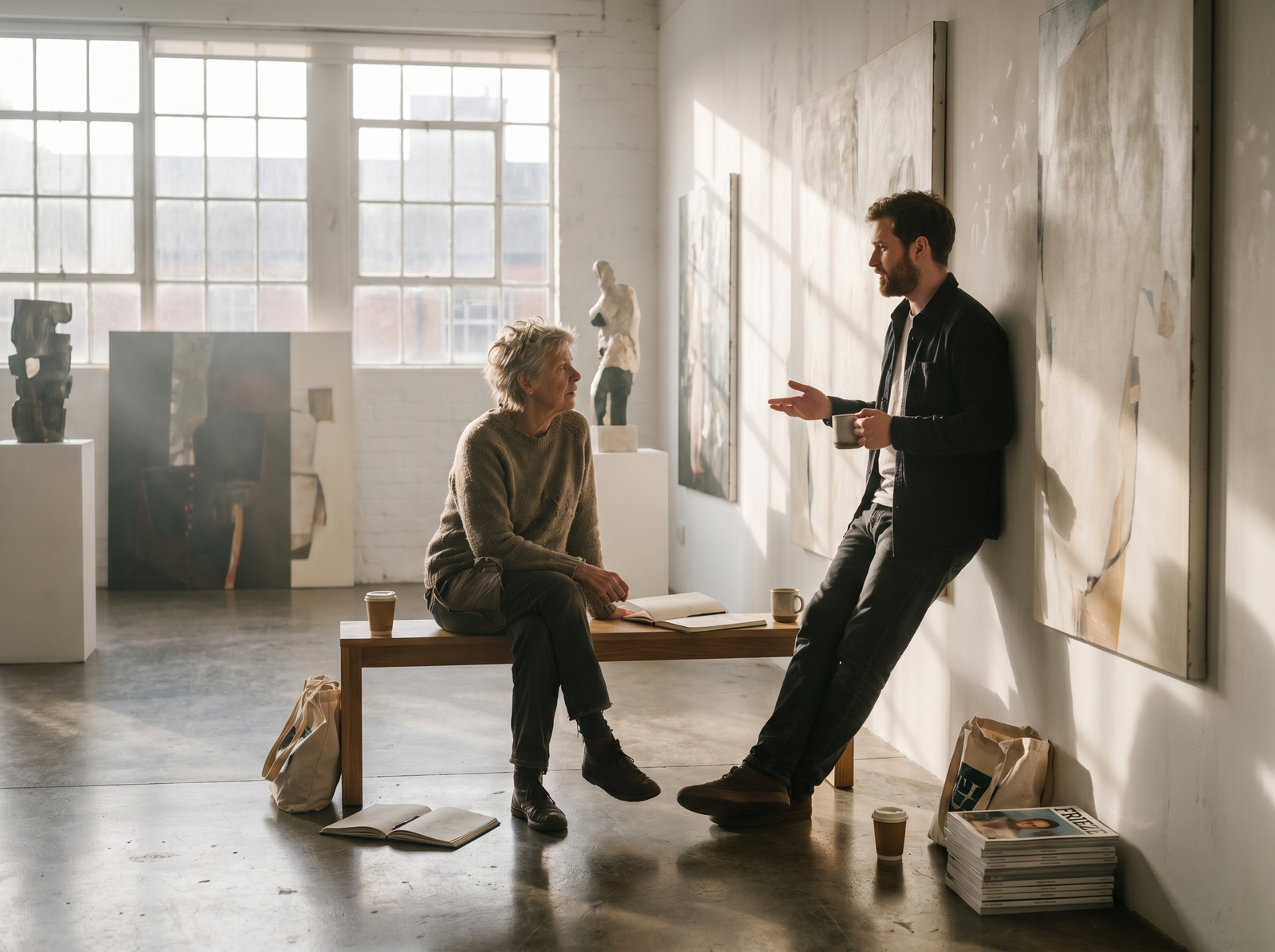
The conversations that actually help tend to happen away from the polished feed.
One thing that strikes us consistently: artists are often more honest about these challenges in private than in public. The professional persona — the confident, productive, visionary artist — is understandably maintained. Showing doubt or financial struggle can feel like it undermines the work, or makes collectors nervous, or invites the wrong kind of attention.
But the silence has a cost. Artists who don't talk about pricing with other artists set their prices in a vacuum. Artists who don't talk about burnout don't recognise it until it's serious. Artists who don't talk about the business side stay underprepared for it.
The most vibrant creative communities we've observed — not just cities or galleries, but genuine communities — are the ones where this kind of honesty is normalised. Where the conversation isn't just about the work, but about how you keep making it.
That's the conversation worth having. In studios, in galleries, online, in private messages. Wherever it can actually happen.
Key takeaways: challenges facing artists in 2026
- Cashflow unpredictability is the most universal challenge artists face — managing it requires planning, not just talent
- Time management isn't about productivity hacks — it's about protecting the conditions that produce good work
- Social media visibility is necessary but has real creative risks — intentionality matters more than frequency
- Pricing is one of the most underdiscussed skills in an artist's career, and getting it wrong compounds over time
- The artists who last treat the business of art with the same seriousness as the art itself
- Community, honest conversation, and asking for help earlier than feels comfortable are consistent markers of long-term resilience
At Best Art Gallery, we work with artists at every stage of their career. If you're navigating any of these challenges — whether it's gallery representation, collector relationships, or simply figuring out your next step — we're here for the conversation. Explore how we work with private collectors and artists, or reach out directly.