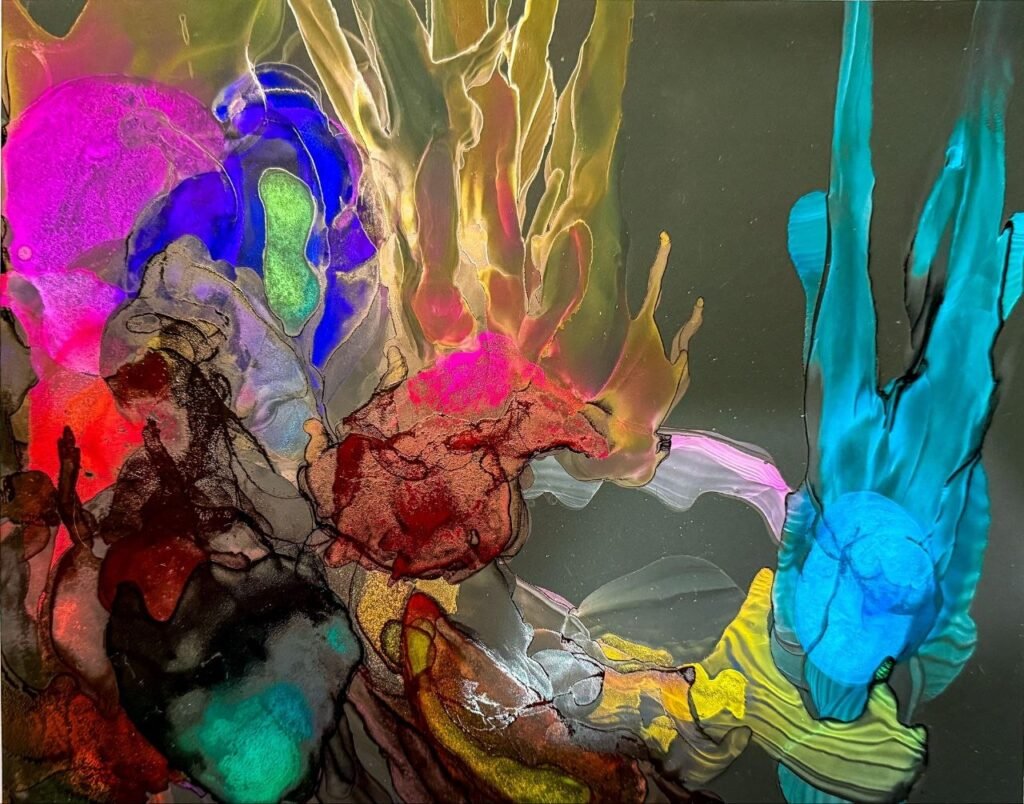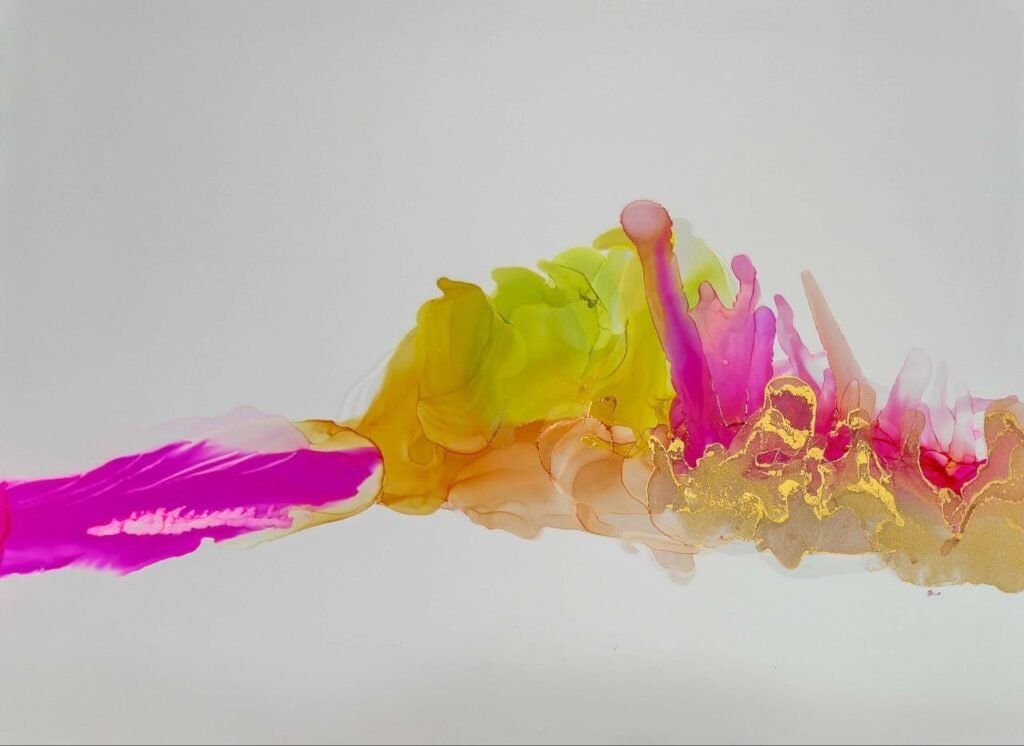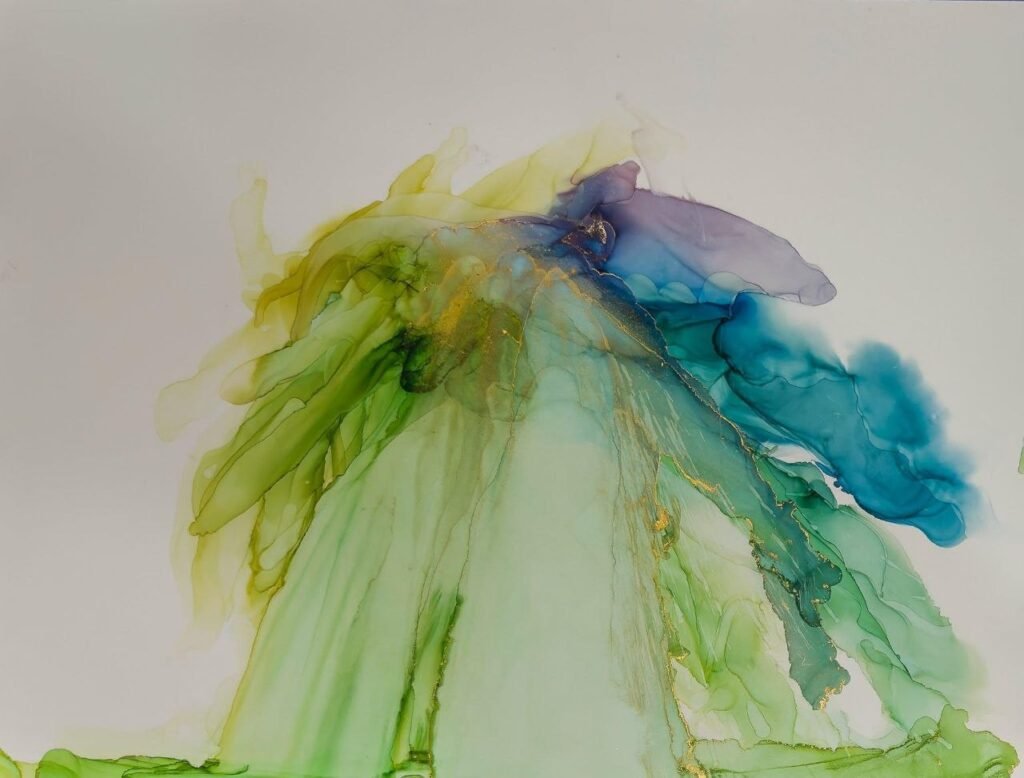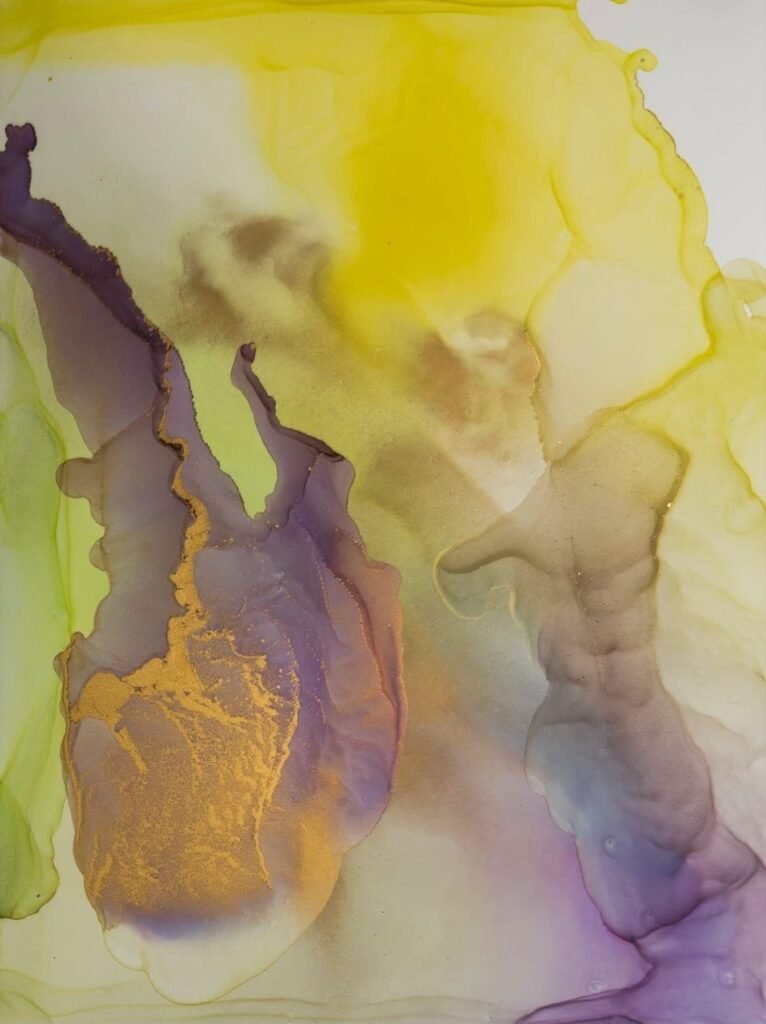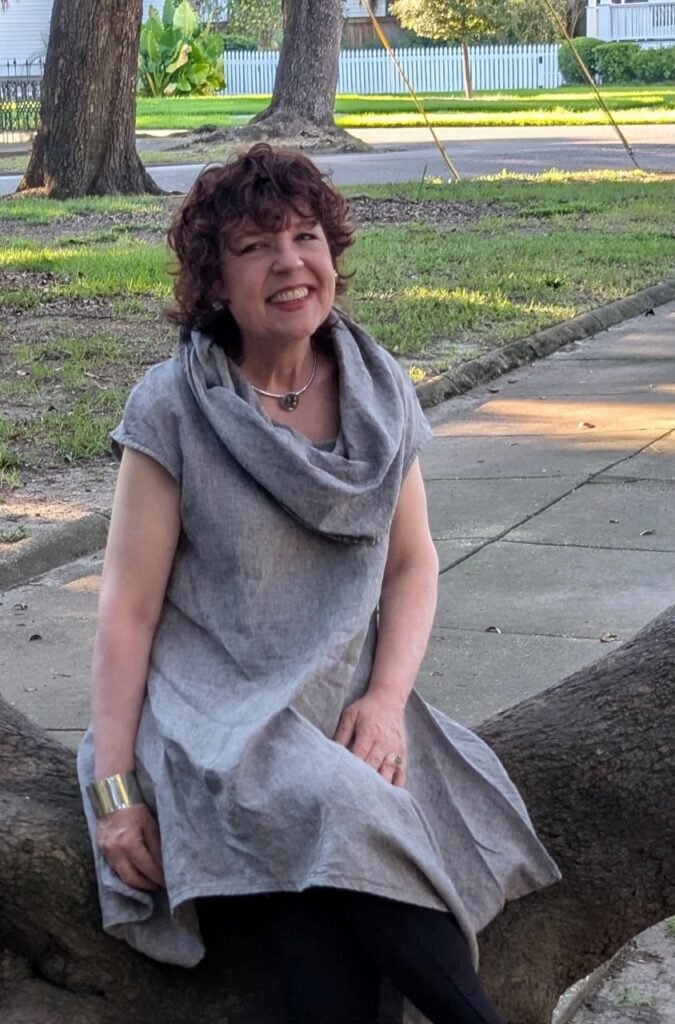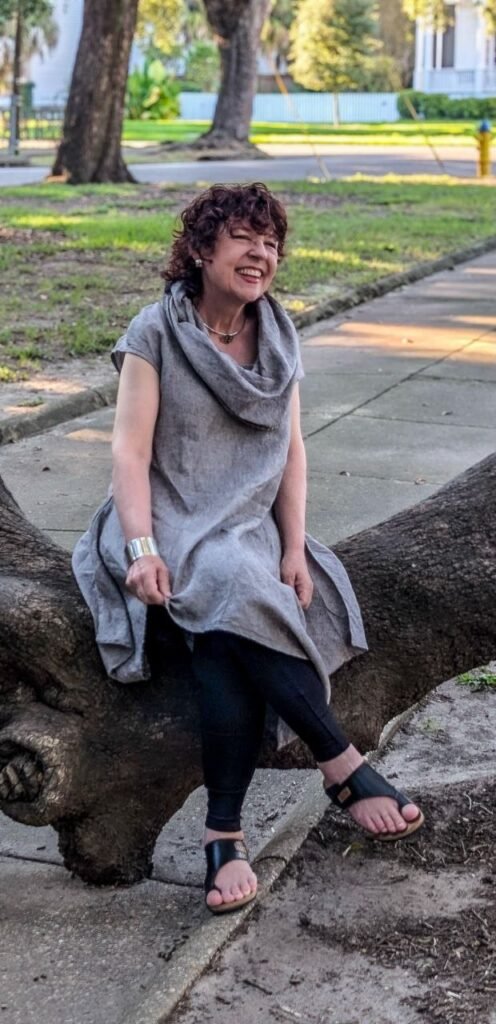
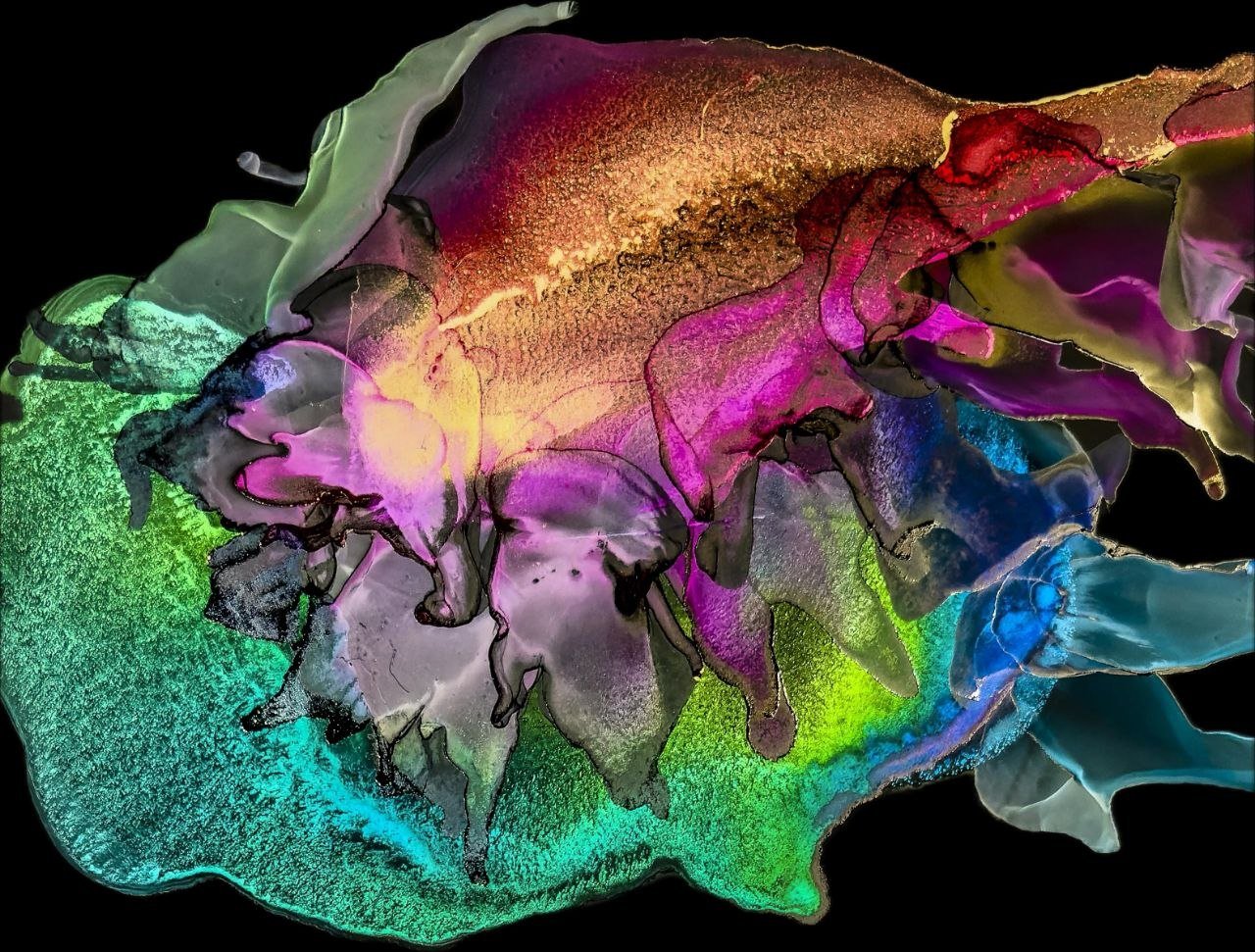
For abstract artist Stacey Cutts Easley, painting is less about illustrating a known idea than discovering something that has not yet found its language. A self-taught artist whose practice has evolved from detailed realism into process-based abstraction, she works primarily with alcohol ink, alongside monotype printing, botanical impressions, acrylics and mixed media. Colour, movement and the unpredictable behaviour of materials shape her compositions. Forms emerge, disappear and return in unexpected relationships, sometimes revealing an emotional presence before the artist herself understands what has appeared.
Her work occupies a space between intention and instinct. Rather than beginning with a predetermined image, Easley responds to the developing surface, adding, removing and altering until the composition begins to establish its own identity. This openness allows ambiguity to remain part of the finished work. Not everything needs an explanation. Sometimes the most meaningful element is precisely what cannot be translated into words.
Long before abstraction became central to her practice, Easley spent years developing the demanding skills of realism. Coloured pencil and pastel taught her to observe light, form and the smallest visual details with extraordinary patience. Every image began with a clear destination, and the challenge lay in reproducing what she could already see. This discipline strengthened her technical understanding, but it also provided a comfortable home for her perfectionism.
For much of her life, she created privately, keeping artworks for herself or giving them to family and friends. Around 2023, commissioned pet portraits began bringing her practice into a more public space. Yet a deeper transformation arrived through alcohol ink. Unlike the controlled marks of pencil, ink could move independently of her intentions. It bloomed, separated, travelled and settled according to forces she could influence but never completely command.
That encounter changed the relationship between artist and material. Instead of asking how faithfully she could reproduce an image, Easley began asking what the medium itself might reveal. The shift opened a new creative freedom, one in which an unexpected result could become more important than the original plan.
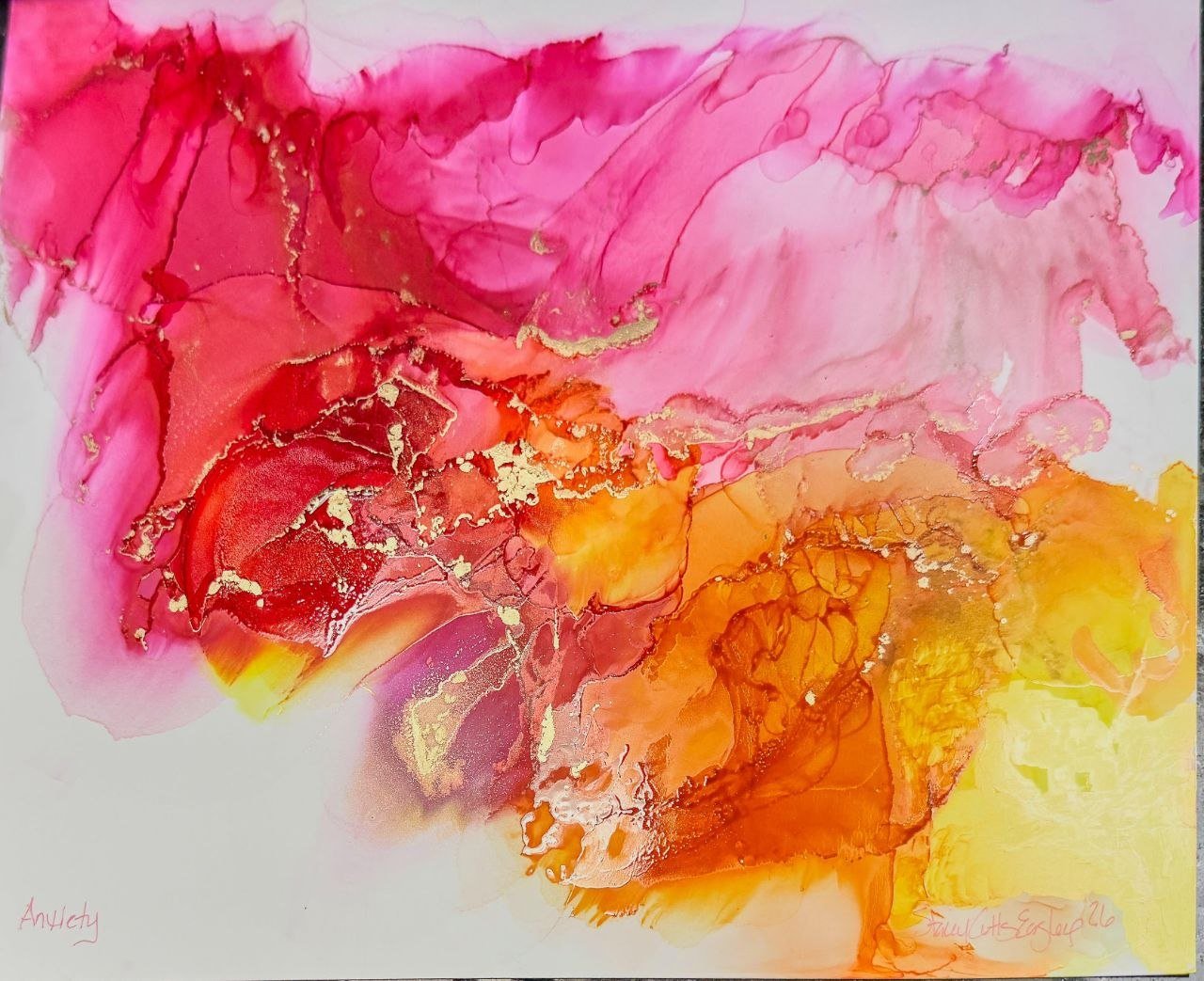
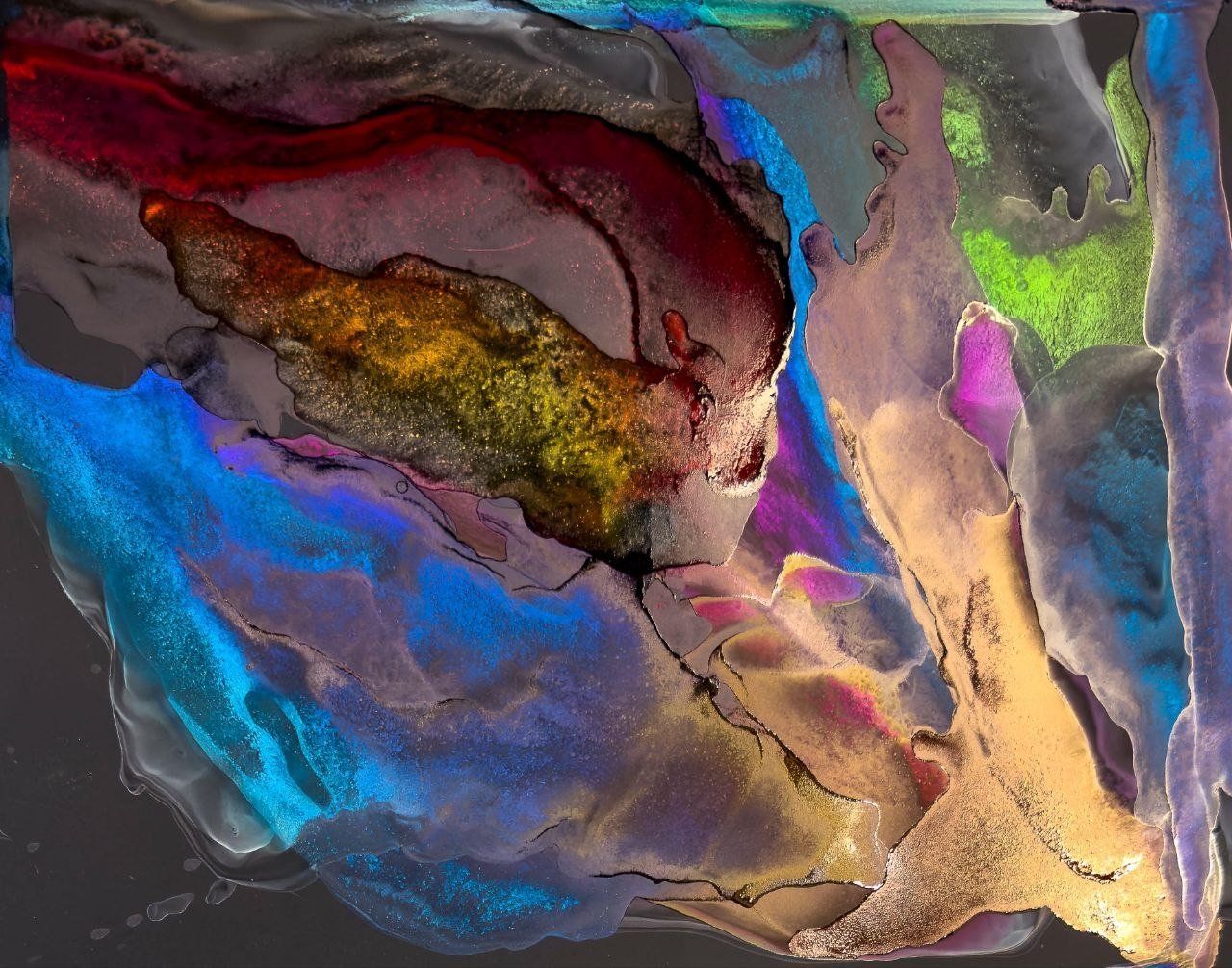
For Stacey Cutts Easley, alcohol ink introduced a form of collaboration with the unpredictable. Pigments spread across the surface, gather at their edges, mingle with neighbouring colours or remain suspended in distinct layers. Gravity, evaporation and surface tension influence each movement. Although the artist can guide these interactions, the material continually creates possibilities beyond conscious planning.
Over time, she learned to recognise the moments when intervention would strengthen a composition and when restraint would serve it better. An accidental shape might suggest a figure, a relationship or an unexpected tension. Rather than immediately correcting or defining it, she allows the image to exist. Her interest in Carl Jung's understanding of intuition as perception through the unconscious offers one way of approaching these encounters. Meaning does not always arrive before the image. Sometimes it follows much later.
For Easley, this process is not an abandonment of skill. It is a different application of attention. The precision developed through realism remains present, but now it works alongside responsiveness, curiosity and a willingness to accept uncertainty.
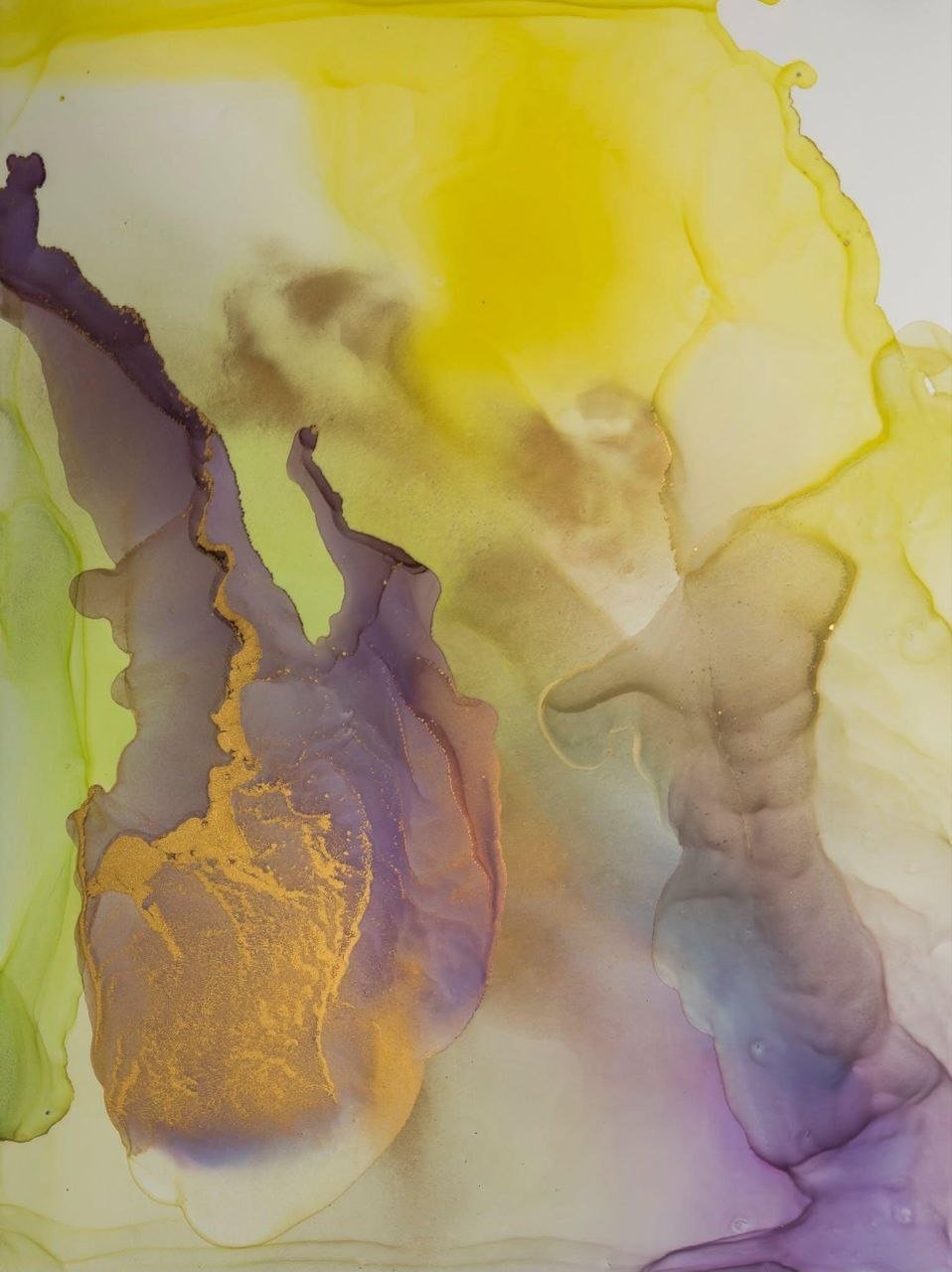
There is an urgency behind Easley's commitment to making art that extends beyond technique or visual pleasure. She describes a force that can feel almost physical, an energy that demands expression without always revealing its source. At times it emerges from emotion; at others, from an immediate fascination with colour, light or texture. The act of creating gives that energy somewhere to go.
Yet the motivation is not entirely inward-looking. Easley also understands art as a form of connection between people who may never meet. A painting can carry an unspoken recognition, suggesting that another person has experienced something similar. In this way, abstraction becomes a language for shared feelings without requiring those feelings to be explained or resolved.
Her perspective also responds to the wider world. Confronted by violence, prejudice, greed and the pressure to measure everything through productivity, she sees art as an invitation to pay attention differently. It does not always need to comfort or beautify. Difficult artworks can also affirm the value of human experience. What matters is their ability to interrupt indifference and make room for feeling.
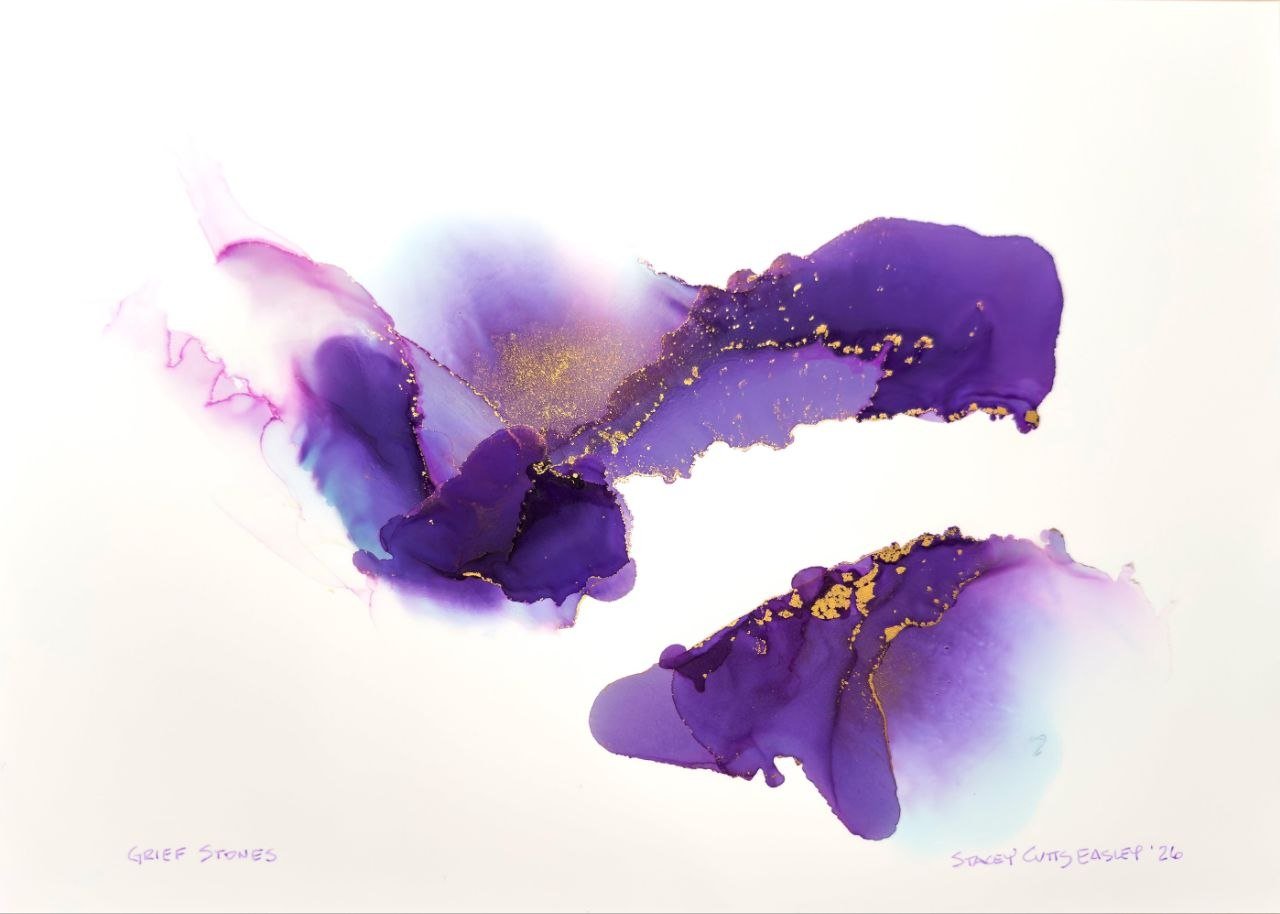
The movement of alcohol ink has become a way for Stacey Cutts Easley to understand the natural world. What appears spontaneous on the surface still follows physical laws. Liquid responds to gravity, colours interact through their chemical properties, and droplets separate or gather through surface tension. Every movement contains an element of unpredictability, yet none exists entirely outside the structures that govern it.
She recognises a similar relationship throughout nature. Water moves, organisms adapt, landscapes change and living systems respond to forces beyond their control. Variation exists within structure. The world is neither completely ordered nor entirely chaotic, and her materials make this relationship visible through their behaviour.
This observation gives the work a philosophical dimension. Painting becomes an exercise in distinguishing what can be influenced from what must be allowed to unfold. Easley does not surrender intention; she learns to work alongside forces that resist complete control. Through the ink, she encounters a reflection of life itself, where acceptance and action must continually find their balance.
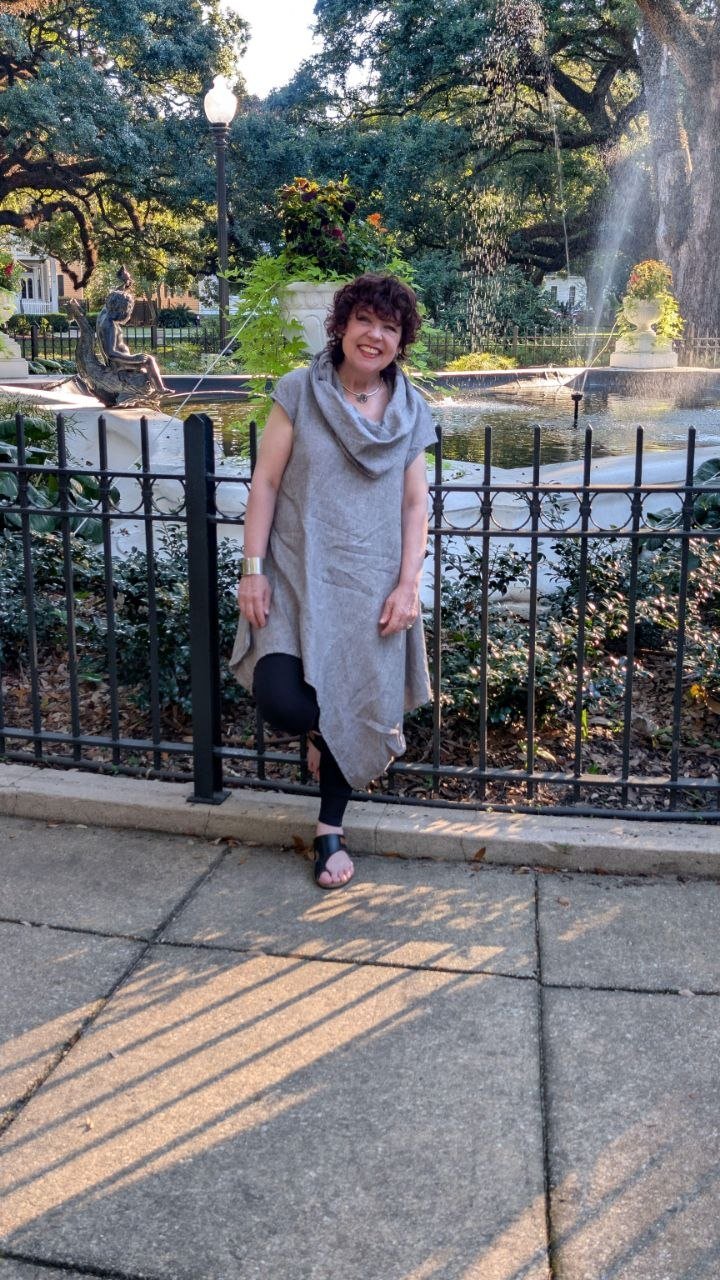
Perhaps the most revealing aspect of Easley's practice is that she does not regard creativity as something she could simply choose to leave behind. Drawing has accompanied her for as long as she can remember, through years of private realism and into the more open territory of abstraction. The materials have changed, but the need to make something visible has remained.
Her current practice embraces the possibility that a painting may understand something before its maker does. Colour can suggest emotion without naming it. An unexpected form can carry significance without becoming a fixed symbol. Viewers, in turn, bring their own memories and experiences to the surface, allowing the work to continue beyond the studio.
Carl Jung's words, "Art is a kind of innate drive that seizes a human being and makes him its instrument," hold particular meaning for Easley. They reflect a relationship with creativity that feels less like a decision than an essential part of being alive. For Best Art Gallery, her journey reveals the expressive freedom that becomes possible when technical mastery gives way to trust. In her work, the invisible is not forced into definition. It is given space to appear.
Discover more artist stories on the Best Art Gallery blog, and explore Stacey Cutts Easley's work on Instagram.