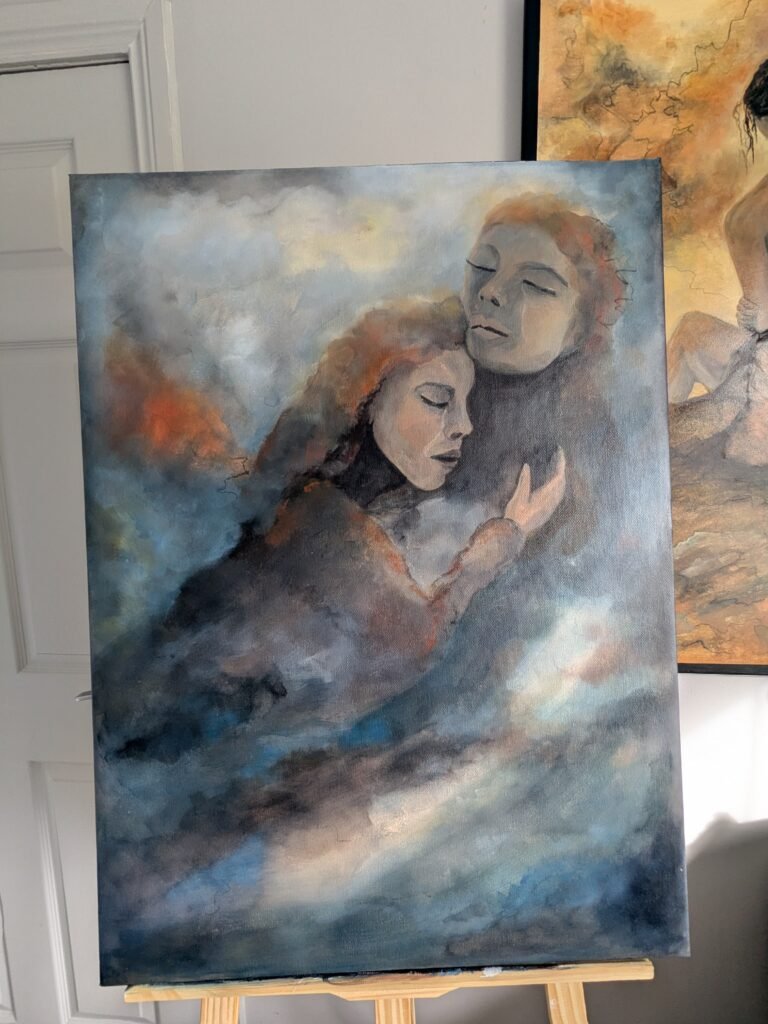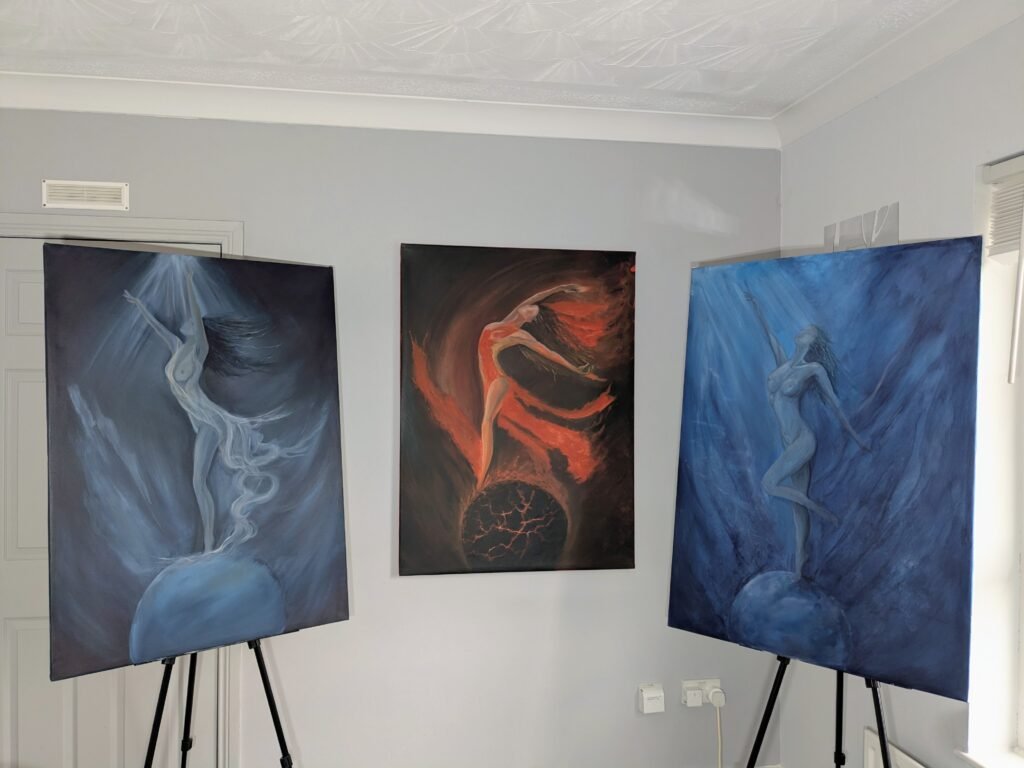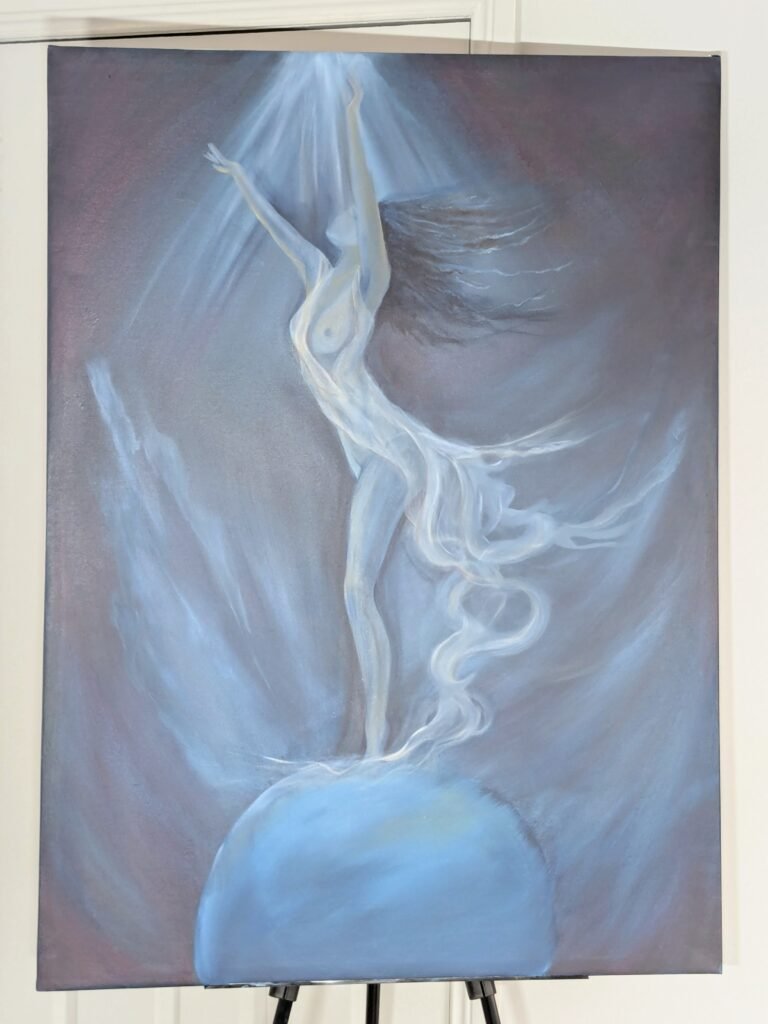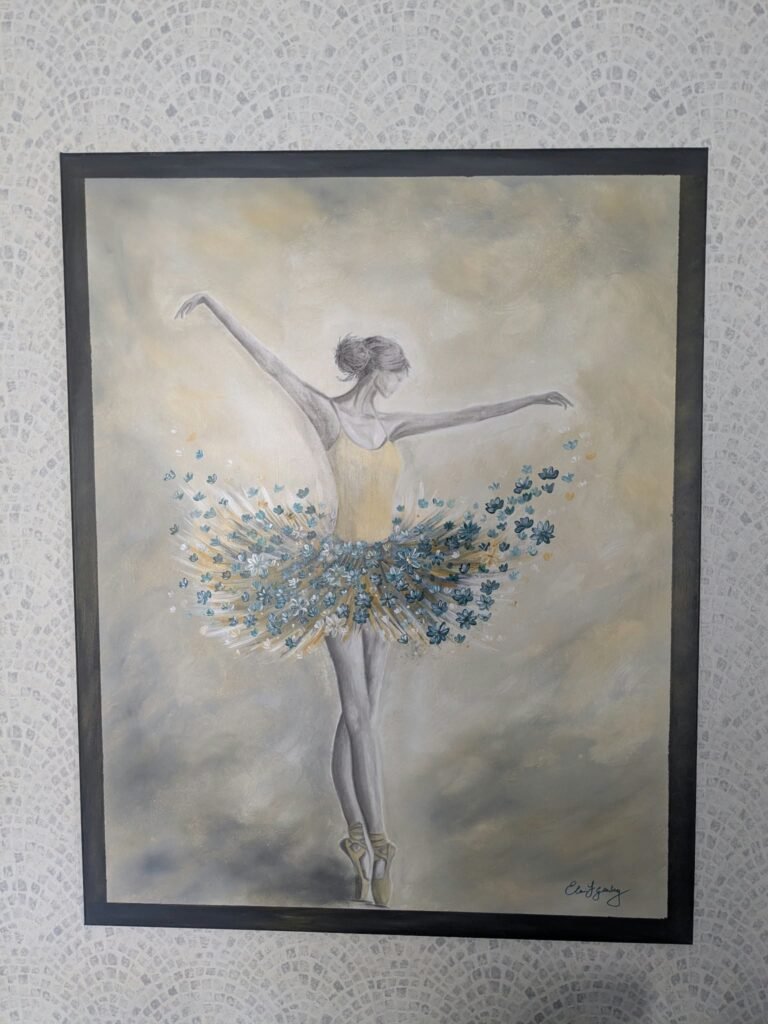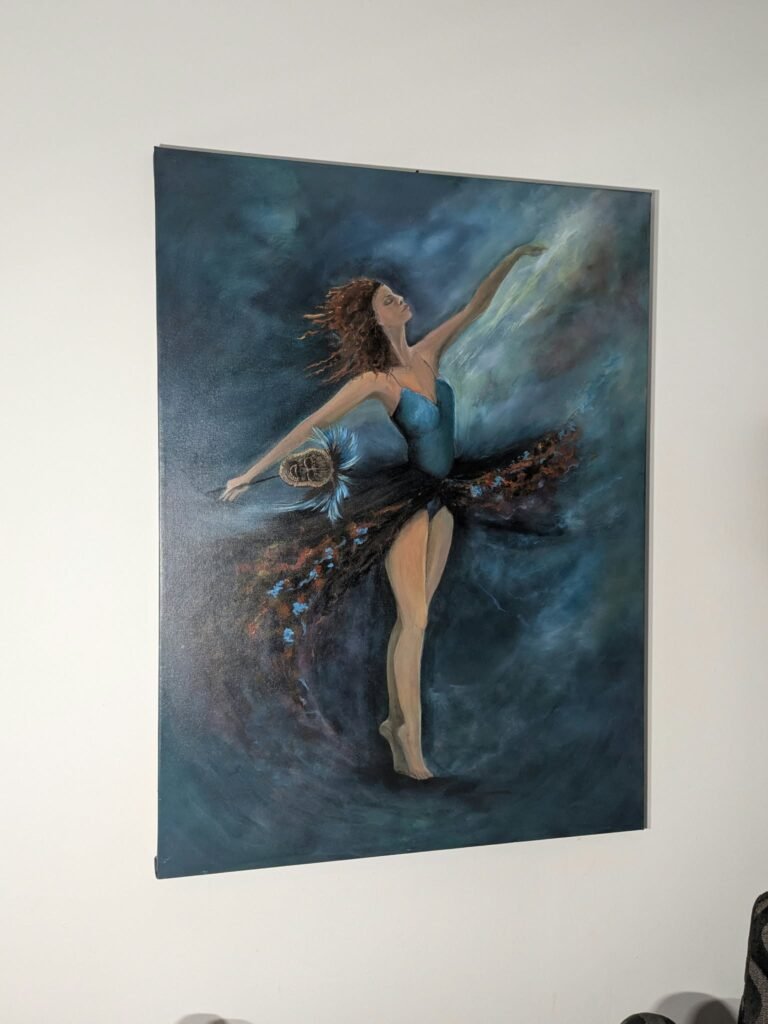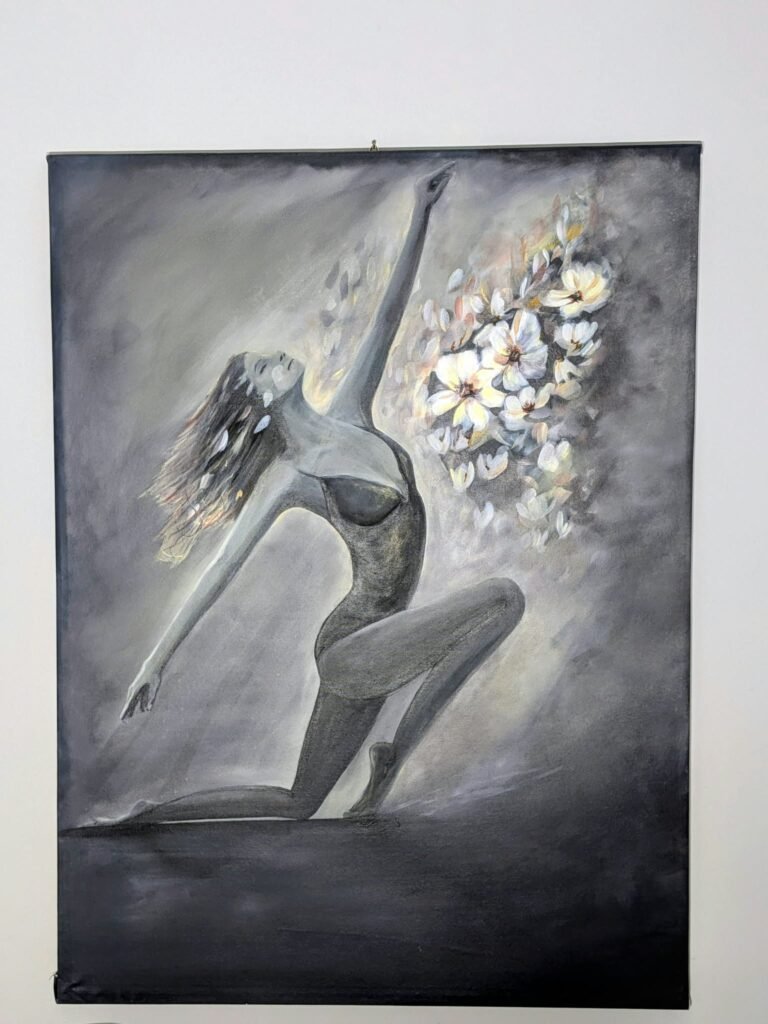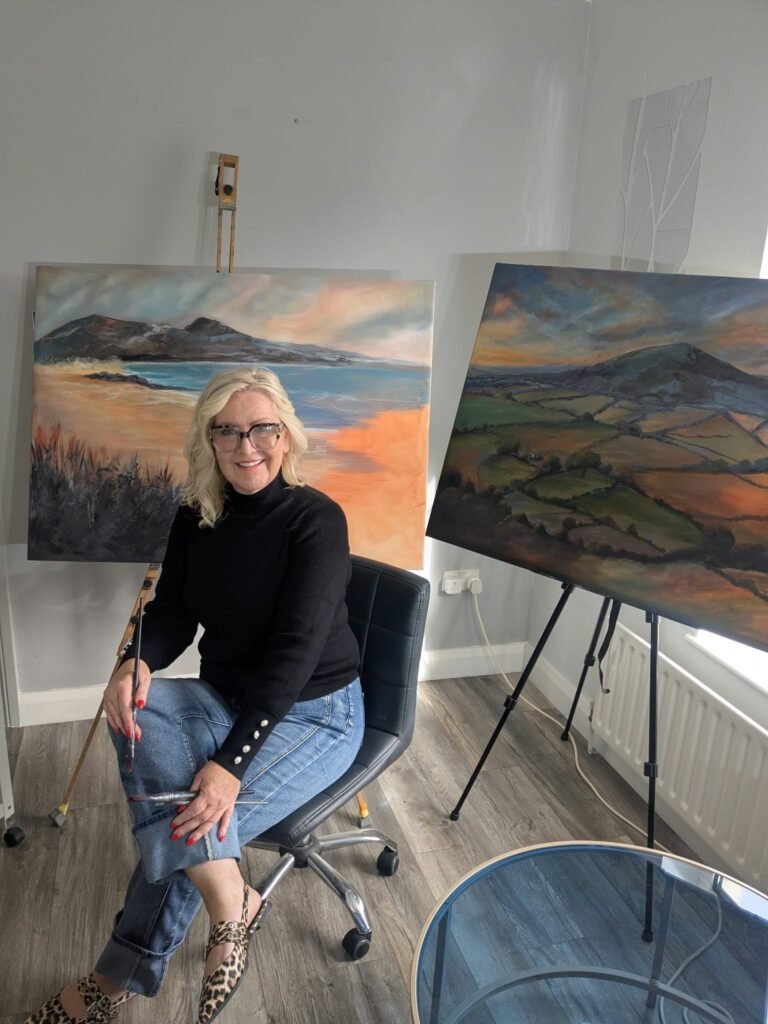
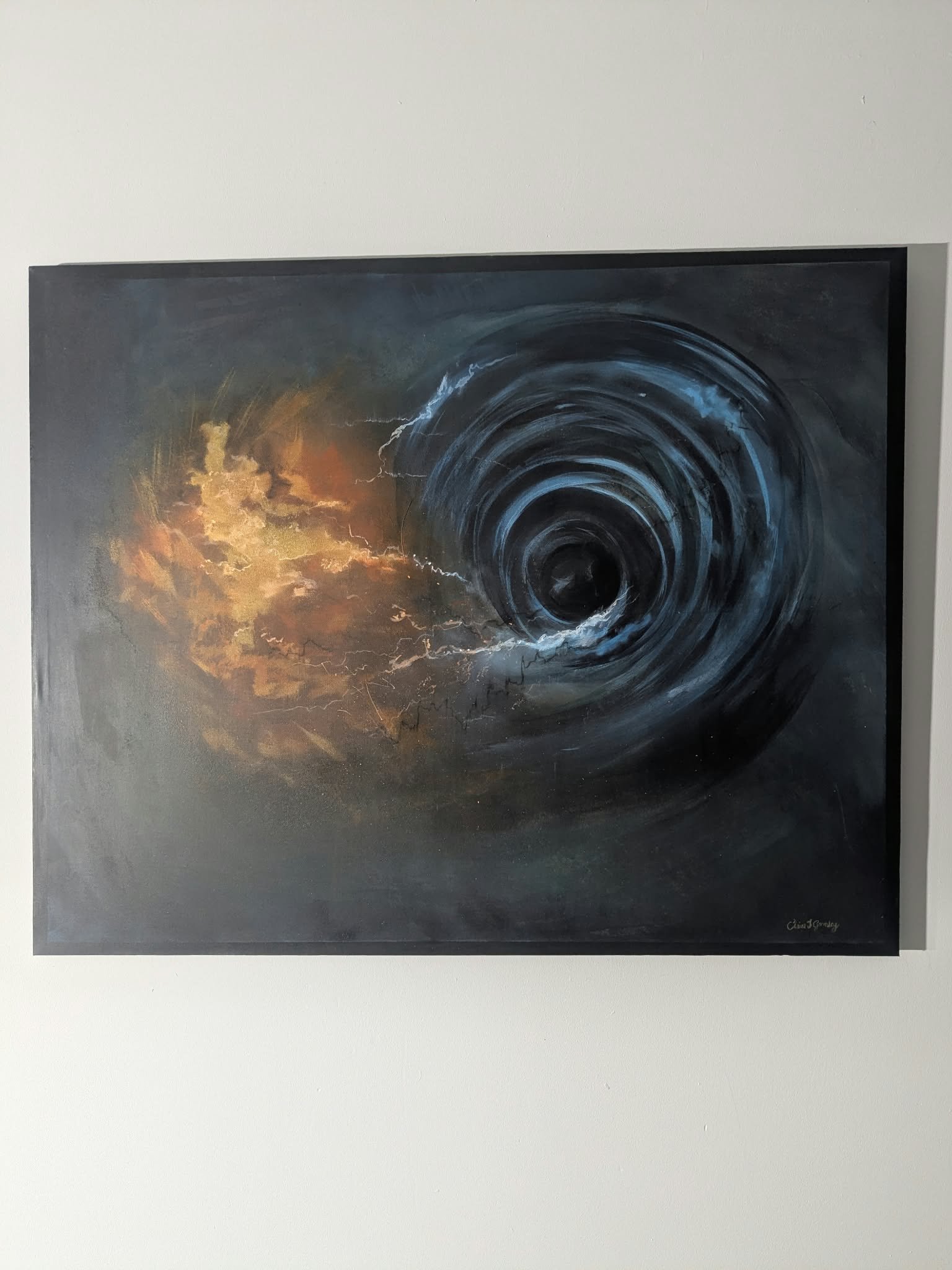
For Elaine Josephine Gormley, painting begins with a feeling rather than a fixed image. The emerging Northern Irish artist creates atmospheric acrylic paintings that move between abstraction and impressionism. Light, movement and colour become ways of expressing experiences that often resist words. Her compositions carry a dreamlike quality, inviting viewers to connect with something beyond the visible subject.
Nature and the feminine spirit frequently enter this visual world. Through layered colour, glazing, texture and metallic elements such as gold leaf and aged copper, Gormley builds surfaces that seem to hold both light and emotion. Her approach is intuitive rather than strictly planned. A painting develops through experimentation, allowing atmosphere and instinct to guide the final image. What matters most is not simply how the artwork looks, but what someone might feel while standing before it.
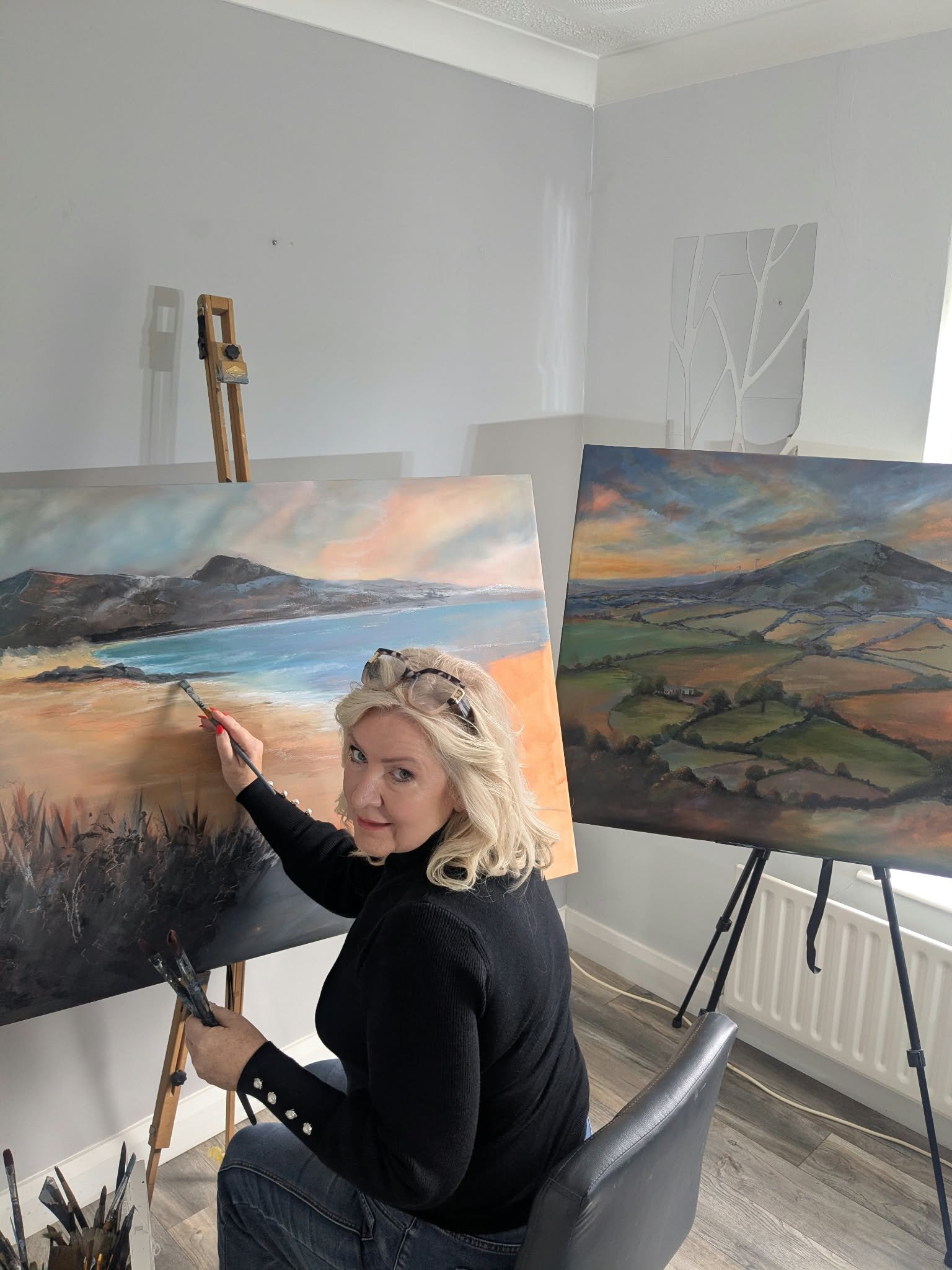
Gormley's journey into painting did not follow a conventional artistic path. For many years, she worked as a hairdresser and colourist. That profession required a close understanding of colour, shape, texture and transformation. It also brought her into regular contact with people and their personal stories. Although she had not yet established herself as a painter, these experiences helped develop a sensitivity that now appears throughout her artistic practice.
After a difficult period in her life and a time of ill health, she began searching for something creative that belonged entirely to her. Painting offered that possibility. What initially felt like an escape soon became something more meaningful. She discovered the freedom of losing herself in colour and movement, gradually developing a visual language shaped by personal experience. The transition was not simply about learning a new craft. It marked the beginning of a different relationship with herself.
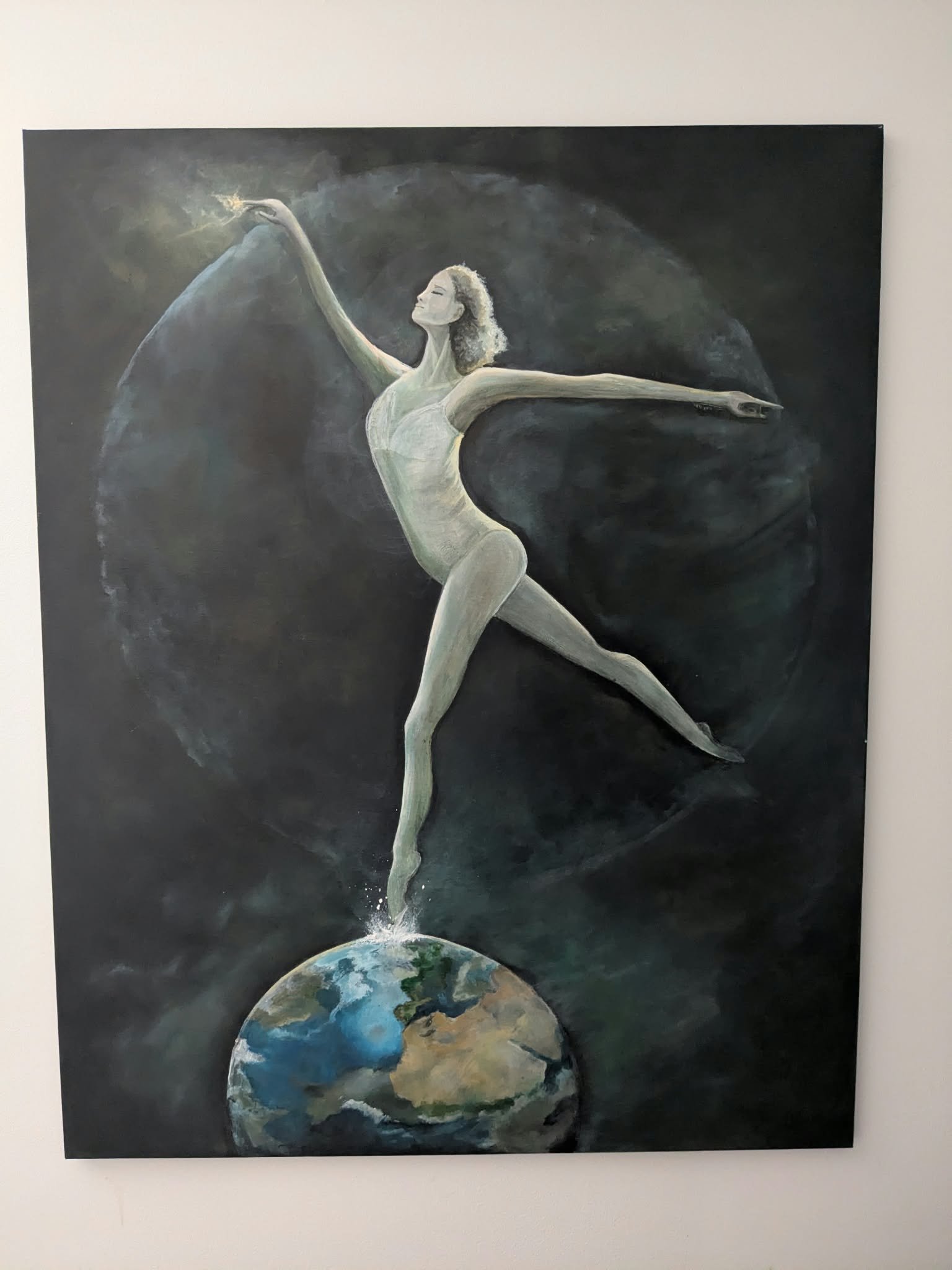
Resilience sits close to the heart of Elaine Josephine Gormley's work. She is fascinated by what people carry through difficult experiences and how those experiences can change them. Rather than treating hardship as something separate from beauty, her paintings allow both to exist together. Emotional vulnerability becomes part of a larger conversation about survival, growth and the possibility of beginning again.
Nature provides an especially meaningful reflection of this philosophy. Flowers bloom, fade and return. Landscapes shift as the light changes, while storms eventually give way to calmer skies. Gormley recognises similar patterns in human life. Difficult seasons do not necessarily erase the possibility of beauty. Instead, they can change the way a person understands it. Her paintings explore this delicate relationship between fragility and strength, allowing colour and atmosphere to suggest hope without denying what came before.
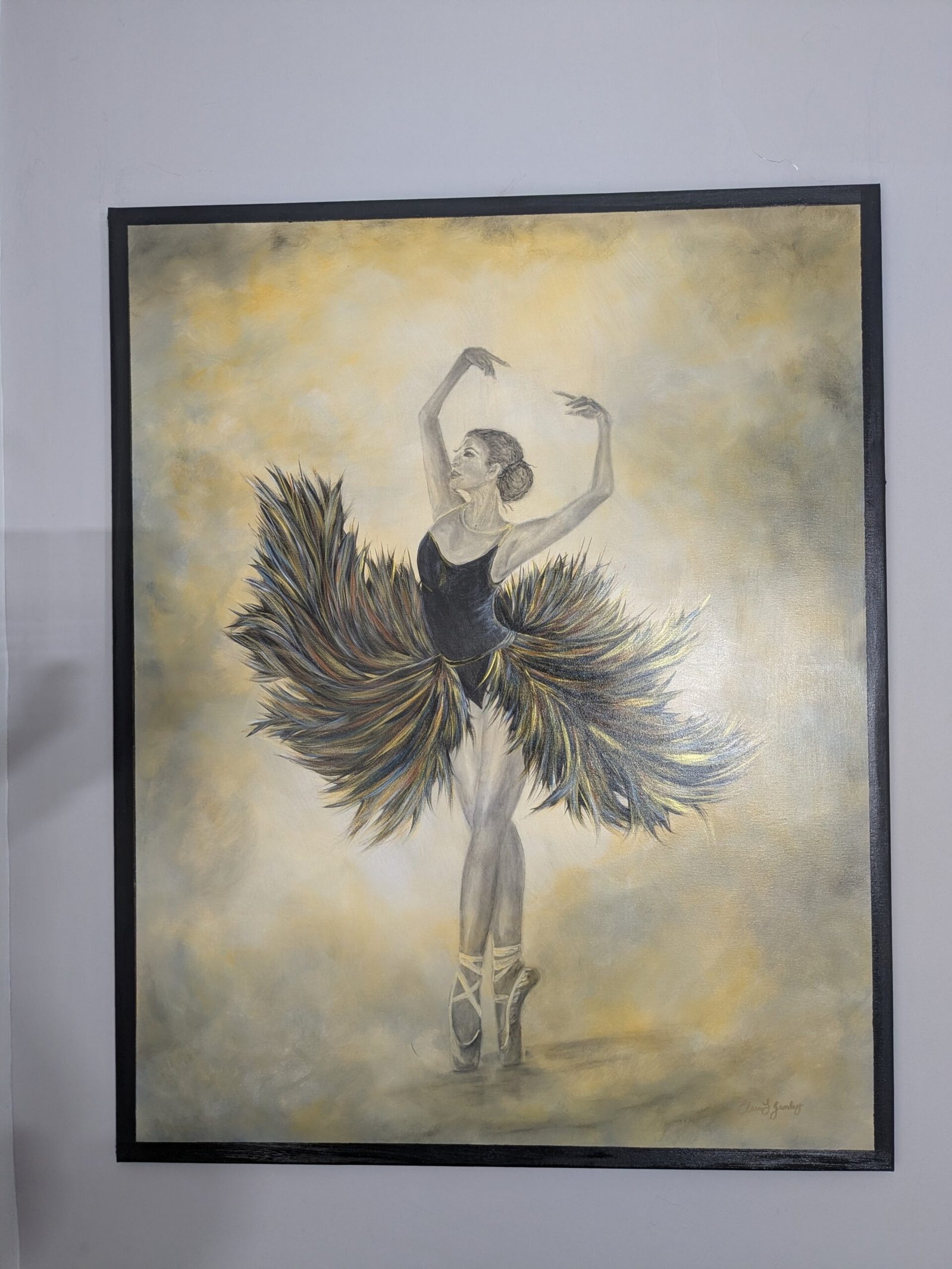
Material exploration plays an important role in Gormley's paintings. Acrylic provides the foundation, but her surfaces often develop through multiple layers of glazing, texture and metallic accents. Gold leaf and aged copper introduce another dimension, allowing light to interact with the composition as the viewer changes position. These details contribute to the atmospheric character of the work without becoming its sole focus.
There is a balance between deliberate choices and intuitive movement. A shift in colour can alter the emotional temperature of a painting. A textured passage can introduce tension, while a softer transition creates space for quiet reflection. The result is an approach in which technique serves feeling. Rather than describing a landscape or figure with complete precision, Gormley uses material and light to communicate the atmosphere surrounding it.
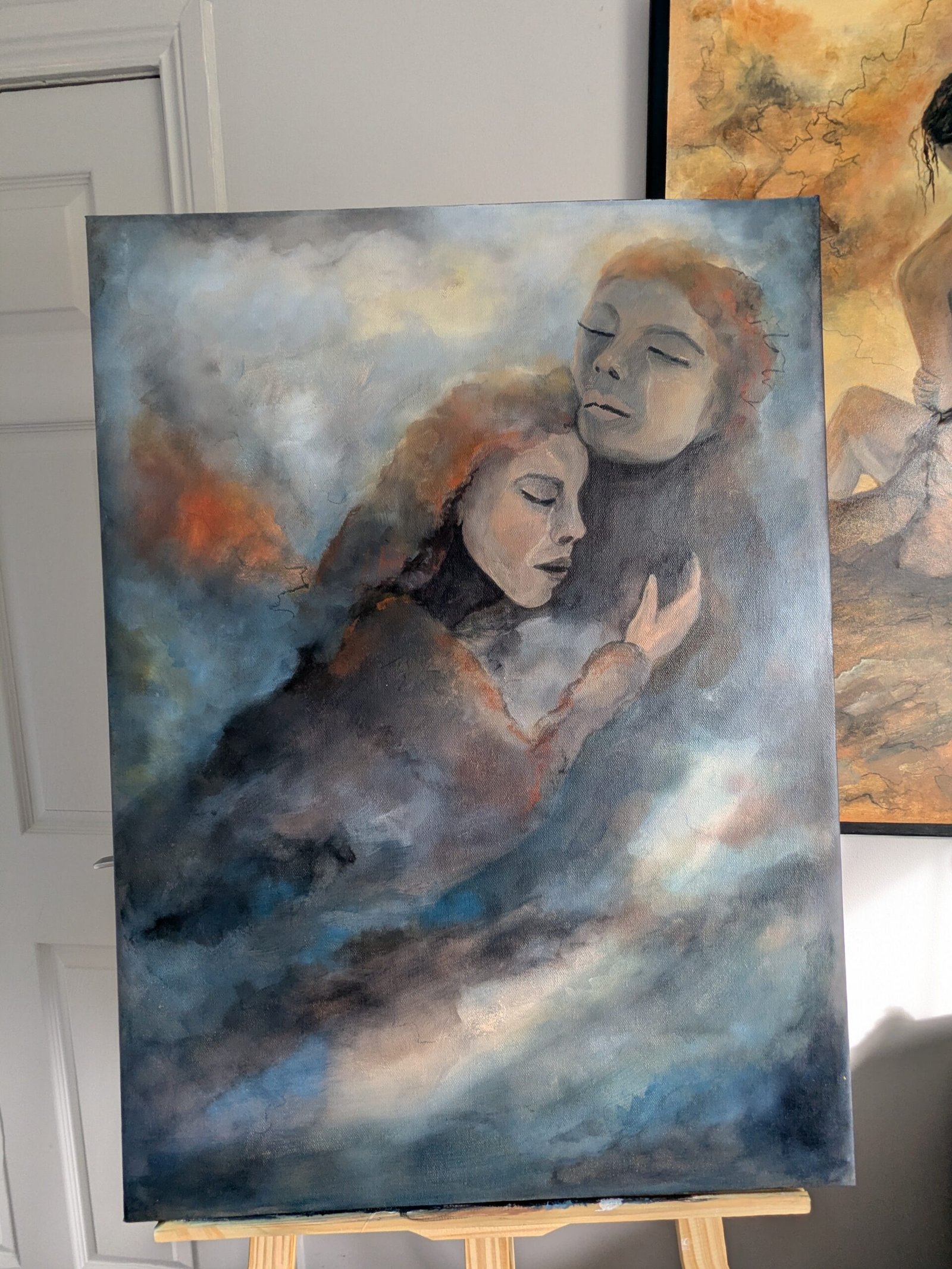
A landscape is rarely just a landscape in Gormley's artistic world. Mountains, flowers, skies and figures become carriers of memory and emotion. A flower may suggest femininity, fragility or renewal. A changing sky can evoke a feeling that has little to do with a particular place. These associations allow familiar subjects to move beyond literal representation and enter a more personal territory.
This is where her relationship with abstraction becomes especially important. Recognisable forms may remain visible, but their meanings stay open. Gormley does not attempt to determine exactly what each viewer should discover. Instead, she creates enough space for individual memories and experiences to enter the painting. What one person recognises as sadness, another might experience as peace. The artwork becomes a meeting place between the artist's emotional world and the viewer's own imagination.
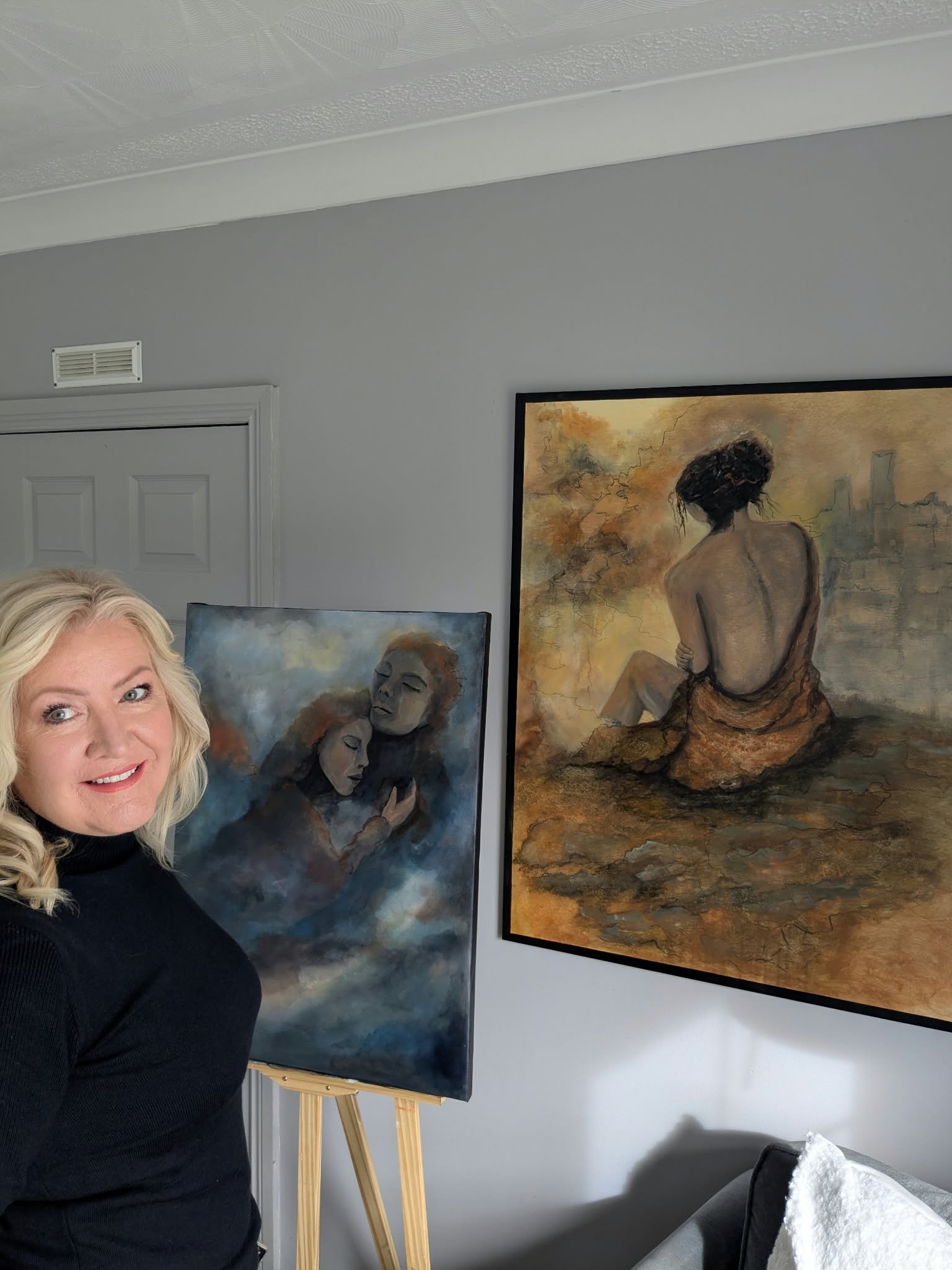
For Gormley, one of painting's greatest gifts is the freedom to become completely absorbed in the creative process. Time seems to disappear as colour, movement and instinct take over. The outside world becomes quieter, leaving space for emotions and memories to emerge through the work. This experience remains central to her motivation. Painting allows her to transform something deeply personal into an object that another person can encounter in an entirely different way.
Her favourite quotation, attributed to Thomas Merton, expresses this relationship: "Art enables us to find ourselves and lose ourselves at the same time." It reflects both the discovery and the release she experiences while painting. Yet the journey does not end when a canvas is complete. Each viewer brings a different history to the work, creating interpretations the artist may never have anticipated.
That openness gives Elaine Josephine Gormley's paintings their emotional purpose. They do not demand a single response or offer a fixed explanation. Instead, they invite people to pause, recognise something of themselves and perhaps discover a feeling they had not yet found the words to express.