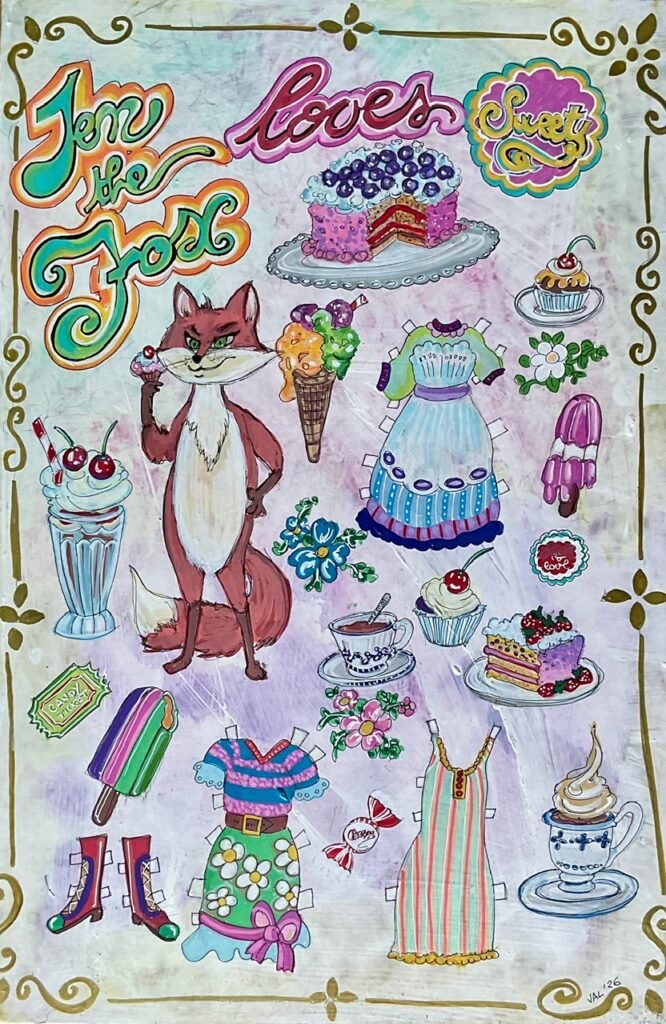
At first glance, Valentina Secchi's paintings seem to offer a joyful escape. Bright colours, familiar characters, sweets and imagined landscapes create a world that feels playful and inviting. Yet look a little longer, and something less comfortable begins to emerge. Behind the colour are questions about loneliness, vulnerability, memory and the pressures of contemporary life.
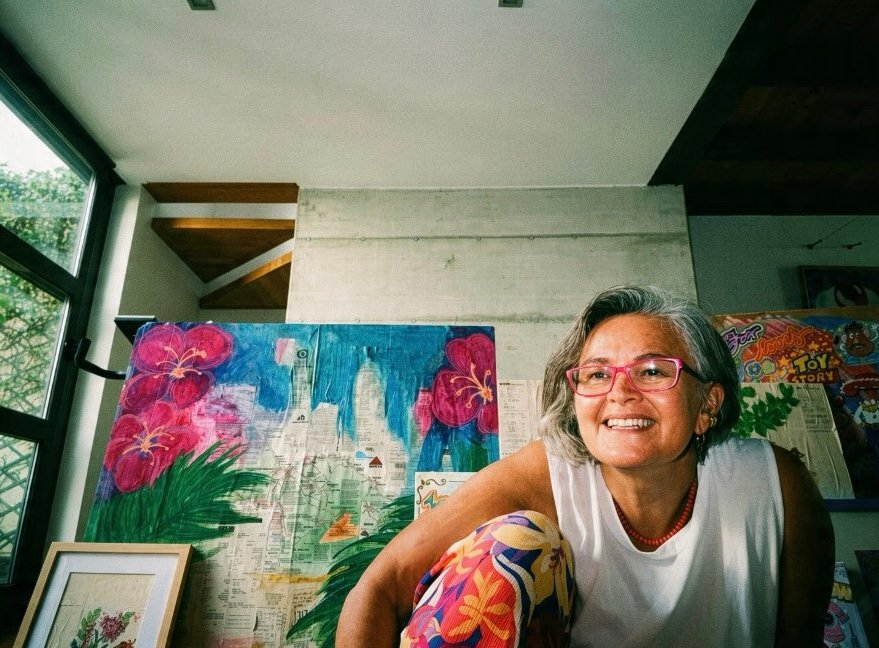
Based in Milan, the Italian contemporary artist works under the name Macadamia Art. Her creative identity also carries a deep connection to New York, a city that has shaped both her personal experiences and artistic imagination. Secchi studied painting at the Brera Academy of Fine Arts and architecture at the Politecnico di Milano. She later worked across illustration, design and architecture. These disciplines continue to inform the way she constructs images and tells stories.
Her paintings bring these experiences together without allowing any single discipline to define them. Instead, she creates a visual language where autobiography meets imagination and social observation. What appears cheerful on the surface often asks the viewer to consider something much more complicated underneath.
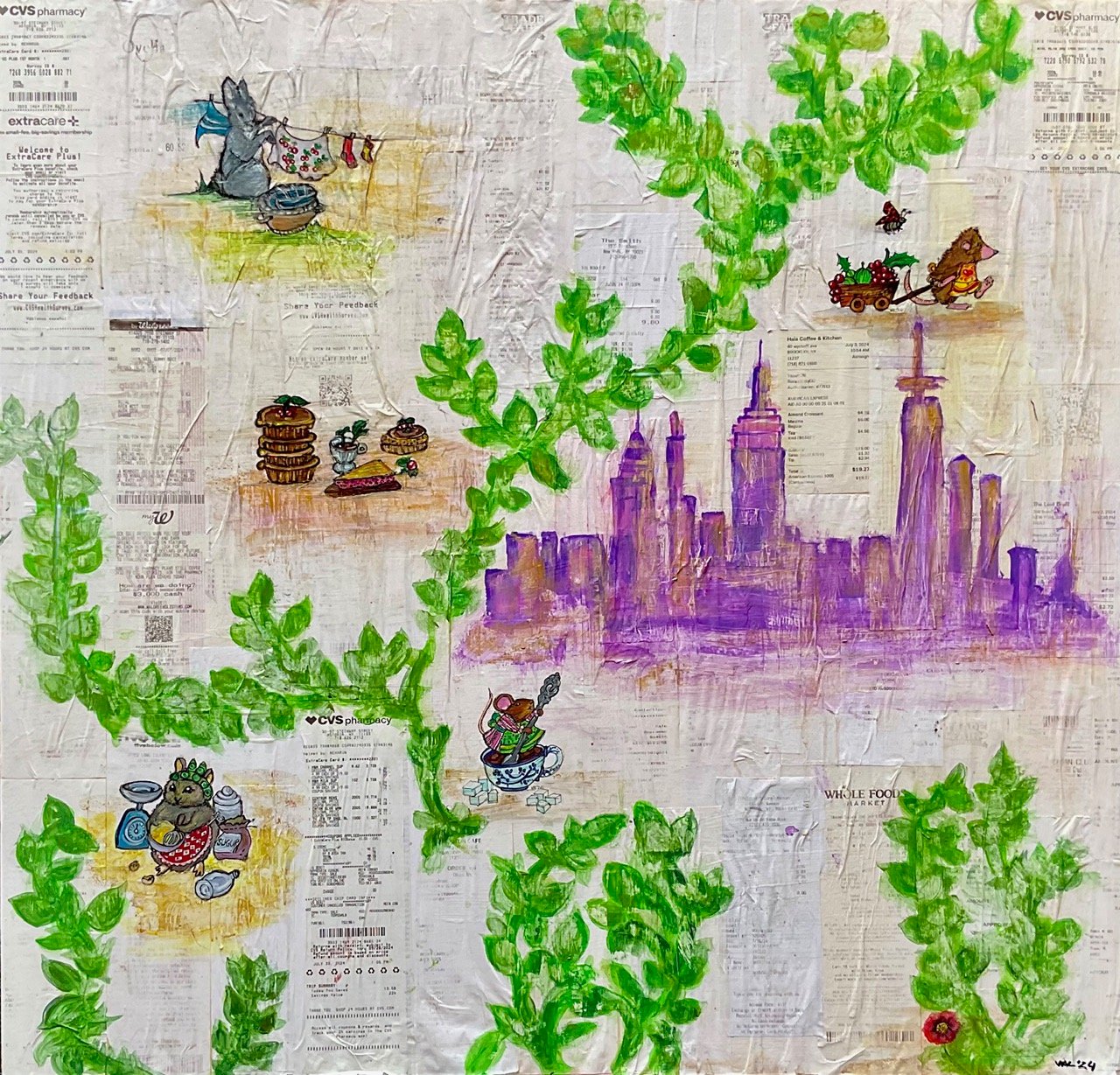
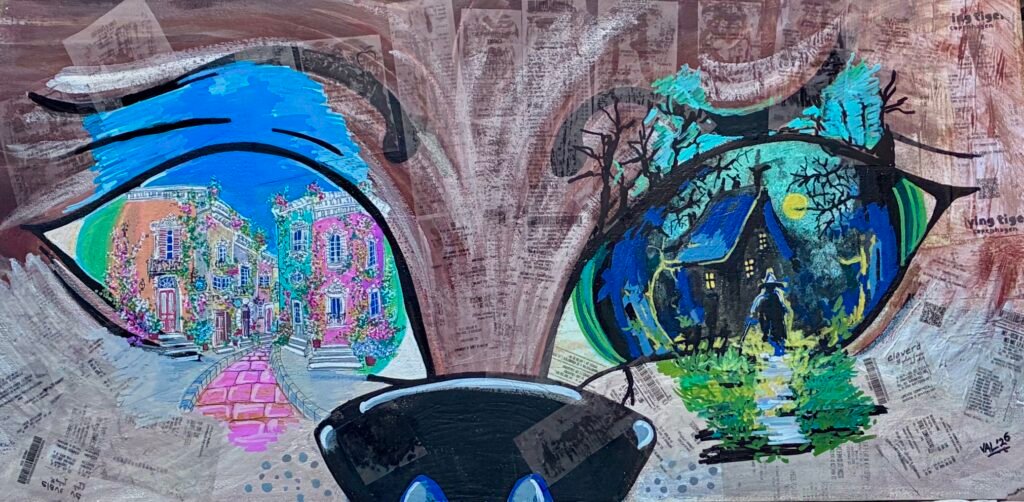
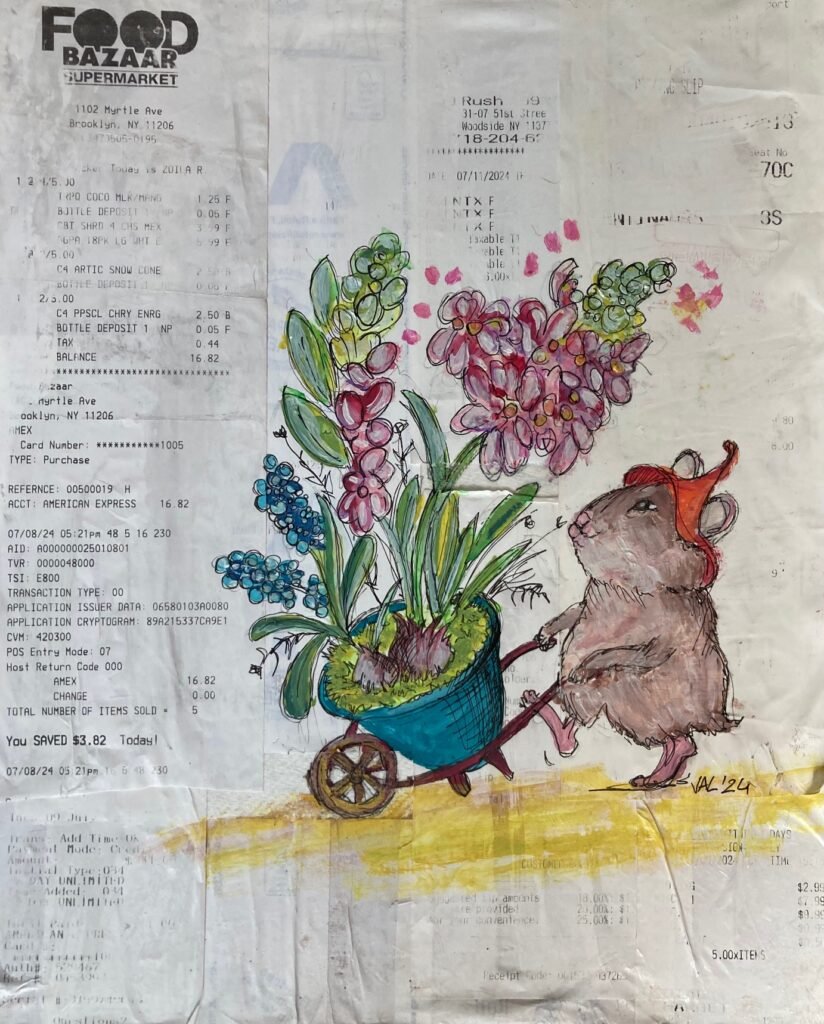
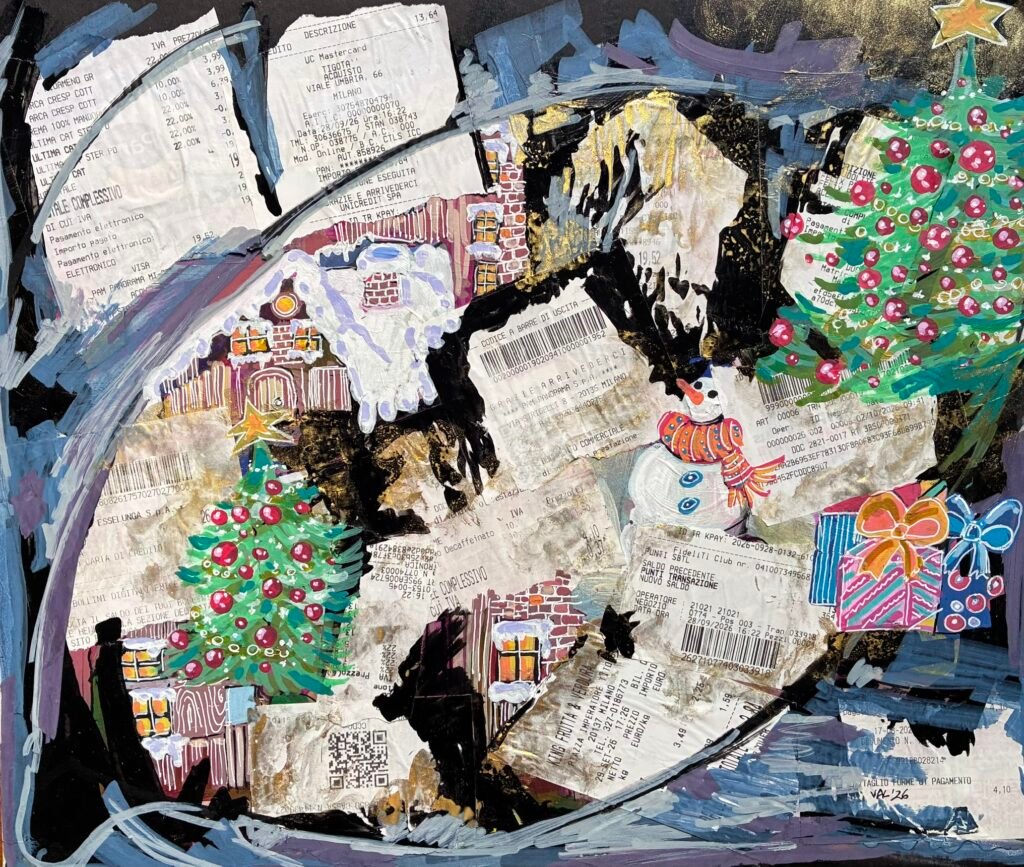
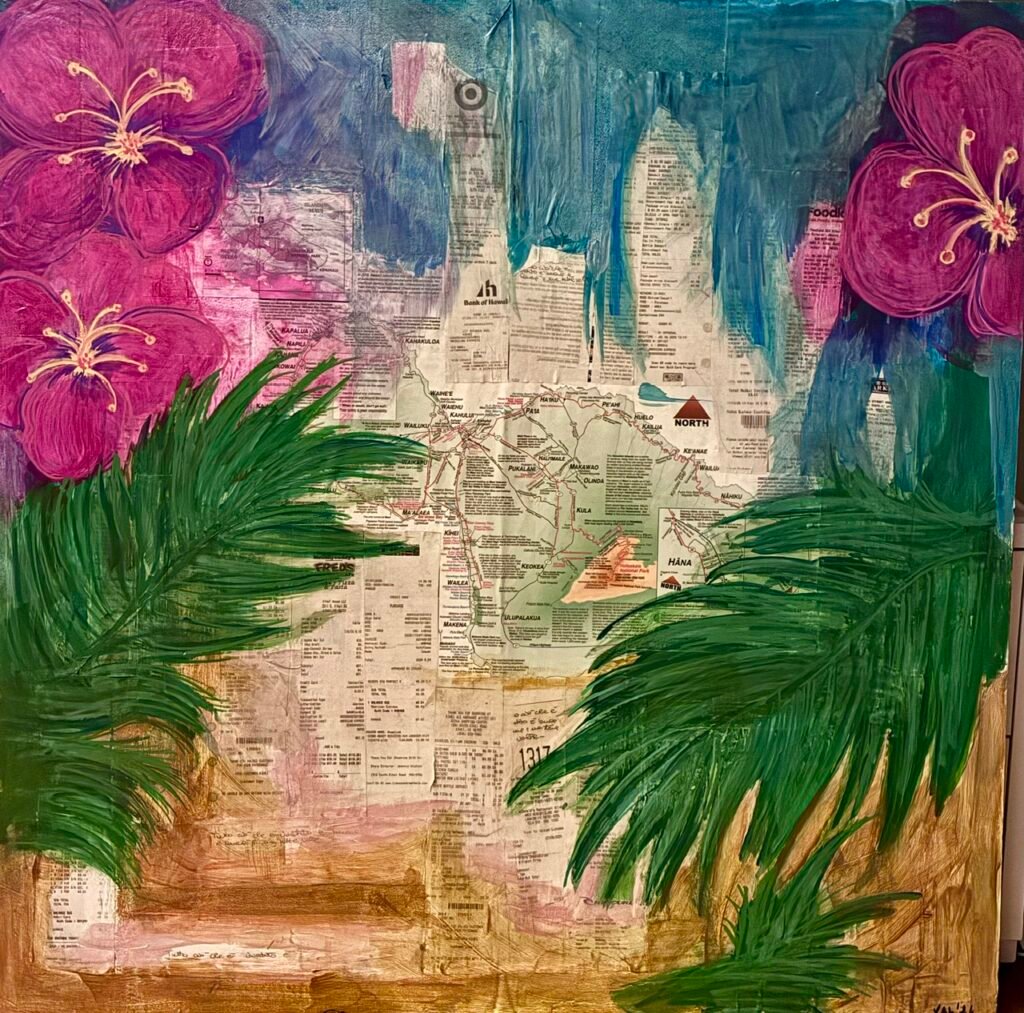
One of the most distinctive elements in Secchi's practice begins with something most people barely notice: a receipt. Usually discarded moments after a purchase, this small piece of paper becomes a record of lived experience in her hands. It reveals where someone has been, what they needed, what they desired and what they could afford.
For Secchi, these everyday records hold stories that conventional images might overlook. A supermarket receipt can describe the cost of simply existing. Meanwhile, a collection of purchases from a journey can preserve the emotional geography of a particular place and time.
Works such as One Month in New York and 10 Days in Maui demonstrate this approach. Rather than treating receipts as meaningless financial documents, she incorporates them into imaginative compositions. Consequently, the ordinary becomes autobiographical, and the disposable becomes a lasting fragment of memory.
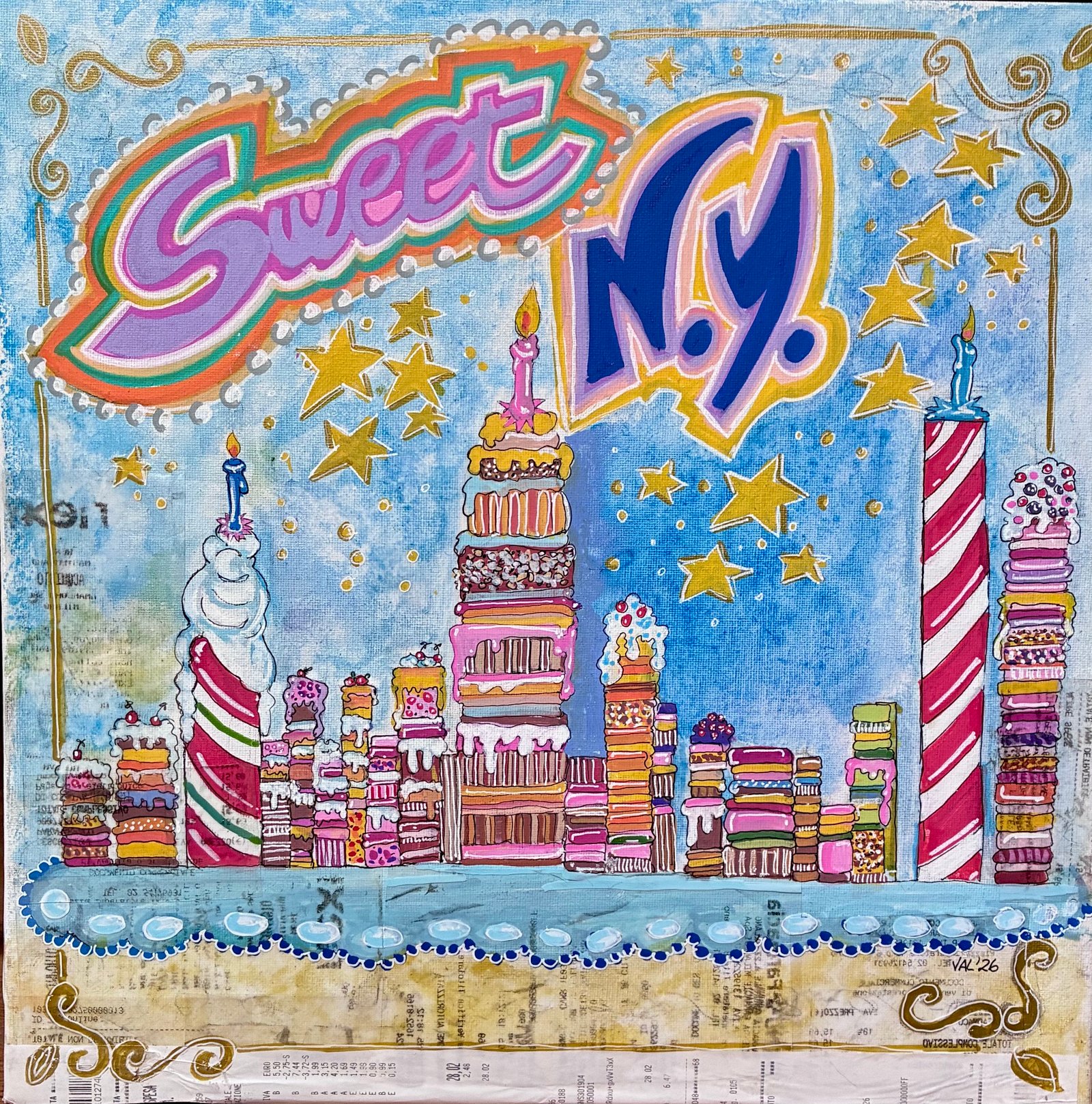
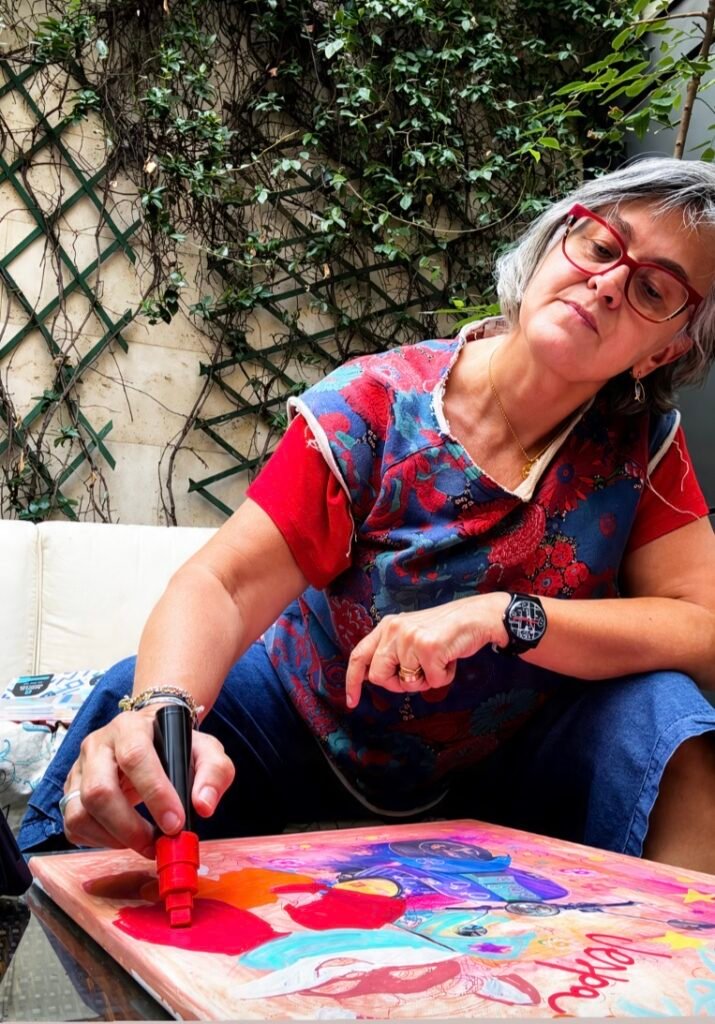
Drawing entered Secchi's life long before she understood what it meant to be an artist. She began at just two or three years old. Even then, she could spend hours absorbed in images of her own making. The page offered a protected space, somewhere the outside world could not completely reach her.
As she grew older, that instinct developed through formal education and professional experience. Painting, illustration, architecture and design introduced different ways of thinking about form, space and communication. However, her deepest connection to art remained rooted in the simple act of making an image.
Over time, Secchi recognised that everyday life offered the richest source of inspiration. Ordinary objects, personal memories and familiar visual symbols gradually entered her compositions. Rather than abandoning the imaginative freedom of childhood, she found ways to bring it into conversation with adult experience.
Today, her paintings preserve that sense of discovery. They allow seemingly unrelated images to coexist, creating narratives that feel personal without becoming entirely literal.
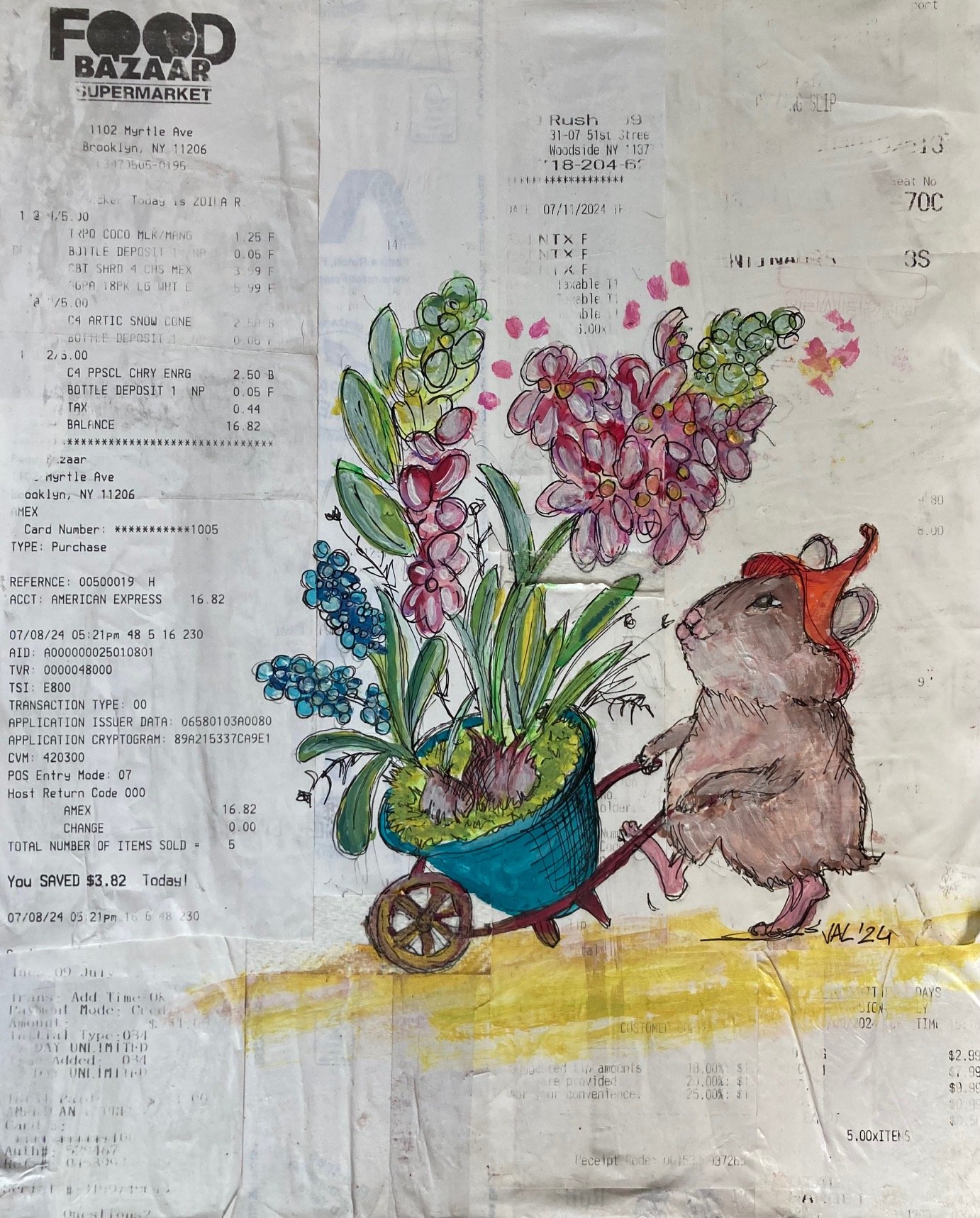
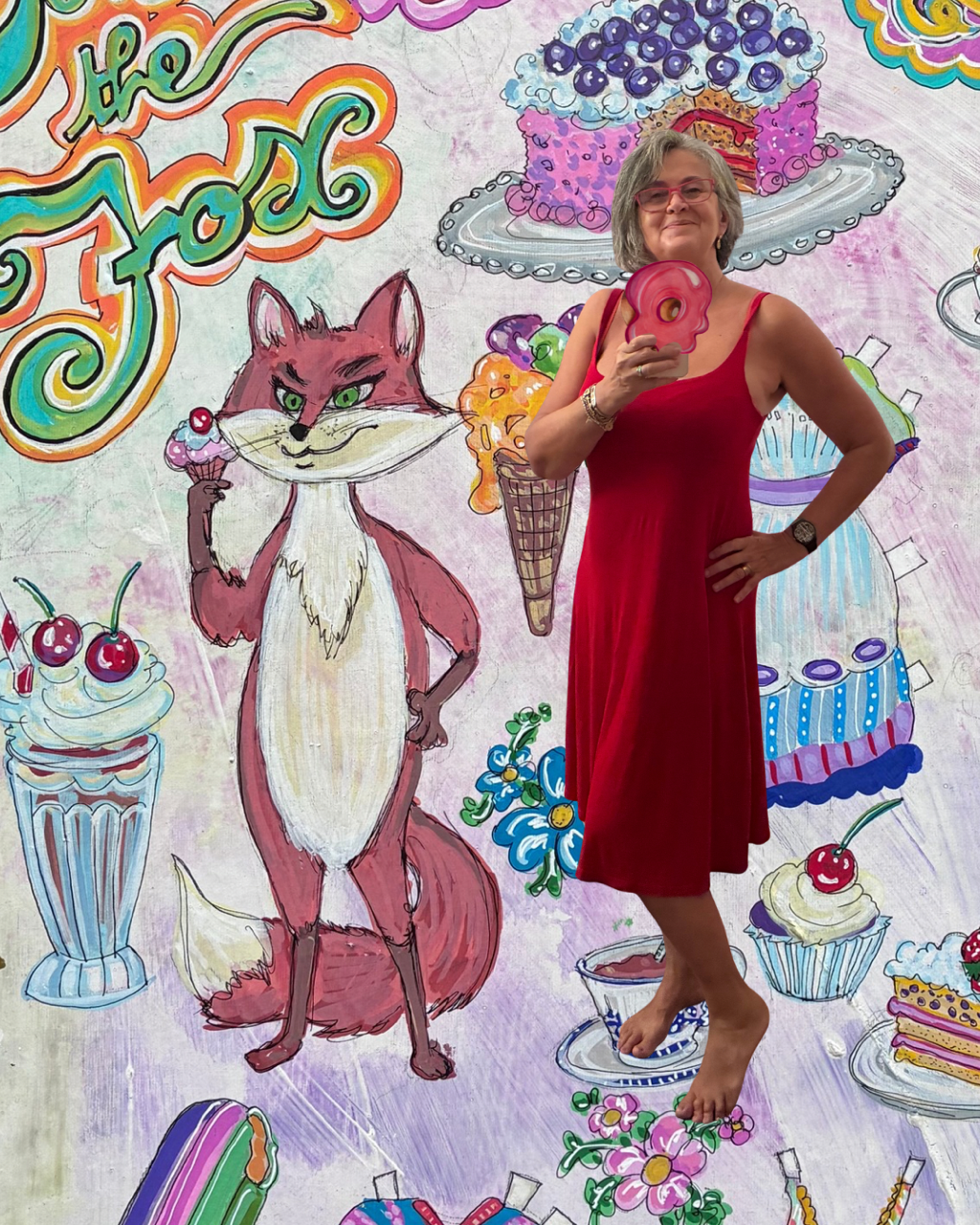
There is a deliberate tension between appearance and meaning in Secchi's work. A landscape made of sweets might initially suggest childhood pleasure. Yet that same imagined city can also speak about the demanding and sometimes unforgiving nature of urban life.
She remains particularly attentive to the contradictions of consumer culture. Attractive products promise happiness, while everyday expenses place growing pressure on people's lives. Cities offer freedom and possibility, but they can also create isolation and uncertainty.
Instead of presenting these contradictions through direct criticism, Secchi allows them to emerge through visual storytelling. Animals, familiar characters and colourful objects become carriers of more complex emotions. Their apparent innocence makes the underlying discomfort more noticeable.
This approach gives her paintings a distinctive emotional rhythm. Viewers may arrive because of the colour, but the stories encourage them to stay. Beneath the playful imagery lies an awareness that beauty and difficulty often exist in the same moment.
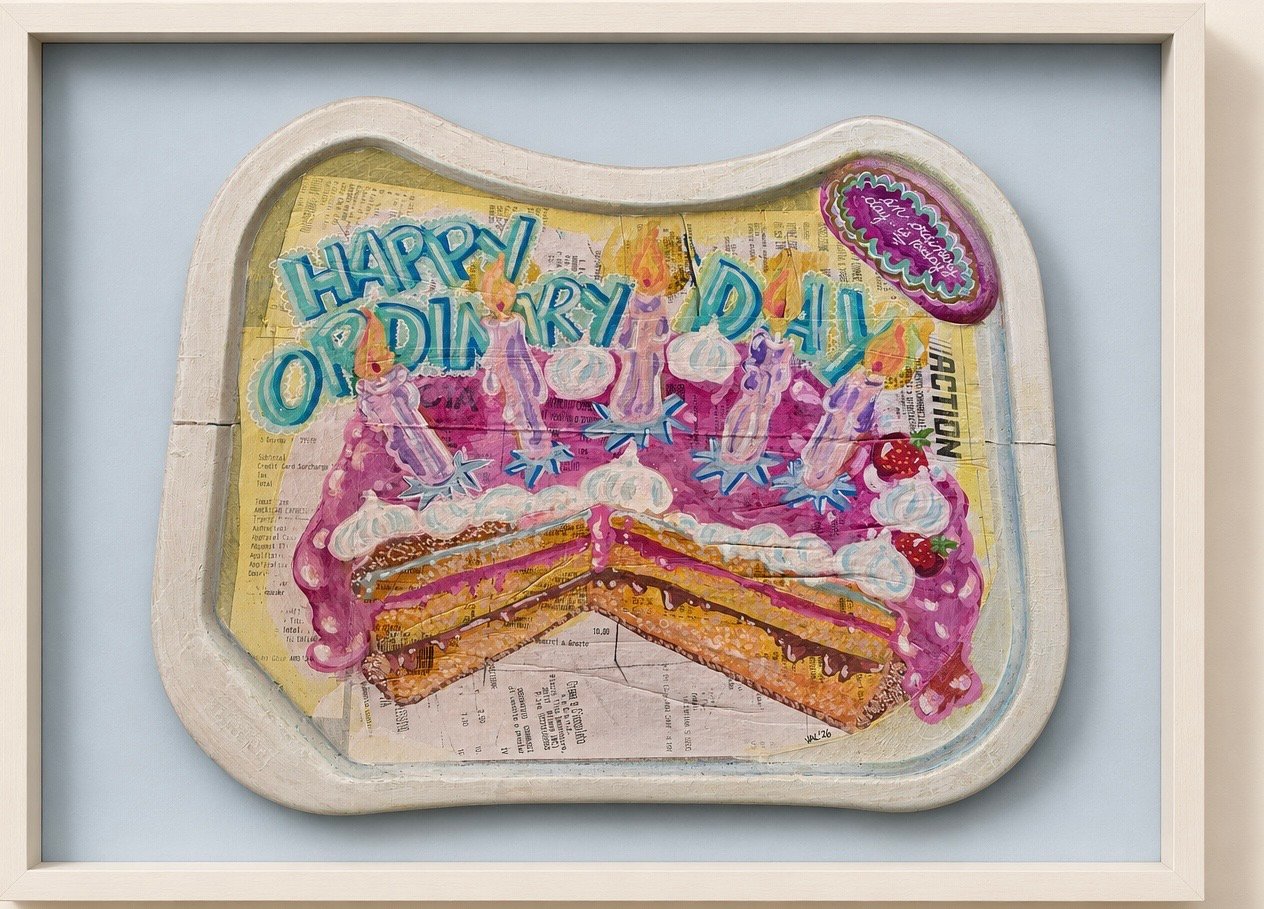
For Secchi, creating art has never felt like an optional activity. It is something she needs. Since childhood, drawing has offered a way to process experiences that might otherwise feel overwhelming. That relationship continues to shape her practice today.
Rather than turning away from difficult realities, she transforms them into images she can confront. A painful memory might become part of an imagined landscape. An uncomfortable observation may appear through a humorous character. Even a simple object can acquire a meaning that extends far beyond its original purpose.
Importantly, this transformation does not erase the experience behind the work. Instead, it changes how that experience can be approached. Colour creates distance without denying emotion, while imagination offers new ways to understand what has happened.
In this sense, Secchi's art is not an escape from the world. It is a way of making the world more inhabitable. Painting gives form to what she has lived and creates space for the viewer to recognise something of their own experience.
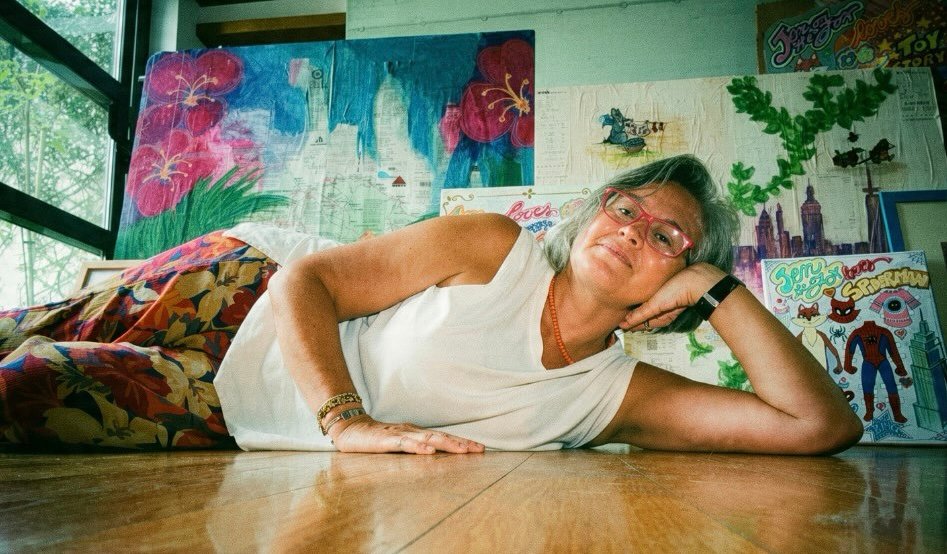
What ultimately connects Secchi's different subjects is her sensitivity to contradiction. Beauty can exist beside discomfort. Humour can carry loneliness. An ordinary object may contain an entire personal history. Rather than choosing between these realities, she allows them to share the same canvas.
Her connection to Milan and New York adds another dimension to this perspective. Both personal experience and the complexity of city life inform her artistic imagination. As a result, her paintings often move between the intimate and the universal, transforming individual memories into images that others can interpret through their own lives.
Perhaps the clearest expression of her philosophy comes from a sentence she wrote herself:
"I don't paint the world as I see it, but as I need to see it in order to inhabit it." — Valentina Secchi
These words reveal the purpose behind her visual language. She does not attempt to make difficult realities disappear. Instead, she gives them different shapes, colours and possibilities. In doing so, Secchi reminds us that art can help us live with what we cannot always change.
For Best Art Gallery, this is what makes her practice compelling. Beneath the bright surfaces and imaginative characters lies a deeply human effort to understand experience and transform it into something that can be shared.