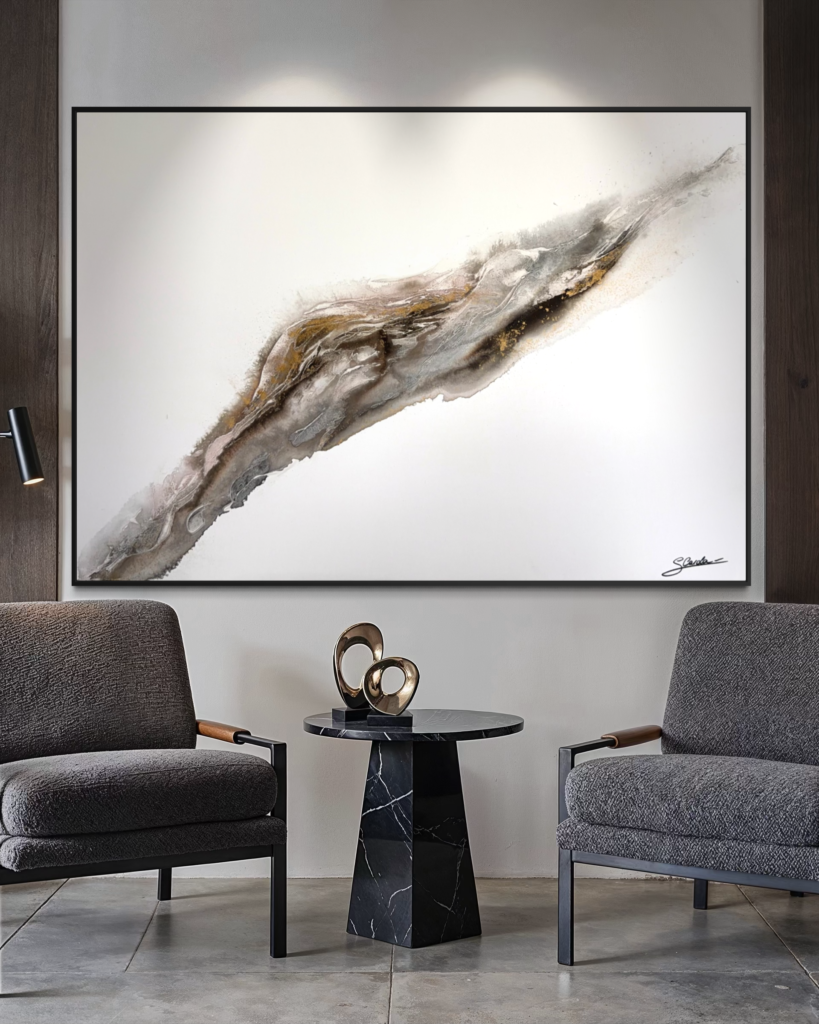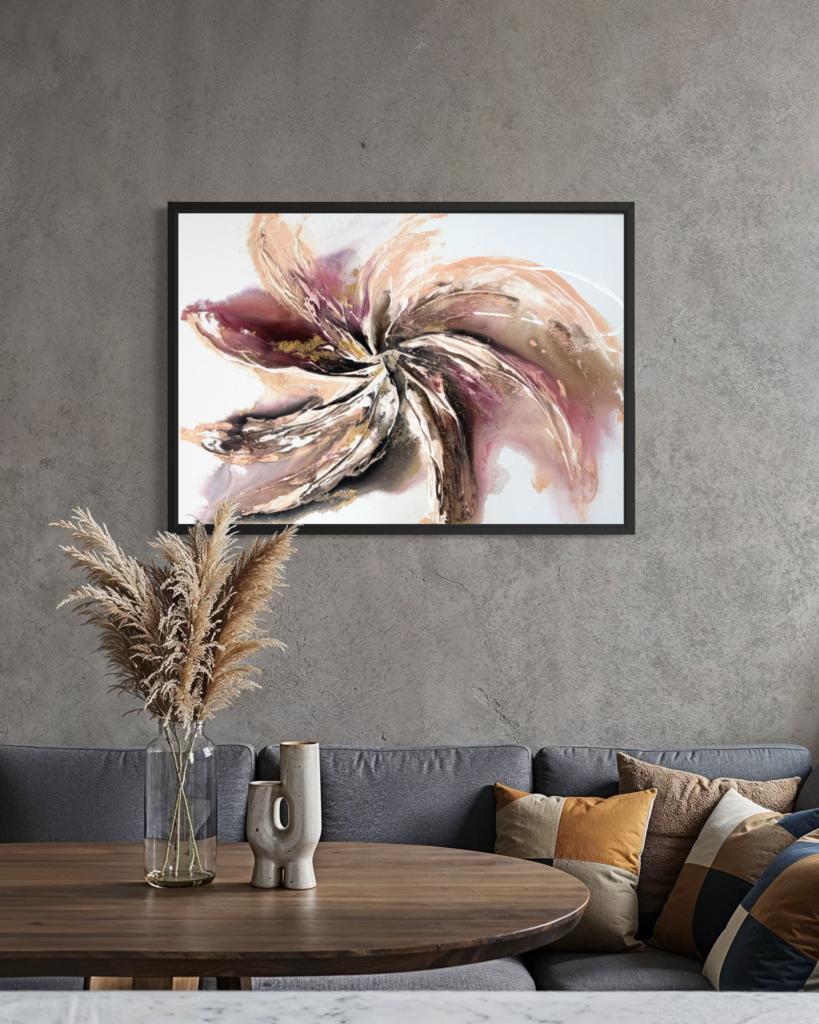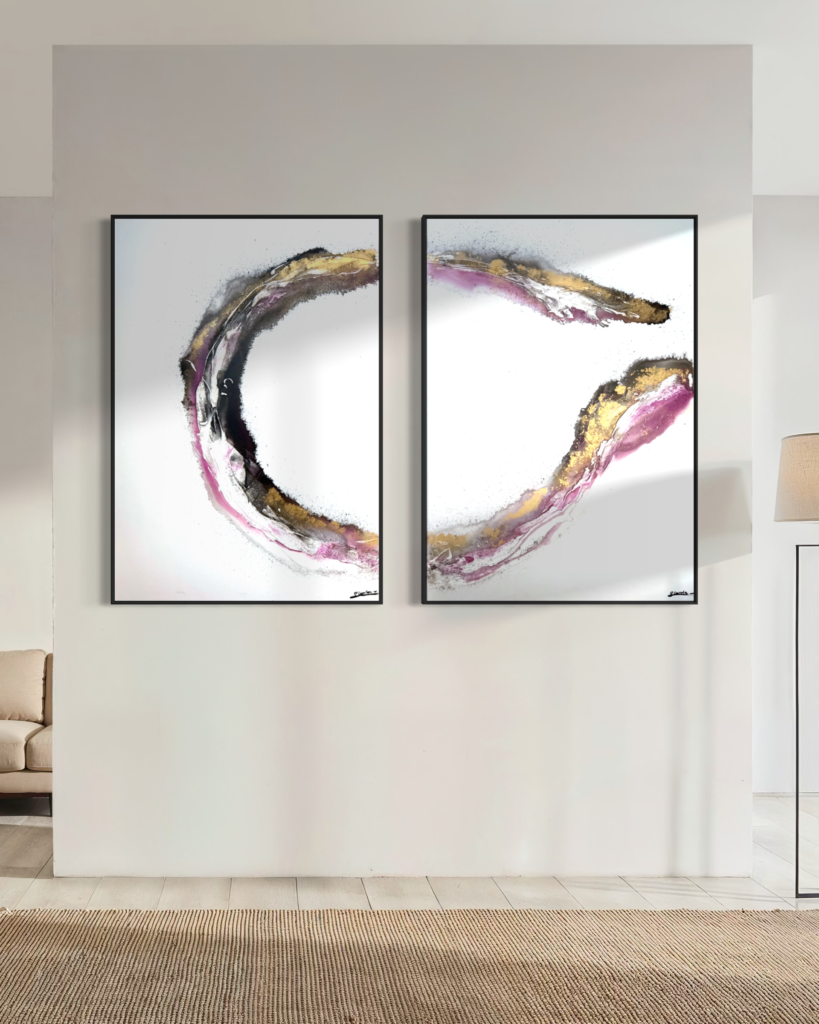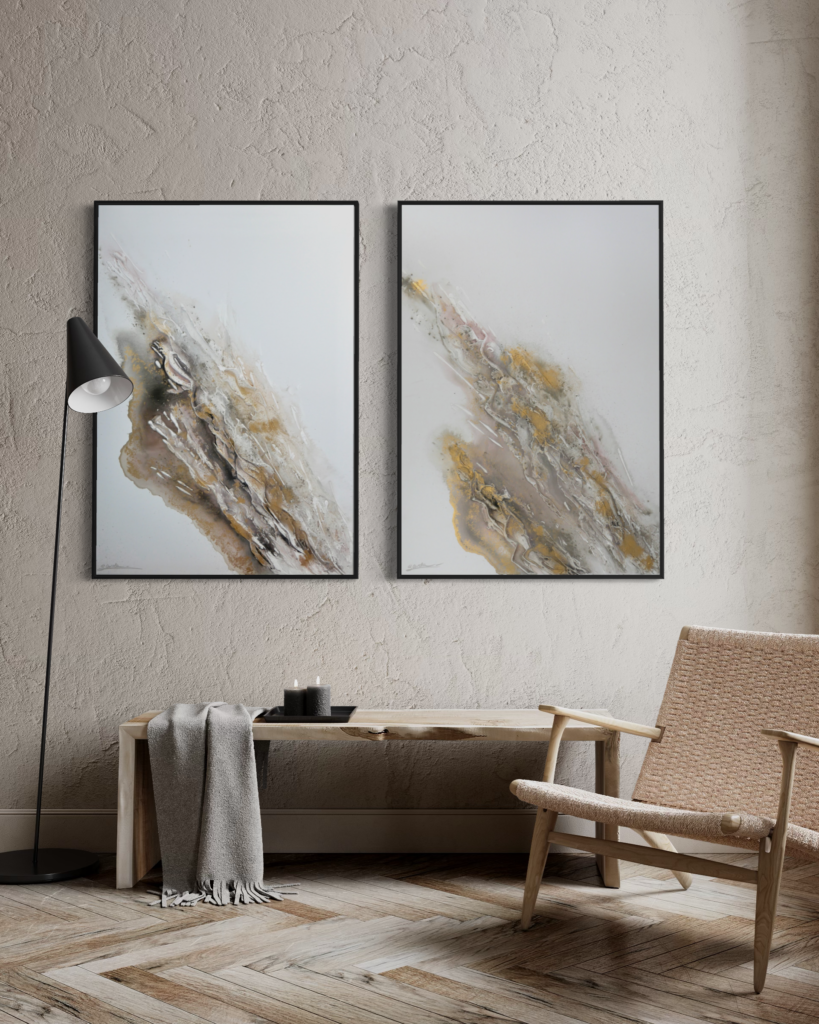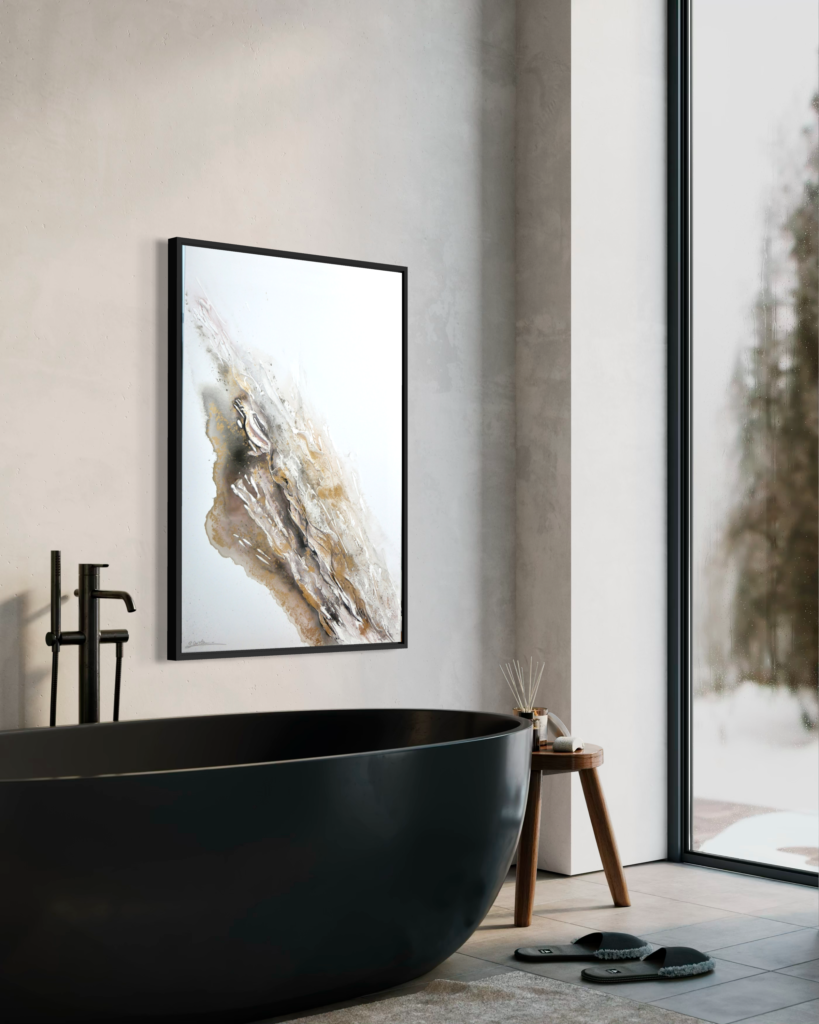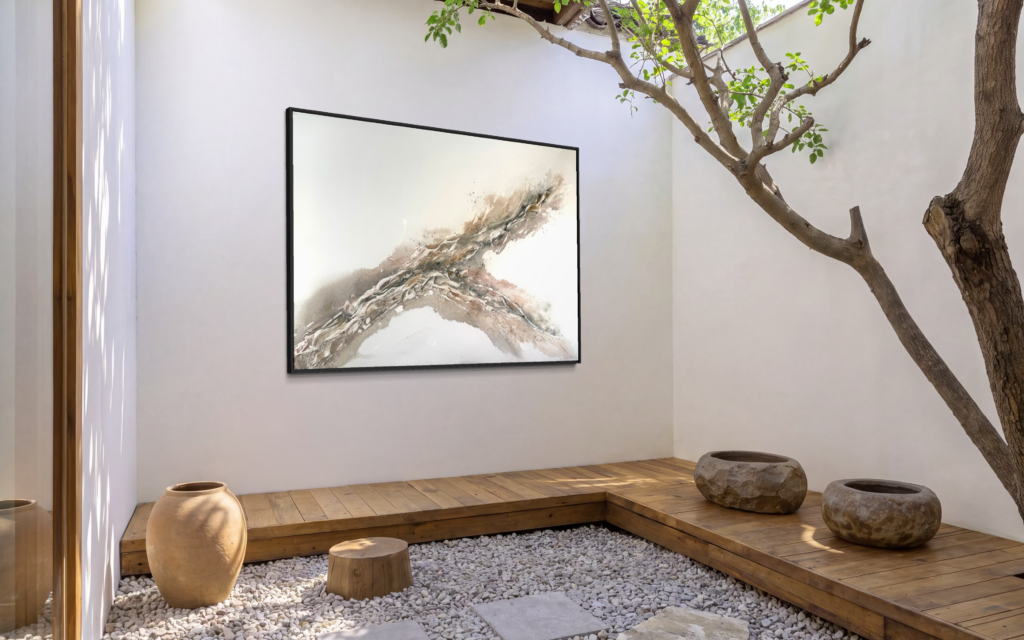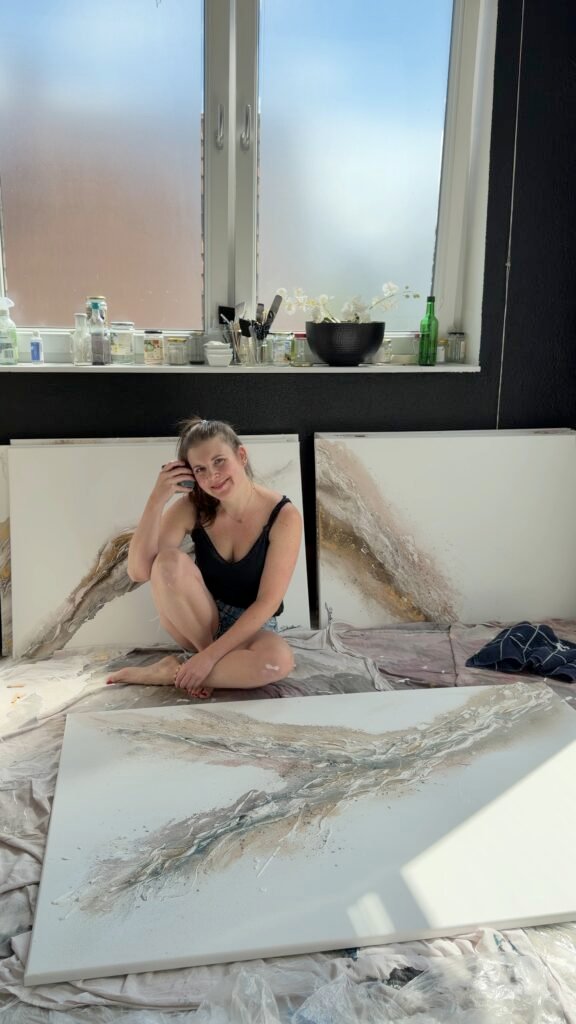
Stefanie Carola creates paintings that ask for more than a glance. Based in Vienna, she builds large, nature-inspired abstract works through heavy texture, earthy colours, carefully placed accents and touches of gold that have gradually become part of her visual signature. The surfaces are deliberately tactile. They invite the hand as much as the eye.
Yet the starting point is rarely an image of nature itself. Instead, Carola paints what remains after she experiences a moment in nature: water finding its way around a stone, wind moving through leaves, birds crossing an open sky or light shifting across a landscape. Her paintings do not attempt to reproduce these scenes. They hold onto their energy, rhythm and sense of presence.
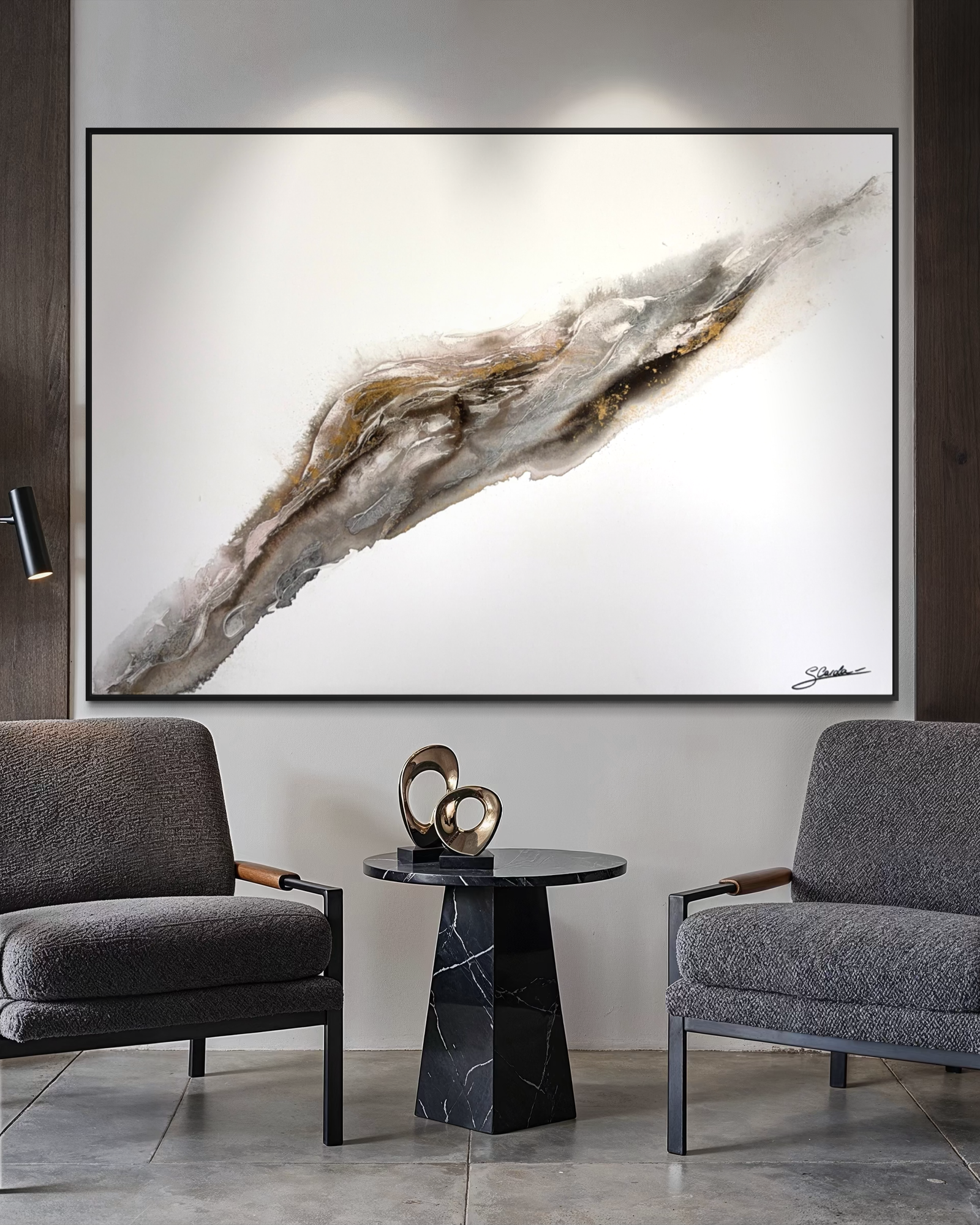
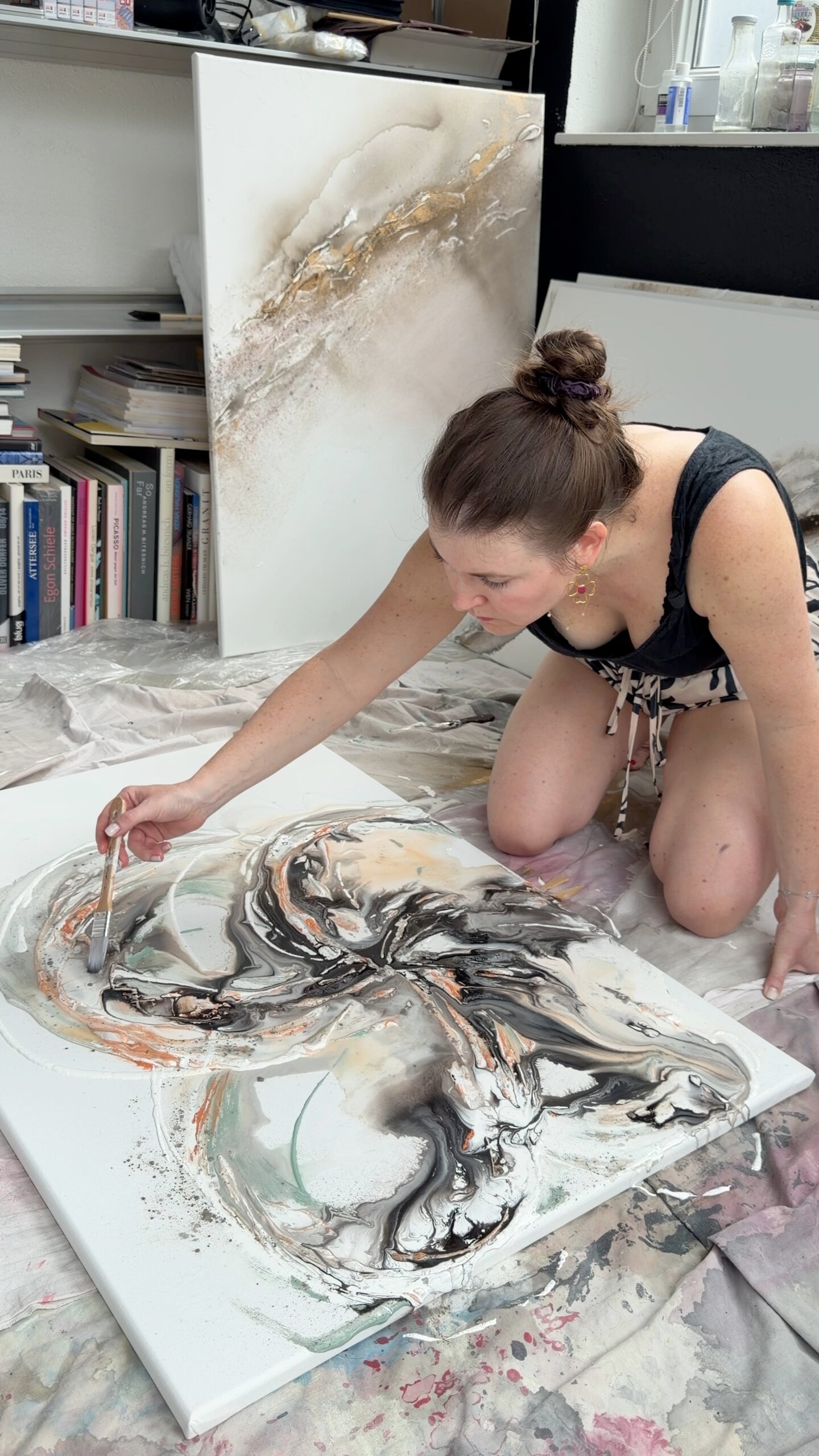
Material plays a fundamental role in the way these paintings communicate. Carola works with vegan paints and modelling paste, using texture created from natural limestone and sand. Whenever possible, she sources materials from Austria or elsewhere in Europe. She also chooses archival-quality components because she wants each painting to retain its character for decades.
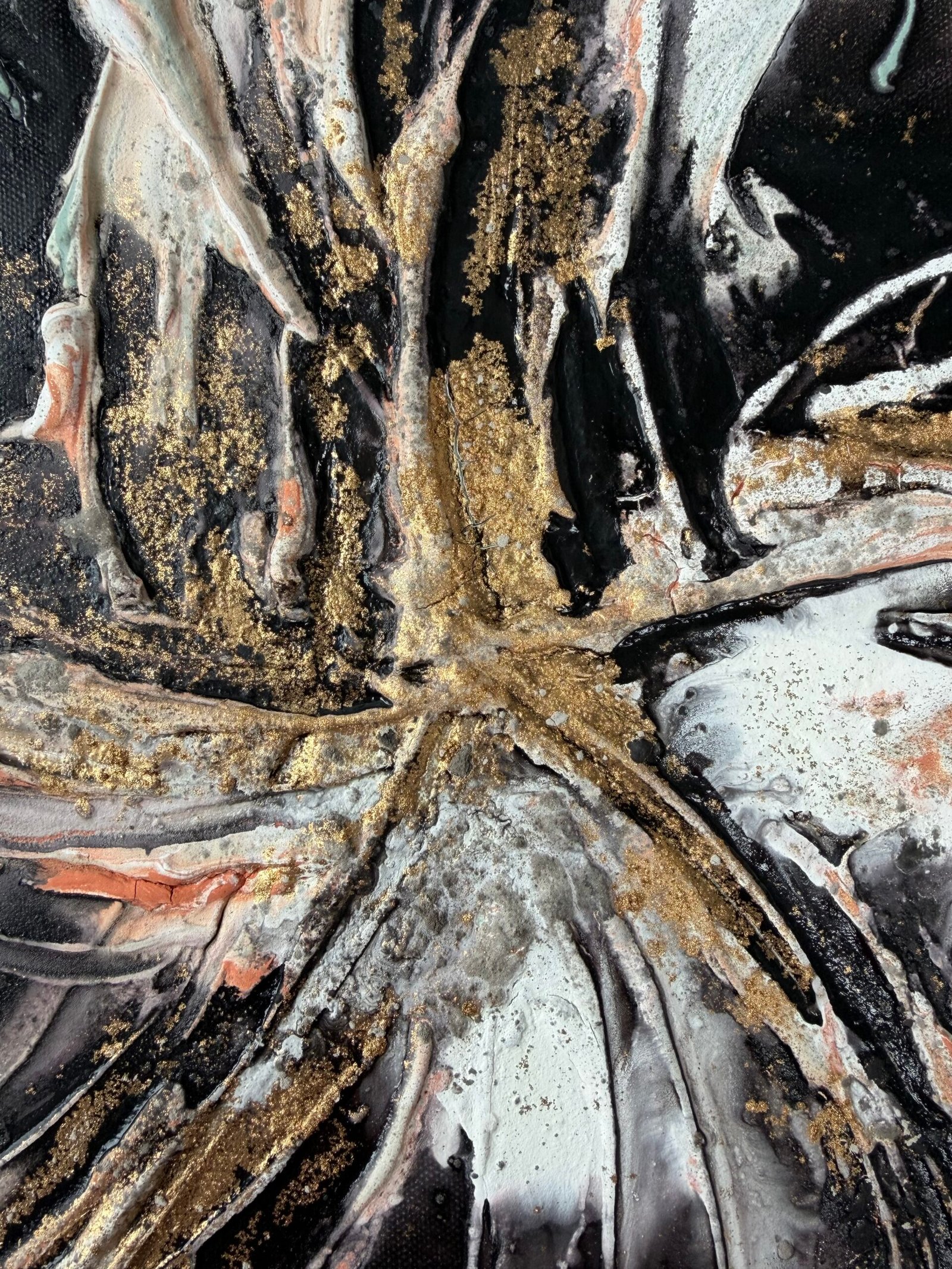
This physical construction gives each surface its own geography. Raised passages catch changing light, shadows settle into crevices and gold appears differently as the viewer moves around the work. Touch adds another dimension altogether. Texture therefore becomes part of how the work asks us to slow down and encounter it.
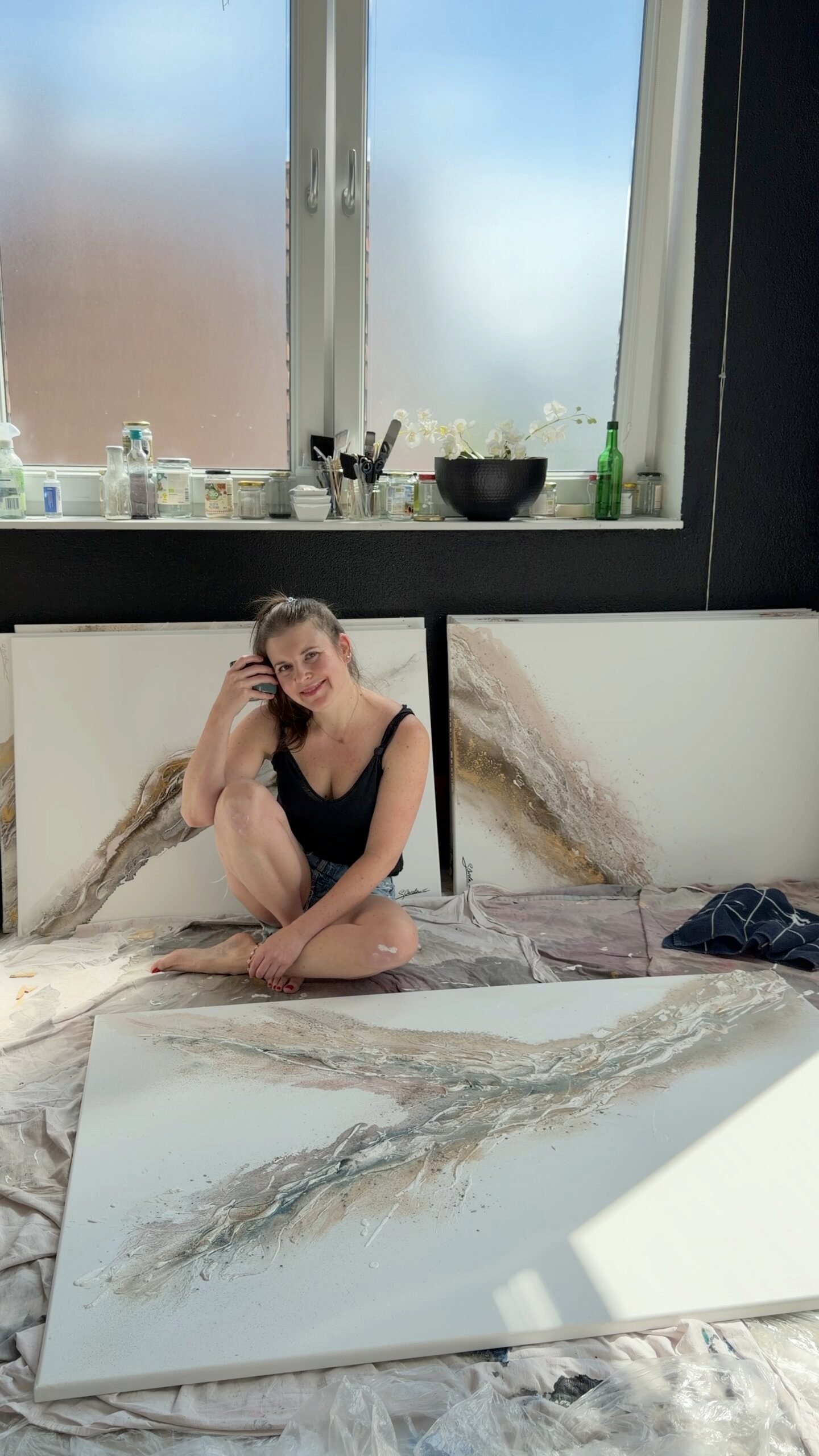
Creativity had been present from the beginning. As a child, Carola was rarely far from a pencil and later became equally fascinated by photography. She also questioned prescribed paths early, from conventional education to the assumption that adulthood should follow a predictable route through work and retirement.
For a time, she nevertheless tried that more familiar direction. Her studies moved between art school and marketing before she entered brand management and eventually founded Austria’s first low-carb brand. What followed became a substantial entrepreneurial chapter: a restaurant, nine books, television, radio, print and a growing team.
Success eventually created an unexpected problem. As the business expanded, Carola found herself managing creativity instead of practicing it. Other people were making while her own time disappeared into managing the structure around them. Recognising that distance from the act of creation became a turning point.
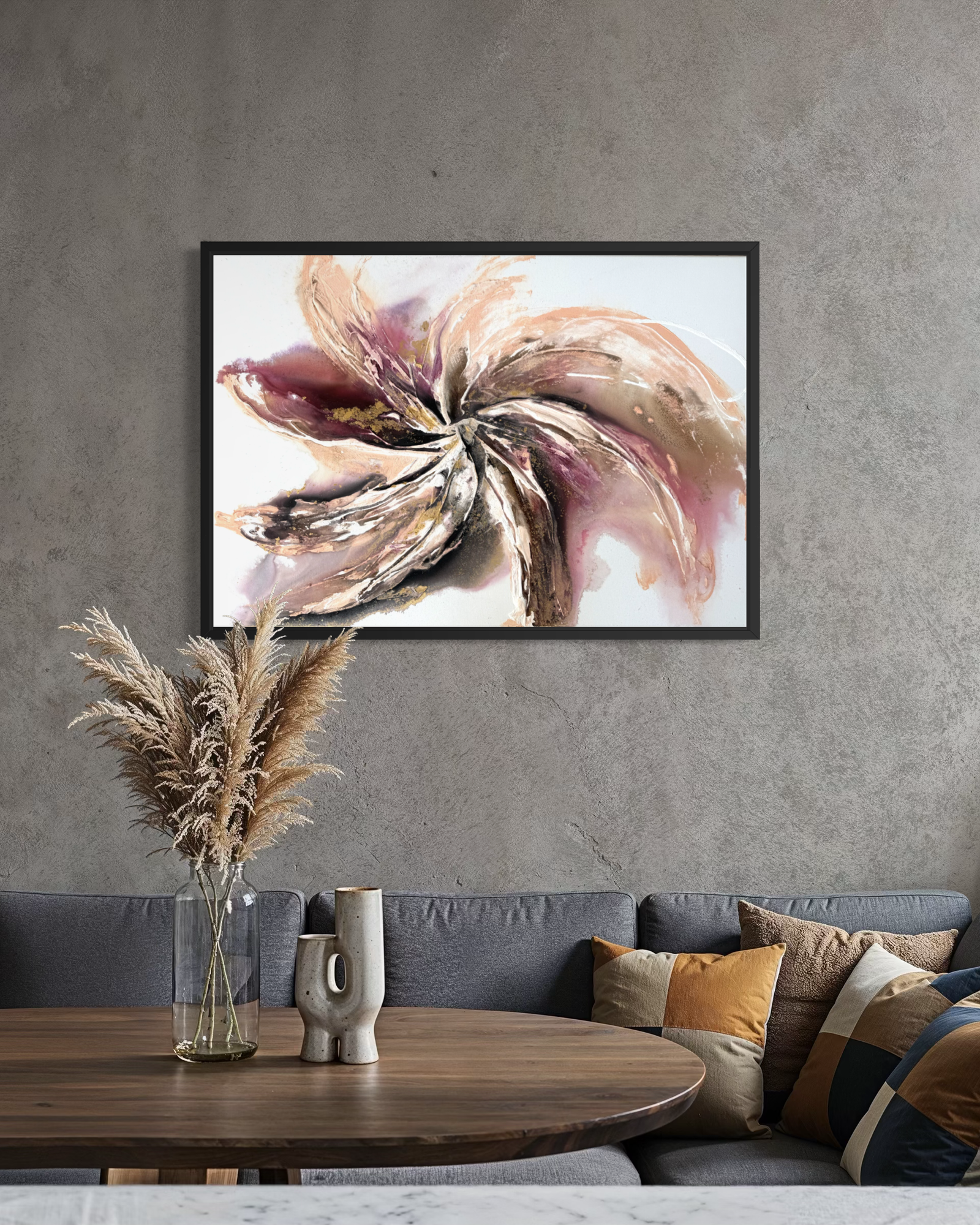
Realistic drawing still holds an important place in Carola’s relationship with art, but abstraction offered something fundamentally different. Drawing, for her, involves knowing where the image is heading. A motif begins as a cat and, through skill and observation, should eventually become recognisably that cat. Abstract painting removes that certainty.
Instead, she allows pigments to flow, fold and connect inside a controlled space. The process echoes the structures she observes in nature, where complexity can emerge without appearing forced. Proportion, movement and balance begin to form intuitively, recalling patterns such as the golden ratio and Fibonacci spiral without requiring conscious calculation.
Her first abstract work made that freedom tangible. What she expected to become little more than an enjoyable experiment dried into something she found genuinely beautiful. Soon, rivers no longer appeared only as rivers; she began seeing pigments folding into one another everywhere. Within months, the first collectors arrived. Exhibitions followed in Vienna, Strasbourg and Milan, while her work also found a permanent public presence in Vienna.
Behind the material beauty of the work sits a larger philosophy about how a life should be lived. Carola believes people are here to experience, feel, touch and create rather than simply surrender their best years to structures they never consciously chose. Painting has become one of the clearest expressions of that belief.
More importantly, the practice changed her understanding of presence. Finding meaningful work did not simply make the hours spent painting more alive; it altered the atmosphere of the rest of the day. A mind that rarely stopped suddenly had somewhere to go. Through making, attention became quieter and more immediate.
This is also why the work remains personal even as it enters other people’s homes. Collectors make the practice sustainable, something Carola considers a gift, but they are not its original reason for existing. Painting begins as something she would continue to do regardless: an activity chosen for its own sake.
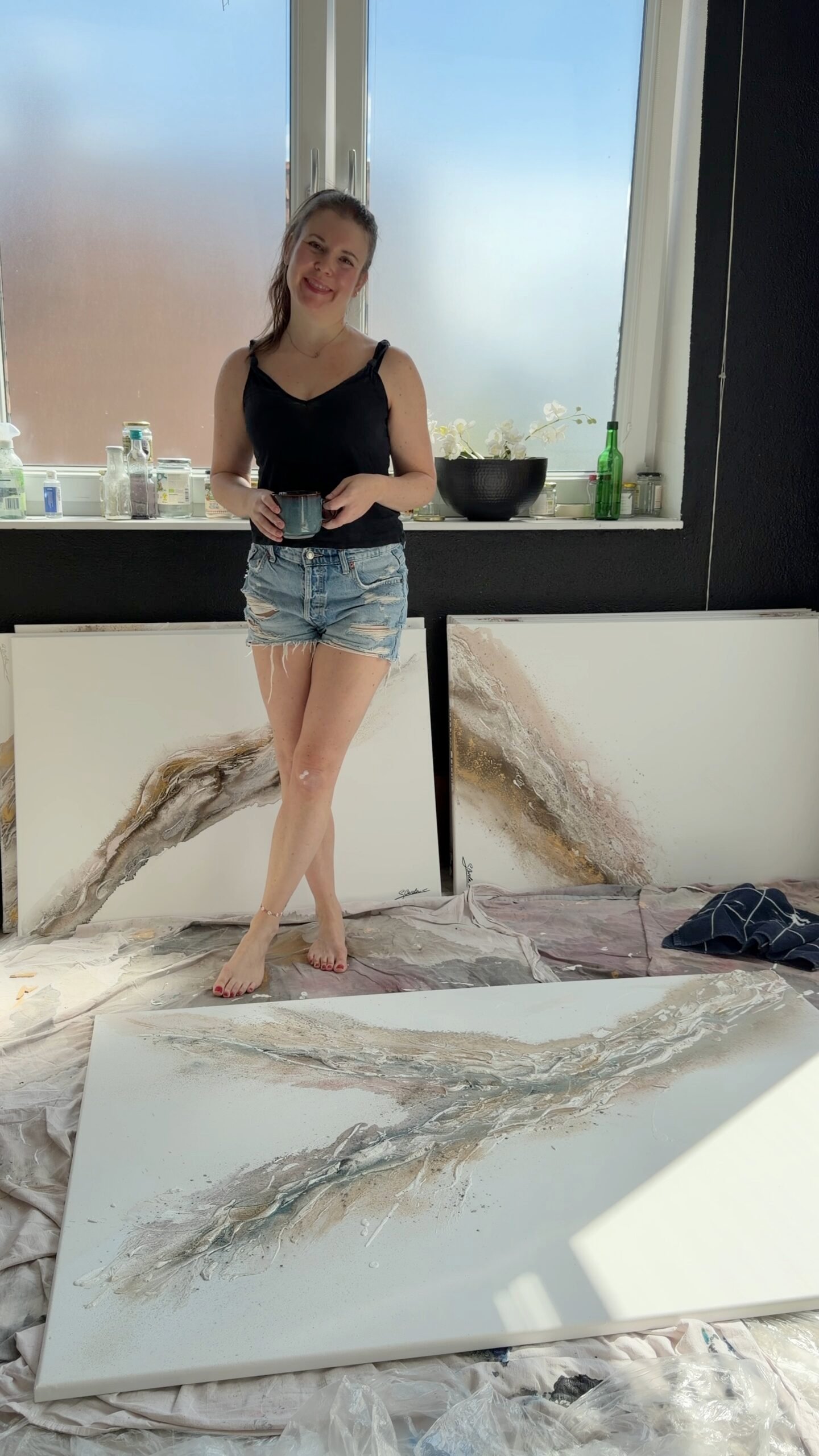
Carola sees the world as complete rather than waiting for correction. That outlook shapes the balance inside her paintings. Light requires darkness; stillness needs movement. One area gives the eye somewhere to rest while another keeps it travelling across the surface. She finds similar relationships in mountains, rivers and organic formations, and brings that instinctive balance into her work.
What the painting depicts consequently becomes less important than what happens while someone encounters it. A work may carry the energy of a breaking wave, light across a mountain or wind moving through a tree without literally representing any of them. The experience remains open.
Picasso’s reflection that it took him years to paint like Raphael but a lifetime to paint like a child resonates strongly with Carola because, for her, the essential challenge is not technique but letting go. Her own work arrives at that freedom through material, intuition and touch. When someone runs a hand across one of these textured surfaces and stops thinking for a moment, even briefly, the painting has fulfilled its purpose.