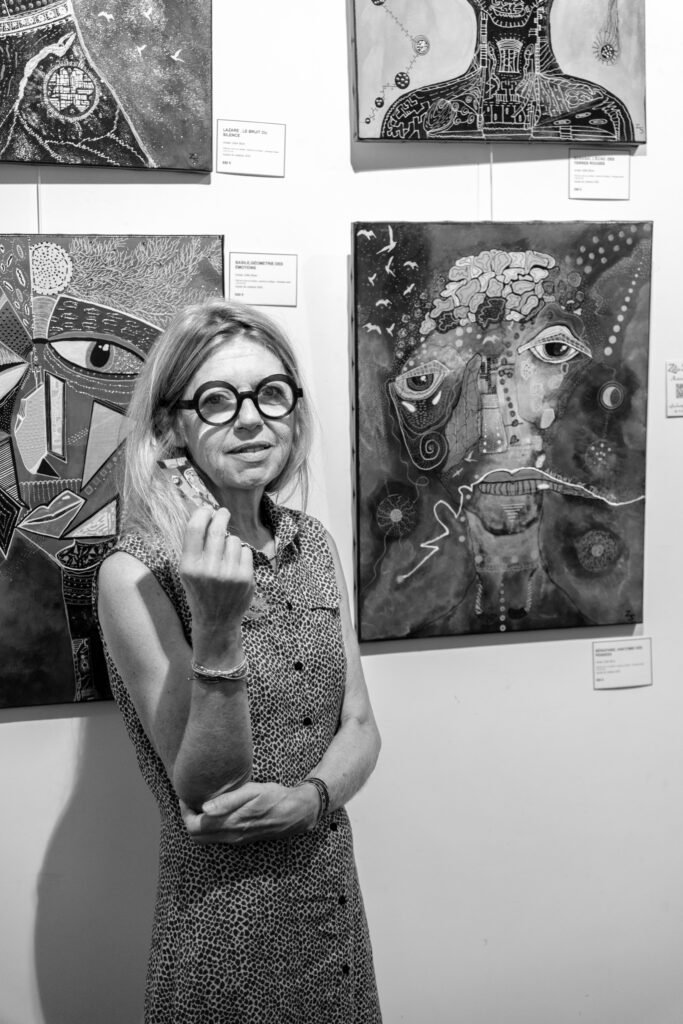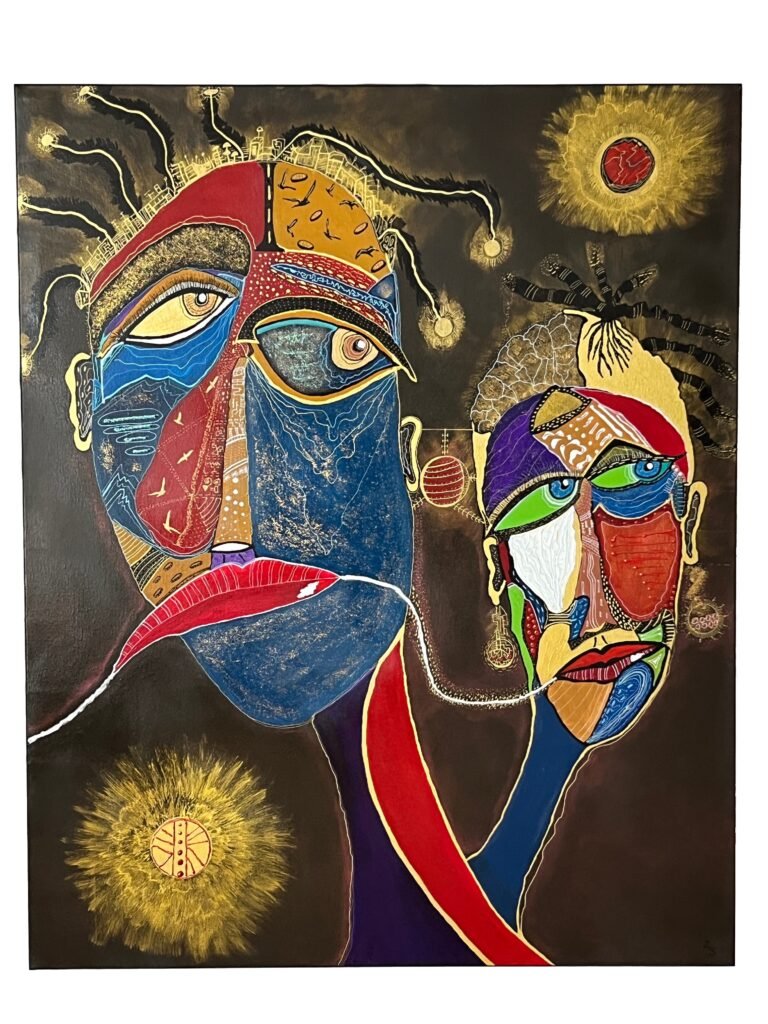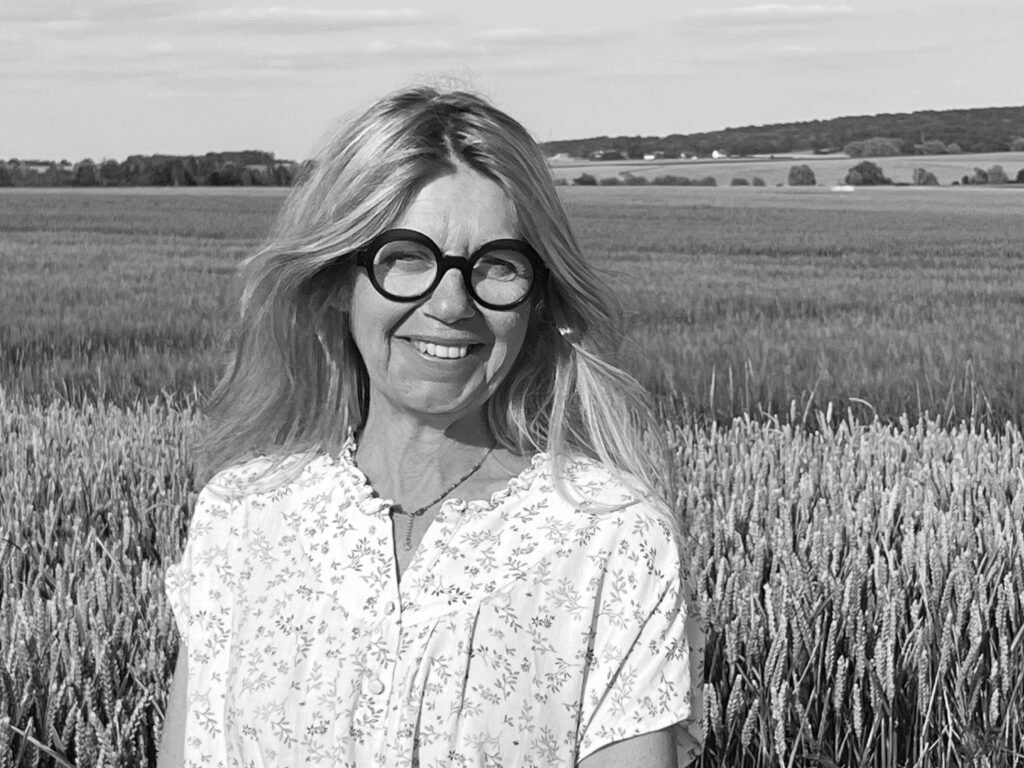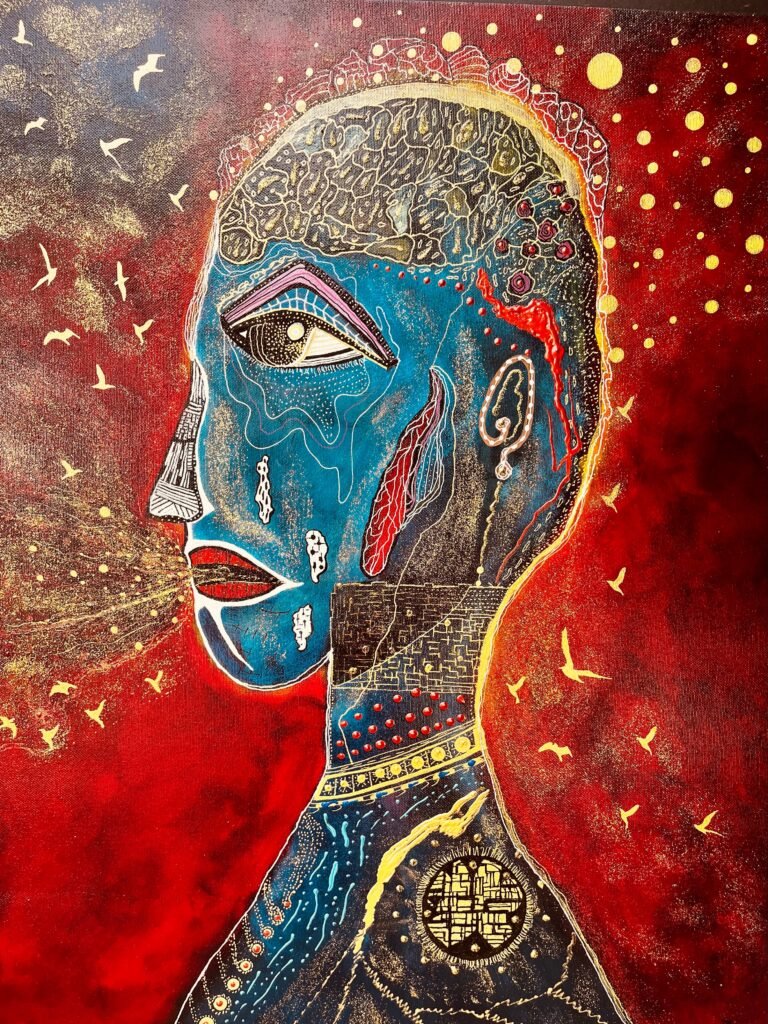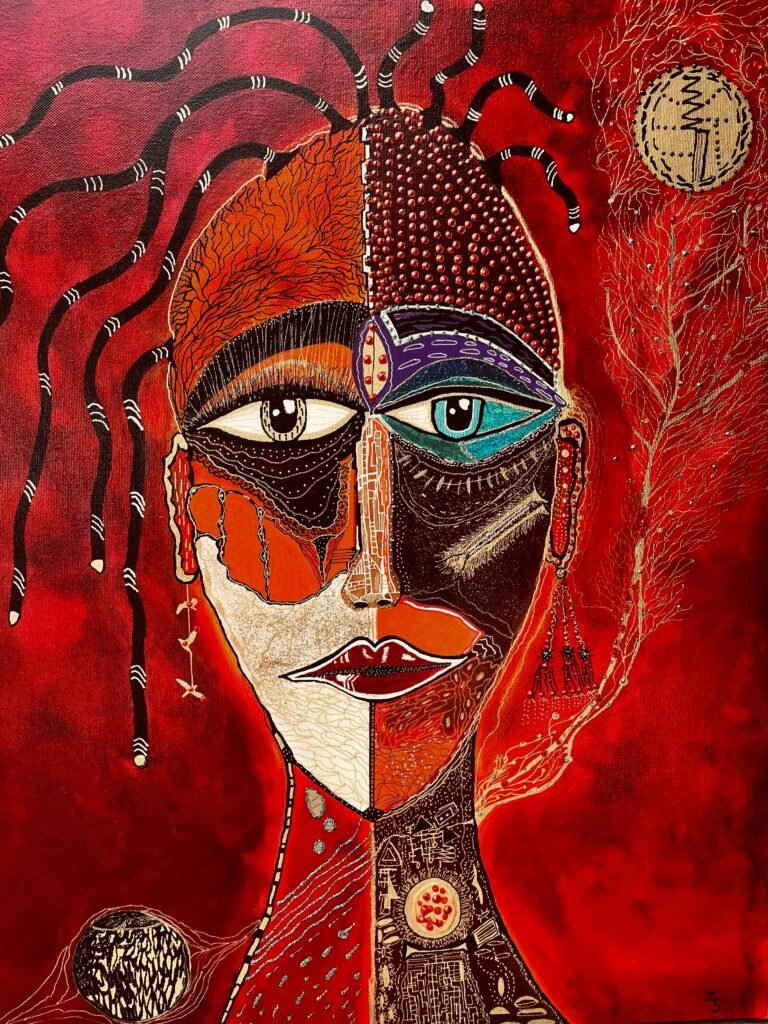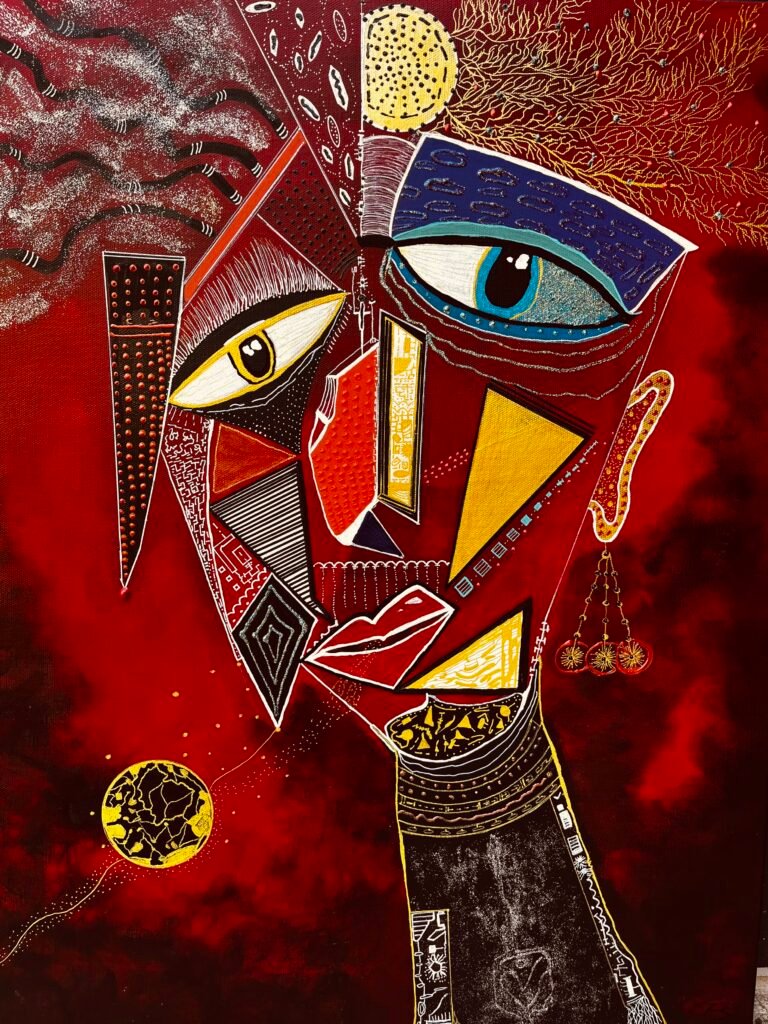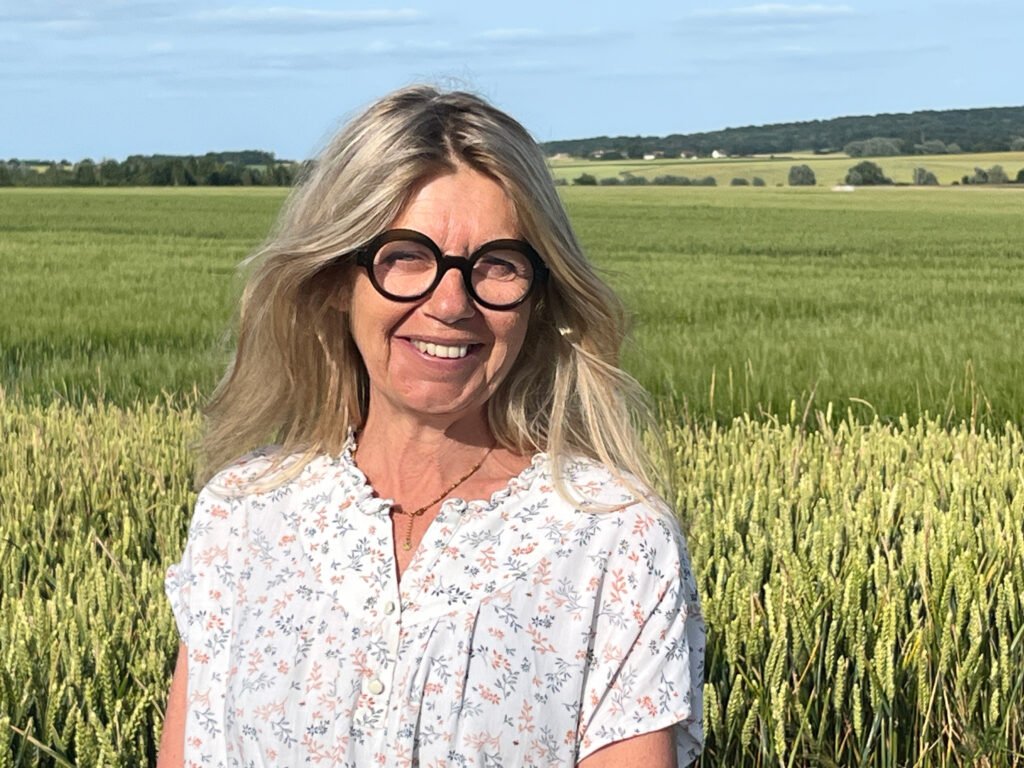
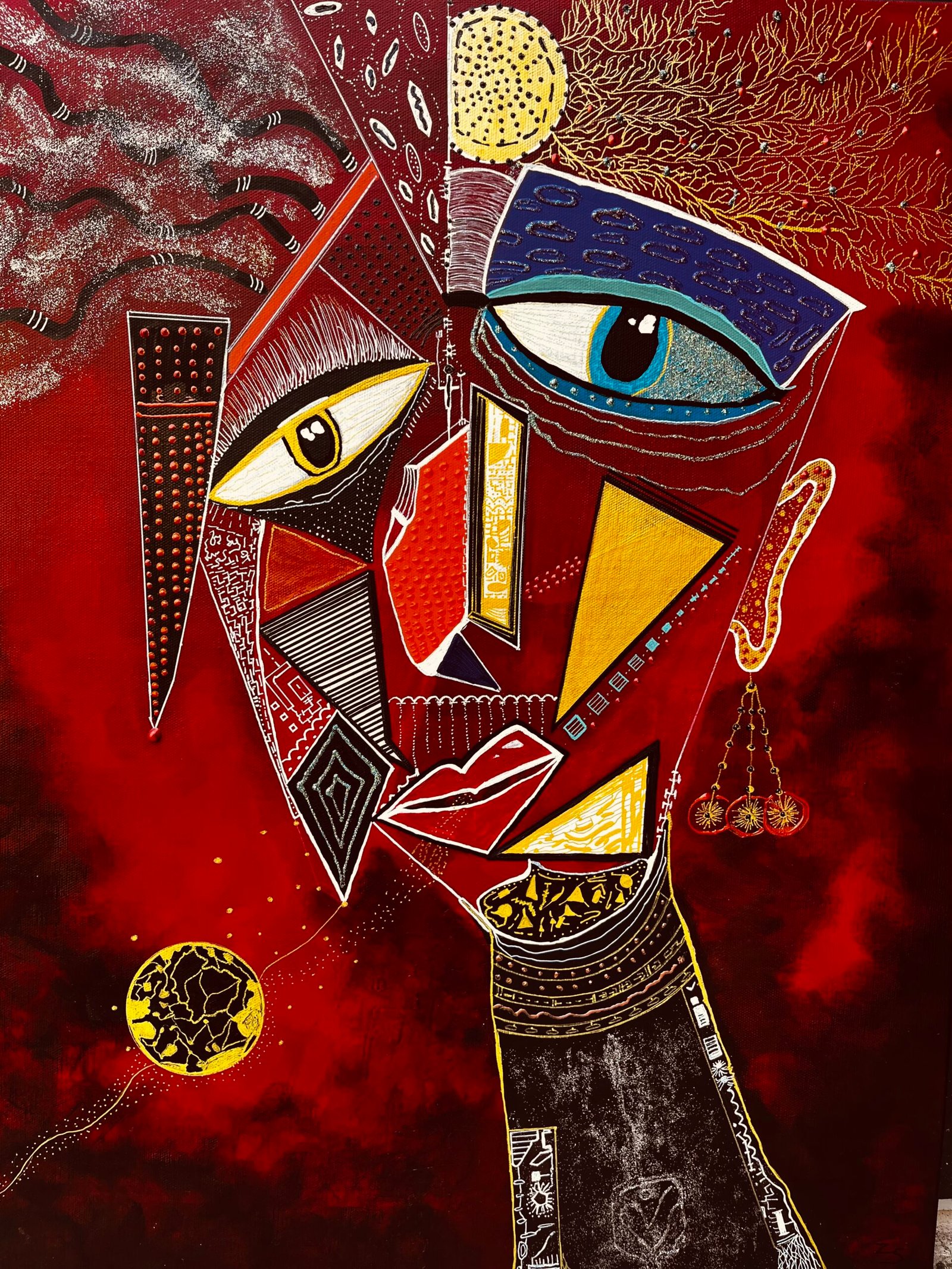
Zélie Show approaches painting as an exploration rather than a search for perfection. A self-taught artist, she works at the boundary between figurative painting and a freer, instinctive language in which recognizable forms are allowed to shift, fragment and transform. The human face sits at the center of this evolving world, but faithful representation is rarely the destination.
Instead, proportions move, contours loosen and color becomes emotionally charged. Faces may appear deconstructed or deliberately distorted, creating a tension between familiarity and uncertainty. What interests Zélie is not simply the face itself, but the presence that can emerge through it: fragility, strength, tension or an emotion that is felt before it can be named.
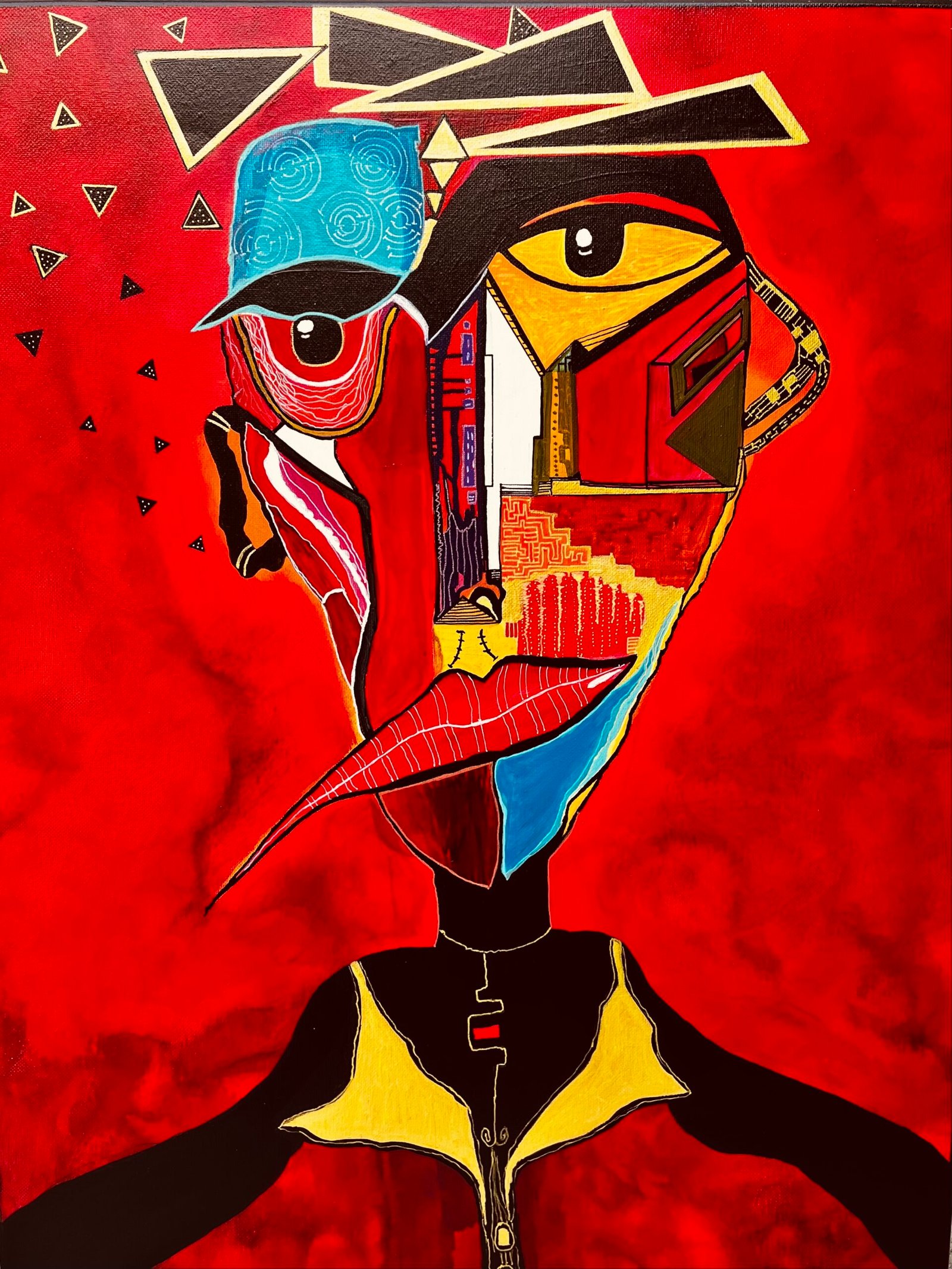
Materiality plays an equally important role in Zélie’s practice. Paint is not simply a tool used to construct an image; it becomes a language in itself. Surfaces preserve gestures, hesitation, accidents and transformations, allowing the process of creation to remain visible within the finished work.
A painting often begins with little more than an intuition, a sensation or a loose direction. From there, Zélie allows the work to respond. An unexpected color can open a new path. A form can redirect the composition. Even what initially appears to be a mistake may become one of the painting’s most important elements. Rather than forcing the work toward a predetermined result, she accompanies it until it begins to acquire a presence of its own.
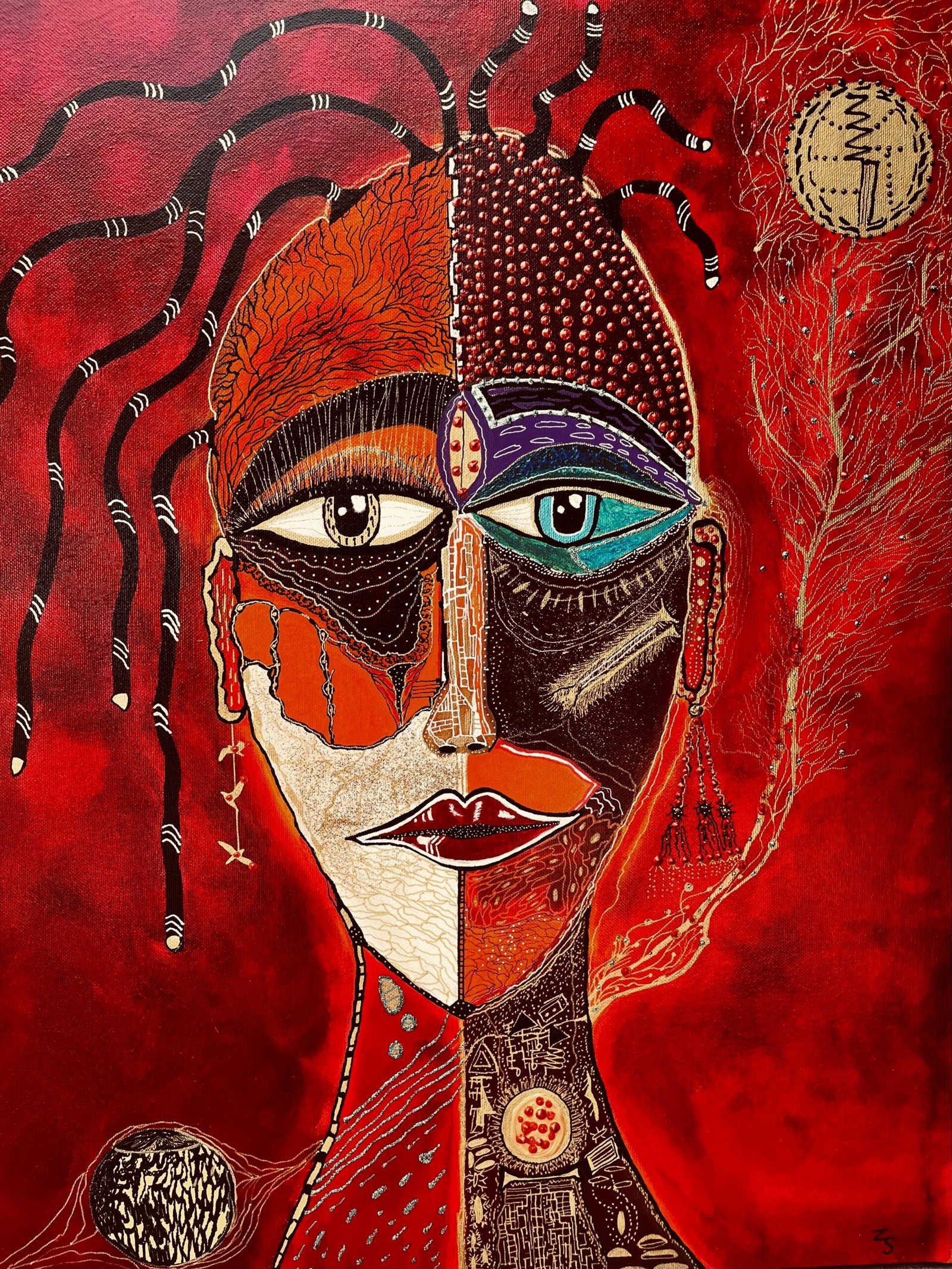
Zélie arrived at painting without formal artistic training. Curiosity came before certainty, and experimentation became her education. She learned through making, observing, failing, beginning again and gradually trusting discovery more than predetermined methods. That self-directed path continues to shape the openness of her practice today.
Her wider life has also entered the work. Years spent interacting with people strengthened her attention to behavior, expression and everything that can exist behind appearances. Travel expanded that vocabulary further. Different landscapes, cultures and encounters altered the way she perceived the world, while African influences in particular found a natural place within her visual imagination.
These experiences have accumulated like layers of paint. Rather than fixing her artistic language in place, Zélie allows it to change alongside her.
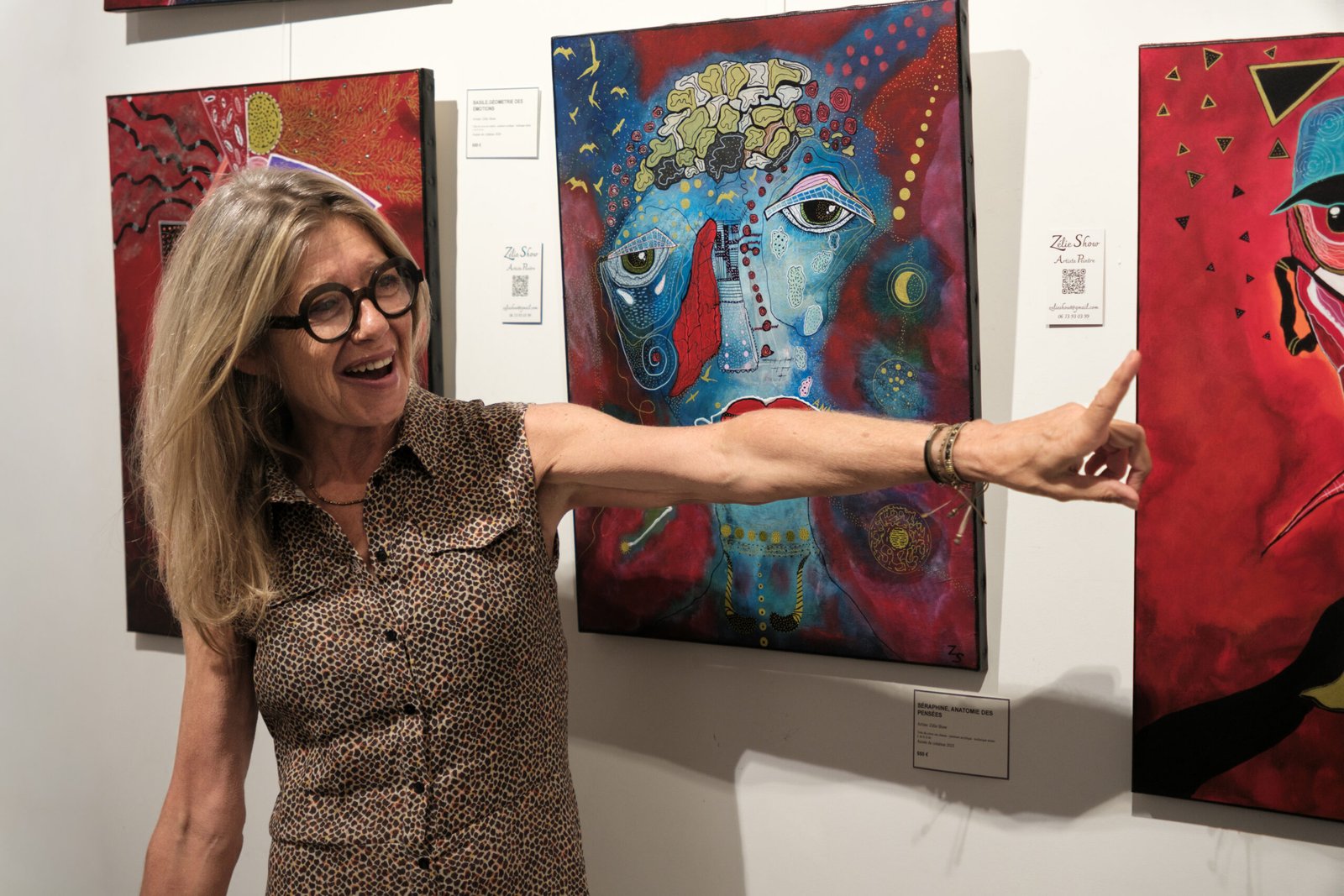
One of the experiences that keeps Zélie returning to the studio is what she calls the “moment of transition.” A new canvas may begin with searching, hesitation and uncertainty. Then something changes. A color, shape, material gesture or unexpected relationship suddenly creates a direction, and what had been a question begins to feel like a presence.
This transformation explains why imperfection matters so deeply within her work. Total control can close possibilities too early. An accidental mark can contain energy, while something initially destined to be erased may eventually give a painting its character. Zélie wants the work to retain that sense of life — something spontaneous that has not been polished until every uncertainty disappears.
Painting therefore becomes both an act of freedom and a period of introspection. The external world quiets, attention narrows and the emerging image becomes a space in which instinct can operate without needing to explain itself.
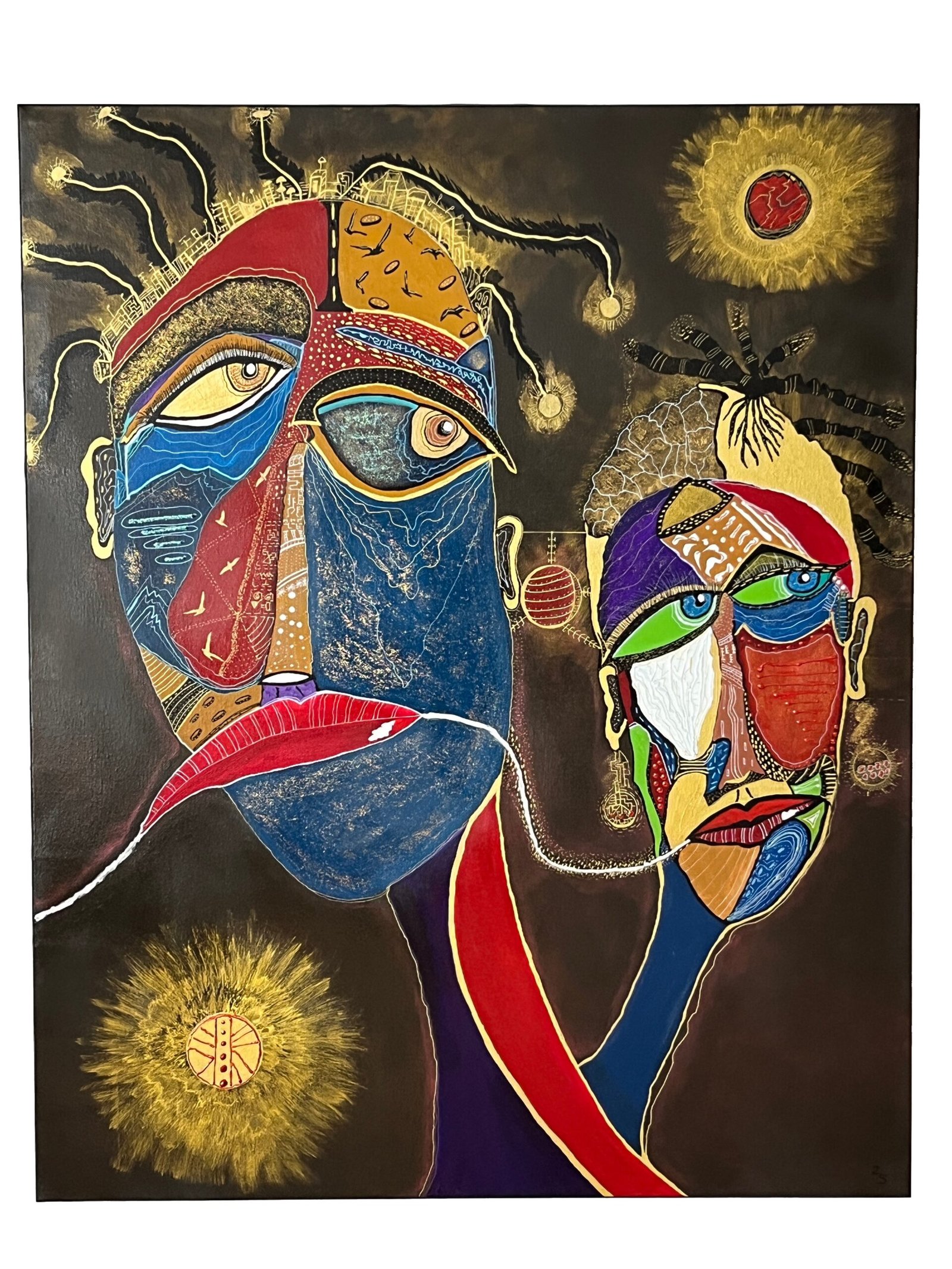
Beneath the expressive surfaces lies a larger question about perception. Zélie is fascinated by the distance between reality and what we believe ourselves to be seeing. History, memory, sensitivity and cultural references shape every encounter with the world. What feels obvious may simply be something we have learned to recognize in a particular way.
Her paintings enter precisely this uncertain territory. Familiar forms are shifted enough to interrupt immediate recognition. A face remains a face, yet its proportions, colors or structure ask the viewer to look again. The purpose is not to uncover one hidden truth, but to make space for multiple ways of seeing.
For Zélie, painting can therefore question certainty without replacing it with another certainty. The work may leave behind a doubt, an association, a memory or simply the feeling that something remains beyond what we can immediately understand.
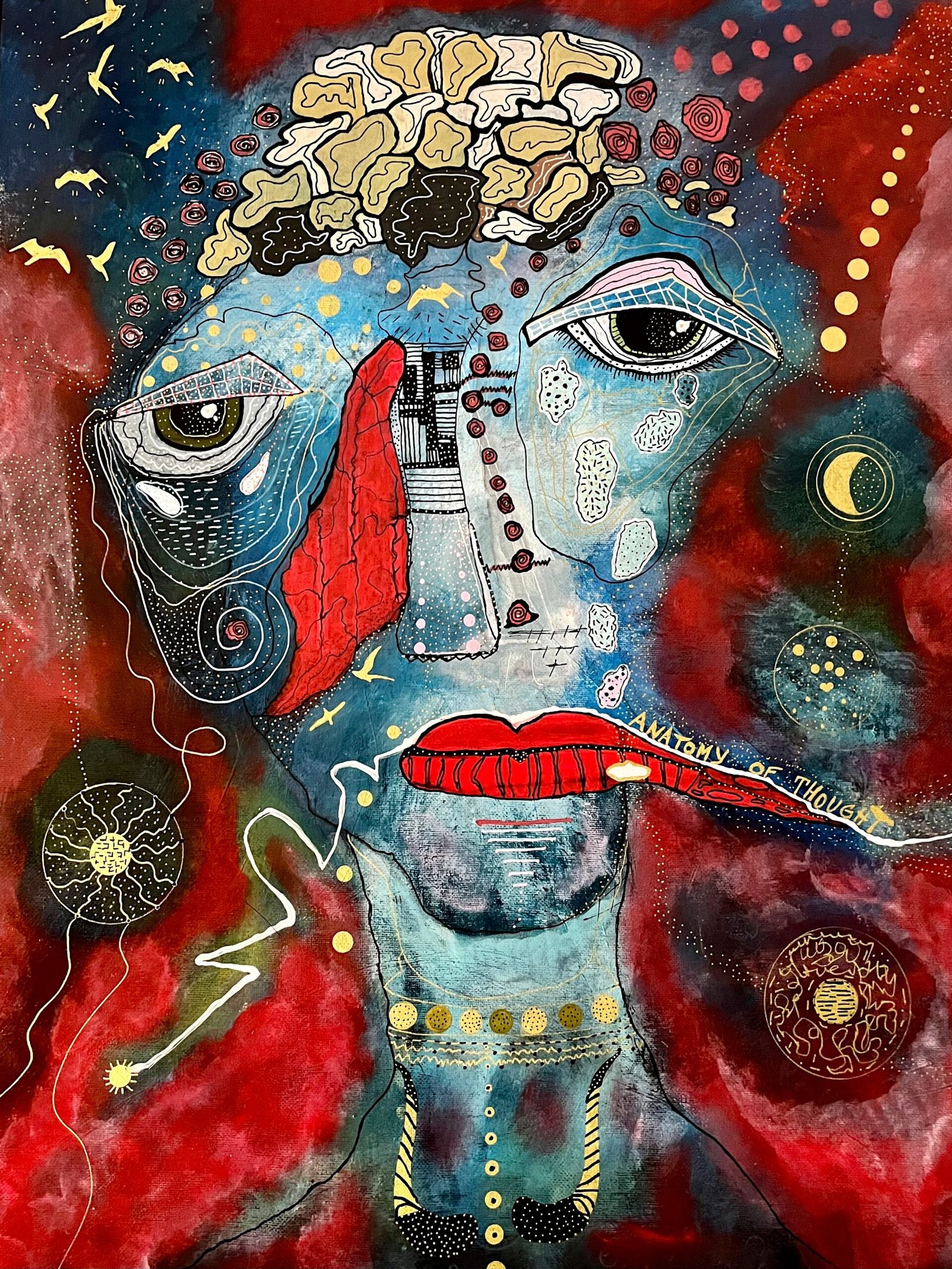
Zélie’s paintings have already travelled beyond the studio through exhibitions in cities including Paris, Casablanca and Valencia. These presentations have introduced another essential element into her practice: the viewer. Once a painting leaves her hands, its meaning no longer belongs entirely to the person who created it.
People bring their own memories and experiences to an artwork. During exhibitions, viewers have shared stories and emotions inspired by her paintings that Zélie herself had never imagined while making them. She sees these encounters as part of the continuing life of the work. The painting becomes a meeting point between two inner worlds rather than a message with only one interpretation.
A phrase Zélie values captures this approach: “I do not paint what I see; I paint what I feel.” Regardless of its uncertain attribution, the idea resonates with her practice. Painting, for Zélie, is not about remaining faithful to visible reality. It is about transforming perception into something another person might encounter, question and ultimately feel for themselves.