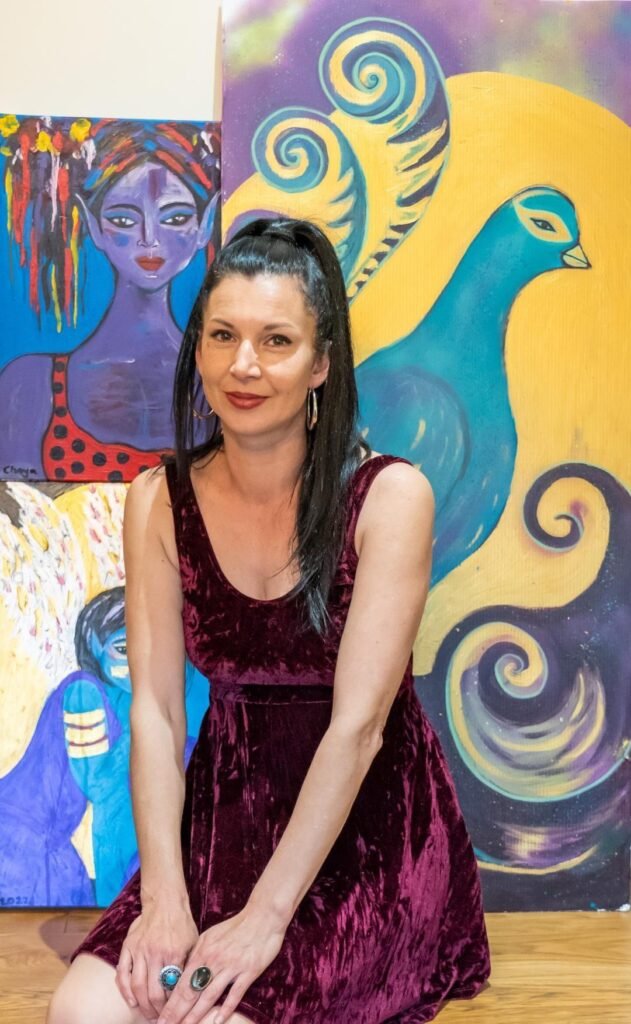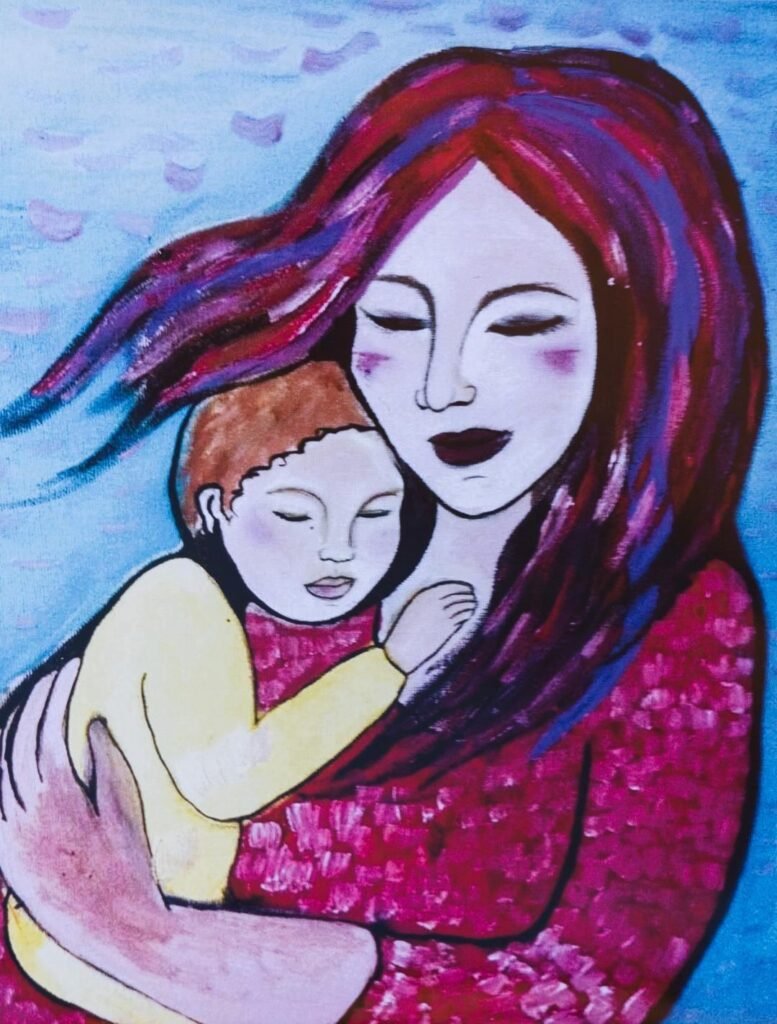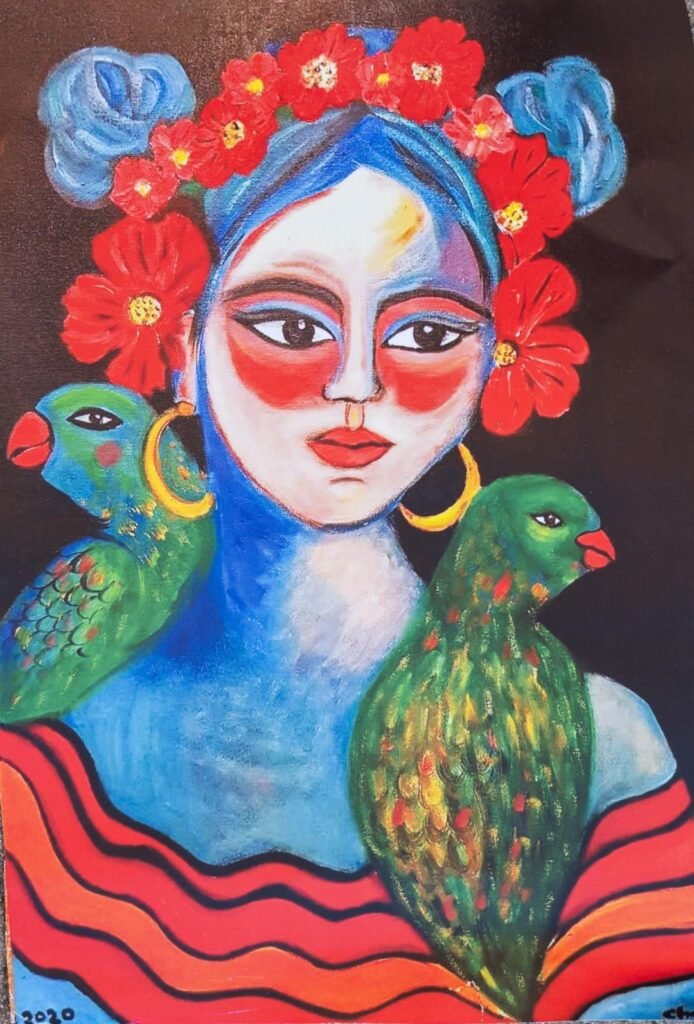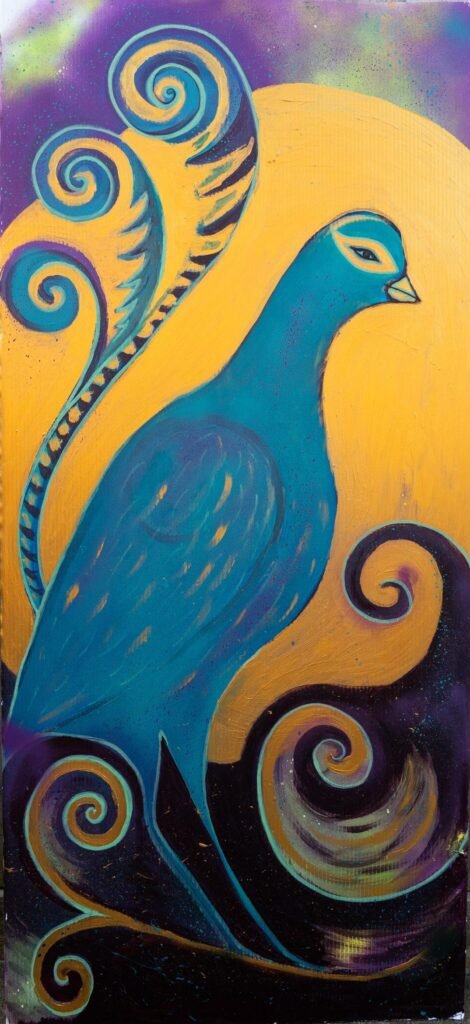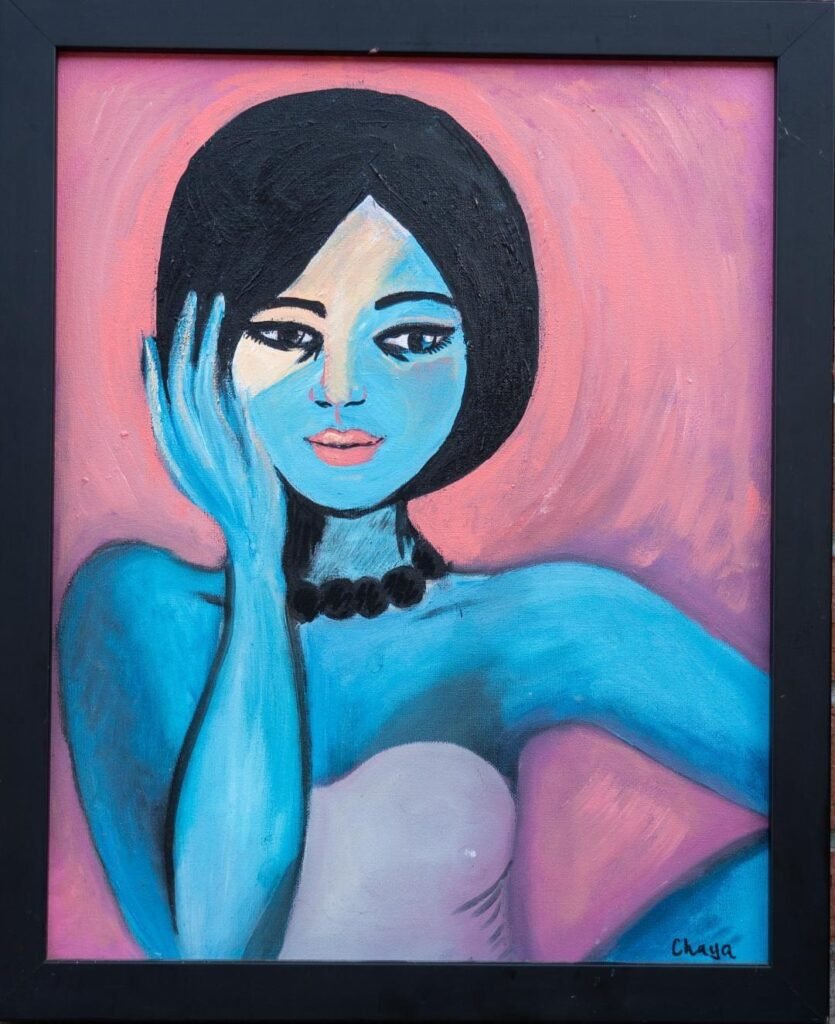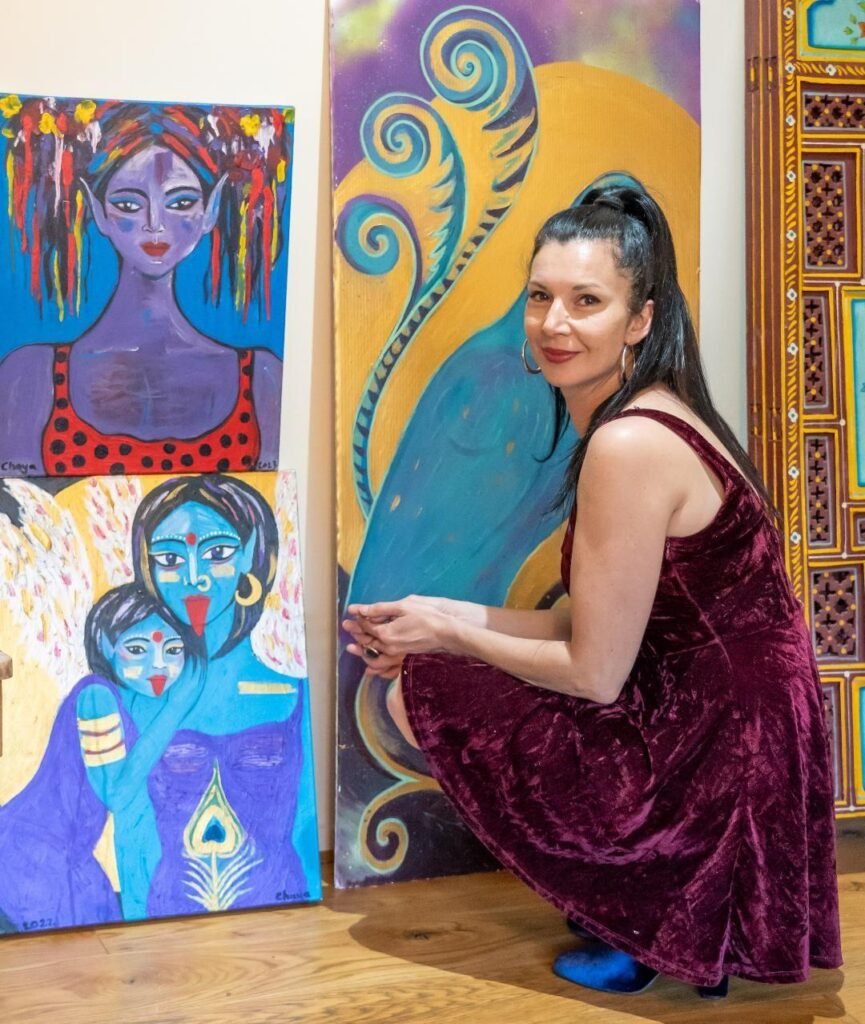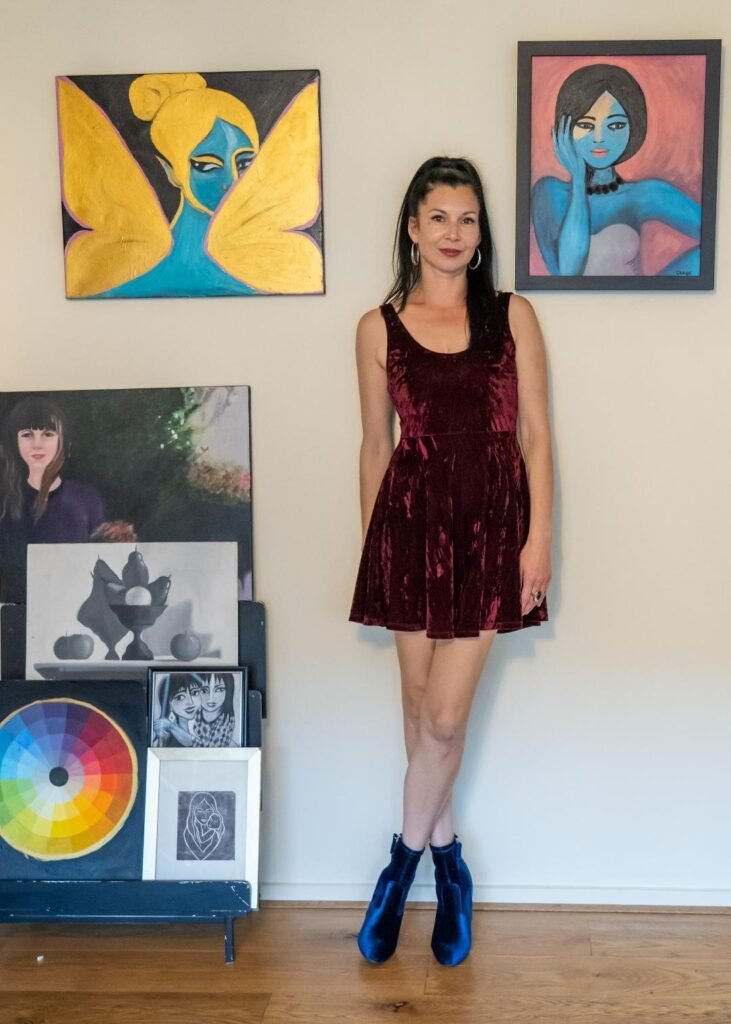
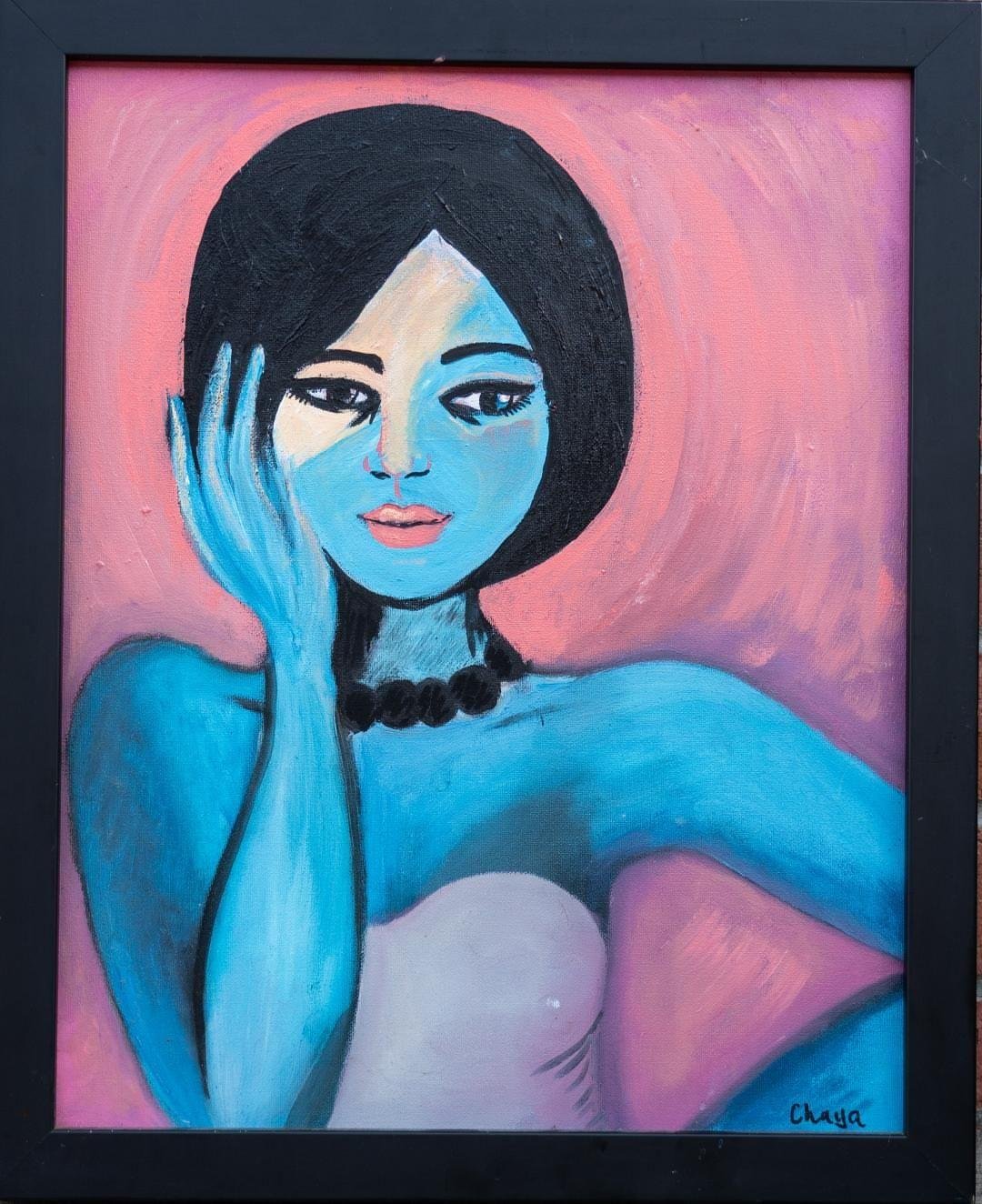
At the centre of Chaya's artistic practice is a fascination with people and the emotions that can exist within a single expression. Working primarily in oils and occasionally acrylics, she creates figurative paintings that favour emotional honesty over polished perfection. Faces, eyes, hands and elongated limbs become expressive elements through which inner states begin to surface. Features may be exaggerated and compositions can carry a deliberate sense of discomfort, yet that tension is part of their emotional power. Birds, flowers, children and animals also enter this visual world, while vivid colour often provides moments of brightness against darker emotional territory.
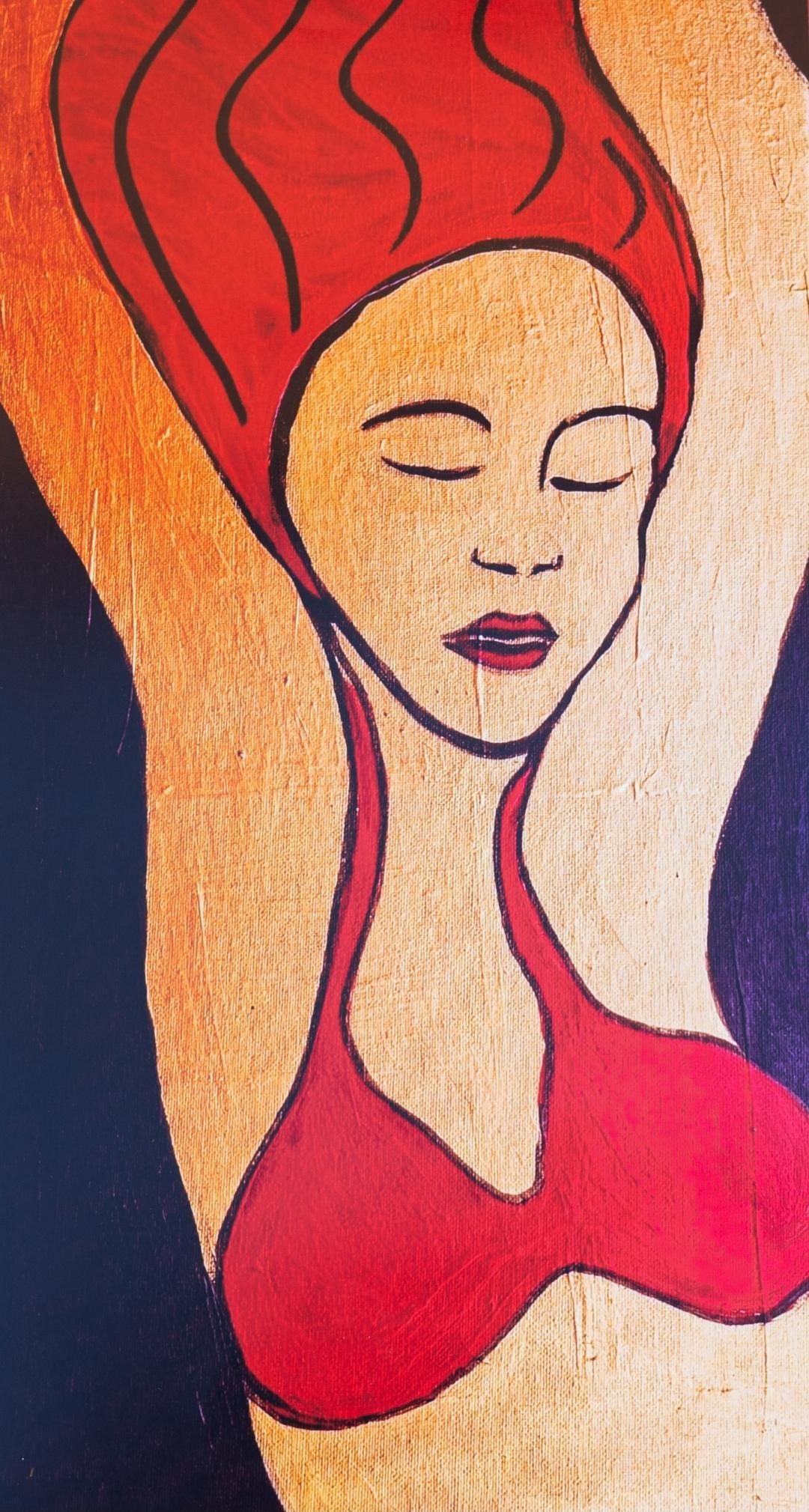
There is an instinctive quality to the way a painting begins in her studio. Rather than approaching the surface with a predetermined destination, Chhaya starts with a feeling and allows the work to reveal itself through the act of painting. Canvas is only one possible surface. Wooden board, paper, furniture and even objects recovered from hard rubbish can become part of the process. She has learned not to overwork what initially arrives with honesty. Too much editing can weaken the emotional charge of an image. This philosophy has shaped an approach in which imperfection remains visible and spontaneity is protected. What matters most is not technical perfection, but whether something genuine survives on the surface.
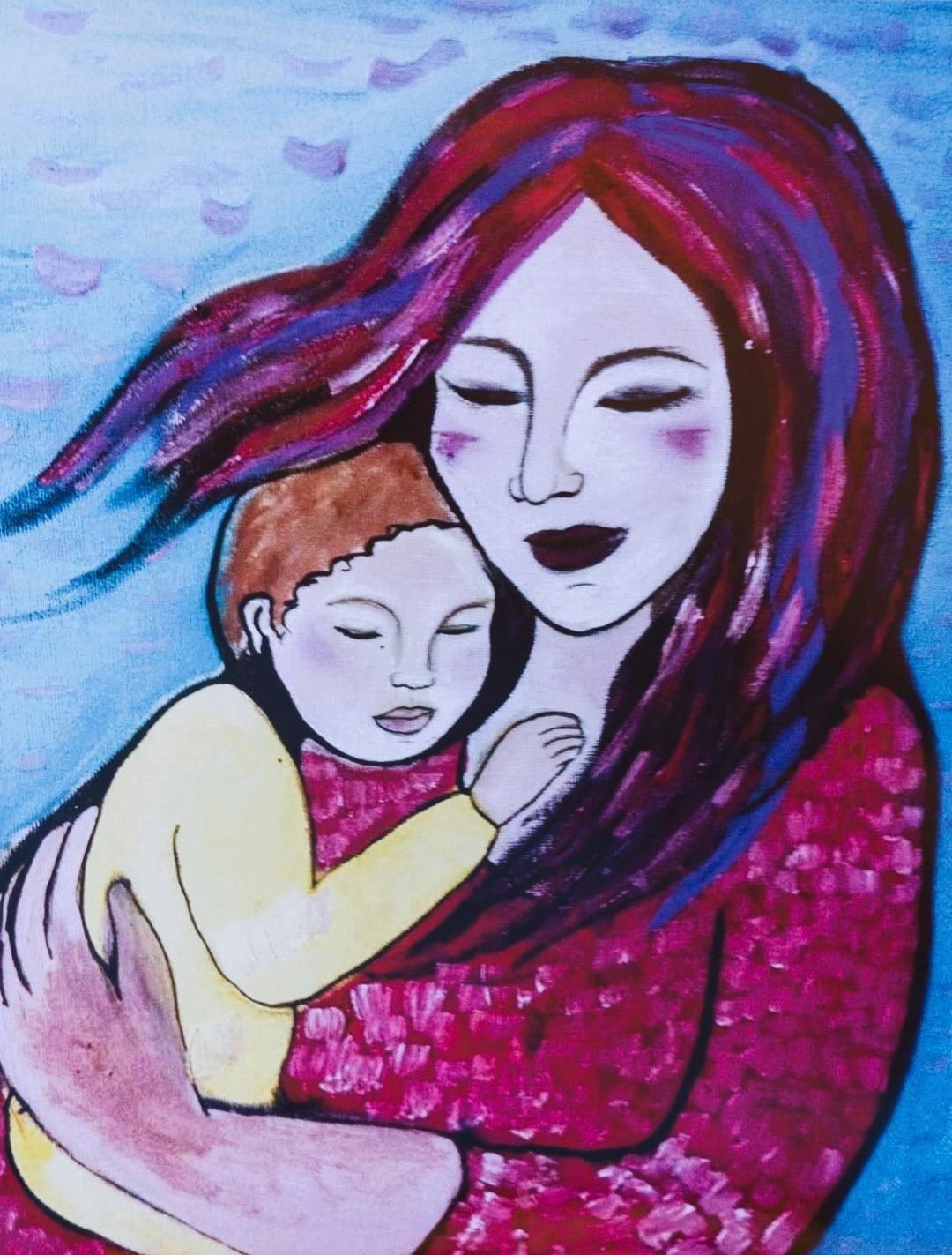
Although creativity had been present since childhood, formal study gave the emerging practice another foundation. After studying VCE Studio Art at Swinburne, Chaya continued into a Bachelor of Visual Art. However, some of the most defining developments came outside the classroom. During the isolation of the COVID period, a difficult pregnancy, serious physical complications and postpartum depression created an intensely challenging chapter. Art, music and poetry became important ways of moving through that darkness. Night after night, painting offered somewhere to place emotions that were difficult to contain elsewhere. Exhibitions followed, collectors began responding to the work, and a deeply personal process of healing gradually developed into a growing artistic career.
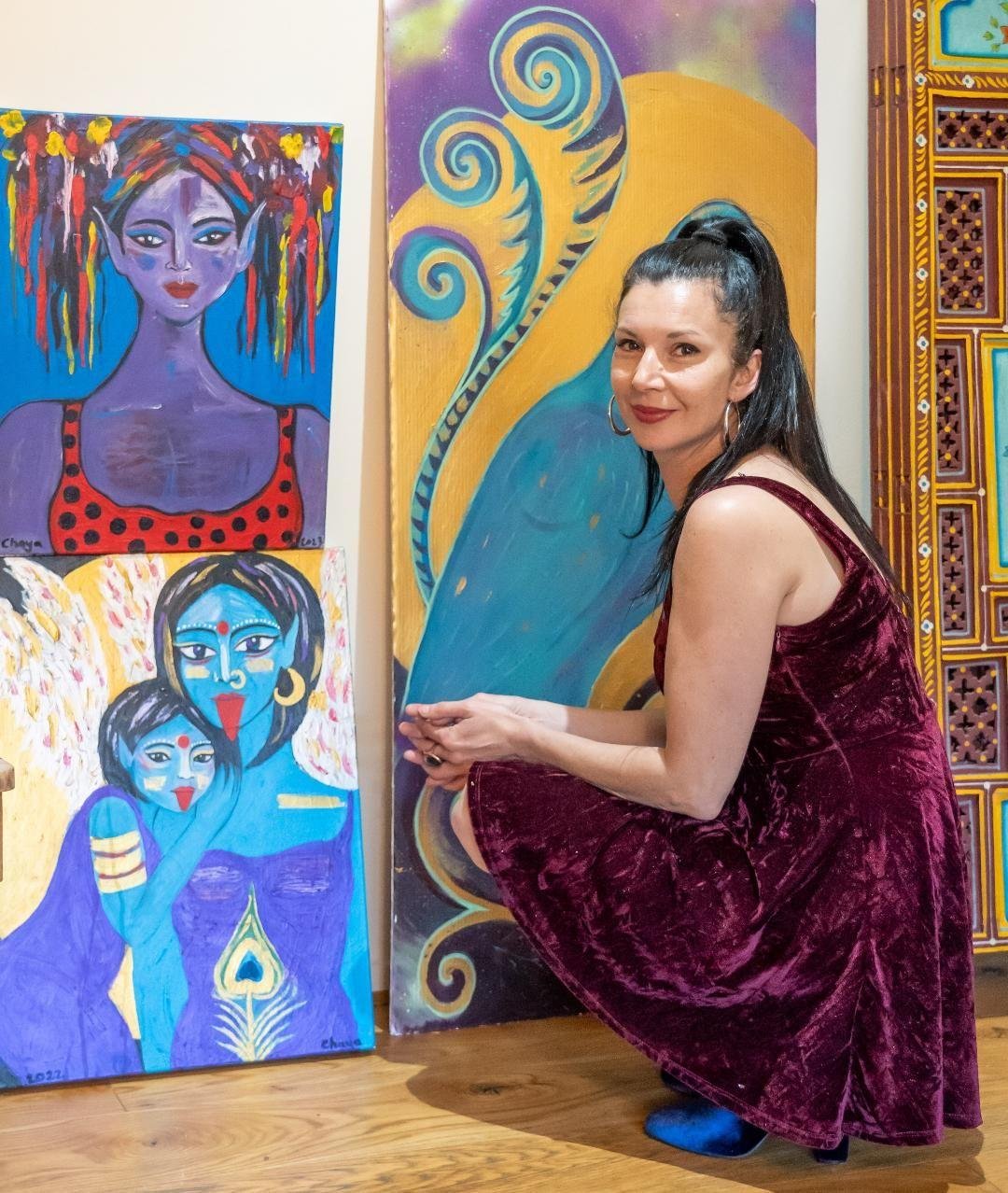
Personal experience is only one layer of the work. Across her practice, wider questions surrounding equality, motherhood, racism and sexism repeatedly emerge. Many of these concerns have appeared in her paintings since her teenage years, shaped by memories, cultural observations and experiences accumulated over time. Rather than separating vulnerability from strength, the work allows both to occupy the same space. Her developing exhibition theme, transforming trauma into power, extends this idea further. It considers how painful experiences can change with time and how what once wounded a person may eventually become a source of wisdom, resilience and strength.
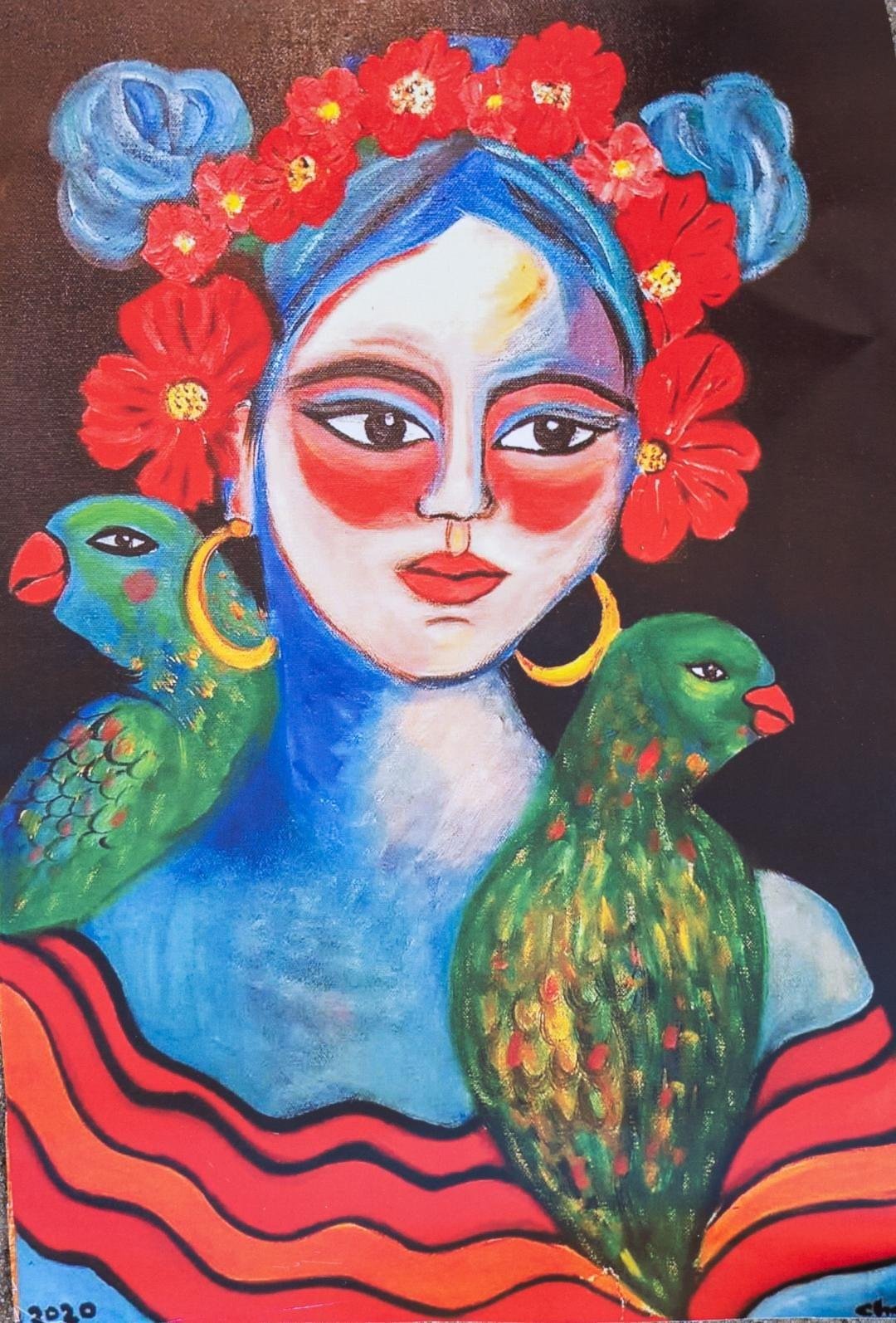
Colour carries its own emotional purpose within Chaya's paintings. Bright tones are not simply decorative choices; they can act as a counterweight to darker feelings and difficult subjects. This contrast reflects a larger duality running throughout the work. Beauty can exist beside sadness, tenderness beside discomfort, and vulnerability beside power. As a lifelong introverted observer with a vivid imagination and an active inner world, she often notices the gestures and expressions that can pass unnoticed in everyday life. Painting gives those observations another language. The eyes may reveal one emotion, the hands another, while colour changes the psychological atmosphere surrounding them.
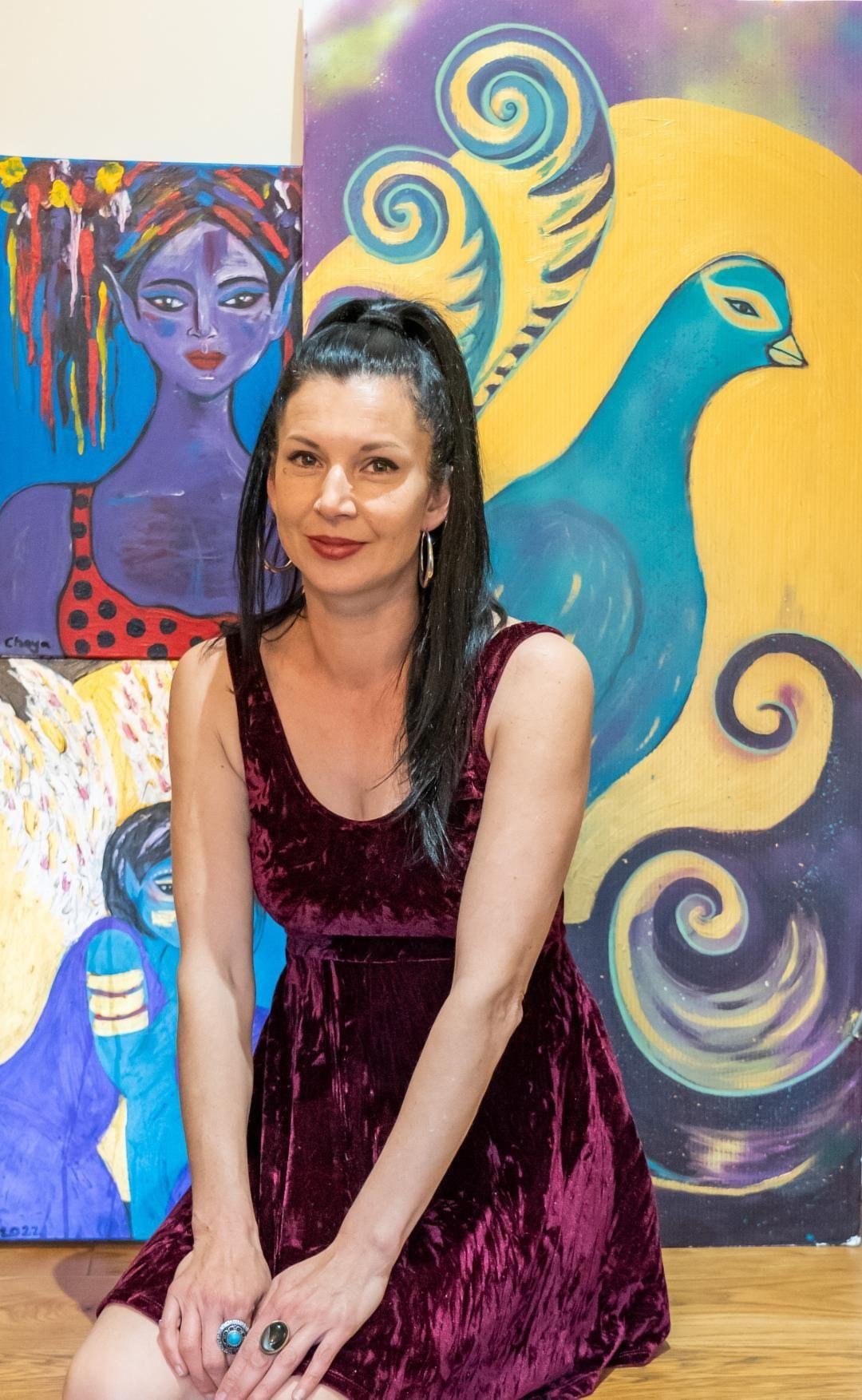
For Chaya, creativity extends far beyond the studio. Gardening, cooking, clothing, music and even the way a family is raised can carry an artistic dimension. Everything feels connected. Despite balancing motherhood, work and daily responsibilities, much of her painting happens late at night, often after midnight, when the surrounding world becomes quieter and concentration deepens. Art has become a source of healing, expression and financial independence, but its deepest value remains personal. Louise Bourgeois' words, "Don't be too careful, you might hurt yourself," reflect an attitude already visible throughout the practice: creativity requires risk, instinct and the willingness to leave something unresolved. In Chhaya's world, rawness is not something to correct. It is often where the truth of a painting begins.